Theme

Diplomacy

Editor's choice
News
Council of Europe launches new International Claims Commission for Ukraine

Council of Europe launches new International Claims Commission for Ukraine

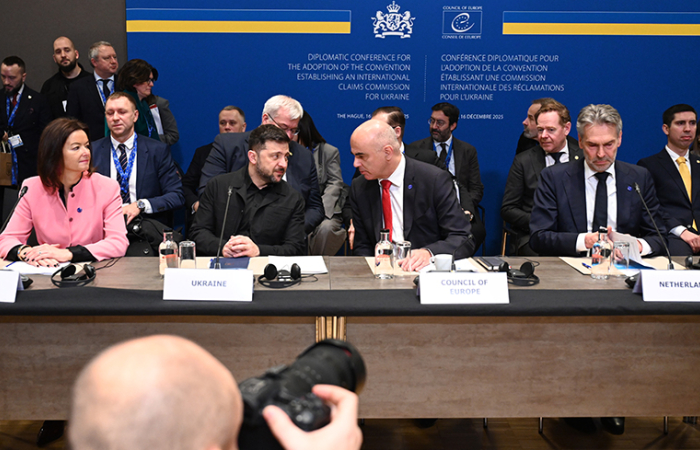
Thirty-four countries and the European Union have signed a new convention establishing an International Claims Commission for Ukraine at a diplomatic conference co-hosted by the 46-nation Council of Europe and the Netherlands in the Hague. The diplomatic conference was attended by leaders and high-level representatives from over 50 states, including the President of Ukraine, Volodymyr Zelenskyy, the President of the Republic of Moldova, Maia Sandu, and the Prime Minister of the Netherlands, Dick Schoof.  “Today marks a major step forward in ensuring accountability for Ukraine. The International Claims Commission represents justice and hope for tens of thousands of victims—our determination that those who have suffered will not be forgotten. I call for quick ratifications so we can get the commission rapidly up and running for the people of Ukraine,” said Council of Europe Secretary General Alain Berset. Ukrainian President Volodymyr Zelenskyy said: “We expect that every mechanism for compensation from the Register of Damage and Claims Commission to the actual payments – will start working and receive strong and sufficient international support, so that people can truly feel that any kind of damage caused by the war can be compensated. This war, and Russia’s responsibility for it, MUST become a clear example – so that others learn not to choose aggression.” “Accountability is about creating the conditions for peace that endures. And therefore, accountability is a condition of security – today and for the future. But accountability is not only about Ukraine. And it is not only about one aggressor and one victim. Accountability is about Europe. About every country in Europe. It is about whether Europe, as a whole, is willing to defend its peace,” said Maia Sandu, President of the Republic of Moldova, which currently holds the Presidency of the Council of Europe’s Committee of Ministers. The Prime Minister of the Netherlands, Dick Schoof, said: “Every day Russia is deliberately bombarding homes, destroying businesses and damaging infrastructure in Ukraine. Russia must compensate Ukraine for the damage caused. That is why we have launched the International Claims Commission for Ukraine and we are honoured to host it.” The International Claims Commission will be the second part of a comprehensive compensation mechanism related to Russia’s war of aggression, building on the existing Register of Damage for Ukraine. The claims commission will be established within the framework of the Council of Europe and will also be open to other countries. The Register of Damage for Ukraine, created in 2023, collects and records compensation claims submitted by individuals, organisations and public bodies in Ukraine. Forty-four states and the European Union have so far joined the Register, which has already received 86,000 claims. The International Claims Commission will review, assess and decide upon claims submitted to the Register of Damage for Ukraine and determine the amount of compensation, if any, which is due in each case. The convention establishing the commission will enter into force once it has been ratified by 25 signatories, as long as sufficient funds have been secured to support its initial work.

Filter archive

Publication date
Editor's choice
News
US urges Azerbaijan to reach peace deal with Armenia before 2025 begins

US urges Azerbaijan to reach peace deal with Armenia before 2025 begins

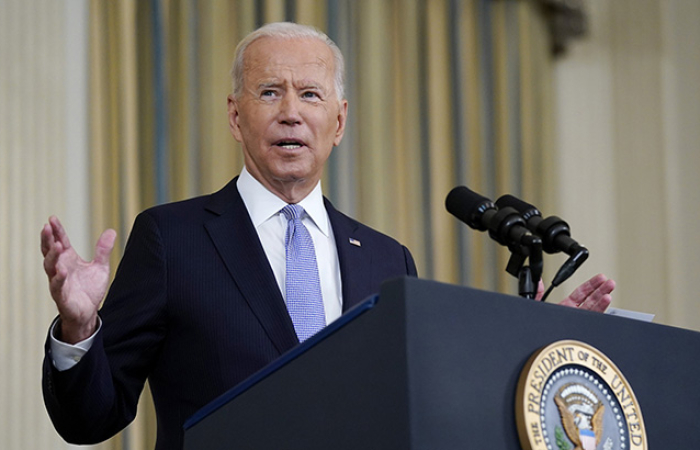
US President Joe Biden has written a letter to Azerbaijani President Ilham Aliyev, stressing that peace between Armenia and Azerbaijan is crucial to stabilising the region and increasing economic connectivity between Europe and Central Asia. Biden stressed that the US is strongly committed to supporting a peace treaty and that Aliyev should focus on reaching an agreement by the end of the year. 
Editor's choice
Analysis
Analysis: The tale of two elections: Implications for the South Caucasus

Analysis: The tale of two elections: Implications for the South Caucasus

As the US presidential election approaches, many are assessing the implications of a Donald Trump or Kamala Harris administration in different parts of the world. Commentators on the South Caucasus are no exception. The Biden administration established a Washington format to facilitate Armenia–Azerbaijan negotiations and took steps to further US–Armenia relations, making a decision to upgrade the status of a strategic dialogue launched in 2019 to a strategic partnership commission. The Biden administration also invested efforts in thawing relations between Armenia and Turkey, viewing this as essential for regional stability. US officials view normalising Armenia–Turkey relations as crucial for reducing Russian influence and decreasing Armenia’s dependency on Russia.
Editor's choice
News
Armenia and Kazakhstan strengthen bilateral ties

Armenia and Kazakhstan strengthen bilateral ties

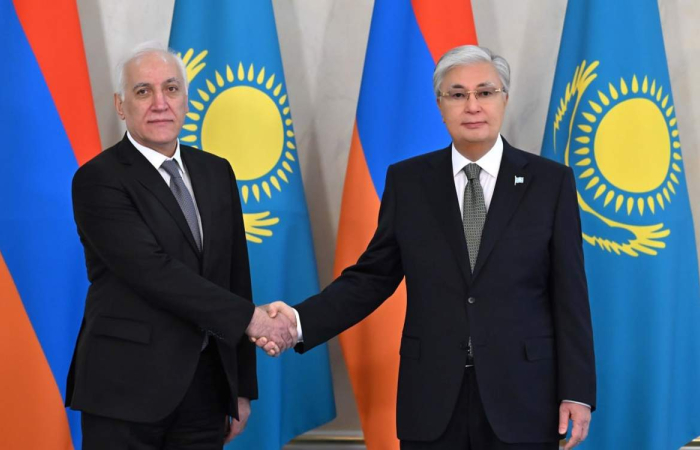
The President of Armenia will make an official visit to Kazakhstan on Tuesday (15 October) to discuss further strengthening of Kazakh-Armenian cooperation with Kazakh President Kassym-Jomart Tokayev. The two leaders will discuss cooperation in various political and economic areas, such as trade and migration, as well as enhancing cultural and humanitarian exchanges. 
Editor's choice
Opinion
Opinion: Can Armenia and Azerbaijan finally reach an agreement by COP29?

Opinion: Can Armenia and Azerbaijan finally reach an agreement by COP29?

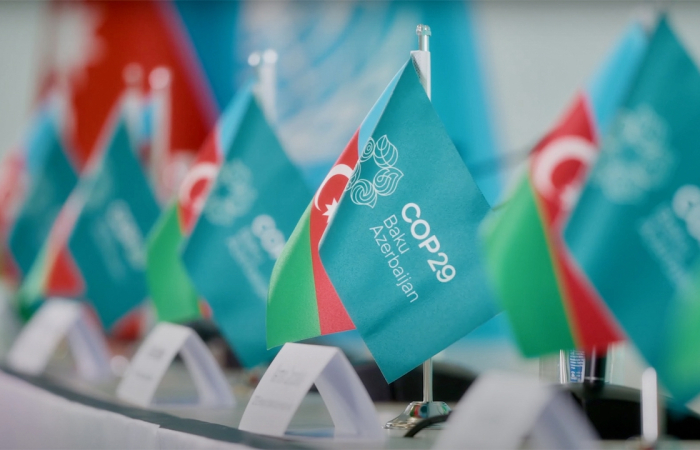
As this year's United Nations Climate Change Conference in Baku draws closer, negotiations between Armenia and Azerbaijan appear to be drifting further apart. Despite hopes that the opposite would be true, a lack of clarity and confusion instead continues to reign. Does the draft Agreement on Peace and Establishment of Interstate Relations contain 17 points or 16? Initially, Armenian Prime Minister Nikol Pashinyan had announced that consensus had been reached on 13 points while 3 were partially agreed and there was no agreement at all on a fourth. Since then, official statements and media in Armenia instead refers to 16 points though Yerevan has reportedly ditched the three incomplete articles to make only 13.
Editor's choice
News
European Union cancels 121 million euros in funding for Georgia

European Union cancels 121 million euros in funding for Georgia

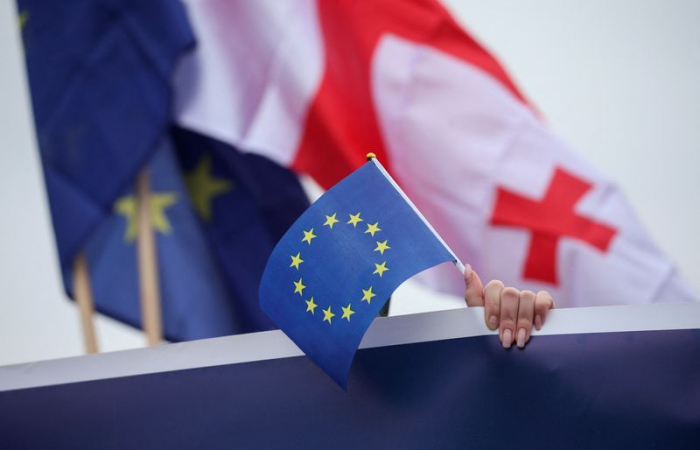
The European Union has decided to cancel €121 million in funds intended to support Georgia's economic development and its aspirations for EU membership. The decision was confirmed by the EU delegation in Georgia, which said that the growing repression of dissent was the reason for the withdrawal of financial assistance.
Editor's choice
News
Bonn Contact Group on Climate Peace and Security ahead of COP29 final report presentation was held successfully in Berlin

Bonn Contact Group on Climate Peace and Security ahead of COP29 final report presentation was held successfully in Berlin

The Bonn Contact Group on Climate, Peace and Security ahead of COP29, held its final report presentation on 9 October at the Hertie School in Berlin, Germany. The meeting was attended by representatives of Berlin-based civil society organisations, policymakers, academics and international organisations. The meeting focused on three critical reports examining the intersections of climate change with water scarcity, land degradation and food insecurity. The event was organised by LINKS Europe in collaboration with the Restart Initiative and the Candid Foundation. 
Editor's choice
News
Russia agrees to withdraw border guards from the Armenian-Iranian border

Russia agrees to withdraw border guards from the Armenian-Iranian border

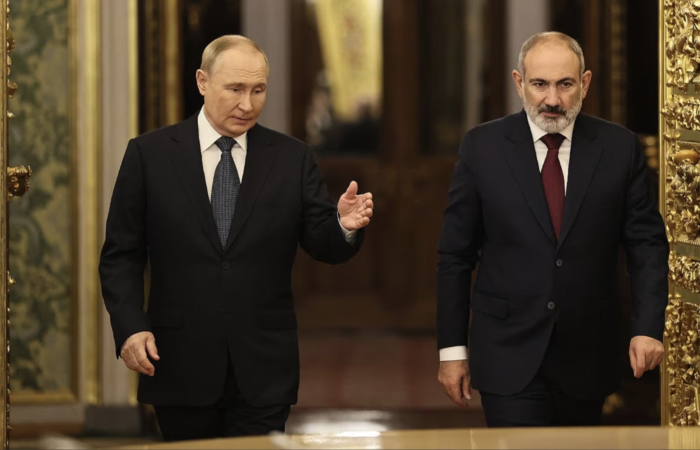
On Tuesday (8 October), Russian President Vladimir Putin and Armenian Prime Minister Nikol Pashinyan agreed at the summit of the Commonwealth of Independent States (CIS) to withdraw Russian border guards from the Armenian-Iranian frontier as of January 2025 and replace them with Armenian border guards. In addition, the Turkish border will be guarded by both Russian and Armenian guards.
Editor's choice
News
US Helsinki Commission assesses political situation in South Caucasus

US Helsinki Commission assesses political situation in South Caucasus

The US Helsinki Commission on Tuesday (1 October) published an analysis of Russia's political and economic agenda. The document addresses, among other things, various developments in the South Caucasus. The region is experiencing various political shifts as Russia's material influence wanes due to its focus on its war with Ukraine. On the one hand. Armenia was once one of Russia's strongest allies. However, following the Nagorno Karabakh war in 2020, Armenia has moved away from Moscow and more towards a Western agenda. On the other hand, Azerbaijan has adopted a cooperative approach with Russia, especially given the similarities between the two countries' strong governmental grip.