Theme

Diplomacy

Editor's choice
News
Germany accuses Russia of cyberattacks and disinformation campaign

Germany accuses Russia of cyberattacks and disinformation campaign

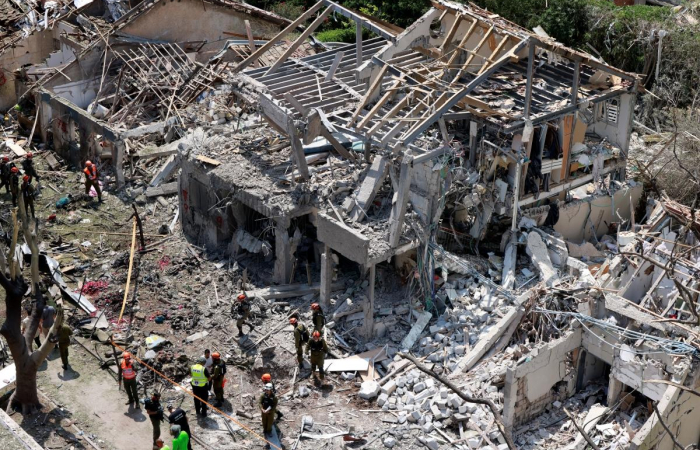
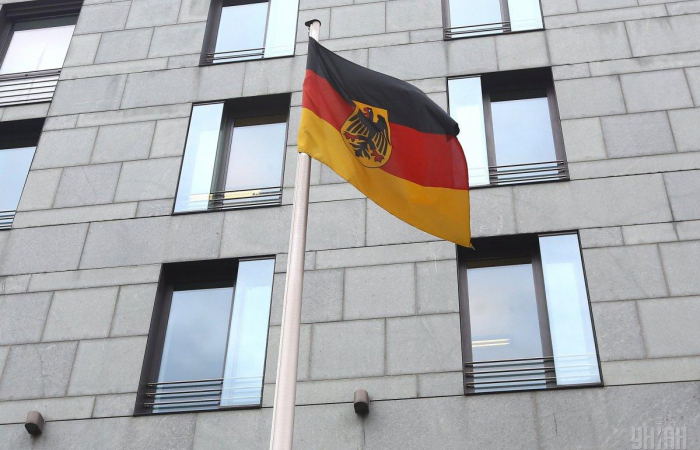
The German government holds Russia responsible for a cyberattack on German air traffic control, and for targeted disinformation campaigns before the last federal election. According to the German Foreign Office in Berlin, the incidents could be clearly attributed to the Russian military intelligence service, the GRU. In response, the Russian ambassador to Berlin was summoned to the Foreign Ministry. "We have been observing a massive increase in threatening hybrid activities by Russia for some time now," a spokesperson for the Foreign Ministry stated. These range from disinformation campaigns and espionage to cyberattacks and sabotage attempts. The aim is to divide society, sow distrust, and undermine confidence in democratic institutions. The spokesperson added that with these actions, Russia is "very concretely threatening our security, not only through its war of aggression against Ukraine, but also here in Germany."  The Foreign Ministry spokesperson explained that the cyberattack on air traffic control in August 2024 was clearly attributed to the hacker collective "APT28," known as "Fancy Bear," and to the responsibility of the Russian military intelligence service, the GRU. Furthermore, it could now be "conclusively stated" that Russia had attempted "to influence and destabilize both the last Federal election and the ongoing internal affairs of the Federal Republic of Germany." There was "absolutely irrefutable evidence" for this". The so-called "Storm 1516" campaign, which has been running since 2024, is allegedly backed by "reliable information" that the Moscow-based think tank "Center for Geopolitical Expertise" is behind it. The Center is also said to be supported by Russian military intelligence. Its primary aim is to influence democratic elections in the West. (Click the image to read more).
Editor's choice
Opinion
Opinion: A sustainable peace requires consistent long-term European involvement

Opinion: A sustainable peace requires consistent long-term European involvement

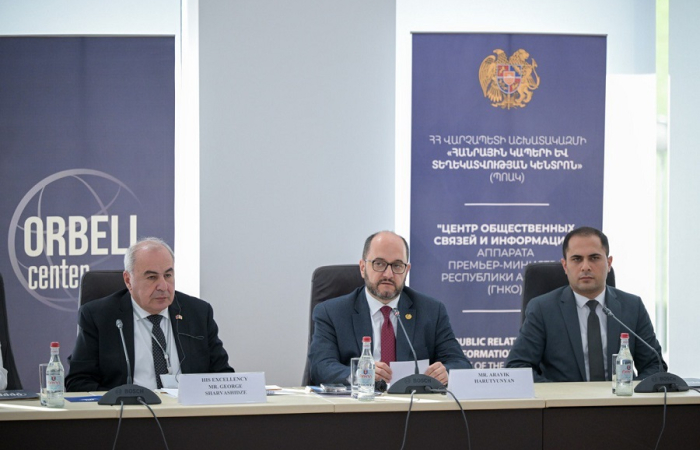
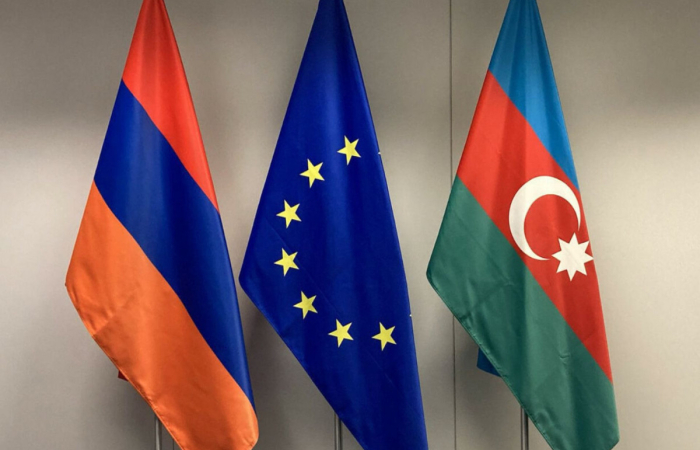
There is no denying that the EU, especially key member states acting in support, helped bring Baku and Yerevan closer to the Washington Declaration of August 8, 2025. But a declaration is not a treaty. Turning principles into a peace deal and eventually to a sustainable peace requires consistent long-term European involvement, writes Yalchin Mammadov in this-op-ed for commonspace.eu Before facilitating trust between Armenia and Azerbaijan, the EU is first expected to address its own credibility gap with Baku. A more balanced approach—such as including Azerbaijan, alongside Armenia, in the European Peace Facility—could be a useful first step. Diplomats can negotiate peace; societies must build peace. In this context, the EU can do what it does the best: long-term societal engagement. By expanding youth and academic exchange programmes, investing in cross-border civil society initiatives, and fostering people-to-people cooperation, Brussels can help shape a new generation equipped to sustain peace beyond political cycles. Such tools are slow and unglamorous, but if ignored, even the strongest treaty risks collapse. And obviously, these aspects require two-way engagement and genuine willingness by both governments to facilitate contact. If Brussels wants to remain influential, it needs to replace outdated one-size-fits-all policies with ambitious, interest-driven and differentiated approaches. Without a clear regional strategy, which appears to be the current situation, the South Caucasus will continue to sit at the margins of Europe’s security architecture—leaving space for other powers to take the lead. (You can read the op-ed in full by clicking the image.)

Filter archive

Publication date
Editor's choice
News
Denmark takes over EU Presidency with a focus on Security, Migration and Enlargement

Denmark takes over EU Presidency with a focus on Security, Migration and Enlargement

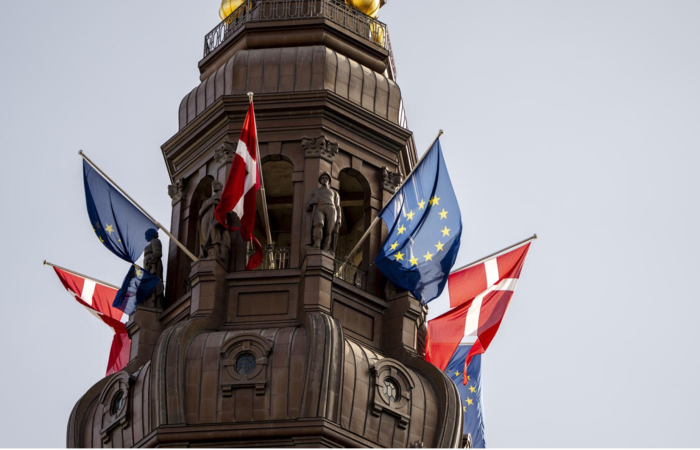
On July 1, Denmark takes over the Presidency of the Council of the European Union for the eighth time. Under the motto ‘A Strong Europe in a Changing World’, the Danish Presidency said its programme of work will ensure that the EU takes responsibility for its own security, while also strengthening its competitiveness. Prime Minister Mette Frederiksen said that priority will be given to boosting defence capabilities in Europe amid Russia's war in Ukraine and US threats to Greenland, a Danish autonomous territory. Pushing countries to keep promises to boost defence spending and bolstering Europe's "dangerous" security will top Denmark’s agenda as it takes over the rotating presidency on Tuesday, according to Prime Minister Mette Frederiksen.
Editor's choice
Monday Commentary
Monday Commentary: NATO Summit in The Hague II: everyone survived, now all eyes on Türkiye

Monday Commentary: NATO Summit in The Hague II: everyone survived, now all eyes on Türkiye

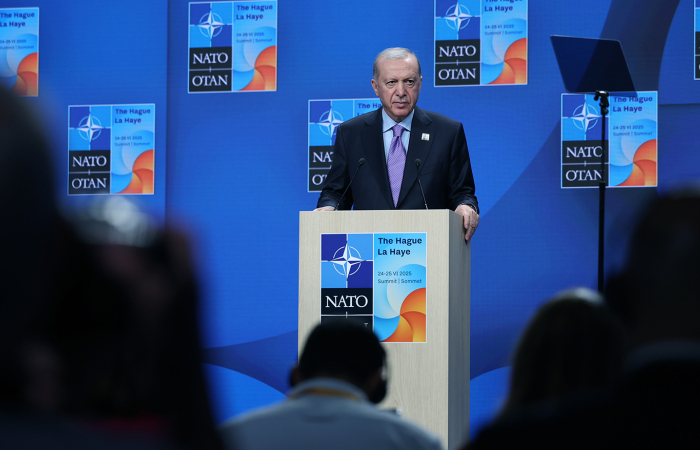
The Nato Summit held in The Hague on 24-25 June was a failure, wrapped in success. It was a success because it avoided public display of divisions, mainly by avoiding issues: it was the shortest summit anyone can remember; it also had a very short final statement that basically had two points, the first a re-commitment to article 5 of the North Atlantic Charter and the principle that an attack on one will be considered an attack on all. The fact that Nato leaders in the Hague had felt the need to re-emphasise this should be a cause of worry not celebration, but in the end, it is good that it was said. The second outcome, the one that received most attention, was the commitment of European countries to spend more on their defence: 5 per cent of GDP, of which 3.5 per cent on hard defence, and 1.5 per cent on related ancillary areas such as infrastructure. You may, if you want, believe that this was a response to US President Donald Trump's insistence. Or, if you are more prudent, understand that countries that matter – Germany, France, Poland and the Scandinavian countries had decided on this course of action quite separately, and as a response to Russia’s invasion of Ukraine, which was a wake-up call. Finland and Sweden’s decision to abandon their neutrality, and join NATO was taken long before Trump returned to the White House. The EU’s decision to spend massively on defence was always to ensure that other European countries are part of this process, willy-nilly.
Editor's choice
News
Fragile Israel – Iran truce brokered by Trump comes into effect but Israel claims Iran violated ceasefire

Fragile Israel – Iran truce brokered by Trump comes into effect but Israel claims Iran violated ceasefire

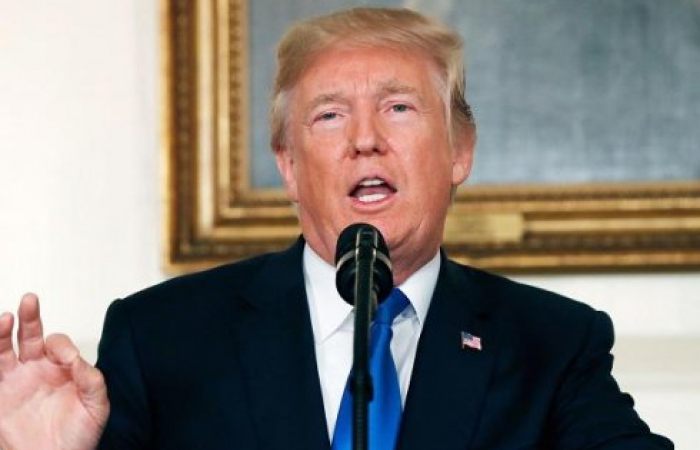
Hours after US President Donald Trump said his ceasefire had taken effect, Israel said it intercepted two Iranian missiles, with Defence Minister Israel Katz vowing that the military would "respond forcefully". Israel had stated on Tuesday it agreed to Trump's declaration of a ceasefire with Iran, adding that it had achieved all its objectives in the 12-day war with its arch-enemy. According to AFP, Iran denied launching missiles at Israel after the ceasefire announcement, and said it had "compelled" Israel to "unilaterally halt its aggression", while stopping short of officially accepting the ceasefire plan.
Editor's choice
News
Spain wants the EU to immediately suspend its association agreement with Israel

Spain wants the EU to immediately suspend its association agreement with Israel

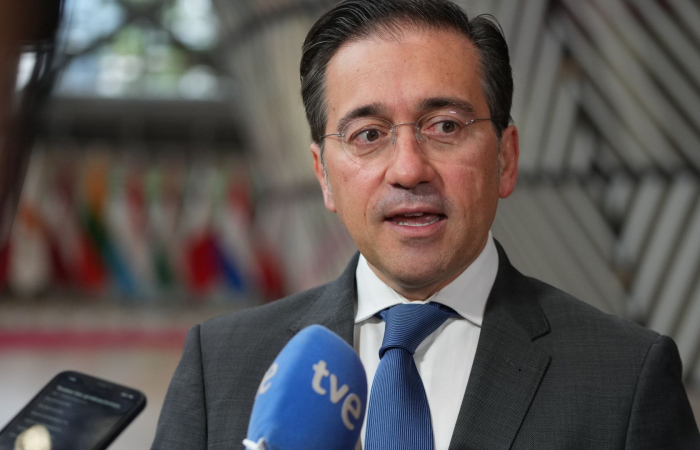
​​​​​​​Spanish Foreign Minister José Manuel Albares will ask EU ministers in Brussels to suspend the agreement with Israel with immediate effect. According to Albares, "The time for words and statements is over", and he added that "The Palestinians in Gaza have no time to lose."
Editor's choice
Analysis
Analysis: Shadows and Sunlight: Armenia and Türkiye Seek Common Ground

Analysis: Shadows and Sunlight: Armenia and Türkiye Seek Common Ground

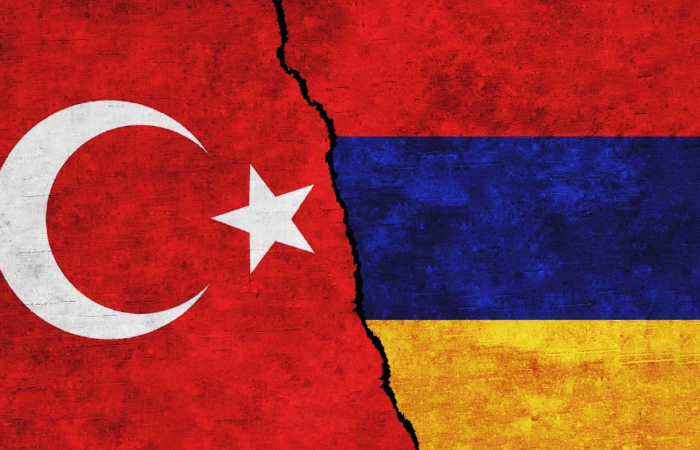
Pashinyan's official visit to Türkiye on June 20, 2025, marks a strategic shift from symbolic reconciliation to strategic rapprochement. Normalisation, for Yerevan, is not an end in itself but a transformative initiative to put an end to Armenia's geopolitical isolation, to diversify its transit routes, to decrease its reliance on Russia and to get access to Turkish ports, measures that reorient Armenia economically and logistically toward the West. Türkiye, on its part, is seizing the moment to strengthen its role as a regional intermediary. Consequently, by promoting normalisation, Ankara solidifies its impact in the South Caucasus and sends a positive signal to Western partners: the EU and U.S., in particular, about its evolving role in the region's stabilisation.