Theme

Defence

Stories related to defence, strategy and cooperation. 

Editor's choice
News
NATO Chief says war is on Europe's doorstep, and warns against complacency

NATO Chief says war is on Europe's doorstep, and warns against complacency

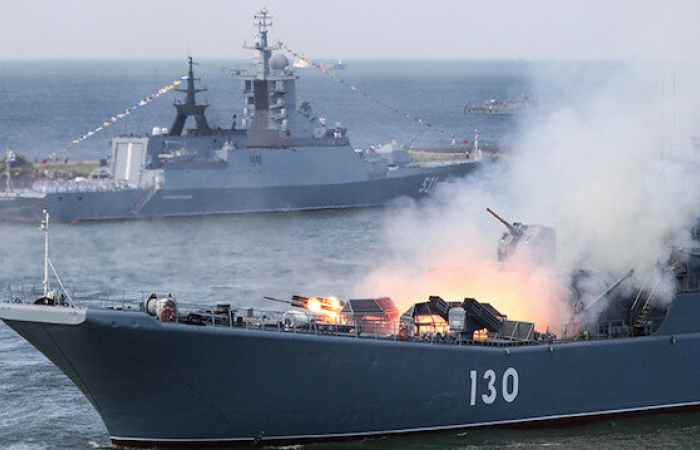
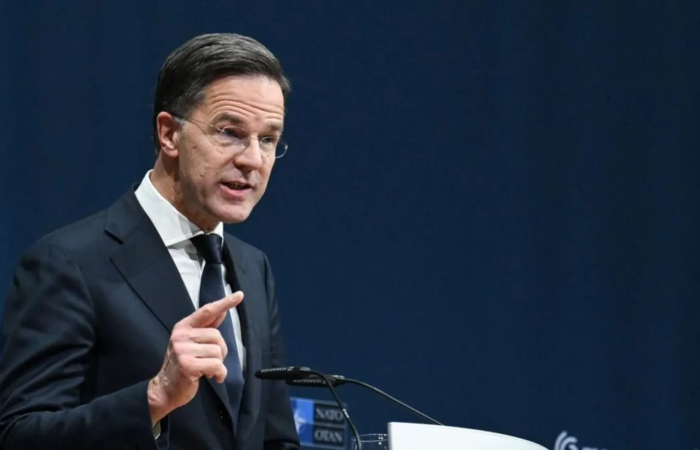
Russia could attack a Nato country within the next five years, the Secretary General of NATO, Mark Rutte, said in a stark new warning. "Nato's own defences can hold for now," Rutte warned in Berlin, but conflict was "next door" to Europe and he feared "too many are quietly complacent, and too many don't feel the urgency, too many believe that time is on our side. "Russia is already escalating its covert campaign against our societies," Rutte said in a speech in Germany. "We must be prepared for the scale of war our grandparents or great-grandparents endured." Earlier this month, Russia's President Vladimir Putin said his country was not planning to go to war with Europe, but it was ready "right now" if Europe wanted to - or started a war. But similar reassurances were given by Moscow in 2022, just before 200,000 Russian troops crossed the border and invaded Ukraine. Putin has accused European countries of hindering US efforts to bring peace in Ukraine - a reference to the role Ukraine's European allies have recently played in trying to change a US peace plan to end the war, whose initial draft was seen as favouring Russia. But Putin was not sincere, Nato's secretary-general said in the German capital, Berlin. Supporting Ukraine, he added, was a guarantee for European security. "Just imagine if Putin got his way; Ukraine under the boot of Russian occupation, his forces pressing against a longer border with Nato, and the significantly increased risk of an armed attack against us." Russia's economy has been on a war footing for more than three years now - its factories churn out ever more supplies of drones, missiles and artillery shells. According to a recent report by the Kiel Institute for the World Economy, Russia has been producing each month around 150 tanks, 550 infantry fighting vehicles, 120 Lancet drones and more than 50 artillery pieces. The UK, and most of its Western allies, are simply not anywhere near this point. Analysts say it would take years for Western Europe's factories to come close to matching Russia's mass-production of weapons. "Allied defence spending and production must rise rapidly, our armed forces must have what they need to keep us safe," the Nato chief said.
Editor's choice
Analysis
Mehman Aliyev on what "peace" can look like for Ukraine

Mehman Aliyev on what "peace" can look like for Ukraine

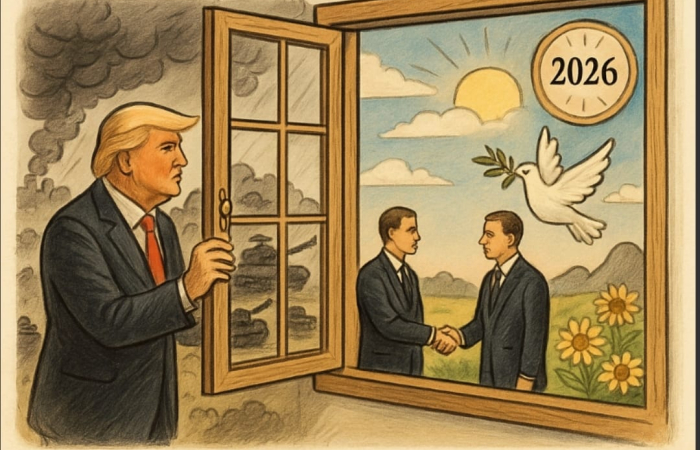
In this analysis,  veteran Azerbaijani journalist and political commentator, Mehman Aliyev, draws lessons from the 1994 Armenia-Azerbaijan ceasefire, to assess what can be possible impact of ceasefire in Ukraine. According to diplomats, a negotiating format or a partial ceasefire based on a modified version of the twenty-eight points is entirely plausible in 2026. A frozen line of contact, monitored by international mechanisms while talks drag on, is more likely than a fully implemented peace treaty by early that same year. “This document opens a window,” said political commentator Farid Gakhramanov. “Whether it means the end of the war or the beginning of a new frozen conflict will depend on the decisions of Moscow, Kyiv, Washington, and Brussels — not on the document itself.” (You can read the full analysis by clicking the image)

Filter archive

Publication date
Editor's choice
News
Armenian president calls for government and opposition to meet on Saturday amid continuing standoff on future of army command

Armenian president calls for government and opposition to meet on Saturday amid continuing standoff on future of army command

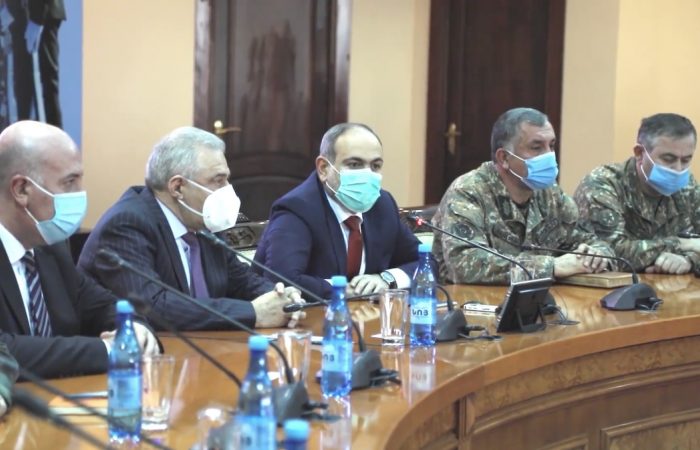
Armenian President Armen Sarkissian has issued an open invitation to prime minister Nikol Pashinyan and the leaders of the opposition to a meet amid a continuing political crisis and an impasse on the command of the armed forces. Pashinyan had a meeting with the army leadership this afternoon
Editor's choice
News
Armenian Armed Forces Chief of Staff formally dismissed

Armenian Armed Forces Chief of Staff formally dismissed

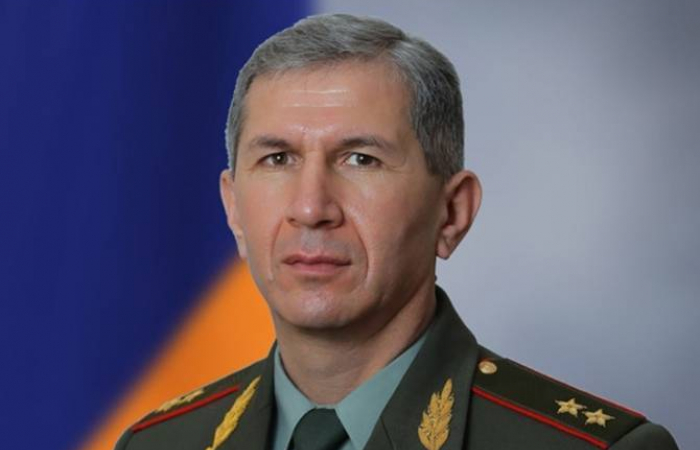
The Chief of Staff of the Armenian Armed Forces, Colonel General Onik Gasparyan, has been formally dismissed from his post, the office of Armenian prime minister Nikol Pashinyan said on Wednesday morning (10 March). The dismissal of Gasparyan has been at the centre of political and constitutional controversy for two weeks.
Editor's choice
News
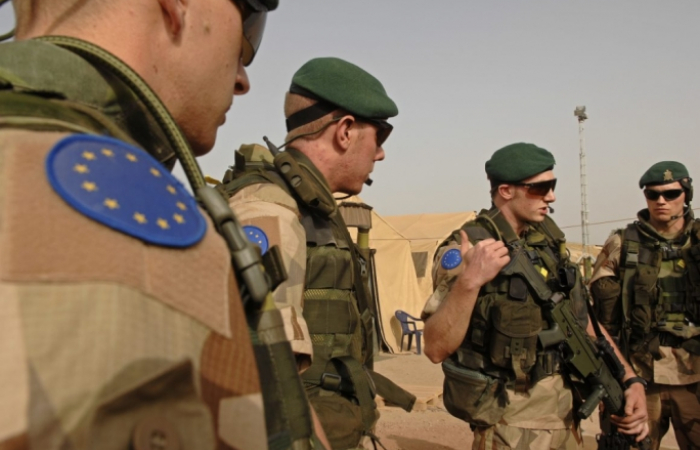
 Divergent views emerge on future Sahel strategy

Divergent views emerge on future Sahel strategy

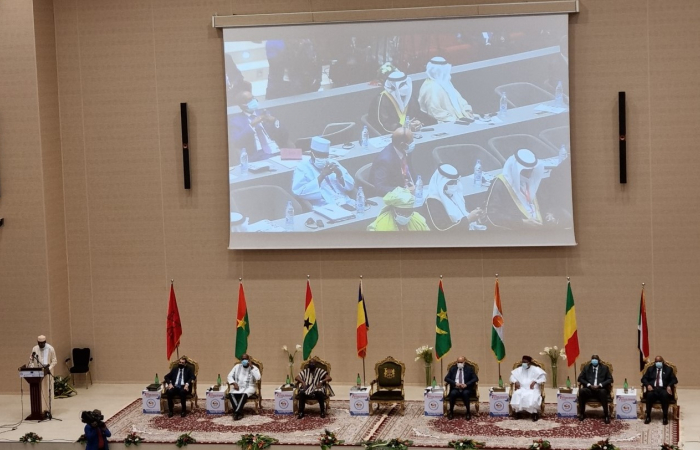
Despite the deployment of the G5 force with the backing of France, the Sahel region continues to suffer from regular jihadist attacks. Although France and its allies participated in the G5 summit last week, they appeared to be pursuing diverging courses of action for combating threats from insurgents. 
Editor's choice
Opinion
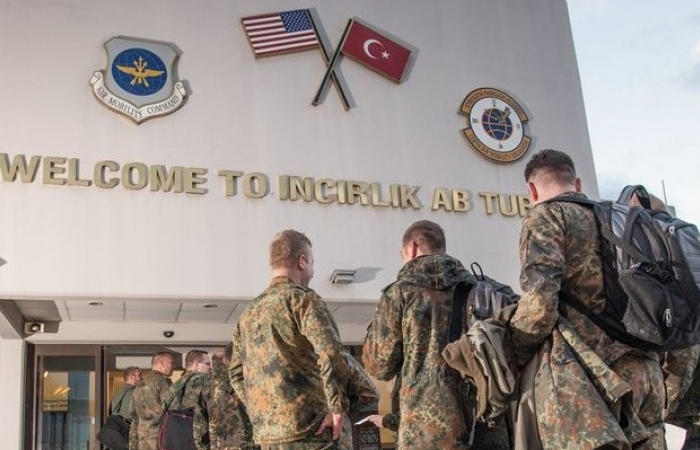
Opinion: US-Turkey relations are difficult but enduring

Opinion: US-Turkey relations are difficult but enduring

"The US needs Turkey to counter Russia in the Black Sea region, the Middle East, and the South Caucasus. Turkey can also be useful in the US strategy to contain China", argues Benyamin Poghosyan in this op-ed. However given the number of problems between the two countries US-Turkey relations may normalise, but they will continue to develop in the cooperation/competition framework, he argues.
Editor's choice
News
GEU Podcast: Is EU ‘strategic autonomy’ compatible with NATO? – with Dr Jamie Shea

GEU Podcast: Is EU ‘strategic autonomy’ compatible with NATO? – with Dr Jamie Shea

After over 70 years at the forefront of Western defence strategy, what is the state of NATO? In this episode of Global Europe Unpacked, Will Murray speaks to Dr Jamie Shea, former NATO Deputy Assistant Secretary General for Emerging Security Challenges, about how the organisation is handling modern challenges, what a 'strategically autonomous' Europe means for NATO, and more...