Theme

Conflict and Peace

Stories related to violent conflicts, diplomatic tensions, and conflict prevention, mediation and resolution.

Editor's choice
News
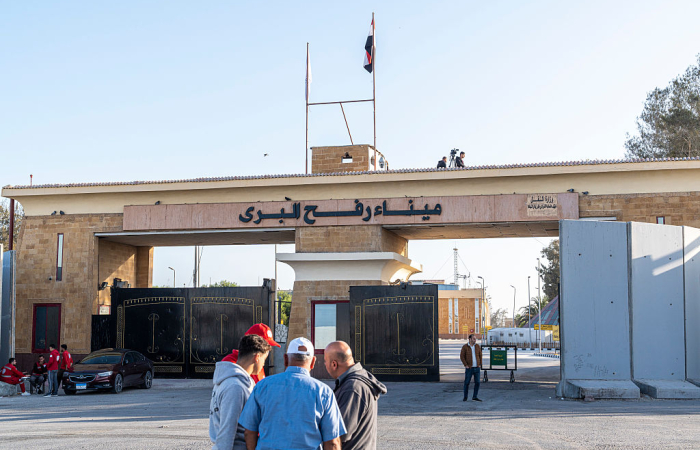
Egypt rejects Israeli "offer" for an exit only Rafah checkpoint in Gaza

Egypt rejects Israeli "offer" for an exit only Rafah checkpoint in Gaza

Egypt has rejected an Israeli "offer" for opening for exit only the Rafah checkpoint in Gaza. According to the Egyptian State Information Service, Egyptian authorities refuted on Wednesday afternoon reports that Israel claims it will open the Rafah crossing, the only lifeline for Gaza to the outside world, but only for those wishing to leave the besieged coastal enclave.  Citing an Egyptian official, the service stated that ''any agreement to open the crossing will cover both entry and exit, in line with US President Donald Trump's plan for humanitarian and political arrangements following the ceasefire.'' Cairo reaffirmed its adherence to the plan and UN Security Council Resolution 2803, including the right of return for Palestinians and maintaining two-way operations at the crossing. Earlier in the day, Israel's Coordinator of Government Activities in the Territories (COGAT) announced that the Rafah crossing would reopen ''within the next few days,'' marking the first such move since February 2025. According to the statement, departures would require prior Israeli security approval and would follow mechanisms previously implemented under EU supervision. Notably, the statement made no mention of the entry of humanitarian aid, which continues to flow through the Kerem Shalom crossing. A Palestinian official also echoed the Egyptian denial of Israel's claim. The announced agreements stress that no Palestinians will be forced to leave Gaza. Those who choose to travel will have the right to return, while humanitarian aid will continue through UN agencies, the International Red Cross and Crescent, and other independent organisations. A European Union official, who requested anonymity and is familiar with the matter, told TNA that the EU has received no official notification from Israel regarding new arrangements, stressing that "no changes exist beyond the January agreements, and we await Israel's formal approval for crossing operations under the Trump plan. "Reopening the crossing will follow mechanisms jointly supervised by the EU and the Palestinian Authority to ensure oversight and transparency, according to the EU official.
Filter archive

Publication date
Editor's choice
Commentary
Opinion: The quest for peace between Armenia and Azerbaijan can follow many paths, all of which need to be explored and exploited

Opinion: The quest for peace between Armenia and Azerbaijan can follow many paths, all of which need to be explored and exploited

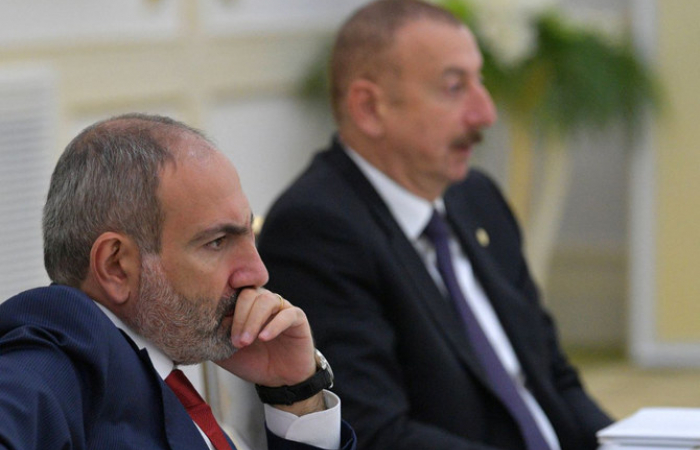
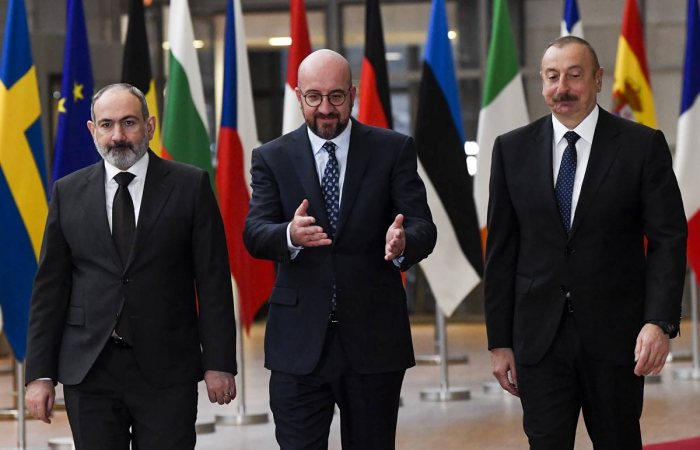
Preparations are under way for a fourth meeting between Armenian prime minister Nikol Pashinyan and Azerbaijani president Ilham Aliyev, facilitated by the president of the European Council Charles Michel. Even a year ago such a process would have been unthinkable. There is no more than one format in which Armenia and Azerbaijan pursue their quest for peace. But options are also available in the way the two leaders can work to achieve the ultimate goal, a peace agreement that will hail a new era of lasting peace in the region. In this commentary, Dennis Sammut says there are many roads open on the way to lasting peace between Armenia and Azerbaijan, and all need to be explored and exploited. Developing trade relations, intensive people to people contacts, establishing diplomatic relations in stages, facilitated travel between the two countries including direct air travel –  are all important steps that can and should be taken in the process of normalising relations. Most of them can be agreed and start giving results in months not years. The process can be supported by an intensive programme of confidence building measures that will help build trust at various layers of society.
Editor's choice
News
EU Special Representative welcomes continued efforts of Armenian and Azerbaijani practitioners towards a peaceful and prosperous future for the South Caucasus

EU Special Representative welcomes continued efforts of Armenian and Azerbaijani practitioners towards a peaceful and prosperous future for the South Caucasus

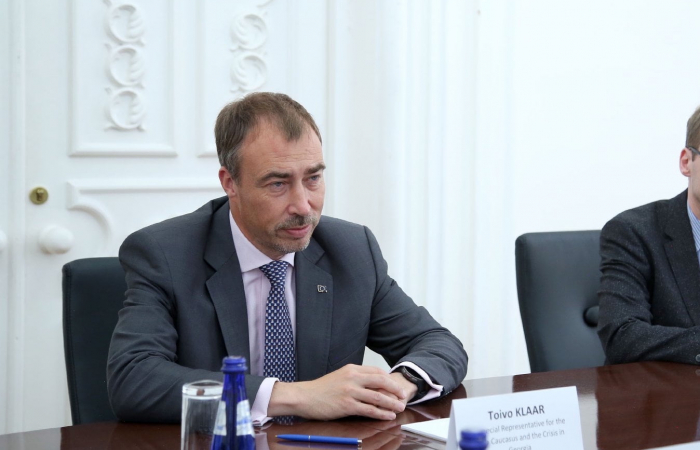
Over 40 Armenian and Azerbaijani practitioners met for a roundtable discussion, supported by the European Union (EU), in Kachreti, Georgia, on 29-30 June 2022. Together with counterparts from the EU, UN and OSCE they discussed possible scenarios of a future peaceful South Caucasus. Discussions encompassed scenarios in the fields of economy and connectivity, security, governance and cultural policies, and assessed the possible steps that can be taken by national governments, civil societies and external actors to enhance prospects of viable solutions to the many challenges confronting long-lasting peace between Armenians and Azerbaijanis. The EU Special Representative Toivo Klaar, affirmed the EU’s continuing commitment to sustainable peace and welcomed the determination of practitioners to continue their efforts to engage in dialogue, build trust and counter embedded narratives precluding not only improved Armenian-Azerbaijani relations, but a peaceful and prosperous future of the South Caucasus region as a whole. 
Editor's choice
Event
Joint Armenian-Azerbaijani expert group on confidence-building measures agrees to intensify efforts

Joint Armenian-Azerbaijani expert group on confidence-building measures agrees to intensify efforts

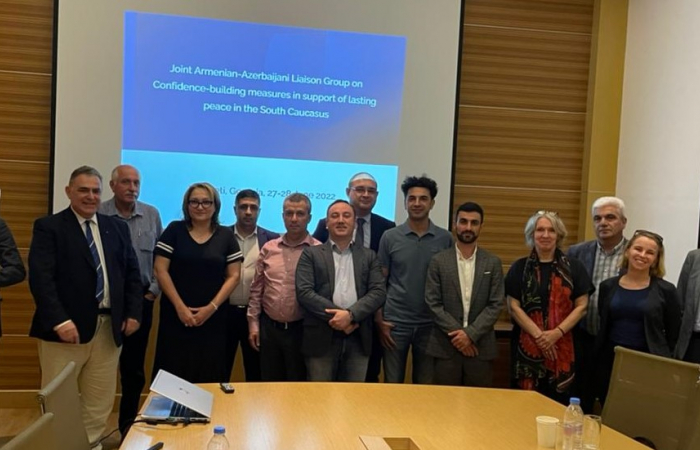
The Joint Armenian-Azerbaijani Liaison Group on Confidence-building measures in support of lasting peace in the South Caucasus (JOLIG), made up of 11 Armenian and Azerbaijani independent experts and opinion-shapers, met in Kachreti, Georgia on 27 and 28 June 2022 to review its activity, and agree on a strategy as to how its work on confidence-building measures can contribute to efforts aimed at bringing lasting peace in the South Caucasus. Participants discussed ongoing efforts aimed at establishing the right conditions for the normalisation of relations between Armenia and Azerbaijan being undertaken by the governments of the two countries with the support of international players. They called on the leadership of the two countries to remain focused and committed to this mission. The group emphasised its belief that confidence-building measures are necessary to be implemented in the current state of Armenia-Azerbaijan relations, and were indispensable as the governments of Armenia and Azerbaijan seek peaceful solutions to long lasting disputes and controversies between them.
Editor's choice
Opinion
Opinion: Azerbaijan’s vision for Karabakh’s future does not envision autonomy or secession

Opinion: Azerbaijan’s vision for Karabakh’s future does not envision autonomy or secession

“Azerbaijan does not intend to grant its Karabakh region any special status that is different from other regions of the country, but it will ensure the provision of cultural rights and  guarantee the security of its inhabitants as is provided throughout the rest  of the Republic of Azerbaijan”, says Vasif Husseynov in this op-ed for commonspace.eu He says that Baku and Yerevan can agree on the specific arrangements under which these are provided. “The temporary deployment of international observer missions of the United Nations, the OSCE or the European Union can be also considered to ensure stable and peaceful transition of the region under the control of Azerbaijani government.“