Theme

Conflict and Peace

Stories related to violent conflicts, diplomatic tensions, and conflict prevention, mediation and resolution.

Editor's choice
News
European leaders set out their plan for Ukraine

European leaders set out their plan for Ukraine

The leaders of Germany, Denmark, Finland, France, Italy, Netherlands, Norway, Poland, Sweden, and United Kingdom, together with the President of the European Council, and the President of the European Commission, o  Monday (15 December) issued a statement, outlining their plan for Ukraine. In their statement, Chancellor Merz, Prime Minister Frederiksen, President Stubb, President Macron, Prime Minister Meloni, Prime Minister Schoof, Prime Minister Støre, Prime Minister Tusk, Prime Minister Kristersson, Prime Minister Starmer, as well as President Costa and President von der Leyen spoke about "Peace for Ukraine". The Leaders welcomed significant progress on President Trump’s efforts to secure a just and lasting peace in Ukraine. They also welcomed the close work between President Zelenskyy’s and President Trump’s teams as well as European teams over the recent days and weeks. They agreed to work together with President Trump and President Zelenskyy to get to a lasting peace which preserves Ukrainian sovereignty and European security. Leaders appreciated the strong convergence between the United States, Ukraine and Europe. Leaders agreed that ensuring the security, sovereignty, and prosperity of Ukraine was integral for wider Euro-Atlantic security. They were clear that Ukraine and its people deserved a prosperous, independent, and sovereign future, free from fear of future Russian aggression. Both the US and European leaders committed to work together to provide robust security guarantees and economic recovery support measures for Ukraine in the context of an agreement on ending the war. This would include commitments to: Provide sustained and significant support to Ukraine to build its armed forces, which should remain at a peacetime level of 800,000 to be able to deter conflict and defend Ukraine’s territory. A European-led ‘multinational force Ukraine’ made up from contributions from willing nations within the framework of the Coalition of the Willing and supported by the US. It will assist in the regeneration of Ukraine’s forces, in securing Ukraine’s skies, and in supporting safer seas, including through operating inside Ukraine. (Click the image to read the statement in full).
Editor's choice
News
NATO Chief says war is on Europe's doorstep, and warns against complacency

NATO Chief says war is on Europe's doorstep, and warns against complacency

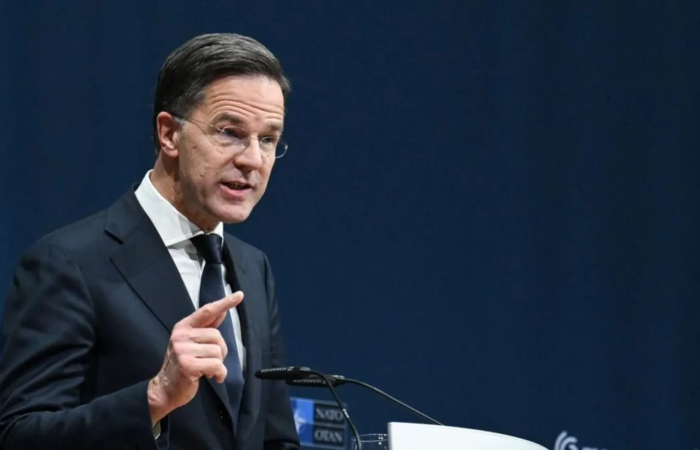
Russia could attack a NATO country within the next five years, the Secretary General of NATO, Mark Rutte, said in a stark new warning. "NATO's own defences can hold for now," Rutte warned in Berlin, but conflict was "next door" to Europe, and he feared "too many are quietly complacent, and too many don't feel the urgency, too many believe that time is on our side. "Russia is already escalating its covert campaign against our societies," Rutte said in a speech in Germany. "We must be prepared for the scale of war our grandparents or great-grandparents endured." Earlier this month, Russia's President Vladimir Putin said his country was not planning to go to war with Europe, but it was ready "right now" if Europe wanted to - or started a war. But similar reassurances were given by Moscow in 2022, just before 200,000 Russian troops crossed the border and invaded Ukraine. Putin has accused European countries of hindering US efforts to bring peace in Ukraine - a reference to the role Ukraine's European allies have recently played in trying to change a US peace plan to end the war, whose initial draft was seen as favouring Russia. But Putin was not sincere, Nato's secretary-general said in the German capital, Berlin. Supporting Ukraine, he added, was a guarantee for European security. "Just imagine if Putin got his way; Ukraine under the boot of Russian occupation, his forces pressing against a longer border with Nato, and the significantly increased risk of an armed attack against us." Russia's economy has been on a war footing for more than three years now - its factories churn out ever more supplies of drones, missiles and artillery shells. According to a recent report by the Kiel Institute for the World Economy, Russia has been producing each month around 150 tanks, 550 infantry fighting vehicles, 120 Lancet drones and more than 50 artillery pieces. The UK, and most of its Western allies, are simply not anywhere near this point. Analysts say it would take years for Western Europe's factories to come close to matching Russia's mass-production of weapons. "Allied defence spending and production must rise rapidly, our armed forces must have what they need to keep us safe," the Nato chief said.

Filter archive

Publication date
Editor's choice
News
War anniversary reminds the world that Russia has seriously violated Georgia's territorial integrity

War anniversary reminds the world that Russia has seriously violated Georgia's territorial integrity

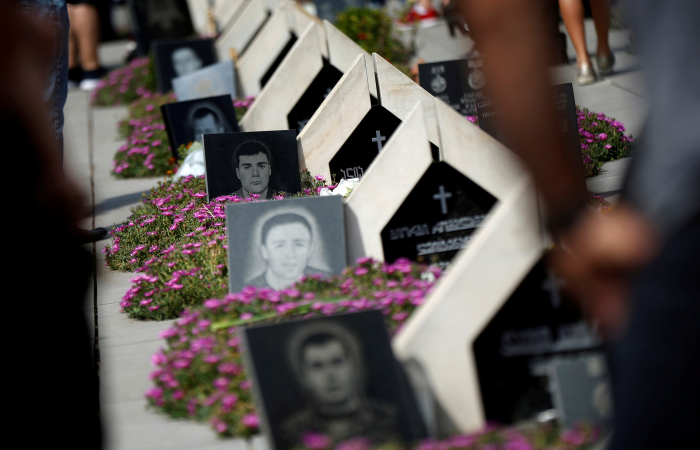
Georgia on Sunday marked the 14th anniversary of the start of the 2008 Georgia-Russia War which lasted five days.  2,232 Georgians were killed or injured during the fighting, of whom 1,045 persons were military personnel. After the August war, Russia recognized the independence of two regions of Georgia - Abkhazia and South Ossetia as independent states. Only a handful of other countries followed, and most nations continue to strongly support Georgia's territorial integrity. The European Union, the United States, the United Kingdom and a number of other countries issued statements on the occasion of the anniversary, once more reiterating their support for Georgia's territorial integrity. In a statement, the Georgian Foreign Ministry called on the Russian Federation "to cease illegal and provocative steps against Georgia, to respect the sovereignty and territorial integrity of Georgia, to fulfil the obligations under the EU-mediated 12 August 2008 Ceasefire Agreement, to withdraw its forces from the territory of Georgia and to reverse the illegal decision on recognition of the so-called independence of the occupied regions."
Editor's choice
News
Three ships loaded with Ukrainian grain arrive in Istanbul

Three ships loaded with Ukrainian grain arrive in Istanbul

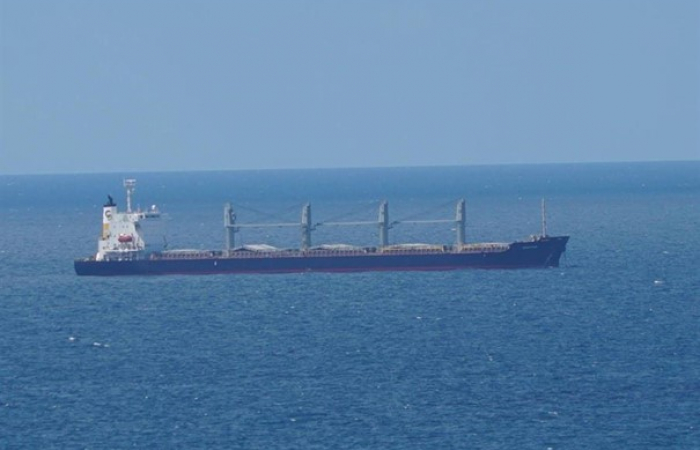
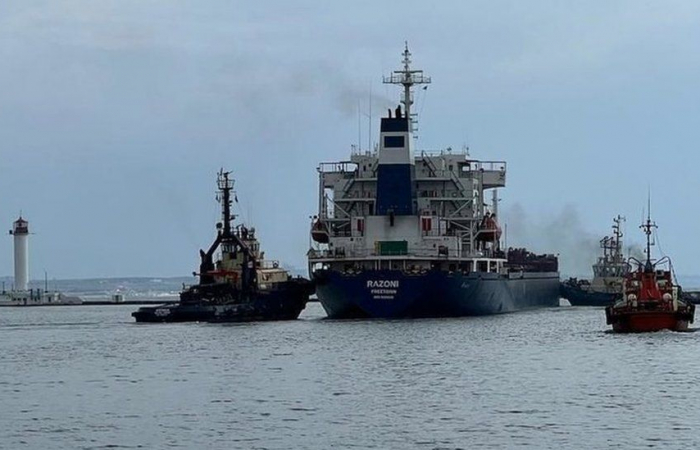
Three grain-loaded ships from Ukraine anchored at the Black Sea entrance of Turkey's Istanbul Strait en route to Ireland, the Turkish National Defence Ministry said on Saturday (6 August) The first ship, the Panama-flagged Navi-Star, which departed from Ukraine's port of Odesa on 5 August, is carrying 33,000 tons of corn under a recent grain shipment deal signed by Turkey, Russia, Ukraine, and the U.N. On July 22, those countries and the U.N. signed a deal in Istanbul to reopen three Ukrainian ports for exports of Ukraine grain. A team from the Joint Coordination Centre in Istanbul, consisting of representatives from all four sides, are inspecting the ship. After the inspection, it is expected to proceed on its way.
Editor's choice
Commentary
Commentary: War or Peace in the South Caucasus?

Commentary: War or Peace in the South Caucasus?

In their report “The South Caucasus from war to peace: 30 measures between now and 2030”, published last April, Armenian and Azerbaijani experts made a stark statement: “All the ingredients for peace exist in the South Caucasus. All the ingredients for war exist too. What is in front of us is a choice.” Never have these words sounded so pertinent as in these last days when in Armenia and in Azerbaijan the sounds of war and the sounds of peace competed with each other, with little sign of compromise. Yet neither war, nor peace, is inevitable. It is a choice, and one that both sides can neither make lightly nor take for granted. This week has once more shown that Armenia and Azerbaijan, and Armenians and Azerbaijanis, face a choice between war and peace. The death and injury of yet more Armenians and Azerbaijanis should focus minds, and increase mutual determination to work for lasting peace and to avoid any steps that can bring another war nearer.
Editor's choice
News
G7 warn China over Taiwan

G7 warn China over Taiwan

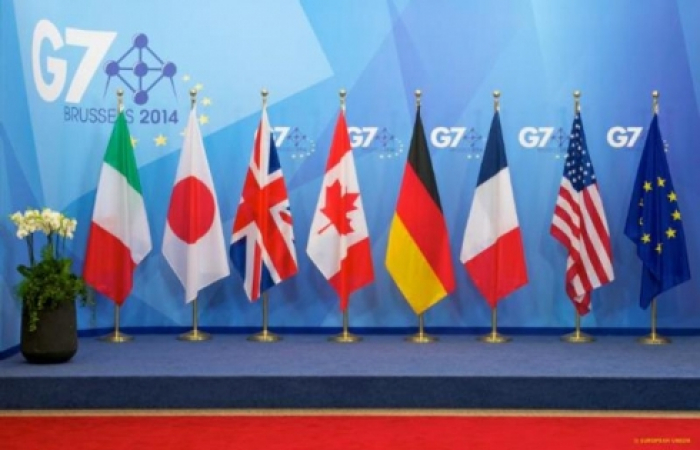
The G7 countries have called on China not to unilaterally change the status quo by force in the Taiwan Strait and beyond, and to resolve cross-Strait differences by peaceful means. In a statement, the G7 Foreign Ministers of Canada, France, Germany, Italy, Japan, the United Kingdom, the United States of America, and the High Representative of the European Union, reaffirmed their shared commitment to maintaining the rules-based international order, peace and stability across the Taiwan Strait and beyond. The statement added: We are concerned by recent and announced threatening actions by the People’s Republic of China (PRC), particularly live-fire exercises and economic coercion, which risk unnecessary escalation. There is no justification to use a visit as pretext for aggressive military activity in the Taiwan Strait. It is normal and routine for legislators from our countries to travel internationally. The PRC’s escalatory response risks increasing tensions and destabilizing the region.
Editor's choice
News
Kosovo-Serbia tensions defused after a flurry of overnight diplomatic activity

Kosovo-Serbia tensions defused after a flurry of overnight diplomatic activity

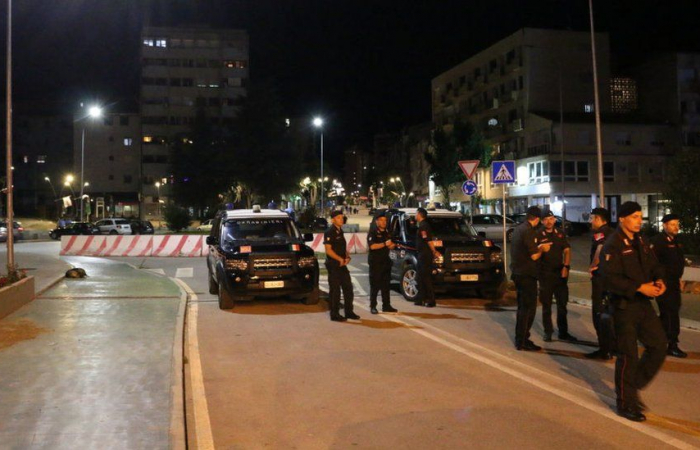
A flurry of diplomatic activity on Sunday night helped defuse tensions between Kosovo and Serbia which saw both sides mobilising military forces. The crisis revolved around a decision of the government of Kosovo that would introduce new rules requiring Serbs in Kosovo to swap their Serbian-issued car number plates for Kosovan-issued ones. The rules were due to come into force at midnight on Monday. But on Sunday ethnic Serbs in the north barricaded roads and armed men fired shots in protest. The rules' implementation has now been delayed for a month following consultations with the US and EU. NATO described the situation as "tense" as hundreds of ethnic-Serbs parked trucks, tankers and other vehicles near two key border crossings with Serbia in protest over the new rules, forcing the police to close the two crossings. The mission led by the alliance in Kosovo, KFOR, said it was "prepared to intervene if stability is jeopardised, in accordance with its mandate, coming from UNSC resolution 1244 of 1999."
Editor's choice
News
Ukrainian grain looted by Russia shipped to Lebanon

Ukrainian grain looted by Russia shipped to Lebanon

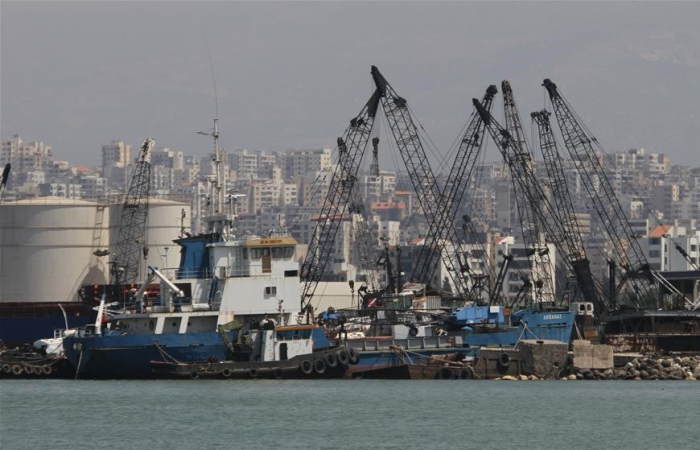
A Syrian cargo ship, sanctioned by the United States and carrying what Ukraine says is stolen barley from the war-torn country, has docked in Lebanon, the Ukrainian diplomatic mission in the Mideast nation said on Thursday (28 July). According to the Ukrainian Embassy in Beirut, the cargo vessel Laodicea docked in the port of Tripoli, Lebanon’s second-largest city. It was carrying 5,000 tons of flour and 5,000 tons of barley, the embassy said. Ukraine has accused Russia of plundering grain and steel from its territory since Moscow invaded the country in late February. Earlier Thursday, Ukrainian Ambassador Ihor Ostash met with Lebanese President Michel Aoun and warned the Lebanese leader that purchasing stolen goods from Russia would “harm bilateral ties,” according to the embassy statement. Kyiv had previously praised Lebanon for condemning Russia for its war on Ukraine. Ukraine has promised to export wheat to Lebanon, currently experiencing a crippling food security and economic crisis.
Editor's choice
News
UN to investigate deadly attack which Iraq blames on Turkey

UN to investigate deadly attack which Iraq blames on Turkey

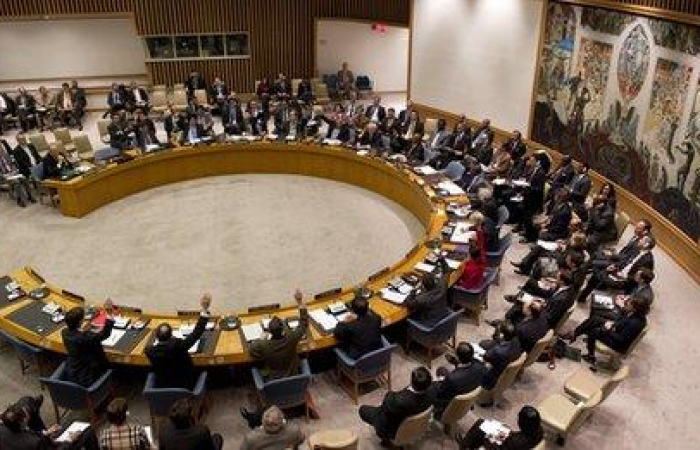
UN Security Council members have backed Iraq’s demand for a major investigation into a deadly July 20 artillery attack on a tourist area popular with Iraqis in the mountainous Duhok governorate of the Kurdistan region that left at least nine people dead and 23 others wounded. It comes only days after the Security Council unanimously condemned the attack “in the strongest terms.” However, council members did not mention Turkey during the emergency meeting late on Tuesday that was sought by Iraq and the UAE to discuss the attack. On the day of the strike, Baghdad summoned Turkey’s ambassador to condemn what it described as a “heinous crime committed by the Turkish troops, which has topped its continuous aggressions on the sovereignty of Iraq and its territories.”   Turkey has denied responsibility, and blames the Kurdistan’s Workers’ Party, which it considers a terrorist organization, for the attack. The PKK has been engaged in a long-running guerrilla war in southeast Turkey. Iraq does not give sanctuary to PKK fighters or its leadership, many of whom take refuge in the mountains where the borders of Iraq, Iran and Turkey meet. Baghdad has repeatedly rejected their presence on its territory. On Wednesday, the Turkish Foreign Ministry condemned an attack on its Consulate-General in Mosul the night before and called for the Iraqi authorities to take steps to protect its diplomatic missions.