Theme

Conflict and Peace

Stories related to violent conflicts, diplomatic tensions, and conflict prevention, mediation and resolution.

Editor's choice
News
European leaders set out their plan for Ukraine

European leaders set out their plan for Ukraine

The leaders of Germany, Denmark, Finland, France, Italy, Netherlands, Norway, Poland, Sweden, and United Kingdom, together with the President of the European Council, and the President of the European Commission, o  Monday (15 December) issued a statement, outlining their plan for Ukraine. In their statement, Chancellor Merz, Prime Minister Frederiksen, President Stubb, President Macron, Prime Minister Meloni, Prime Minister Schoof, Prime Minister Støre, Prime Minister Tusk, Prime Minister Kristersson, Prime Minister Starmer, as well as President Costa and President von der Leyen spoke about "Peace for Ukraine". The Leaders welcomed significant progress on President Trump’s efforts to secure a just and lasting peace in Ukraine. They also welcomed the close work between President Zelenskyy’s and President Trump’s teams as well as European teams over the recent days and weeks. They agreed to work together with President Trump and President Zelenskyy to get to a lasting peace which preserves Ukrainian sovereignty and European security. Leaders appreciated the strong convergence between the United States, Ukraine and Europe. Leaders agreed that ensuring the security, sovereignty, and prosperity of Ukraine was integral for wider Euro-Atlantic security. They were clear that Ukraine and its people deserved a prosperous, independent, and sovereign future, free from fear of future Russian aggression. Both the US and European leaders committed to work together to provide robust security guarantees and economic recovery support measures for Ukraine in the context of an agreement on ending the war. This would include commitments to: Provide sustained and significant support to Ukraine to build its armed forces, which should remain at a peacetime level of 800,000 to be able to deter conflict and defend Ukraine’s territory. A European-led ‘multinational force Ukraine’ made up from contributions from willing nations within the framework of the Coalition of the Willing and supported by the US. It will assist in the regeneration of Ukraine’s forces, in securing Ukraine’s skies, and in supporting safer seas, including through operating inside Ukraine. (Click the image to read the statement in full).
Editor's choice
News
NATO Chief says war is on Europe's doorstep, and warns against complacency

NATO Chief says war is on Europe's doorstep, and warns against complacency

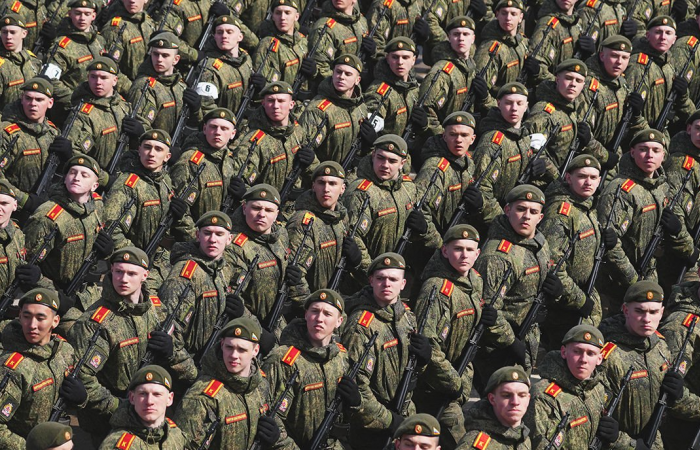
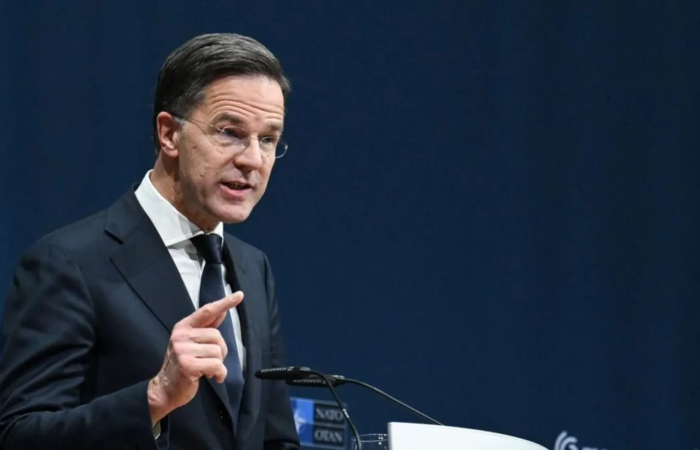
Russia could attack a NATO country within the next five years, the Secretary General of NATO, Mark Rutte, said in a stark new warning. "NATO's own defences can hold for now," Rutte warned in Berlin, but conflict was "next door" to Europe, and he feared "too many are quietly complacent, and too many don't feel the urgency, too many believe that time is on our side. "Russia is already escalating its covert campaign against our societies," Rutte said in a speech in Germany. "We must be prepared for the scale of war our grandparents or great-grandparents endured." Earlier this month, Russia's President Vladimir Putin said his country was not planning to go to war with Europe, but it was ready "right now" if Europe wanted to - or started a war. But similar reassurances were given by Moscow in 2022, just before 200,000 Russian troops crossed the border and invaded Ukraine. Putin has accused European countries of hindering US efforts to bring peace in Ukraine - a reference to the role Ukraine's European allies have recently played in trying to change a US peace plan to end the war, whose initial draft was seen as favouring Russia. But Putin was not sincere, Nato's secretary-general said in the German capital, Berlin. Supporting Ukraine, he added, was a guarantee for European security. "Just imagine if Putin got his way; Ukraine under the boot of Russian occupation, his forces pressing against a longer border with Nato, and the significantly increased risk of an armed attack against us." Russia's economy has been on a war footing for more than three years now - its factories churn out ever more supplies of drones, missiles and artillery shells. According to a recent report by the Kiel Institute for the World Economy, Russia has been producing each month around 150 tanks, 550 infantry fighting vehicles, 120 Lancet drones and more than 50 artillery pieces. The UK, and most of its Western allies, are simply not anywhere near this point. Analysts say it would take years for Western Europe's factories to come close to matching Russia's mass-production of weapons. "Allied defence spending and production must rise rapidly, our armed forces must have what they need to keep us safe," the Nato chief said.

Filter archive

Publication date
Editor's choice
News
The world waits whilst Tehran and Washington haggle about nuclear deal

The world waits whilst Tehran and Washington haggle about nuclear deal

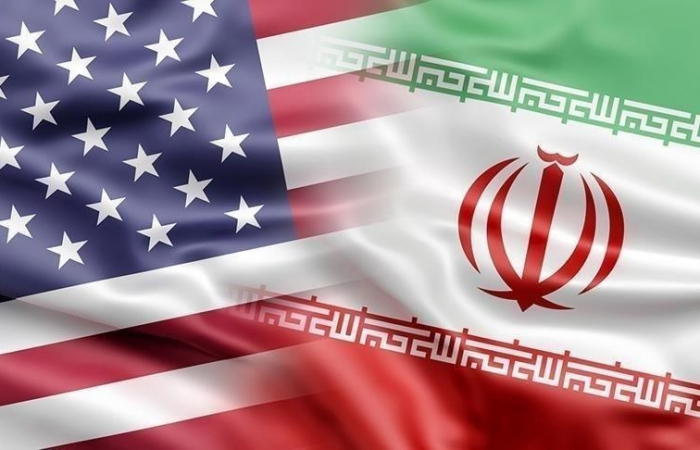
After years of tension and months of negotiations, it appeared in August that the process of reviving the Iran nuclear, known as JCPOA, was coming to a successful close. The EU negotiators, who had been leading the difficult discussions, made what they said was the "final offer", and early indications from both Tehran and Washington appeared to be positive. In Brussels, officials were cautiously optimistic that a deal was in the bag. But the process dragged on and reports in some Middle East media sources appear to suggest that it has now grinded again back to a halt.  The US said Iran’s latest response was “not constructive”.  
Editor's choice
Opinion
Opinion: Having multiple mediators is not hindering the Armenia-Azerbaijan peace process, yet

Opinion: Having multiple mediators is not hindering the Armenia-Azerbaijan peace process, yet

"The peace negotiations between Armenia and Azerbaijan have not been negatively affected by current tensions between Russia and the west.   Although Moscow criticized the EU’s mediation initiatives, it has not challenged the implementation of the agreements between the sides, including those reached in the EU-mediated platform", writes Vasif Huseynov in this op-ed. "Against this backdrop, the two tracks of peace talks (i.e., the EU-mediated and the Russia-mediated) find a favourable environment to run without contradicting each other. This raises hope that the recent positive developments between Baku and Yerevan will advance in the upcoming months", he says.
Editor's choice
News
Armenia and Azerbaijan agree to start working on the text of a peace treaty

Armenia and Azerbaijan agree to start working on the text of a peace treaty

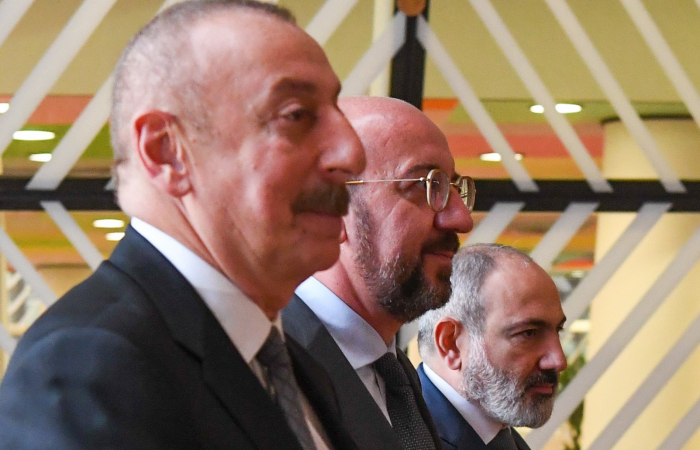
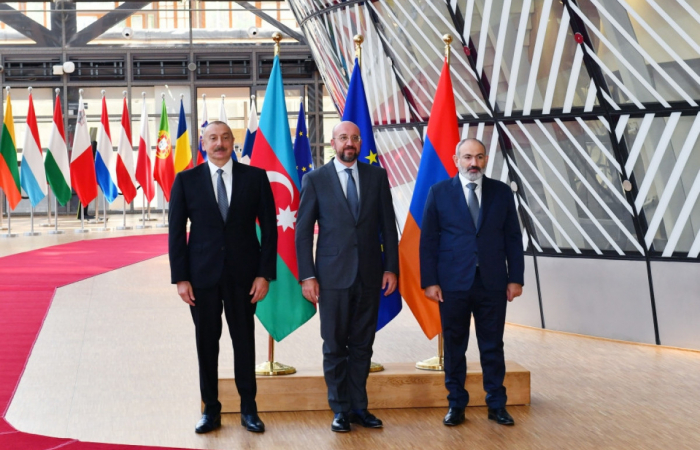
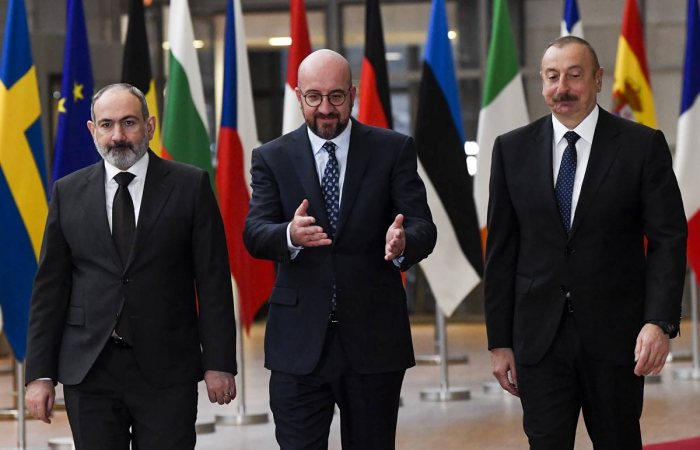
The president of the European Council, Charles Michel, on Wednesday (31 August) hosted in Brussels the leaders of Armenia and Azerbaijan, prime minister Nikol Pashinyan and president Ilham Aliyev, for talks on the future of relations between the two countries and peace in the South Caucasus. Michel said that at the meeting it was agreed "to step up substantive work to advance on the peace treaty governing inter-state relations between Armenia and Azerbaijan and tasked the Foreign Ministers to meet within one month to work on draft texts." President Michel underlined that "it is important to take the population along on both sides and prepare them for a long-term sustainable peace. Public messaging is critical in this regard – in a sensitive situation like this every word spoken in public is obviously listened to by the other side and weighed. The EU is ready to further step up its support towards a long-term sustainable peace. The EU will also continue to push for the advancement of economic development for the benefit of both countries and their populations." The three leaders agreed to meet again in this format by the end of November.
Editor's choice
News
The man who ended an era and triggered the collapse of an empire

The man who ended an era and triggered the collapse of an empire

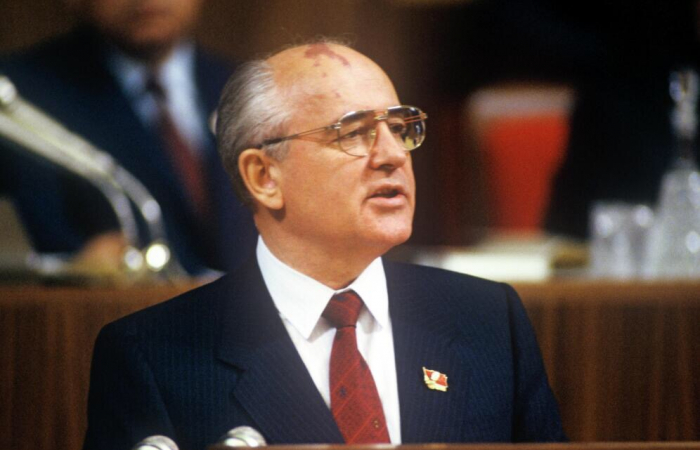
The eighth and last leader of the former Soviet Union Mikhail Sergeyevich Gorbachev has died. He was 91 years old. Gorbachev is considered a giant political figure who initiated the processes that ended the Cold War that had dominated international relations in the second half of the 20th century. His attempt to reform the Soviet Union met strong resistance, including a failed attempted coup by the KGB and the Army, and finally led to both his political demise, and the dissolution of the USSR into fifteen independent states. Born on 2nd March 1931 to a peasant family in the Stavropol region in the south of the Russian SSR, Mikhail Gorbachev was the architect of the policies of glasnost' (openness) and perestroika (restructuring) that tried to reform the Soviet system from within. Many Russians, including the current leadership in the Kremlin blame Gorbachev for the Soviet Union's collapse and see him as a direct cause of Russia's problems in the 21st century, but Gorbachev was only trying to reverse the rot that had set-in at all levels of the Soviet state. He persisted with his reform programme despite the risks. He was awarded the Nobel Peace Prize in 1990, and after leaving power spent his time as Head of the Gorbachev Foundation.
Editor's choice
News
Michel hosts Aliyev and Pashinyan in Brussels tomorrow

Michel hosts Aliyev and Pashinyan in Brussels tomorrow

The president of the European Council, Charles Michel, will host the leaders of Armenia and Azerbaijan in Brussels tomorrow Wednesday (30 August) as part of efforts to help the two countries achieve lasting peace. This will be the third time Charles Michel will be welcoming President Ilham Aliyev of Azerbaijan and Prime Minister Nikol Pashinyan of Armenia in less than nine months. The meeting is scheduled to start at 13.00 Brussels time. Ahead of tomorrow's meeting, Michel on Tuesday (30 August) held separate telephone conversations with the two leaders. Sources told commonspace.eu that last minute details regarding the meeting tomorrow were discussed to ensure the success of the meeting. Michel also touched on issues related with the bilateral agenda between the EU and the two countries.
Editor's choice
News
A bloody independence day for Ukraine

A bloody independence day for Ukraine

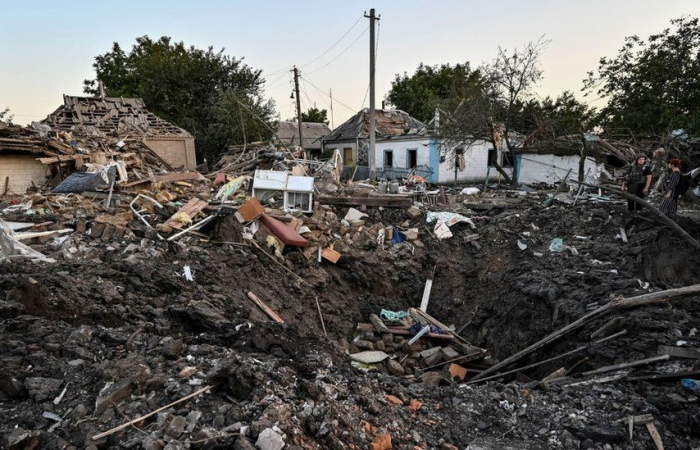
On Wednesday (24 August) Ukraine marked the 31st anniversary of its independence. The day also marked the end of the sixth month of the war, launched by Russia on 24 February. The Russians decided to mark the day with rocket strike on a Ukrainian train station that killed 22 people. Ukraine says five of the victims of the attack in the eastern town of Chaplyne burnt to death in a vehicle. An 11-year-old boy was also killed. This was not the first time that Russia targeted civilian train stations. In April, 50 people died in a similar attack.  In Ukraine, celebrations of independence day were subdued and the government had previously warned the Russians may use the occasion for a large scale provocation. However, around the world, there were gatherings of supporters in the streets to mark Ukraine's independence and world leaders also rallied to support the embattled nation to mark the occasion, with many countries announcing further assistance. A large rally in support of Ukraine was held in the Georgian capital. Tbilisi.
Editor's choice
Analysis
Analysis: Origins of the Houthi supremacist ideology

Analysis: Origins of the Houthi supremacist ideology

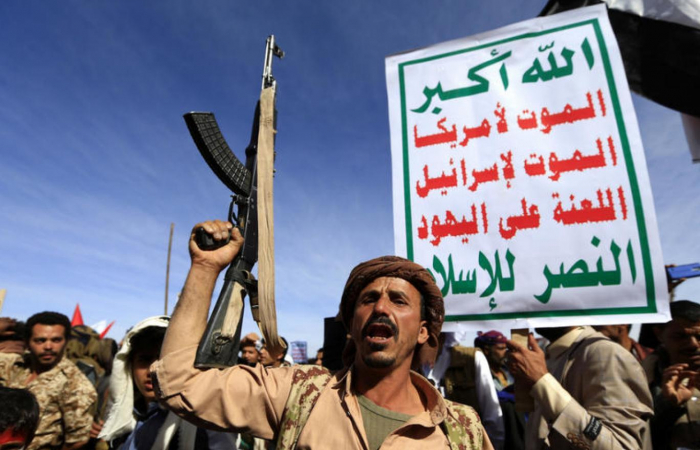
One of the several, often overlooked, challenges facing Yemen is the supremacist and divisive ideological basis of the Houthi movement. The movement’s ideology has rebellion and violence at its core, a recipe that can perpetuate crises within a society. In this analysis for commonspace.eu, Noman Ahmed and Mahmoud Shamsan shed light on the ideological fault lines that fuel the current conflict in Yemen, highlighting the nature of this ideology, which suggests that Ahl al-Bayt — descendants from the family of the Islamic Prophet — are, by divine decree, considered to be more deserving of the right to greater political and religious rule than other socio-political components. The analysis then looks into the background of the Houthis and argues that the ideology is a catalyst for conflict rather than peaceful political competition, and that so long as the Houthi political goal of Hashemite dominance remains unrealised, Houthi desire for conflict will not recede.