Theme

Conflict and Peace

Stories related to violent conflicts, diplomatic tensions, and conflict prevention, mediation and resolution.

Editor's choice
News
European leaders set out their plan for Ukraine

European leaders set out their plan for Ukraine

The leaders of Germany, Denmark, Finland, France, Italy, Netherlands, Norway, Poland, Sweden, and United Kingdom, together with the President of the European Council, and the President of the European Commission, o  Monday (15 December) issued a statement, outlining their plan for Ukraine. In their statement, Chancellor Merz, Prime Minister Frederiksen, President Stubb, President Macron, Prime Minister Meloni, Prime Minister Schoof, Prime Minister Støre, Prime Minister Tusk, Prime Minister Kristersson, Prime Minister Starmer, as well as President Costa and President von der Leyen spoke about "Peace for Ukraine". The Leaders welcomed significant progress on President Trump’s efforts to secure a just and lasting peace in Ukraine. They also welcomed the close work between President Zelenskyy’s and President Trump’s teams as well as European teams over the recent days and weeks. They agreed to work together with President Trump and President Zelenskyy to get to a lasting peace which preserves Ukrainian sovereignty and European security. Leaders appreciated the strong convergence between the United States, Ukraine and Europe. Leaders agreed that ensuring the security, sovereignty, and prosperity of Ukraine was integral for wider Euro-Atlantic security. They were clear that Ukraine and its people deserved a prosperous, independent, and sovereign future, free from fear of future Russian aggression. Both the US and European leaders committed to work together to provide robust security guarantees and economic recovery support measures for Ukraine in the context of an agreement on ending the war. This would include commitments to: Provide sustained and significant support to Ukraine to build its armed forces, which should remain at a peacetime level of 800,000 to be able to deter conflict and defend Ukraine’s territory. A European-led ‘multinational force Ukraine’ made up from contributions from willing nations within the framework of the Coalition of the Willing and supported by the US. It will assist in the regeneration of Ukraine’s forces, in securing Ukraine’s skies, and in supporting safer seas, including through operating inside Ukraine. (Click the image to read the statement in full).
Editor's choice
News
NATO Chief says war is on Europe's doorstep, and warns against complacency

NATO Chief says war is on Europe's doorstep, and warns against complacency

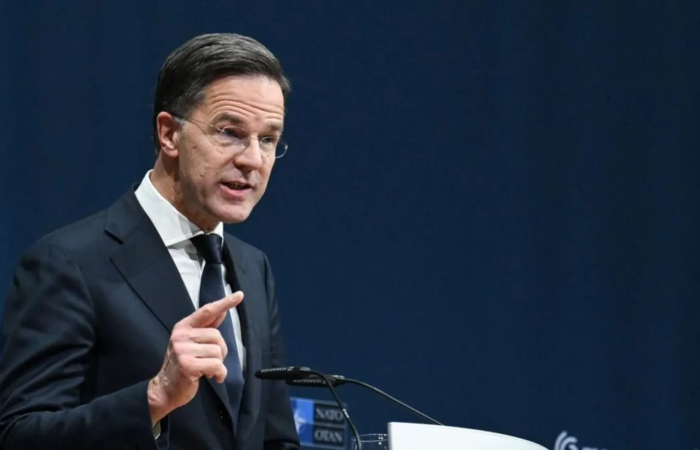
Russia could attack a NATO country within the next five years, the Secretary General of NATO, Mark Rutte, said in a stark new warning. "NATO's own defences can hold for now," Rutte warned in Berlin, but conflict was "next door" to Europe, and he feared "too many are quietly complacent, and too many don't feel the urgency, too many believe that time is on our side. "Russia is already escalating its covert campaign against our societies," Rutte said in a speech in Germany. "We must be prepared for the scale of war our grandparents or great-grandparents endured." Earlier this month, Russia's President Vladimir Putin said his country was not planning to go to war with Europe, but it was ready "right now" if Europe wanted to - or started a war. But similar reassurances were given by Moscow in 2022, just before 200,000 Russian troops crossed the border and invaded Ukraine. Putin has accused European countries of hindering US efforts to bring peace in Ukraine - a reference to the role Ukraine's European allies have recently played in trying to change a US peace plan to end the war, whose initial draft was seen as favouring Russia. But Putin was not sincere, Nato's secretary-general said in the German capital, Berlin. Supporting Ukraine, he added, was a guarantee for European security. "Just imagine if Putin got his way; Ukraine under the boot of Russian occupation, his forces pressing against a longer border with Nato, and the significantly increased risk of an armed attack against us." Russia's economy has been on a war footing for more than three years now - its factories churn out ever more supplies of drones, missiles and artillery shells. According to a recent report by the Kiel Institute for the World Economy, Russia has been producing each month around 150 tanks, 550 infantry fighting vehicles, 120 Lancet drones and more than 50 artillery pieces. The UK, and most of its Western allies, are simply not anywhere near this point. Analysts say it would take years for Western Europe's factories to come close to matching Russia's mass-production of weapons. "Allied defence spending and production must rise rapidly, our armed forces must have what they need to keep us safe," the Nato chief said.

Filter archive

Publication date
Editor's choice
News
Dozens dead or injured and tens of thousands displaced after clashes on the border between Kyrgyzstan and Tajikistan

Dozens dead or injured and tens of thousands displaced after clashes on the border between Kyrgyzstan and Tajikistan

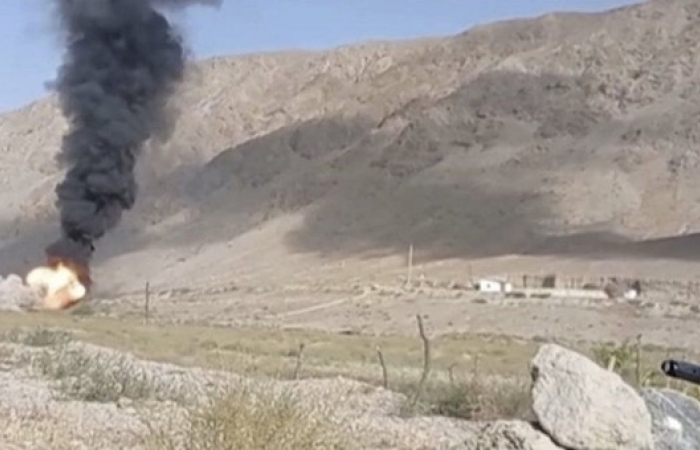
Fighting on the border between the Central Asian republics of Kyrgyzstan and Tajikistan on Friday (16 September) killed at least 24 people, wounded dozens and prompted a mass evacuation. Both sides blamed each other for responsibility for the incidents. Kyrgyzstan’s Health Ministry said early Saturday that the bodies had been delivered to hospitals in the Batken region that borders Tajikistan. An additional 87 people were wounded, the ministry said. Clashes on the border that began earlier this week grew into large-scale fighting Friday involving tanks, artillery and rocket launchers. As part of the shelling, Tajik forces struck the regional capital, Batken, with rockets. Kyrgyzstan’s Emergencies Ministry said 136,000 people were evacuated from the area engulfed by the fighting. Kyrgyzstan's president, Sadyr Zhaparov, and his Tajik counterpart, president Emomali Rakhmon, were both in Samarkand in nearby Uzbekistan on Friday, participating in the Summit of the Shanghai Co-operation Organisation, and are reported to have met on the margins of the main event.
Editor's choice
News
UN Security Council starts discussing situation on Armenia-Azerbaijan border

UN Security Council starts discussing situation on Armenia-Azerbaijan border

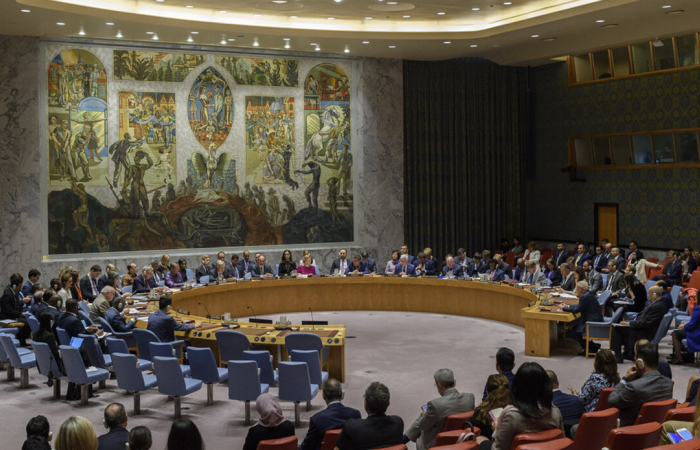
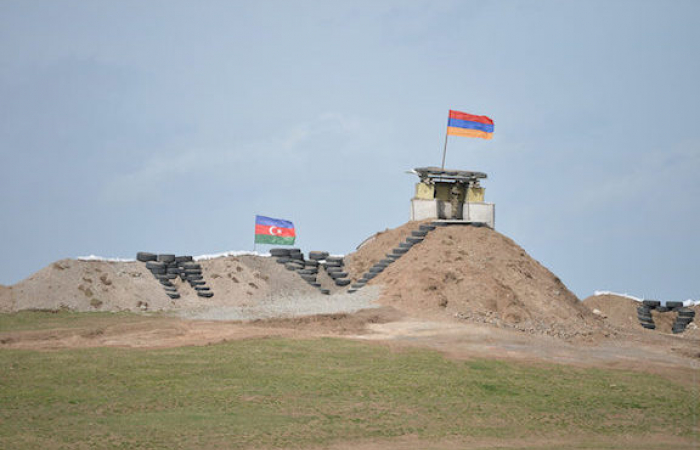
The United Nations Security Council on Wednesday (14 September) started discussing, in close session, the situation on the Armenia and Azerbaijan border. The meeting was held at the request of Armenia, who accuses Azerbaijan of encroaching on its territory. Diplomatic sources told the media that there was overall in the discussion unanimity in calling on the sides to immediately cease hostilities and return to diplomatic negotiations. It is understood that the Council will continue with its deliberations today, and the meeting this time will be in public. Meanwhile, the Secretary of National Security Council of Armenia on Wednesday evening told Armenian Public TV that following the mediation of the international community a cease fire had been agreed by both Armenia and Azerbaijan starting from 20.00 hours. There have so far not been any reports of new clashes overnight. In Armenia, the political situation remains tense, with the opposition collecting signatures from MPs for the impeachment of prime minister Nikol Pashinyan. But so far only opposition MPs have joined the initiative which is likely to fail.
Editor's choice
News
Armenia and Azerbaijan bury their dead

Armenia and Azerbaijan bury their dead

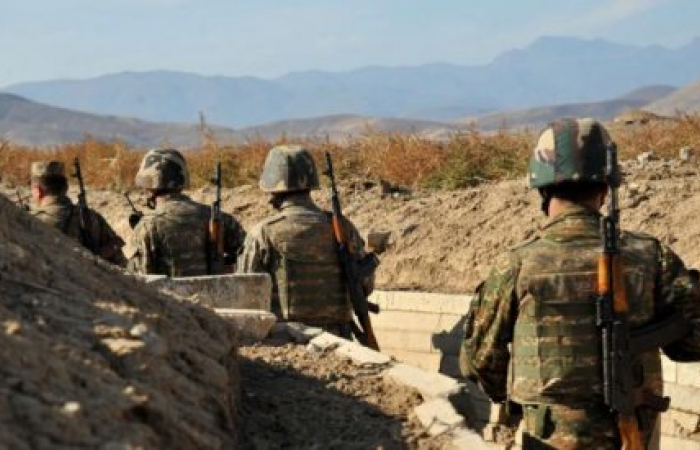
Armenia and Azerbaijan have been burying the dead from the violence on their border on Tuesday. Official figures indicate that 49 Armenian soldiers and fifty Azerbaijani soldiers were killed during the overnight clashes from Monday to Tuesday (12-13 September). Reports suggest that the final figures are likely to be higher. Armenia has also reported three civilians injured during the fighting. Details as to what exactly happened are unclear. Azerbaijan says it was responding to Armenian provocations. Armenia accuses Azerbaijan of trying to take by force chunks of its territory in order to establish a land corridor between its mainland territory and the exclave of Nakhichevan which is separated by the Armenia  province of Siyunik. There have been widespread calls by the international community for an immediate end to the fighting and for both sides to return to previously held positions in order to allow all issues to be resolved in negotiations. Armenia on Tuesday appealed to Russia, with which it has a defence treaty, and to the Collective Security Treaty Organisation, of which it is a full member, for support. A virtual summit of the CSTO countries took place on Tuesday afternoon and the organisation agreed to send an investigation mission to the region. EU Special Representative for the South Caucasus, Toivo Klaar, has arrived in Baku where he is expected to consult with government leaders before travelling to Yerevan.
Editor's choice
News
Updated: Intense diplomatic activity after clashes on Armenia-Azerbaijan border

Updated: Intense diplomatic activity after clashes on Armenia-Azerbaijan border

International efforts are under way to try to contain fighting on the Armenian-Azerbaijani border. EU Special Representative for the South Caucasus Toivo Klaar said the EU is in close contact with the sides to contribute to de-escalation. "The fighting along the Armenian-Azerbaijan border & the reported intense shelling need to stop immediately", Klaar tweeted. Dozens of soldiers are reported to have been killed in the heavy exchange of fire overnight. Armenia says that at least 49 of its soldiers are dead. Azerbaijan has also reported casualties. It is not yet clear if there were civilian casualties on  either side There was intensive diplomatic activity in the early hours of Tuesday (13 September) following armed clashes between Armenia and Azerbaijan on their border. Both sides accuse each other of provocations and there were reports of use of heavy weapons, including artillery, mortars and drones. There are also reports of casualties, although this cannot as yet be confirmed. Armenian sources said that prime minister Nikol Pashinyan spoke on the phone with Russian president, Vladimir Putin, French president Macron and US Secretary of State Antony Blinken. Some reports suggested that the two sides had agreed to a cease fire starting at 0900 local time Tuesday (13 September).
Editor's choice
News
Reports of serious incidents on the Armenia - Azerbaijan border

Reports of serious incidents on the Armenia - Azerbaijan border

Both Armenia and Azerbaijan are reporting serious incidents on the border of the two countries. The two sides accuse each other of starting the fighting. There are reports of casualties but these cannot as yet be confirmed. Shooting appears to have started late on Monday evening (12 September) and continued in the early hours of Tuesday (13 September), and involved artillery and mortar exchanges and the use of other heavy weapons. The Armenian side says that the areas affected are in the direction of Goris, Jermuk and Sotyk Districts. Azerbaijan says that the areas affected are Lachin, Kelbajar and Dashkesan. Armenian media source quote European Union spokesperson Peter Strano saying that the EU is monitoring closely the situation. "The European Union calls on the sides to refrain from any actions that could exacerbate the situation and undermine the ongoing settlement process, which the European Union strongly supports and remains committed to", Strano was quoted as saying.
Editor's choice
News
Russia attacks power stations and civilian infrastructure in Ukraine

Russia attacks power stations and civilian infrastructure in Ukraine

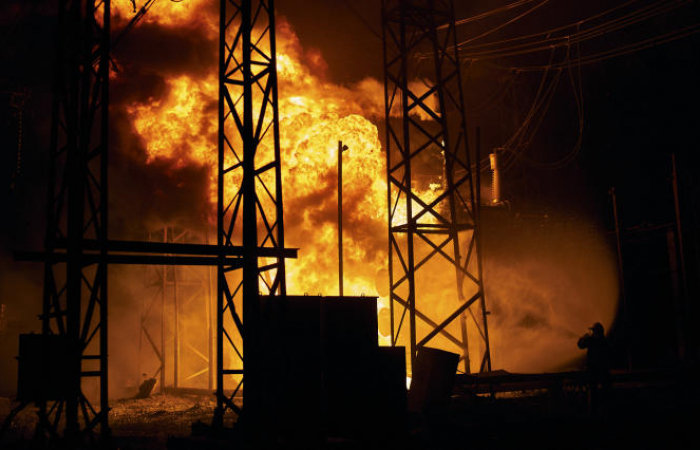
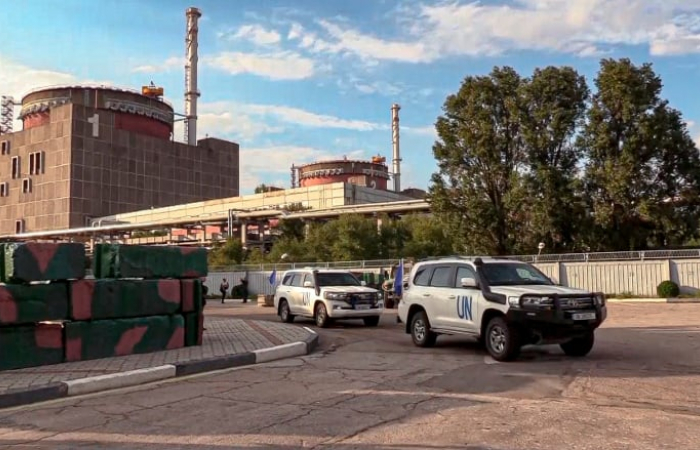
Russia attacked power stations and other civilian infrastructure in Ukraine on Sunday (11 September), causing widespread outages across the country as Kyiv’s forces pressed a swift counteroffensive that has driven Moscow’s troops from large swaths of territory it had occupied in the northeast. The bombardment ignited a massive fire at a power station on Kharkiv’s western outskirts and killed at least one person. President Volodymyr Zelensky denounced the “deliberate and cynical missile strikes” against civilian targets as acts of terrorism. Ukraine’s second-largest city of Kharkiv appeared to be without power Sunday night. Cars drove through darkened streets, and the few pedestrians used flashlights or mobile phones to light their way. Separately, the Zaporizhzhia Nuclear Power Plant in the Russia-occupied south completely shut down in a bid to prevent a radiation disaster as fighting raged nearby.
Editor's choice
News
Ukrainian army makes advances liberating big chunks of territory

Ukrainian army makes advances liberating big chunks of territory

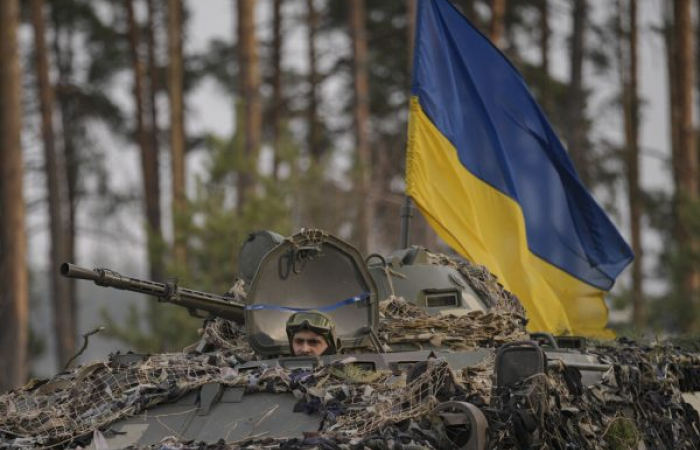
Ukrainian forces have liberated over 2,000 sq km (772 sq miles) of territory from Russian occupation in a rapid counter-offensive in eastern Ukraine. Ukraine's rapid advance saw troops enter the key towns of Izyum and Kupiansk on Saturday, although fighting continues in the vicinity of the towns. Officials in Kyiv said Ukrainian forces were still fighting to gain control of a number of settlements around Izyum, while adding that more than 30 towns and villages have been retaken in the Kharkiv region. Russia's defence ministry confirmed its forces' retreat from Izyum itself and Kupiansk, which it said would allow its forces "to regroup" in territory held by Moscow-backed separatists. The Russian ministry also confirmed the withdrawal of troops from a third key town, Balaklyia, in order to "bolster efforts" on the Donetsk front. Ukrainian forces entered the town on Friday. Meanwhile, the head of the Russia-installed administration in the Kharkiv region recommended that its people evacuate to Russia "to save lives".
Editor's choice
News
Vostok-2022 military exercises are meant to show that Russia is not isolated

Vostok-2022 military exercises are meant to show that Russia is not isolated

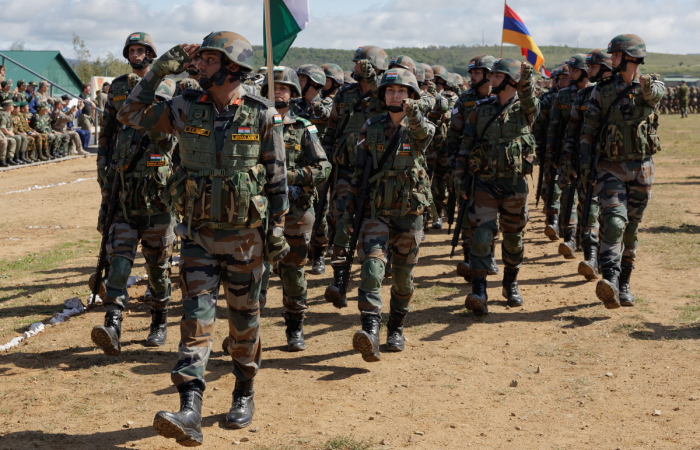
For the last few days Russia has been conducting military exercises in the Far East, with the participation of tens of thousands of soldiers, and multiple military hardware. But apart from the limited military value, Vostok-2022 are meant to show that Russia is far from being isolated in the international community, despite the sanctions and pressure of the west, following its invasion of Ukraine on 24 February. Commonspace.eu political editor said in a comment that "it is to be noted that in recent military exercises, the Russian Ministry of Defence invited contingents from the unrecognised Russian protectorates of Abkhazia and South Ossetia. This allowed a number of countries to refuse to participate, citing  the Abkhaz and South Ossetian presence as diplomatically problematic. This year the Russians decided to take no chances. Participation of countries such as India was of much more political importance than that of Moscow's South Caucasus proxies." "Regardless however, Vostok-2022 has exposed once again a weakness in the diplomatic war that Ukraine is waging against Russia with the support of western countries. The response in the Middle East, Africa and Asia against the blatant aggressive invasion has been lukewarm."