Theme

Conflict and Peace

Stories related to violent conflicts, diplomatic tensions, and conflict prevention, mediation and resolution.

Editor's choice
News
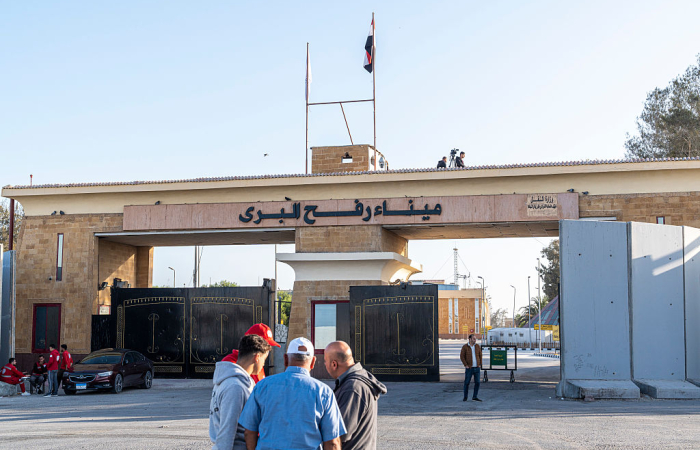
Egypt rejects Israeli "offer" for an exit only Rafah checkpoint in Gaza

Egypt rejects Israeli "offer" for an exit only Rafah checkpoint in Gaza

Egypt has rejected an Israeli "offer" for opening for exit only the Rafah checkpoint in Gaza. According to the Egyptian State Information Service, Egyptian authorities refuted on Wednesday afternoon reports that Israel claims it will open the Rafah crossing, the only lifeline for Gaza to the outside world, but only for those wishing to leave the besieged coastal enclave.  Citing an Egyptian official, the service stated that ''any agreement to open the crossing will cover both entry and exit, in line with US President Donald Trump's plan for humanitarian and political arrangements following the ceasefire.'' Cairo reaffirmed its adherence to the plan and UN Security Council Resolution 2803, including the right of return for Palestinians and maintaining two-way operations at the crossing. Earlier in the day, Israel's Coordinator of Government Activities in the Territories (COGAT) announced that the Rafah crossing would reopen ''within the next few days,'' marking the first such move since February 2025. According to the statement, departures would require prior Israeli security approval and would follow mechanisms previously implemented under EU supervision. Notably, the statement made no mention of the entry of humanitarian aid, which continues to flow through the Kerem Shalom crossing. A Palestinian official also echoed the Egyptian denial of Israel's claim. The announced agreements stress that no Palestinians will be forced to leave Gaza. Those who choose to travel will have the right to return, while humanitarian aid will continue through UN agencies, the International Red Cross and Crescent, and other independent organisations. A European Union official, who requested anonymity and is familiar with the matter, told TNA that the EU has received no official notification from Israel regarding new arrangements, stressing that "no changes exist beyond the January agreements, and we await Israel's formal approval for crossing operations under the Trump plan. "Reopening the crossing will follow mechanisms jointly supervised by the EU and the Palestinian Authority to ensure oversight and transparency, according to the EU official.
Filter archive

Publication date
Editor's choice
News
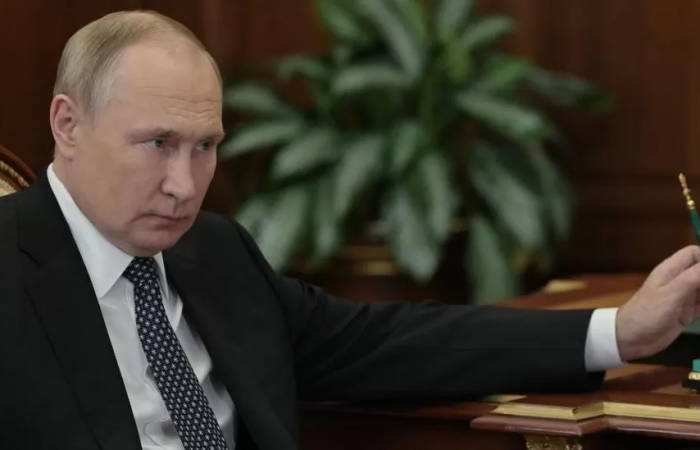
Putin orders Orthodox Christmas ceasefire, rejected by Ukraine

Putin orders Orthodox Christmas ceasefire, rejected by Ukraine

Following an appeal from Patriarch Kirill, the head of the Russian Orthodox Church, Russian President Vladimir Putin has ordered a 36-hour ceasefire along the front line in Ukraine over Orthodox Christmas. Scheduled to begin on Friday at 12pm Moscow time, the ceasefire ordered by Putin was quickly rejected by the Ukrainians. The Ukrainian presidential advisor Mikhailo Podolyak responded by saying that "[The Russian Federation] must leave the occupied territories - only then will it have a 'temporary truce'". He added that Russia should "keep hypocrisy to yourself". Over the New Year celebrations, Russia launched one of its biggest drone attacks on critical infrastructure and main population centres in Ukraine since the start of its full-scale war. Ukraine says that it successfully destroyed all 84 of the drones that Russia launched over the New Year period. Patriarch Kirill had asked "all the parties involved" in the conflict to "cease fire and establish a Christmas truce". A subsequent statement by the Kremlin read: "Taking into consideration the appeal by [Kirill], the president hereby instructs the minister of defence of the Russian Federation to impose a ceasefire regime along the entire line of contact in Ukraine", ending at midnight on Sunday.
Editor's choice
News
Ukraine under massive Russian attack

Ukraine under massive Russian attack

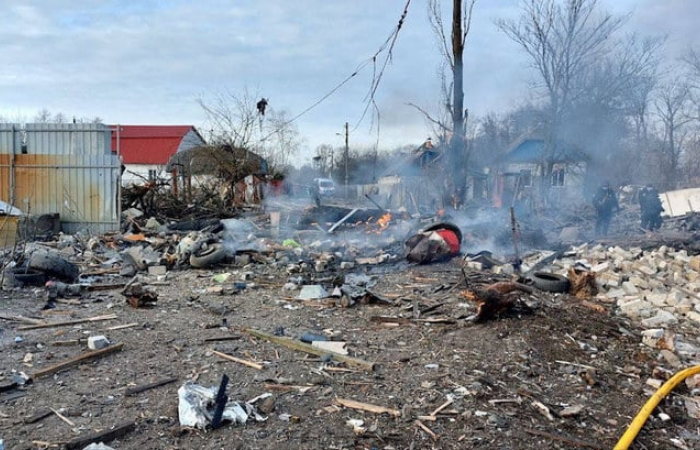
Cities across Ukraine have been targeted by a wave of Russian missile strikes, in one of the largest bombardments since the war began. At least three people - including a 14-year-old girl - were taken to hospital after explosions hit the capital Kyiv, Mayor Vitaliy Klitschko said. Blasts were also heard in the cities of Kharkiv, Odesa, Lviv and Zhytomyr. Ukraine's military said 69 missiles were launched, with air defences intercepting 54 of them. Earlier, presidential adviser Mykhailo Podolyak said more than 120 missiles had been launched at civilian infrastructure. The air raid lasted for close to five hours and the regional leader of the southern province of Odesa, Maksym Marchenko, spoke of a "massive missile attack on Ukraine". The Ukrainian Air Force said Russia attacked the country from "various directions with air and sea-based cruise missiles". It added that a number of Kamikaze drones had also been used. As air raid alerts sounded in all regions of the country, presidential adviser Oleksiy Arestovych urged civilians to seek shelter and said the country's air defences were operating.
Editor's choice
Opinion
Opinion: 2022 - a year of high expectations tempered by dire realities

Opinion: 2022 - a year of high expectations tempered by dire realities

After the wave of diplomatic activities in late September – early October 2022, it seemed that the idea of signing a peace treaty between Armenia and Azerbaijan by the end of 2022 was more than a dream. However, November – December 2022 proved that pessimists were closer to reality. After Russia re-inserted itself in the negotiation process by organizing a new trilateral leaders' summit on October 31, 2022, and Armenian and Azerbaijani foreign ministers met in Washington on November 7, 2022; the peace process stalled. In the current situation, the external players involved in the negotiations and interested in preventing a resumption of hostilities should focus on preserving the fragile stability that emerged after September aggression by Azerbaijan. In this context, the resumption of the Brussels format of negotiations is of utmost importance. Otherwise, the Nagorno Karabakh conflict and Armenia – Azerbaijan relations risk becoming another pawn in Russia – US confrontation, with negative implications for all sides.
Editor's choice
News
President Zelensky addresses US Congress

President Zelensky addresses US Congress

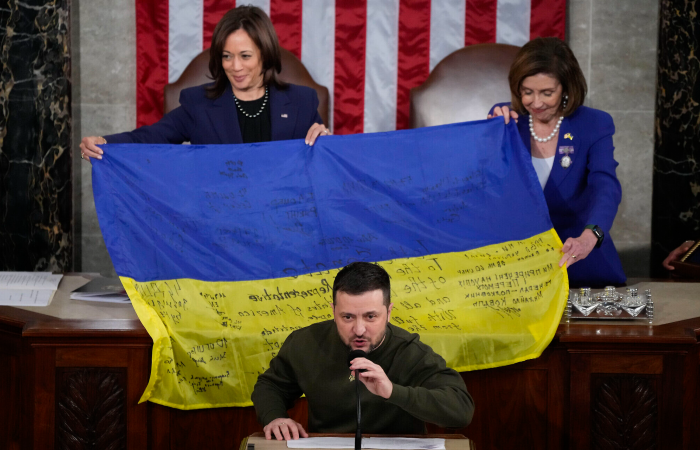
The Ukrainian President Volodymyr Zelensky, on his first foreign visit since the start of Russia's full-scale invasion of Ukraine on 24th February 2022, has addressed the US Congress in person. This followed being welcomed to the White House by US President Joe Biden and the First Lady Dr. Jill Biden, and a wider American-Ukrainian discussion on the ongoing war during which US Vice-President Kamala Harris and Secretary of Defence Lloyd J. Austin III were also present. During his address to the US Congress, President Zelensky delivered a defiant speech in which he said that "against all odds and doom and gloom scenarios, Ukraine did not fall. Ukraine is alive and kicking", adding that his country would never surrender. Referring to other conflicts in Russia's so-called "near abroad", Zelensky said that "this battle cannot be frozen or postponed. It cannot be ignored hoping that the ocean or something else will provide a protection." Zelensky's visit comes amid concerns from Republicans over the cost of American military aid to Ukraine. His address can be seen in large part as an attempt to assuage those worries and make the case for long-term American support for Ukraine's military. He notably said that "Your money is not charity, it's an investment in the global security and democracy that we handle in the most responsible way."
Editor's choice
News
EU continues to develop its tools in support of its objective to contribute to peace in the South Caucasus.

EU continues to develop its tools in support of its objective to contribute to peace in the South Caucasus.

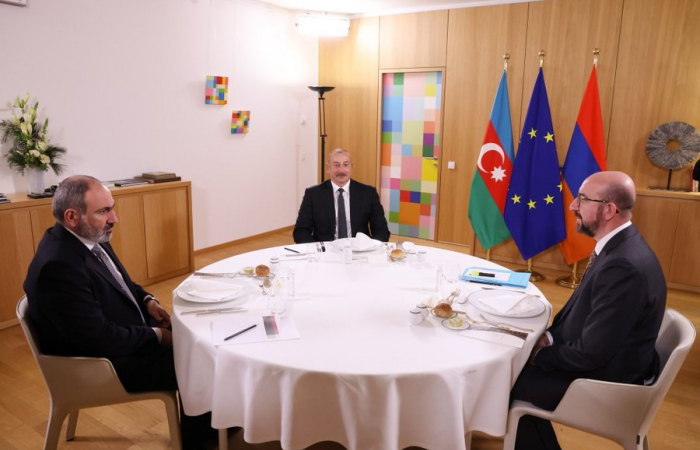
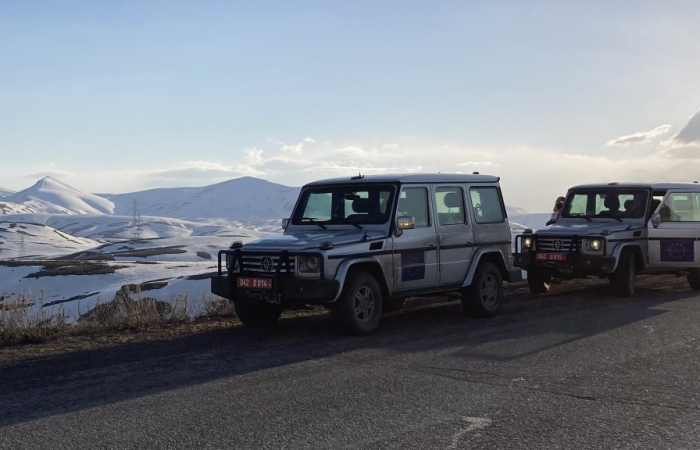
The European Union continues to develop its tools in support of its objective to contribute to peace and security in the South Caucasus.  On Monday (19 December), the EU Monitoring Capacity in Armenia (EUMCAP), launched in October, completed its mandate. Based on the agreement between the leaders of Armenia, Azerbaijan, European Council and France, the EUMCAP was deployed on 20 October along the Armenian side of the international border with Azerbaijan with the objective of monitoring, analysing and reporting on the situation on the ground. EU leaders, meeting in Brussels last week, assessed the wotk of the mission and the way forward. A statement by the European External Action Service on Monday stated that, "the Council – in agreement with Armenia’s authorities - decided that the existing EU Monitoring Mission in Georgia (EUMM Georgia) will deploy a transitional planning assistance team in Armenia to enhance the EU’s awareness of the security situation, and contribute to the planning and preparation of a possible civilian CSDP mission in the country. The transitional planning assistance team is also expected to support the President of the European Council, Charles Michel, in the EU-facilitated normalisation process between Armenia and Azerbaijan."
Editor's choice
Opinion
Opinion: 2022 started promising from the perspective of peace between Armenia and Azerbaijan but prospects for 2023 are bleak

Opinion: 2022 started promising from the perspective of peace between Armenia and Azerbaijan but prospects for 2023 are bleak

Russia's attempts to show Armenia and Azerbaijan its red lines during the summit in Sochi on 31 October disrupted a positive moment in Armenia-Azerbaijan relations that had been ongoing throughout 2022. A deterioration in Azerbaijan-Iran relations has further hightened tensions in the region. "One can foresee that new escalations and hostilities will be imminent, if the peace efforts fail to deliver tangible outcomes between Armenia and Azerbaijan, and if some external actors continue to fuel the tensions in the region", writes Vasif Huseynov in this op-ed for commonspace.eu.