Theme

Conflict and Peace

Stories related to violent conflicts, diplomatic tensions, and conflict prevention, mediation and resolution.

Editor's choice
News
European leaders set out their plan for Ukraine

European leaders set out their plan for Ukraine

The leaders of Germany, Denmark, Finland, France, Italy, Netherlands, Norway, Poland, Sweden, and United Kingdom, together with the President of the European Council, and the President of the European Commission, o  Monday (15 December) issued a statement, outlining their plan for Ukraine. In their statement, Chancellor Merz, Prime Minister Frederiksen, President Stubb, President Macron, Prime Minister Meloni, Prime Minister Schoof, Prime Minister Støre, Prime Minister Tusk, Prime Minister Kristersson, Prime Minister Starmer, as well as President Costa and President von der Leyen spoke about "Peace for Ukraine". The Leaders welcomed significant progress on President Trump’s efforts to secure a just and lasting peace in Ukraine. They also welcomed the close work between President Zelenskyy’s and President Trump’s teams as well as European teams over the recent days and weeks. They agreed to work together with President Trump and President Zelenskyy to get to a lasting peace which preserves Ukrainian sovereignty and European security. Leaders appreciated the strong convergence between the United States, Ukraine and Europe. Leaders agreed that ensuring the security, sovereignty, and prosperity of Ukraine was integral for wider Euro-Atlantic security. They were clear that Ukraine and its people deserved a prosperous, independent, and sovereign future, free from fear of future Russian aggression. Both the US and European leaders committed to work together to provide robust security guarantees and economic recovery support measures for Ukraine in the context of an agreement on ending the war. This would include commitments to: Provide sustained and significant support to Ukraine to build its armed forces, which should remain at a peacetime level of 800,000 to be able to deter conflict and defend Ukraine’s territory. A European-led ‘multinational force Ukraine’ made up from contributions from willing nations within the framework of the Coalition of the Willing and supported by the US. It will assist in the regeneration of Ukraine’s forces, in securing Ukraine’s skies, and in supporting safer seas, including through operating inside Ukraine. (Click the image to read the statement in full).
Editor's choice
News
NATO Chief says war is on Europe's doorstep, and warns against complacency

NATO Chief says war is on Europe's doorstep, and warns against complacency

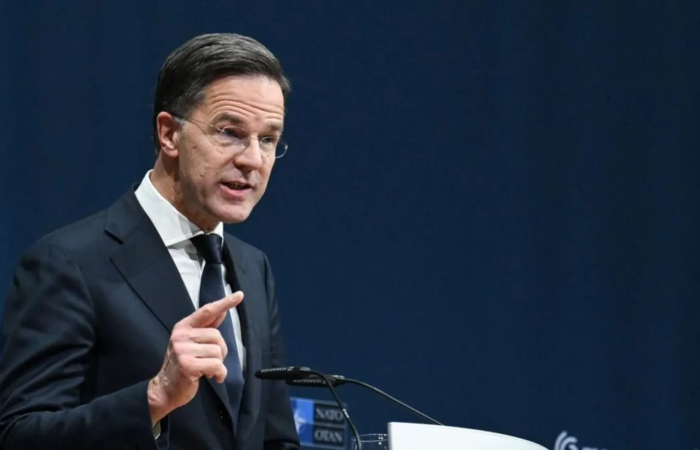
Russia could attack a NATO country within the next five years, the Secretary General of NATO, Mark Rutte, said in a stark new warning. "NATO's own defences can hold for now," Rutte warned in Berlin, but conflict was "next door" to Europe, and he feared "too many are quietly complacent, and too many don't feel the urgency, too many believe that time is on our side. "Russia is already escalating its covert campaign against our societies," Rutte said in a speech in Germany. "We must be prepared for the scale of war our grandparents or great-grandparents endured." Earlier this month, Russia's President Vladimir Putin said his country was not planning to go to war with Europe, but it was ready "right now" if Europe wanted to - or started a war. But similar reassurances were given by Moscow in 2022, just before 200,000 Russian troops crossed the border and invaded Ukraine. Putin has accused European countries of hindering US efforts to bring peace in Ukraine - a reference to the role Ukraine's European allies have recently played in trying to change a US peace plan to end the war, whose initial draft was seen as favouring Russia. But Putin was not sincere, Nato's secretary-general said in the German capital, Berlin. Supporting Ukraine, he added, was a guarantee for European security. "Just imagine if Putin got his way; Ukraine under the boot of Russian occupation, his forces pressing against a longer border with Nato, and the significantly increased risk of an armed attack against us." Russia's economy has been on a war footing for more than three years now - its factories churn out ever more supplies of drones, missiles and artillery shells. According to a recent report by the Kiel Institute for the World Economy, Russia has been producing each month around 150 tanks, 550 infantry fighting vehicles, 120 Lancet drones and more than 50 artillery pieces. The UK, and most of its Western allies, are simply not anywhere near this point. Analysts say it would take years for Western Europe's factories to come close to matching Russia's mass-production of weapons. "Allied defence spending and production must rise rapidly, our armed forces must have what they need to keep us safe," the Nato chief said.

Filter archive

Publication date
Editor's choice
Editorial
Editorial: the surge towards peace across the Muslim Middle East is an expression of pragmatism, not heavenly inspiration

Editorial: the surge towards peace across the Muslim Middle East is an expression of pragmatism, not heavenly inspiration

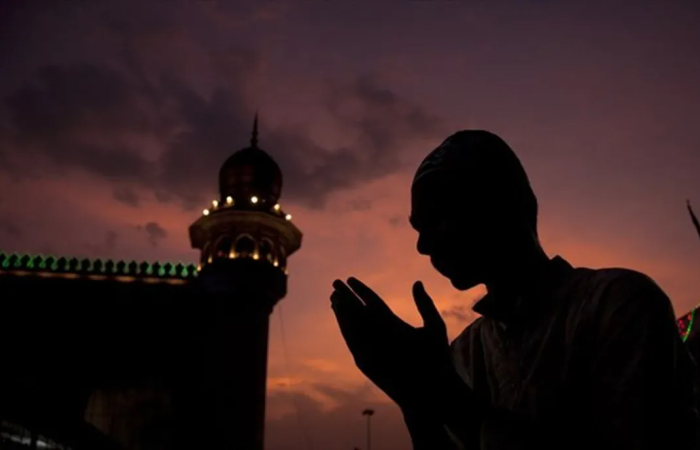
Although we are in the middle of the holy month of Ramadan, and peace is in the air across the whole of the Muslim Middle East, commonspace.eu writes in this editorial that "problems are being patched up, not resolved. Many of the causes or factors that triggered the conflicts in the first place remain as acute as ever. But for the moment the region is exhausted. Visionary leaders need time and space to implement their reforms; others such as the Iranian clerical regime, need time to regroup after being rattled by internal and external turmoil. There is then the issue of the wider picture. The Gulf region has for decades been the epicentre of geopolitical rivalry, which often overspilled into violence. It appears to be now losing this unenviable role. Open warfare is ongoing on the European continent following the Russian invasion of Ukraine in February 2022. This is unlikely to end any time soon."
Editor's choice
Monday Commentary
Opinion: The claim that a multipolar world is necessarily a better one is a fallacy

Opinion: The claim that a multipolar world is necessarily a better one is a fallacy

The European and Global international system is broken. Whilst others have contributed to its decline and subversion in the past, it was Russia’s actions in Ukraine, and other parts of the former Soviet space before that, that have dealt it the decisive fatal blow."What is desperately needed in the international system are rules, and the mechanism to ensure that these rules are abided with", writes Dennis Sammut in today's Monday Commentary. "Multi-polarity may sound like an attractive solution, especially to small countries who have been under pressure from bigger players or international actors, but with closer inspection, on its own, it is not."
Editor's choice
News
Russia shells Kherson Oblast over 70 times, promises bonuses for destroyed NATO tanks

Russia shells Kherson Oblast over 70 times, promises bonuses for destroyed NATO tanks

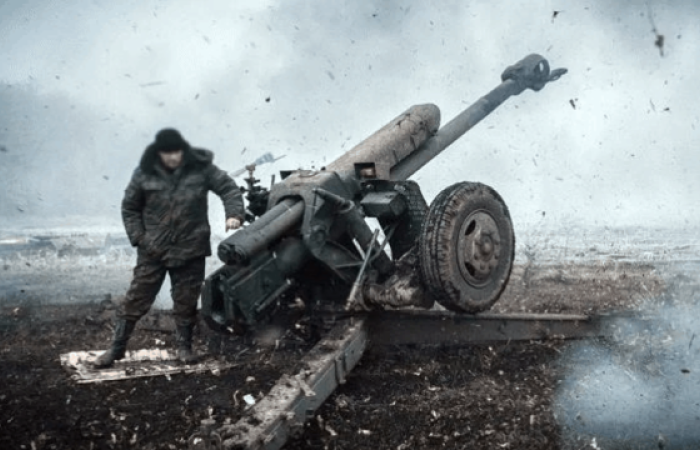
Russia has shelled Ukraine's southern Kherson Oblast 70 times over the past 24 hours, the region's Governor Oleksandr Prokudin said on Telegram on Monday morning (10 April). Firing a total of 360 shells in 78 attacks, 17 shells hit residential areas of the city of Kherson. There were no casualties reported, however, and 90 people were evacuated from areas of the oblast under Ukrainian government control. Ever since areas of Kherson region were liberated by Ukrainian forces in November 2022, the right bank of the Dnipro river has frequently been shelled by Russia firing across the river, causes regular civilians injuries and deaths. Meanwhile, documents recently leaked from US intelligence to The New York Times have revealed that Russia is supposedly offering an extra bonus to troops who that successfully damage or destroy NATO-supplied tanks in Ukraine.
Editor's choice
News
Israel launches air strikes on Lebanon and Gaza after huge rocket barrage

Israel launches air strikes on Lebanon and Gaza after huge rocket barrage

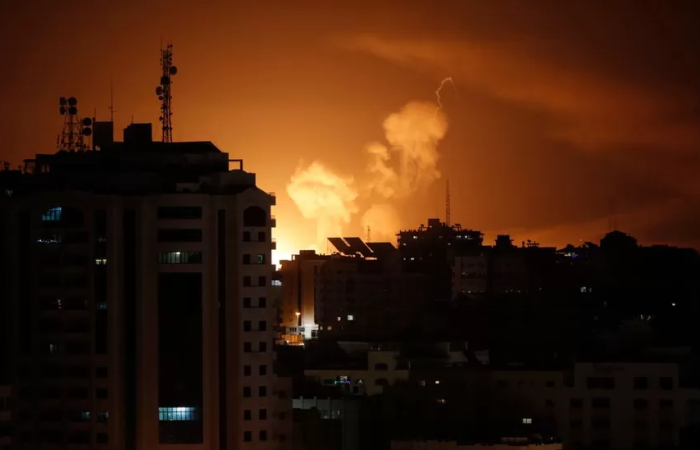
The Israeli military (IDF) has carried out air stikes on the Palestinian militant group Hamas in southern Lebanon and the Gaza Strip overnight on 6-7 April. The military said they launched the strikes in response to a 34-rocket barrage fired from southern Lebanon into Israel on Thursday (6 April), which it blamed on Hamas. It was the biggest attack from Lebanon in 17 years. The Israeli military have said that 25 of the rockets fired from Lebanon were intercepted, but five hit Israeli territory. After the retaliatory strikes began, militants in Gaza then fired some 44 rockets into Israel, most of which were either intercepted by Israel's Iron Dome defence system or fell in open areas, according to the IDF. At least one house in the city of Sderot was hit, however. According to the IDF, more than 10 Hamas targets were hit in Gaza, including a shaft for an underground site to construct weapons, three other weapons workshops and an underground tunnel. There have thus far been no casualties reported from either the strikes or the overnight rocket fire, however a man was injured by shrapnel in northern Israel on Thursday afternoon as a result of the rocket barrage from Lebanon.
Editor's choice
Commentary
Commentary: a fundamental question defines the position of different protagonists over the future of Karabakh

Commentary: a fundamental question defines the position of different protagonists over the future of Karabakh

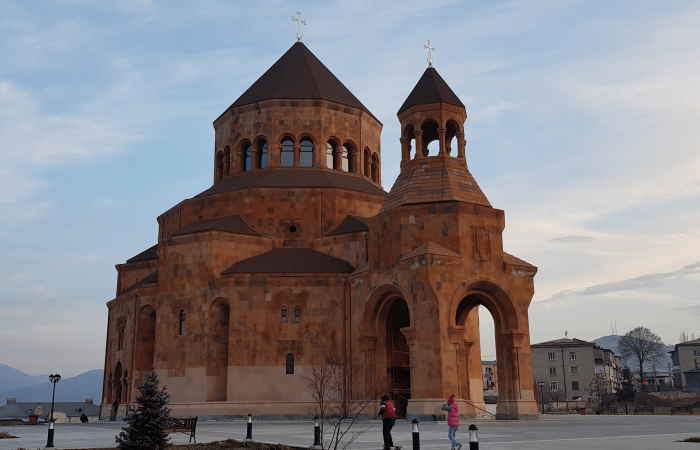
A fundamental question defines the position of different protagonists over the future of Karabakh, writes commonspace.eu in this commentary. "A lot of the issues in Armenia-Azerbaijan relations can be managed easily with a little bit of imagination and good will. The future of Karabakh remains a real stumbling block." But if Armenia and Azerbaijan fail to reach a peace agreement before the window of opportunity closes and are soon back at the Kremlin's mercy, "they will only have themselves to blame". The world watches on as Armenia and Azerbaijan hug each other and promise peace with each other one day, and exchange threats, insults and gunfire the next. International observers are concerned, bemused, or, very often, bored by this situation. Concerns about the imminent start of a new Armenia-Azerbaijan war are exaggerated. At the moment neither side needs a war, wants it, or even more importantly, can afford it, whether it be politically, financially or socially.
Editor's choice
News
Russian and Ukrainian losses as high as 10 to 1 on some days, says Ukraine

Russian and Ukrainian losses as high as 10 to 1 on some days, says Ukraine

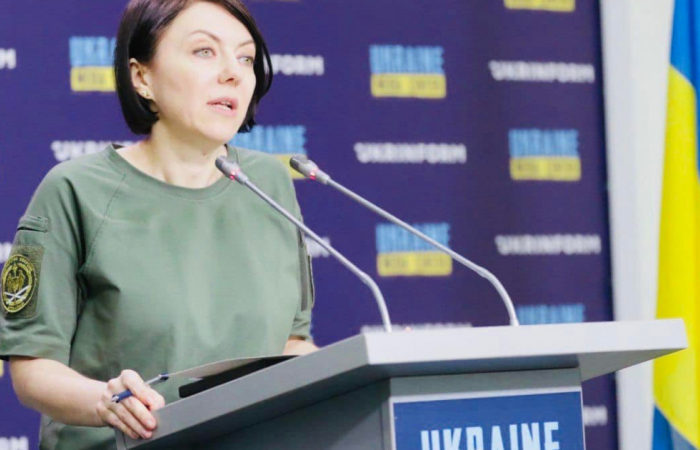
Writing on Telegram on Thursday (30 March), the Ukrainian Deputy Defense Minister Hanna Malyar has said that Russian and Ukrainian losses in the east of Ukraine are as high as 10 to 1 on some days. This comes a few hours after the UK Defense Secretary Ben Wallace said on Sky News that the total Russian number of dead and injured since 24 February 2022 could be as high as 220,000. "The Russian forces have some really significant and deep systemic problems at the moment in their efforts," Wallace said, adding the Russian military was making "almost no progress whatsoever." Meanwhile, the General Staff of Ukraine's Armed Forces claimed on 29 March that Russia had lost approximately 172,340 troops in Ukraine since the beginning of its full-scale invasion, including 610 casualties just over the past day. Although these numbers are all but impossible to verify, reports do suggest very high casualty numbers, especially on the Russian side. In other news, Ukraine's Defense Minister Oleksii Reznikov has said that Ukraine's counteroffensive involving recent deliveries of Western tanks may begin in April or May, but cautioned that a lot depends on weather conditions.
Editor's choice
Commentary
Commentary: Yemen is where the resilience of the Iran-Saudi deal will be tested

Commentary: Yemen is where the resilience of the Iran-Saudi deal will be tested

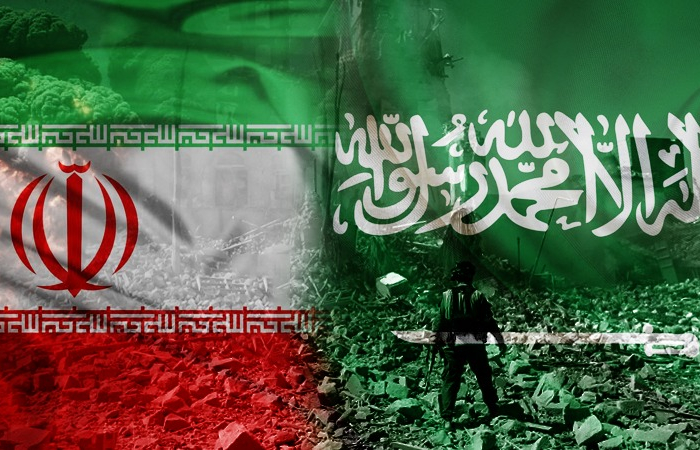
Developments in Yemen over the last days do not augur well for the 10 March Iran-Saudi Arabia normalisation deal, writes commonspace.eu in this commentary, writing that "it is in Yemen where the biggest test for the resilience of the Beijing agreement will come, sooner rather than later." On 10 March in Beijing, Iran and Saudi Arabia together with China signed an agreement that amongst other things provides for the restoration of diplomatic relations between Tehran and Riyadh. The agreement has many other provisions, and remains confidential, but it is widely understood that it contains provisions for lessening tensions in the region and taking the heat out of some hotspots where the two regional powers continue to look each other in the eye. Yemen invariably is at the top of the agenda.