Theme

Conflict and Peace

Stories related to violent conflicts, diplomatic tensions, and conflict prevention, mediation and resolution.

Editor's choice
News
European leaders set out their plan for Ukraine

European leaders set out their plan for Ukraine

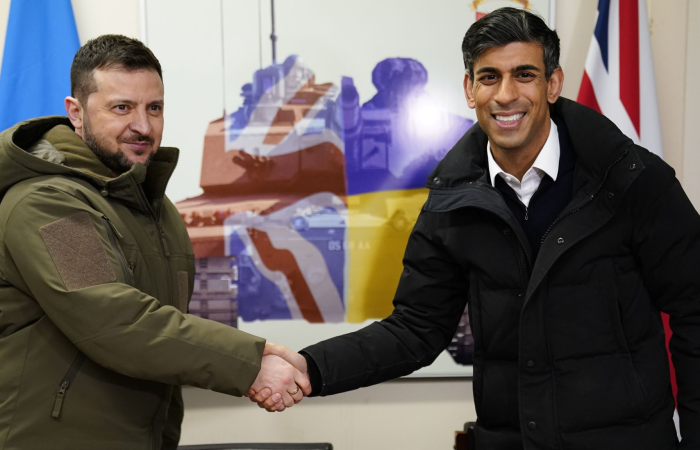
The leaders of Germany, Denmark, Finland, France, Italy, Netherlands, Norway, Poland, Sweden, and United Kingdom, together with the President of the European Council, and the President of the European Commission, o  Monday (15 December) issued a statement, outlining their plan for Ukraine. In their statement, Chancellor Merz, Prime Minister Frederiksen, President Stubb, President Macron, Prime Minister Meloni, Prime Minister Schoof, Prime Minister Støre, Prime Minister Tusk, Prime Minister Kristersson, Prime Minister Starmer, as well as President Costa and President von der Leyen spoke about "Peace for Ukraine". The Leaders welcomed significant progress on President Trump’s efforts to secure a just and lasting peace in Ukraine. They also welcomed the close work between President Zelenskyy’s and President Trump’s teams as well as European teams over the recent days and weeks. They agreed to work together with President Trump and President Zelenskyy to get to a lasting peace which preserves Ukrainian sovereignty and European security. Leaders appreciated the strong convergence between the United States, Ukraine and Europe. Leaders agreed that ensuring the security, sovereignty, and prosperity of Ukraine was integral for wider Euro-Atlantic security. They were clear that Ukraine and its people deserved a prosperous, independent, and sovereign future, free from fear of future Russian aggression. Both the US and European leaders committed to work together to provide robust security guarantees and economic recovery support measures for Ukraine in the context of an agreement on ending the war. This would include commitments to: Provide sustained and significant support to Ukraine to build its armed forces, which should remain at a peacetime level of 800,000 to be able to deter conflict and defend Ukraine’s territory. A European-led ‘multinational force Ukraine’ made up from contributions from willing nations within the framework of the Coalition of the Willing and supported by the US. It will assist in the regeneration of Ukraine’s forces, in securing Ukraine’s skies, and in supporting safer seas, including through operating inside Ukraine. (Click the image to read the statement in full).
Editor's choice
News
NATO Chief says war is on Europe's doorstep, and warns against complacency

NATO Chief says war is on Europe's doorstep, and warns against complacency

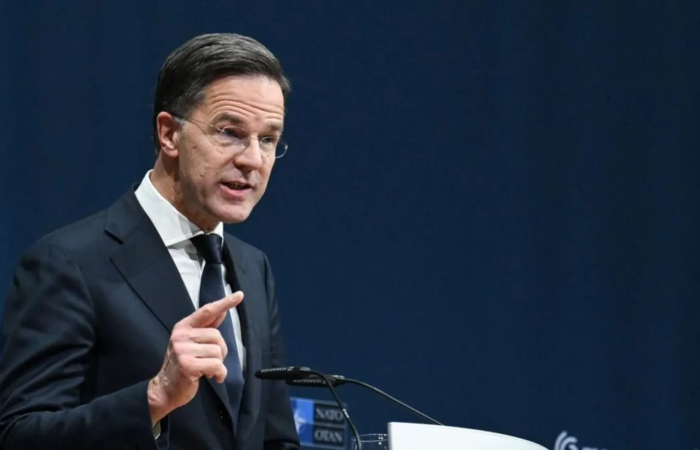
Russia could attack a NATO country within the next five years, the Secretary General of NATO, Mark Rutte, said in a stark new warning. "NATO's own defences can hold for now," Rutte warned in Berlin, but conflict was "next door" to Europe, and he feared "too many are quietly complacent, and too many don't feel the urgency, too many believe that time is on our side. "Russia is already escalating its covert campaign against our societies," Rutte said in a speech in Germany. "We must be prepared for the scale of war our grandparents or great-grandparents endured." Earlier this month, Russia's President Vladimir Putin said his country was not planning to go to war with Europe, but it was ready "right now" if Europe wanted to - or started a war. But similar reassurances were given by Moscow in 2022, just before 200,000 Russian troops crossed the border and invaded Ukraine. Putin has accused European countries of hindering US efforts to bring peace in Ukraine - a reference to the role Ukraine's European allies have recently played in trying to change a US peace plan to end the war, whose initial draft was seen as favouring Russia. But Putin was not sincere, Nato's secretary-general said in the German capital, Berlin. Supporting Ukraine, he added, was a guarantee for European security. "Just imagine if Putin got his way; Ukraine under the boot of Russian occupation, his forces pressing against a longer border with Nato, and the significantly increased risk of an armed attack against us." Russia's economy has been on a war footing for more than three years now - its factories churn out ever more supplies of drones, missiles and artillery shells. According to a recent report by the Kiel Institute for the World Economy, Russia has been producing each month around 150 tanks, 550 infantry fighting vehicles, 120 Lancet drones and more than 50 artillery pieces. The UK, and most of its Western allies, are simply not anywhere near this point. Analysts say it would take years for Western Europe's factories to come close to matching Russia's mass-production of weapons. "Allied defence spending and production must rise rapidly, our armed forces must have what they need to keep us safe," the Nato chief said.

Filter archive

Publication date
Editor's choice
News
Ukraine continues counteroffensive with small but steady gains, US to send $500m in military aid

Ukraine continues counteroffensive with small but steady gains, US to send $500m in military aid

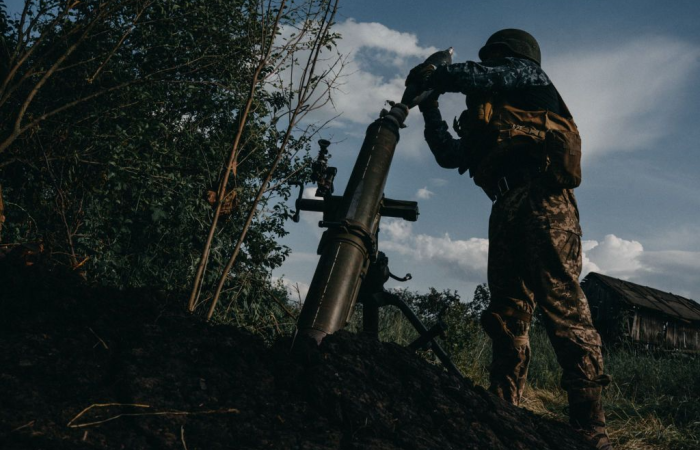
Ukraine's counteroffensive against occupied Russian positions in the east and south of the country have continued in recent days, with Ukraine making small but steady gains in all directions, according to Ukrainian authorities. On Monday (26 June), Deputy Defense Minister Hanna Maliar confirmed that Ukrainian forces had liberated one of two settlements in Donetsk Oblast called Rivnopil, with the liberated one being located close to the border with the neighbouring Zaporizhzhia Oblast. The Kyiv Independent writes that Rivnopil is the ninth settlement liberated by Ukrainian forces, in what has been a slow but steady counteroffensive that began in the early days of June. The other settlements recaptured by Ukraine include Lobkove, Levadne, Piatykhatky, and Novodarivka in Zaporizhzhia Oblast and Donetsk Oblast's villages of Neskuchne, Storozheve, Makarivka, and Blahodatne. Elsewhere, on the Bakhmut axis in the eastern Donetsk Oblast, both the U.K. Ministry of Defense and Maliar reported Ukrainian advances.
Editor's choice
News
Russian airstrike on Idlib market in Syria kill at least 13, injures dozens

Russian airstrike on Idlib market in Syria kill at least 13, injures dozens

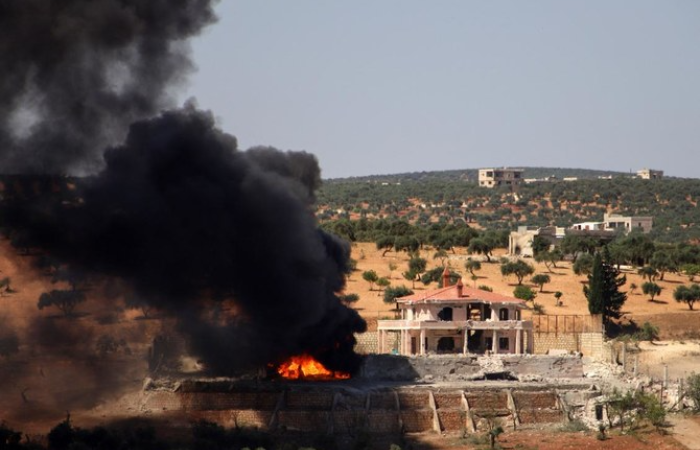
A Russian airstrike launched on a market in the north-western Syrian city of Idlib on Sunday (25 June) have killed 13 people, reports Arab News. At least nine civilians are among the dead, including two children. Around 30 people are understood to have been injured in the Russian strike on the rebel-held city, and it is expected that the death toll will rise. The regime of Syrian President Bashar al-Assad - backed by Russia and Iran - has won back most of the territory that it lost to various groups in the early years of the Syrian Civil War that began in 2011 after the regime violently surpressed pro-democracy protests that had swept through a number of Arab countries. The violent repression of the protests led to President Assad and Syria being a pariah state for a number of years, although a process of the country's rehabilitation has recently taken place with Syria re-joining the Arab League in May this year, at the 32nd summit of the group in Jeddah. You can read more about this here. Over the years, Russia has repeatedly launched airstrikes across rebel-held regions of Syria. Although deadly Russian airstrikes on civilians in Syria have been limited this year - likely due to its ongoing invasion of Ukraine - Sunday's strike is the deadliest attack on Syria this year.
Editor's choice
Editorial
Editorial: Baku and Stepanakert need to talk; now is the time for Azerbaijan to show magnanimity and generosity

Editorial: Baku and Stepanakert need to talk; now is the time for Azerbaijan to show magnanimity and generosity

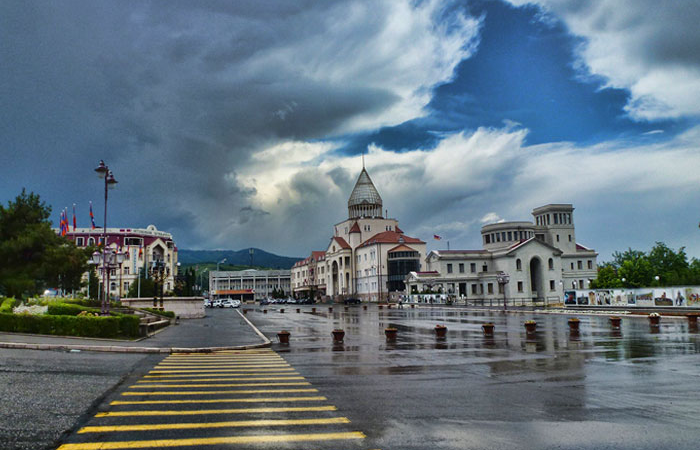
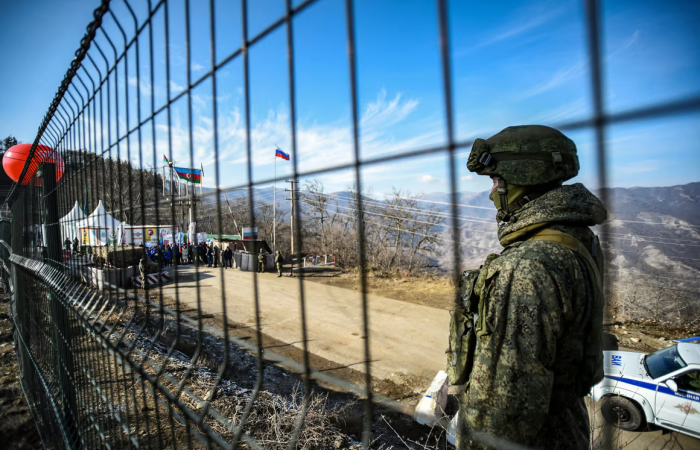
"The question that remains unanswered is if there are Armenians in Nagorno-Karabakh who are determined enough not to want to live in an Azerbaijani state that they will resist violently. Such thinking may exist, probably only amongst marginal groups, but nothing will come out of it unless it is abetted by the Government of Armenia, and/or by Russia, or in a less tangible way by radical groups within the Armenian diaspora. The latter can provide some money and possibly some human resources, but do not have the logistical capacity necessary for anything more than isolated incidents," writes commonspace.eu in this editorial. "Whilst a detailed future vision for Karabakh may have to wait until the negotiations are more advanced, now is the time for Baku to send positive signals. By tightening the noose around Nagorno-Karabakh Azerbaijan has forced the issue, so time is no longer on its side." 
Editor's choice
News
Kyiv under Russian attack as African leaders arrive on peace mission

Kyiv under Russian attack as African leaders arrive on peace mission

Leaders and representatives of seven African countries - South Africa, Senegal, Zambia, Uganda, the Republic of the Congo, Comoros and Egypt - as well as the African Union chief Azali Assoumani, have arrived in Kyiv on Friday (16 June) to promote an African peace plan aimed at ending the ongoing war in Ukraine. South African President Cyril Ramaphosa is among the African delegation, and arrived at Kyiv's Nemishaeve railway station where he was greeted by Ukraine's special envoy for Africa and the Middle East, Maksym Subkh, as well as the South African ambassador to Ukraine, Andre Groenewald. According the Reuters news agency, the full peace proposal, which has not yet been made public, includes suggestions of a full withdrawal of Russian troops, the removal of all tactical nuclear weapons from the territory Belarus, the suspension of an International Criminal Court arrest warrant for Vladimir Putin, and broad sanctions relief. After arriving in Kyiv, African leaders headed to the Kyiv suburb of Bucha to pay there respects to the some 458 people who were killed during a brief Russian occupation in the opening weeks of the full-scale invasion last year, and are buried in a mass grave there.