Theme

Conflict and Peace

Stories related to violent conflicts, diplomatic tensions, and conflict prevention, mediation and resolution.

Editor's choice
News
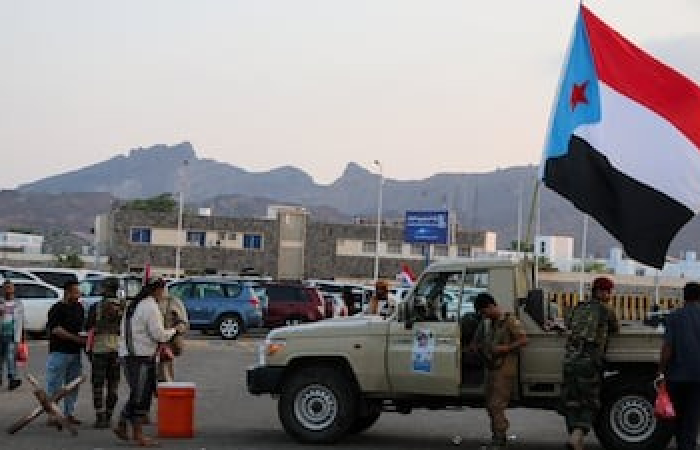
UAE says it will withdraw from Yemen, but division emerges in Yemeni presidential council

UAE says it will withdraw from Yemen, but division emerges in Yemeni presidential council

In a move seen as an attempt to de-escalate a crises with Saudi Arabia, the United Arab Emirates, on Tuesday (30th December) announced that it was heeding a call to withdraw its troops from Southern Yemen. UAE says that its presence included counter-terrorism teams that were crucial in fighting against Islamist groups. UAE sources said that parts of Yemen not controlled by the Houthis have had Al Qaeda in the Arab Peninsula (AQAP) operatives using the territory to launch attacks on Europe, the US and Middle East. UAE teams have co-ordinated with American and British special forces and intelligence. The sources added that Emirati forces and their Yemeni allies also helped reverse Houthi gains in the south. including the liberation of Aden port. The small UAE contingent has remained in place since the UAE withdrew most of its military personnel in 2019. The leading English-language newspaper in Abu Dhabi, The National, said that the main UAE force was based at Riyan Mukalla International Airport, with access to fixed-wing aircraft and helicopters, but also operated smaller contingents in the port town Balhaf and Shabwa. "It is understood it also flew a number of drones from the airbase that were able to track terrorist movements, pass information back to its allies and assisted special forces' missions." Meanwhile a division has emerged in Yemen's presidential council after four members denounced what they called the 'unilateral decisions' by the chairman. Four of Yemen’s eight Presidential Leadership Council members on Tuesday denounced an announcement by the council’s chairman accusing him of breaching the governing agreement. Tension between Yemeni leaders has been rising for weeks, underscoring the fragility of the country's already fractured political landscape and further complicating efforts to confront the Iran-backed Houthi rebels. The latest rift took an unprecedented turn on Tuesday morning, marked by a Saudi-led coalition “limited operation” striking combat vehicles Riyadh linked to the Southern Transitional Council, which has three members in the PLC. The PLC Chairman, Rashad al Alimi, on Tuesday said that he was seeking to cancel the joint defence agreement with the UAE. “What has been issued … constitutes a clear violation of the Declaration of the Transfer of Power [agreement], which explicitly stipulates that the Presidential Leadership Council is a collective body whose decisions are taken by consensus, or by majority when consensus is not possible,” the statement by the four members said. “It does not, under any circumstances, allow for unilateral decision-making on sovereign, military, or major political matters." The statement was signed by STC chief Aidarous Al Zubaidi, Faraj Al Bahsani, Tariq Saleh and Abu Zaraa al Muharrami. (click the picture to read the full article).
Editor's choice
Opinion
John Simpson: "I've reported on 40 wars but I've never seen a year like 2025"

John Simpson: "I've reported on 40 wars but I've never seen a year like 2025"

John Simpson is the BBC's World Affairs editor, and one of its most experienced journalists. In this sombre and candid article for BBC InDepth Simpson says "I've reported on 40 wars but I've never seen a year like 2025". commonspace.eu is republishing the article in full because of its importance:

Filter archive

Publication date
Editor's choice
Commentary
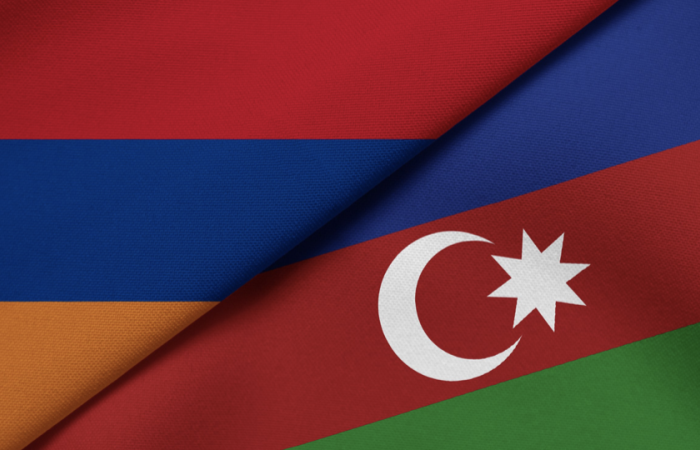
Commentary: The four Cs that will characterise Armenia-Azerbaijan relations for the next decade

Commentary: The four Cs that will characterise Armenia-Azerbaijan relations for the next decade

Armenia and Azerbaijan have practically been in a state of war with each other ever since they emerged as independent countries following the dissolution of the USSR in 1991. Over the last three years they have been negotiating, sometimes with the help of others, sometimes on their own, to end the cycle of violence and usher in a new era of peace. So far they have failed to agree on the text of a peace agreement, but it is likely that eventually they will, possibly quite soon. However, even in the absence of a formal peace agreement Armenia-Azerbaijan relations are changing, and will continue to change to become much more nuanced than has been the case so far. A relationship that has so far been based on confrontation and containment is making way for one based on contact and co-operation. The process is unlikely to be very quick, or simple and easy. At least for another decade Armenia-Azerbaijan relations will continue to be a mix of all four elements: confrontation, containment, contact and co-operation. Managing this mix will be the challenge facing the leadership in the two countries. The international community must be ready to support this process tangibly and speedily.
Editor's choice
News
Commentary: encircled by war, violence and turmoil, can the six GCC countries sustain their quest for development?

Commentary: encircled by war, violence and turmoil, can the six GCC countries sustain their quest for development?

The six Gulf monarchies that form the Gulf Co-operation Council (GCC) – Bahrain, Kuwait, Oman, Qatar, Saudi Arabia and the United Arab Emirates – project themselves as islands of peace and stability regardless of their difficult neighbourhood. For some time now their main focus has been the development of their economies – this to ensure that they can maintain their prosperity as the world transits away from hydrocarbon energy resources which up to now has been their main source of income. This they need to do not least to sustain the high standard of living to which their citizens have got used to. Ambitious plans, many costing tens of billions of euros to be implemented, are now in place. Most depend on peace, stability and tranquillity for their success. These attributes are these days in short supply in the wider region in which the GCC countries sit. An unprecedented level of war, crises and turmoil encircles the six countries. In this commentary commonspace.eu Managing Editor, Dr Dennis Sammut says that questions arise if the Gulf Monarchies have what it takes – not just in financial resources, and those things these resources can buy - but also in terms of wisdom, internal cohesion and strategic depth, to weather the storms of the future. Even if they are able to navigate the geopolitics of the moment, what impact is the tension that surrounds the region having on its domestic politics? Are the grandiose economic plans still viable, or is a more modest approach going to be necessary?
Editor's choice
News
Gaza War: the first hundred days

Gaza War: the first hundred days

The world on Sunday marked the 100th day of the war in Gaza. Thousands took to the streets across the world, many supporting one side or the other in the conflict. For the Palestinian people in Gaza the anniversary is simply another opportunity to count the dead and injured, not to speak of other untold suffering that they have to endure. And there seems to be no end in sight. Also Sunday, Israeli warplanes struck targets in Lebanon following a Hezbollah missile attack that killed two Israeli civilians — an older woman and her adult son — in northern Israel. The exchange of fire underscored concerns that the Gaza violence could trigger wider fighting across the region. The war in Gaza, launched by Israel in response to the unprecedented 7 October attack by the Palestinian group Hamas on Israeli territory, has killed nearly 24,000 Palestinians, devastated vast swaths of Gaza, driven around 85 percent of the territory’s 2.3 million residents from their homes and pushed a quarter of the population into starvation. In a sign of widening rift in the positions of Israel and the US, White House National Security Council spokesman John Kirby speaking to the CBS TV channel on Sunday (14 January) said the US has been speaking to Israel “about a transition to low-intensity operations” in Gaza.“We believe it’s the right time for that transition. And we’re talking to them about doing that".
Editor's choice
News
US and UK attack Houthi controlled areas in Yemen

US and UK attack Houthi controlled areas in Yemen

The United States and the United Kingdom have conducted overnight a series of strikes on territory in Yemen controlled by the Houthi Movement. Other countries, including Australia, Bahrain, The Netherlands and Canada provided support. Saudi Arabia allowed overflight over its territory by the attacking aircraft. The strikes were led and coordinated by the US. The Pentagon said they were intended to disrupt and degrade the Houthis' military capabilities – specifically drone and missiles sites which they’ve been using in Yemen to target international shipping in the Red Sea. In the early hours of the morning, jets from a US aircraft carrier already in the region - backed up by a tomahawk fired from US warships hit more than 12 sites - including in the capital Sanaa and the port of Hudaydah. President Biden defended the action saying the strikes were in direct response to unprecedented Houthi attacks against international shipping. The British contribution in the attack was in the form of four Typhoon jets that flew from RAF Akrotiri in Cyprus - a round trip of several thousand miles - which required refuelling. They used paveway bombs to hit 2 targets – a site said to be used for launching drones and an airfield from where the Houthis have fired missiles. In a statement soon after the strikes, Rishi Sunak said Britain would always stand up for the freedom of navigation and the free flow of trade. The Houthis were defiant before the threat of airstrikes – and also now after. One of its officials posted “the battle will be bigger and beyond the imagination and expectation of the Americans and British”. “Our country was subjected to a massive aggressive attack by American and British ships, submarines and warplanes,” Houthi Deputy Foreign Minister Hussein Al-Ezzi said, according to official rebel media. “America and Britain will have to prepare to pay a heavy price and bear all the dire consequences of this blatant aggression,” he said. US Central Command described military strikes against Houthi sites as a ‘success’ in a statement on Friday morning.  The US Central Command said they hold the Iranian-backed Houthis responsible for attacks on international shipping over the past few weeks. These strikes aimed to undermine the Houthi ability to carry out more attacks. Sixty targets at 16 Houthi locations were hit by more than 100 precision-guided munitions, it said.