Theme

Conflict and Peace

Stories related to violent conflicts, diplomatic tensions, and conflict prevention, mediation and resolution.

Editor's choice
News
European leaders set out their plan for Ukraine

European leaders set out their plan for Ukraine

The leaders of Germany, Denmark, Finland, France, Italy, Netherlands, Norway, Poland, Sweden, and United Kingdom, together with the President of the European Council, and the President of the European Commission, o  Monday (15 December) issued a statement, outlining their plan for Ukraine. In their statement, Chancellor Merz, Prime Minister Frederiksen, President Stubb, President Macron, Prime Minister Meloni, Prime Minister Schoof, Prime Minister Støre, Prime Minister Tusk, Prime Minister Kristersson, Prime Minister Starmer, as well as President Costa and President von der Leyen spoke about "Peace for Ukraine". The Leaders welcomed significant progress on President Trump’s efforts to secure a just and lasting peace in Ukraine. They also welcomed the close work between President Zelenskyy’s and President Trump’s teams as well as European teams over the recent days and weeks. They agreed to work together with President Trump and President Zelenskyy to get to a lasting peace which preserves Ukrainian sovereignty and European security. Leaders appreciated the strong convergence between the United States, Ukraine and Europe. Leaders agreed that ensuring the security, sovereignty, and prosperity of Ukraine was integral for wider Euro-Atlantic security. They were clear that Ukraine and its people deserved a prosperous, independent, and sovereign future, free from fear of future Russian aggression. Both the US and European leaders committed to work together to provide robust security guarantees and economic recovery support measures for Ukraine in the context of an agreement on ending the war. This would include commitments to: Provide sustained and significant support to Ukraine to build its armed forces, which should remain at a peacetime level of 800,000 to be able to deter conflict and defend Ukraine’s territory. A European-led ‘multinational force Ukraine’ made up from contributions from willing nations within the framework of the Coalition of the Willing and supported by the US. It will assist in the regeneration of Ukraine’s forces, in securing Ukraine’s skies, and in supporting safer seas, including through operating inside Ukraine. (Click the image to read the statement in full).
Editor's choice
News
NATO Chief says war is on Europe's doorstep, and warns against complacency

NATO Chief says war is on Europe's doorstep, and warns against complacency

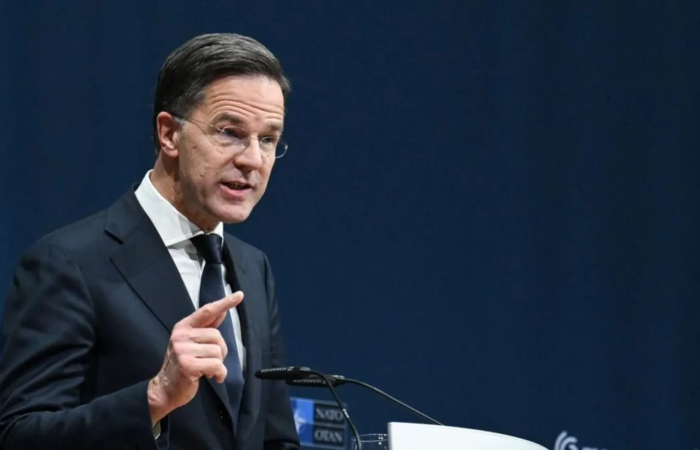
Russia could attack a NATO country within the next five years, the Secretary General of NATO, Mark Rutte, said in a stark new warning. "NATO's own defences can hold for now," Rutte warned in Berlin, but conflict was "next door" to Europe, and he feared "too many are quietly complacent, and too many don't feel the urgency, too many believe that time is on our side. "Russia is already escalating its covert campaign against our societies," Rutte said in a speech in Germany. "We must be prepared for the scale of war our grandparents or great-grandparents endured." Earlier this month, Russia's President Vladimir Putin said his country was not planning to go to war with Europe, but it was ready "right now" if Europe wanted to - or started a war. But similar reassurances were given by Moscow in 2022, just before 200,000 Russian troops crossed the border and invaded Ukraine. Putin has accused European countries of hindering US efforts to bring peace in Ukraine - a reference to the role Ukraine's European allies have recently played in trying to change a US peace plan to end the war, whose initial draft was seen as favouring Russia. But Putin was not sincere, Nato's secretary-general said in the German capital, Berlin. Supporting Ukraine, he added, was a guarantee for European security. "Just imagine if Putin got his way; Ukraine under the boot of Russian occupation, his forces pressing against a longer border with Nato, and the significantly increased risk of an armed attack against us." Russia's economy has been on a war footing for more than three years now - its factories churn out ever more supplies of drones, missiles and artillery shells. According to a recent report by the Kiel Institute for the World Economy, Russia has been producing each month around 150 tanks, 550 infantry fighting vehicles, 120 Lancet drones and more than 50 artillery pieces. The UK, and most of its Western allies, are simply not anywhere near this point. Analysts say it would take years for Western Europe's factories to come close to matching Russia's mass-production of weapons. "Allied defence spending and production must rise rapidly, our armed forces must have what they need to keep us safe," the Nato chief said.

Filter archive

Publication date
Editor's choice
Commentary
The work of UNRWA must be sustained

The work of UNRWA must be sustained

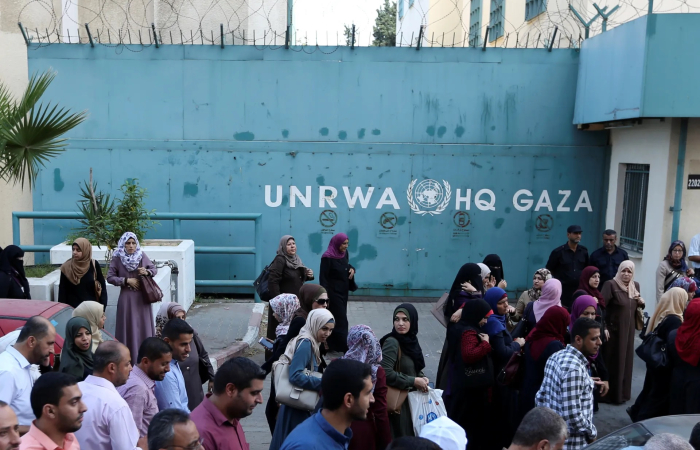
Israeli accusations that staff of the UN Humanitarian agency UNRWA which works in Gaza, were involved in the 7 October attacks on Israel need to be taken seriously, and the UN leadership must flash out any bad apples amongst the many, and restore the reputation of the organisation for professionalism. But the knee-jerk reaction of several Western governments in suspending funding to UNRWA is unacceptable, especially given the dire situation of millions of Palestinians, made much worse by the recent war in Gaza. Stopping the work of UNRWA will make an already significant humanitarian disaster much worse. In this regard, countries like Norway and Spain are to be commended. They kept a cool head and reiterated their commitment and support to UNRWA, whilst others were more hasty in halting or suspending support for the agency. There are two problems here: financial and political. The financial aspect is solvable. Gulf states need to step in and compensate for any shortfall in UNRWA’s budget. Other countries need also to step up. But the bigger problem is political. The support of Western countries for UNRWA gives it the necessary prestige that allows its leadership to negotiate the stormy waters of the Middle East. This should not be lost. Countries like UK, Netherlands, Germany and Italy, need to quickly reconsider their position and restore the funding to UNRWA. UNRWA was established in 1948 as a temporary measure to provide relief to the Palestinian people. That seventy-five years later it is still needed more than ever is a testimony of the failure of the international community to do justice to the Palestinians. From the tragedy and suffering of the last five months a new reality must emerge that must necessarily include the creation of a viable Palestinian state. It is time for the EU and European countries in particular, but also the US, to think strategically and act firmly.
Editor's choice
Opinion
Opinion: The ICJ ruling on the “South Africa v. Israel” case is a step in the right direction, but not decisive enough

Opinion: The ICJ ruling on the “South Africa v. Israel” case is a step in the right direction, but not decisive enough

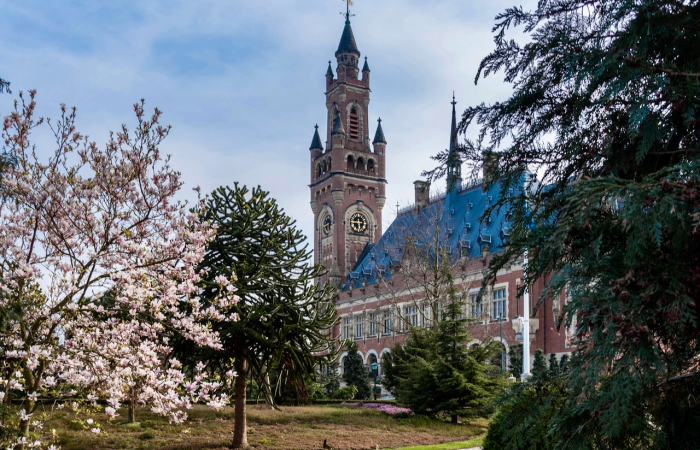
On Friday (26 January) the International Court of Justice (ICJ) in the Hague ruled on whether emergency measures are required until a final decision is taken on the South Africa’s genocide case against Israel. The judges ruled that Israel must act to stop genocide in Gaza and allow the flow of humanitarian aid and basic services. Although this verdict is legally binding on the parties involved and a step in the right direction, the ICJ lacks enforcement power. The Court needs the U.N. Security Council (UNSC) to enforce its decision through mechanisms such as sanctions or even military intervention, however, the UNSC is unlikely to do so given the United States’ traditional shielding of Israel through the veto power. Moreover, the Court did not demand a ceasefire that would require Israel to stop its operation in the Gaza Strip. This disappointed many who consider an immediate ceasefire by all parties as being essential in order to end the suffering on civilians.
Editor's choice
News
Houthis escalate confrontation in Red Sea and Gulf of Aden, firing missile at US warship

Houthis escalate confrontation in Red Sea and Gulf of Aden, firing missile at US warship

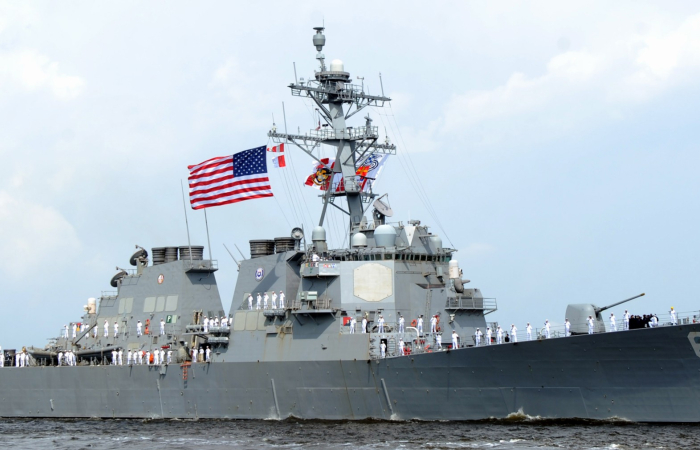
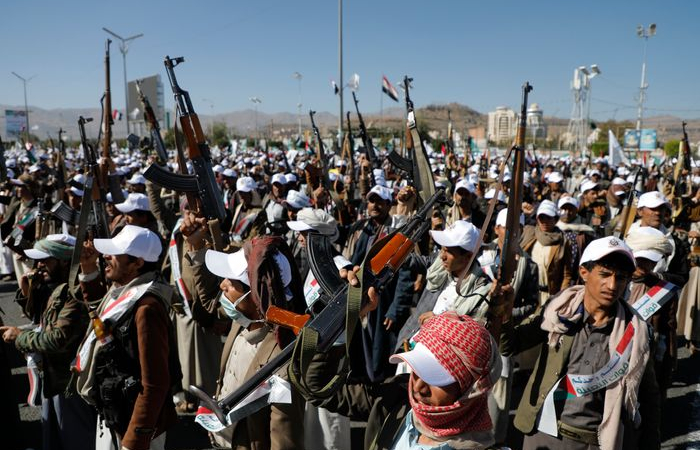
In an incident that is likely to further aggravate the already tense situation in the Red Sea and the Gulf of Aden, Yemen's rebel Houthi Movement on early on Saturday (27 January) fired a missile at an American naval vessel patrolling in the Gulf of Aden. The group, which has been attacking commercial shipping off the coast of Yemen in response to the ongoing conflict between Israel and Hamas, fired an anti-ship missile toward the U.S. destroyer USS Carney, according to a statement from U.S. Central Command. A terse statement from the US Central Command in Tampa said, On Jan. 26, at approximately 1:30 p.m. (Sanaa time), Iranian-backed Houthi militants fired one anti-ship ballistic missile from Houthi-controlled areas of Yemen toward Arleigh-Burke class destroyer USS Carney (DDG 64) in the Gulf of Aden. The missile was successfully shot down by USS Carney. There were no injuries or damage reported.  On Friday, the Houthi rebels also struck an oil tanker with an anti-ship ballistic missile, according to the ships operator, Trafigura. "The crew is continuing efforts to control the fire in one of the ship’s cargo tanks with support from military vessels," the company said in a statement.
Editor's choice
Opinion
Opinion: Committing to doing what it takes for Ukraine to achieve victory

Opinion: Committing to doing what it takes for Ukraine to achieve victory

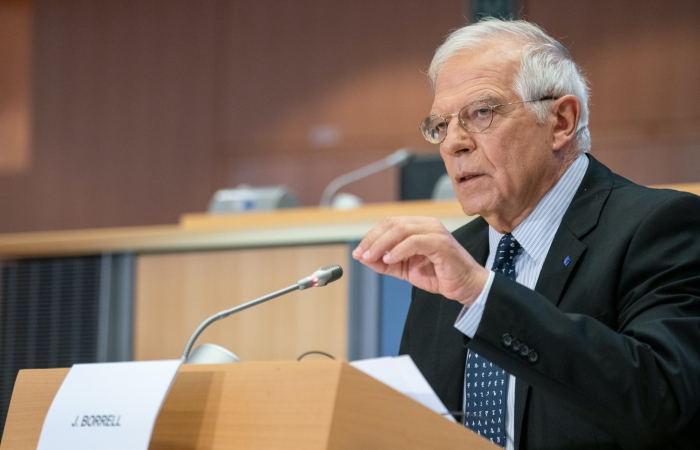
2024 started with an unprecedented number of Russian drones and ballistic missiles raining down on Ukraine. In this op-ed published this week on various media outlets, the European Union's High Representative for Foreign and Security Policy, Josep Borrell, argues that Ukraine prevailing against the Russian aggression is the best security guarantee for Europe and that a paradigm shift is needed from supporting Ukraine for 'as long as it takes' to committing to 'what it takes' for Ukraine to achieve victory. Borrell argues that we must intensify our efforts to win the race against time with Putin’s Russia. "We cannot allow him to prevail. Our own security is at stake. Should Putin’s strategy prove successful, it would embolden Russia and other autocracies to pursue their imperialist agendas. We must at any cost prevent a world where might makes right, where powerful countries change borders at will, and the weak fall prey to the strong. Allowing such a scenario would cast a long shadow over our future for decades to come. Ukraine prevailing against the Russian aggression is the best security guarantee for Europe. A Russia that learnt to stay within its borders will lessen pressure on its neighbours, ease Ukraine’s path to EU membership and allow Europe and the world to shift attention to the many other challenges that need solving. With our assistance, Ukraine can consign Russia’s imperial ambitions to the pages of history. This must guide our actions and thinking."
Editor's choice
News
Yemen's legitimate government welcomes the designation of the Houthis as terrorists

Yemen's legitimate government welcomes the designation of the Houthis as terrorists

Yemen’s internationally recognized Presidential Leadership Council asked the world on Sunday to follow the US lead in labeling the Iran-backed Houthis as terrorists and impose stiffer penalties on the militia for jeopardizing international marine trade and perpetrating crimes in Yemen. At a meeting in Riyadh, the council praised Washington’s decision to designate the Houthis as international terrorists, encouraged the rest of the world to follow suit, and praised the international community’s joint response to the Houthi Red Sea raids. The council said in a statement it “welcomed the decision to designate the Houthi militias as a global terrorist organization and looks forward to additional sanctions against the rogue militias.” It reiterated a request to the international community to strengthen the military capabilities of Yemen’s coast guard and offer protection from the Houthis and other terrorist groups, according to the statement carried by the official news agency. The council warned that Houthi attacks in the Red Sea would result in the militarization of the crucial maritime route, raising shipping and insurance prices, and impeding the flow of critical supplies to the nation. Humanitarian groups have long resisted the labeling of Houthi terrorists, fearing it would disrupt the flow of aid through militia-controlled ports, which receive over 70 percent of essential supplies. There is also concern that designating the Houthis as  a terrorist group will complicate the process of trying to find a peaceful solution to Yemen's on-going civil war. The Houthis currently occupy large parts of northern Yemen, as well as the capital Sanaa and seem to be deeply entrenched there. The UN is involved in a long-running process to negotiate peace, but so far there has been little progress.
Editor's choice
News
EU, AU and US say crises in Sudan and in Ethiopia-Somalia relations threaten regional stability in the Horn of Africa

EU, AU and US say crises in Sudan and in Ethiopia-Somalia relations threaten regional stability in the Horn of Africa

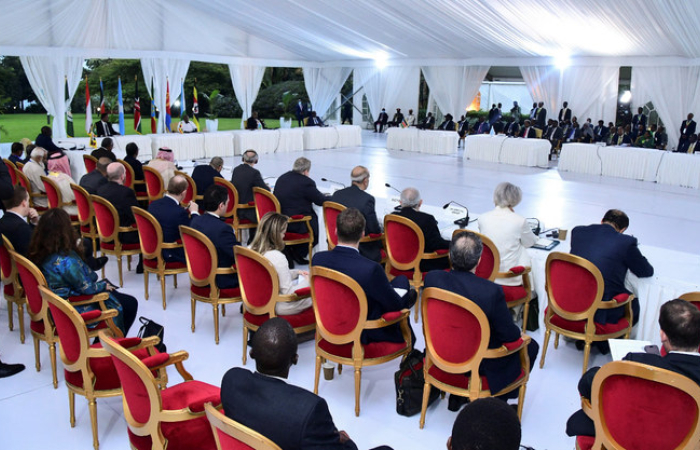
The African Union, European Union, and United States called Thursday (18 January) for an immediate cease-fire and constructive dialogue between warring factions in Sudan. They also called for an end to tension between Somalia and Ethiopia over an agreement signed between Ethiopia and Somalia’s breakaway region Somaliland. Representatives of the AU, EU and US spoke in Kampala, Uganda, after the meeting of an East African regional bloc. They said the two crises are threatening regional stability in the Horn of Africa. Annette Weber, the EU special envoy for the Horn of Africa, said the two crises have a common link with Red Sea, which she called a critical waterway carrying 10 percent of global cargo. Weber also said there needs to be a collective response among Horn of Africa countries against attacks on ships by Yemen-based Houthi rebels. Regarding Somalia, the AU, EU and US said they recognize the country’s sovereignty, unity and territorial integrity, including the breakaway region of Somaliland.