Theme

Conflict and Peace

Stories related to violent conflicts, diplomatic tensions, and conflict prevention, mediation and resolution.

Editor's choice
News
European leaders set out their plan for Ukraine

European leaders set out their plan for Ukraine

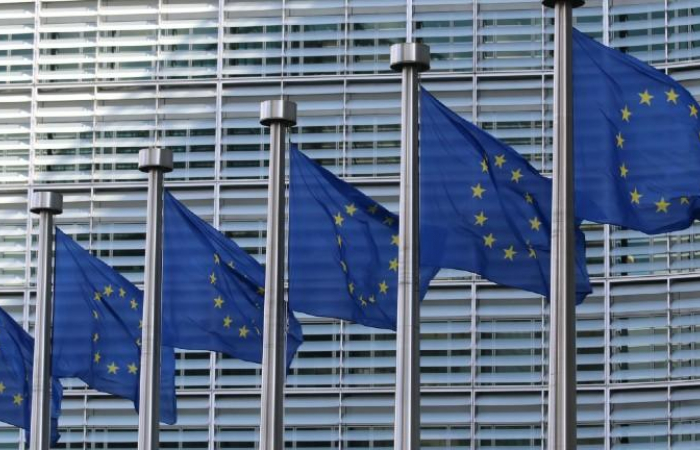
The leaders of Germany, Denmark, Finland, France, Italy, Netherlands, Norway, Poland, Sweden, and United Kingdom, together with the President of the European Council, and the President of the European Commission, o  Monday (15 December) issued a statement, outlining their plan for Ukraine. In their statement, Chancellor Merz, Prime Minister Frederiksen, President Stubb, President Macron, Prime Minister Meloni, Prime Minister Schoof, Prime Minister Støre, Prime Minister Tusk, Prime Minister Kristersson, Prime Minister Starmer, as well as President Costa and President von der Leyen spoke about "Peace for Ukraine". The Leaders welcomed significant progress on President Trump’s efforts to secure a just and lasting peace in Ukraine. They also welcomed the close work between President Zelenskyy’s and President Trump’s teams as well as European teams over the recent days and weeks. They agreed to work together with President Trump and President Zelenskyy to get to a lasting peace which preserves Ukrainian sovereignty and European security. Leaders appreciated the strong convergence between the United States, Ukraine and Europe. Leaders agreed that ensuring the security, sovereignty, and prosperity of Ukraine was integral for wider Euro-Atlantic security. They were clear that Ukraine and its people deserved a prosperous, independent, and sovereign future, free from fear of future Russian aggression. Both the US and European leaders committed to work together to provide robust security guarantees and economic recovery support measures for Ukraine in the context of an agreement on ending the war. This would include commitments to: Provide sustained and significant support to Ukraine to build its armed forces, which should remain at a peacetime level of 800,000 to be able to deter conflict and defend Ukraine’s territory. A European-led ‘multinational force Ukraine’ made up from contributions from willing nations within the framework of the Coalition of the Willing and supported by the US. It will assist in the regeneration of Ukraine’s forces, in securing Ukraine’s skies, and in supporting safer seas, including through operating inside Ukraine. (Click the image to read the statement in full).
Editor's choice
News
NATO Chief says war is on Europe's doorstep, and warns against complacency

NATO Chief says war is on Europe's doorstep, and warns against complacency

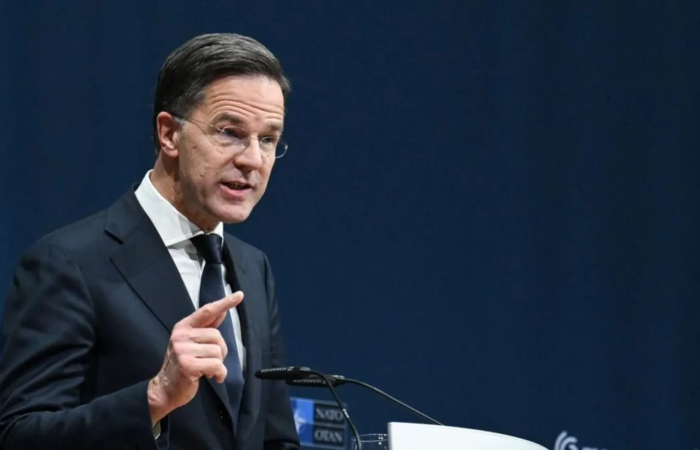
Russia could attack a NATO country within the next five years, the Secretary General of NATO, Mark Rutte, said in a stark new warning. "NATO's own defences can hold for now," Rutte warned in Berlin, but conflict was "next door" to Europe, and he feared "too many are quietly complacent, and too many don't feel the urgency, too many believe that time is on our side. "Russia is already escalating its covert campaign against our societies," Rutte said in a speech in Germany. "We must be prepared for the scale of war our grandparents or great-grandparents endured." Earlier this month, Russia's President Vladimir Putin said his country was not planning to go to war with Europe, but it was ready "right now" if Europe wanted to - or started a war. But similar reassurances were given by Moscow in 2022, just before 200,000 Russian troops crossed the border and invaded Ukraine. Putin has accused European countries of hindering US efforts to bring peace in Ukraine - a reference to the role Ukraine's European allies have recently played in trying to change a US peace plan to end the war, whose initial draft was seen as favouring Russia. But Putin was not sincere, Nato's secretary-general said in the German capital, Berlin. Supporting Ukraine, he added, was a guarantee for European security. "Just imagine if Putin got his way; Ukraine under the boot of Russian occupation, his forces pressing against a longer border with Nato, and the significantly increased risk of an armed attack against us." Russia's economy has been on a war footing for more than three years now - its factories churn out ever more supplies of drones, missiles and artillery shells. According to a recent report by the Kiel Institute for the World Economy, Russia has been producing each month around 150 tanks, 550 infantry fighting vehicles, 120 Lancet drones and more than 50 artillery pieces. The UK, and most of its Western allies, are simply not anywhere near this point. Analysts say it would take years for Western Europe's factories to come close to matching Russia's mass-production of weapons. "Allied defence spending and production must rise rapidly, our armed forces must have what they need to keep us safe," the Nato chief said.

Filter archive

Publication date
Editor's choice
News
Anger across the Muslim world and the Global South as US vetoes Gaza cease fire resolution for the 4th time

Anger across the Muslim world and the Global South as US vetoes Gaza cease fire resolution for the 4th time

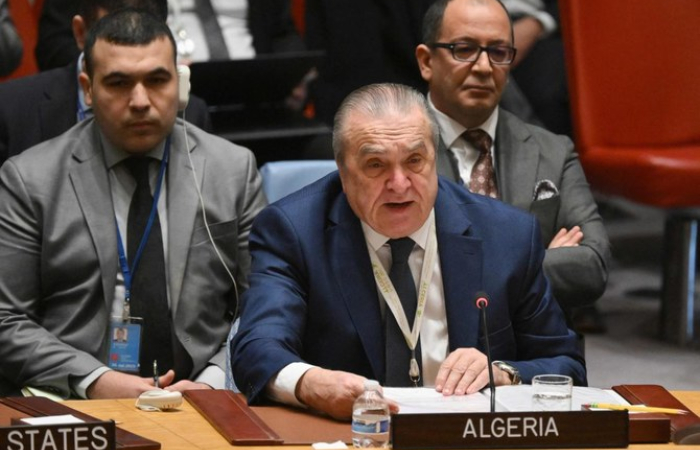
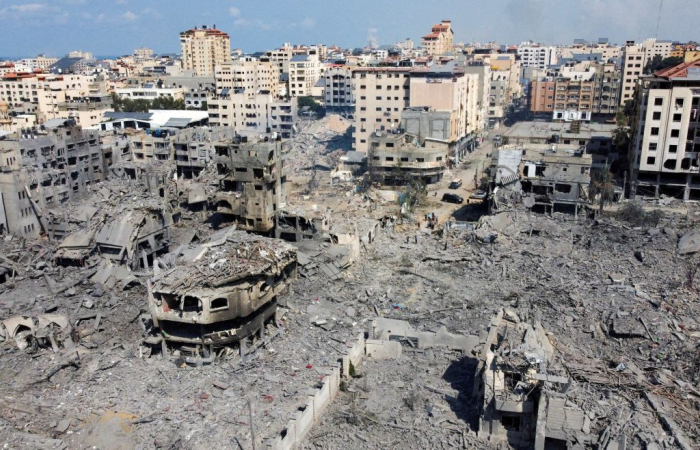
Commentators and opinion shapers across the Muslim world and the global south on Wednesday (21 February) were unanimous in their condemnation of the American veto of an Algerian resolution in the UN Security Council which called for an immediate cease fire in Gaza. Many commentators in Western countries were similarly appalled after for the fourth time since the start of the war in Gaza, the US on Tuesday vetoed a draft UN Security Council resolution demanding an immediate ceasefire in the embattled territory. It said such a resolution would interfere with ongoing, “sensitive” negotiations, led by Washington, that are attempting to broker an end to the hostilities. Thirteen of the 15 council members voted in favor of the resolution, which was drafted by Algeria. The UK abstained. In addition to the call for an immediate ceasefire, the Arab-backed draft resolution did also demand the immediate release of all hostages. It also rejected the forced displacement of Palestinian civilians, called for the unrestricted flow of humanitarian aid to the people of Gaza, and reiterated council demands that both Israel and Hamas “scrupulously comply” with the rules of international law, especially in relation to the protection of civilians. It also condemned “all acts of terrorism,” without explicitly naming either side.
Editor's choice
News
Incidents on Armenia-Azerbaijan border leave dead and injured soldiers (Updated)

Incidents on Armenia-Azerbaijan border leave dead and injured soldiers (Updated)

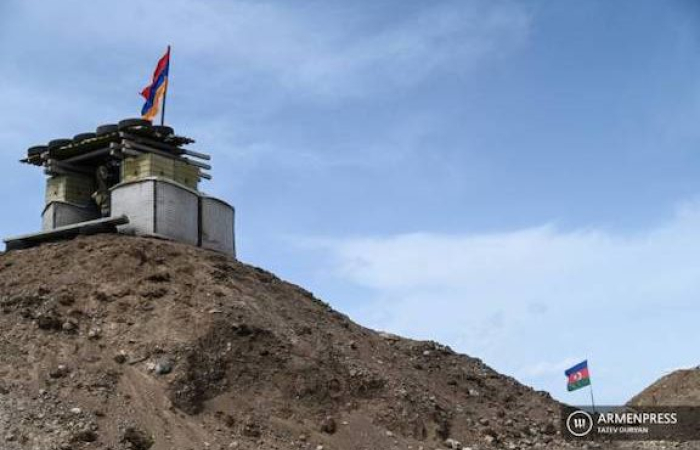
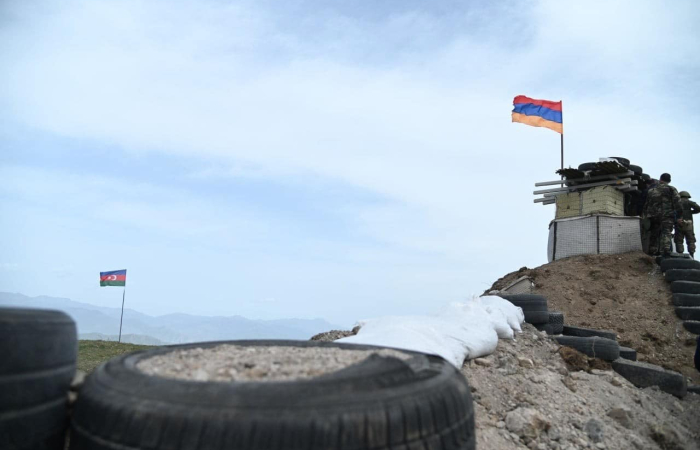
Armenia and Azerbaijan have reported incidents on their border in the last twenty four hours as a result of which there are several casualties, including four dead Armenian soldiers.. In the first incident, on Monday 12th February in the afternoon, Azerbaijan reported that one of its border guards, Parviz Khalizadeh, aged 24 years, was hit by a sniper bullet fired from an Armenian post in the Syunik region. Armenia said that it was investigating the incident. Later, Azerbaijan reported that Armenian forces, between 2050 and 2340 on Monday, had fired at its positions in the northern sector of the common border. No casualties were reported. The Armenian Ministry of Defence strongly denied the claim. This morning (Tuesday 13th), Azerbaijan reported that it had conducted a "retaliatory operation" against the Armenian military post from where the sniper bullet had been fired on Monday near the settlement of Nearkin Hand in the Siyunik region. Armenia confirmed that Azerbaijan had opened fire at 0530 as a result of which four Armenian soldiers were killed and and one more wounded. The four Armenian soldiers who died were named as Eduard Harutyunyan, Gagik Manukyan, Arsen Hambardzumyan, and Hrach Hovhanissian. Both sides held each other responsible for the incidents.
Editor's choice
News
In Yemen the legitimate government announces appointment of a new prime minister whilst rebels continue attacks on Red Sea shipping

In Yemen the legitimate government announces appointment of a new prime minister whilst rebels continue attacks on Red Sea shipping

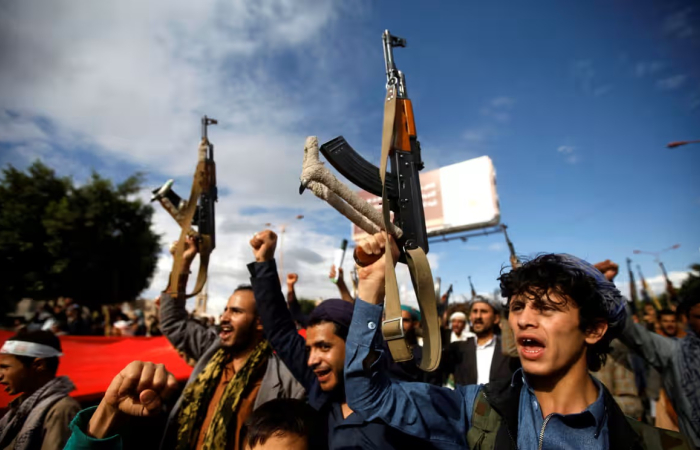
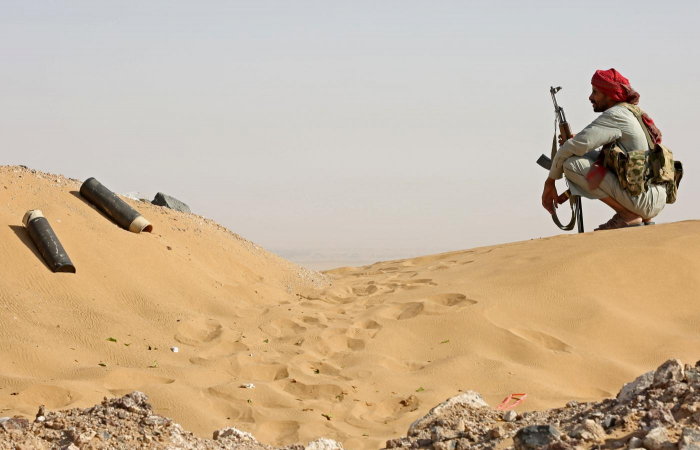
Yemen's legitimate government announced the appointment of new prime minister. The internationally recognized Presidential Leadership Council head announced that Yemen’s Foreign Minister Ahmed Awad bin Mubarak will be the new prime minister. He succeeds Maeen Abdulmalik Saeed, who was made an adviser to PLC president, Rashad Al-Alimi. In a post on X, the new prime minister promised to focus on improving living standards for Yemenis, reviving government institutions, and putting an end to the Houthi military seizure of power in Yemen. Meanwhile, Yemen’s Houthi militia on Tuesday launched another wave of missiles toward ships in the Red Sea and Gulf of Aden as the group’s leader vowed to continue attacks until Israel lifted its blockade of Gaza. A cargo vessel sailing 57 nautical miles west of the Houthi-controlled port city of Hodeidah sustained minor damage to its bridge after one of the weapons passed through its deck, according to British maritime agencies the UK Maritime Trade Operations (UKMTO), and Ambrey. The UKMTO reported that a small boat had been spotted off the ship’s port side. Meanwhile, Ambrey officials said a British-owned and Barbados-flagged cargo ship had been damaged in a drone attack while navigating through the southeast Red Sea. On Tuesday, the UKMTO warned shipping companies operating in the Gulf of Aden to exercise caution after receiving reports of an explosion near to a commercial vessel 50 nautical miles south of the Yemeni city of Aden.
Editor's choice
News
800 western officials say the policies of their governments on Gaza "are contributing to grave violations of international law, war crimes and even ethnic cleansing or genocide"

800 western officials say the policies of their governments on Gaza "are contributing to grave violations of international law, war crimes and even ethnic cleansing or genocide"

The BBC is reporting that more than 800 serving officials in the US and Europe have signed a statement warning that their own governments' policies on the Israel-Gaza war could amount to "grave violations of international law". Many are describing the statement as an unprecedented move that reflects great concern in official circles in western countries about the the position of their governments on the situation in Gaza. The "transatlantic statement", a copy of which was passed to the BBC, says their administrations risk being complicit in "one of the worst human catastrophes of this century" but that their expert advice has been sidelined. It is the latest sign of significant levels of dissent within the governments of some of Israel's key Western allies. One signatory to the statement, a US government official with more than 25 years' national security experience, told the BBC of the "continued dismissal" of their concerns. "The voices of those who understand the region and the dynamics were not listened to," said the official. "What's really different here is we're not failing to prevent something, we're actively complicit. That is fundamentally different from any other situation I can recall," added the official, who spoke on condition of anonymity. The statement is signed by civil servants from the US, the EU and 11 European countries including the UK, France and Germany.
Editor's choice
Opinion
Opinion: Roadblock to peace: the geopolitical quagmire of the "Zangezur Corridor"

Opinion: Roadblock to peace: the geopolitical quagmire of the "Zangezur Corridor"

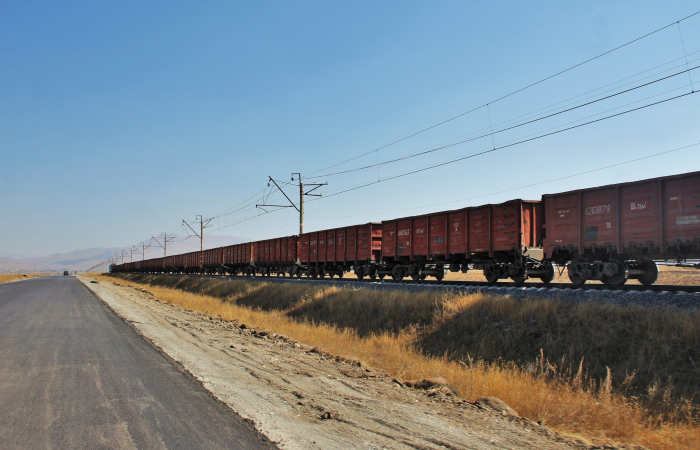
This year marks the 30th anniversary of the 1994 ceasefire agreement that put fighting between Armenian and Azerbaijani forces over the Soviet-era mainly ethnic Armenian Nagorno Karabakh Autonomous Oblast (NKAO) on hold – or at least until it escalated into war in 2016 and more devastatingly in 2020. Despite the involvement of international mediators, peace remained elusive despite occasional claims to the contrary. The sides were said to have gotten close, but never enough to prevent tens of thousands dying in over three decades of conflict.