Theme

Conflict and Peace

Stories related to violent conflicts, diplomatic tensions, and conflict prevention, mediation and resolution.

Editor's choice
News
European leaders set out their plan for Ukraine

European leaders set out their plan for Ukraine

The leaders of Germany, Denmark, Finland, France, Italy, Netherlands, Norway, Poland, Sweden, and United Kingdom, together with the President of the European Council, and the President of the European Commission, o  Monday (15 December) issued a statement, outlining their plan for Ukraine. In their statement, Chancellor Merz, Prime Minister Frederiksen, President Stubb, President Macron, Prime Minister Meloni, Prime Minister Schoof, Prime Minister Støre, Prime Minister Tusk, Prime Minister Kristersson, Prime Minister Starmer, as well as President Costa and President von der Leyen spoke about "Peace for Ukraine". The Leaders welcomed significant progress on President Trump’s efforts to secure a just and lasting peace in Ukraine. They also welcomed the close work between President Zelenskyy’s and President Trump’s teams as well as European teams over the recent days and weeks. They agreed to work together with President Trump and President Zelenskyy to get to a lasting peace which preserves Ukrainian sovereignty and European security. Leaders appreciated the strong convergence between the United States, Ukraine and Europe. Leaders agreed that ensuring the security, sovereignty, and prosperity of Ukraine was integral for wider Euro-Atlantic security. They were clear that Ukraine and its people deserved a prosperous, independent, and sovereign future, free from fear of future Russian aggression. Both the US and European leaders committed to work together to provide robust security guarantees and economic recovery support measures for Ukraine in the context of an agreement on ending the war. This would include commitments to: Provide sustained and significant support to Ukraine to build its armed forces, which should remain at a peacetime level of 800,000 to be able to deter conflict and defend Ukraine’s territory. A European-led ‘multinational force Ukraine’ made up from contributions from willing nations within the framework of the Coalition of the Willing and supported by the US. It will assist in the regeneration of Ukraine’s forces, in securing Ukraine’s skies, and in supporting safer seas, including through operating inside Ukraine. (Click the image to read the statement in full).
Editor's choice
News
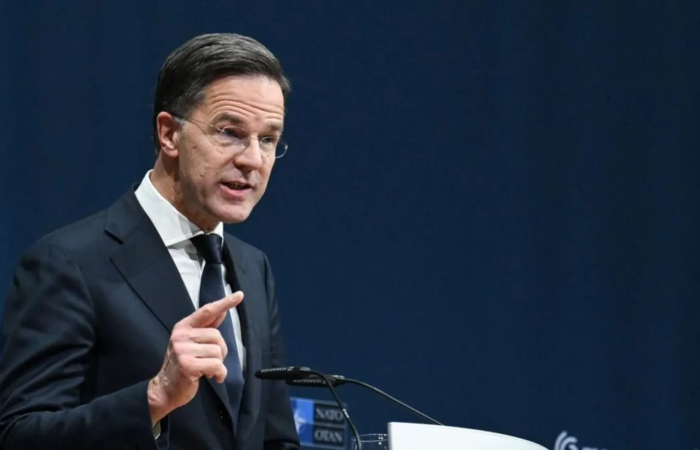
NATO Chief says war is on Europe's doorstep, and warns against complacency

NATO Chief says war is on Europe's doorstep, and warns against complacency

Russia could attack a NATO country within the next five years, the Secretary General of NATO, Mark Rutte, said in a stark new warning. "NATO's own defences can hold for now," Rutte warned in Berlin, but conflict was "next door" to Europe, and he feared "too many are quietly complacent, and too many don't feel the urgency, too many believe that time is on our side. "Russia is already escalating its covert campaign against our societies," Rutte said in a speech in Germany. "We must be prepared for the scale of war our grandparents or great-grandparents endured." Earlier this month, Russia's President Vladimir Putin said his country was not planning to go to war with Europe, but it was ready "right now" if Europe wanted to - or started a war. But similar reassurances were given by Moscow in 2022, just before 200,000 Russian troops crossed the border and invaded Ukraine. Putin has accused European countries of hindering US efforts to bring peace in Ukraine - a reference to the role Ukraine's European allies have recently played in trying to change a US peace plan to end the war, whose initial draft was seen as favouring Russia. But Putin was not sincere, Nato's secretary-general said in the German capital, Berlin. Supporting Ukraine, he added, was a guarantee for European security. "Just imagine if Putin got his way; Ukraine under the boot of Russian occupation, his forces pressing against a longer border with Nato, and the significantly increased risk of an armed attack against us." Russia's economy has been on a war footing for more than three years now - its factories churn out ever more supplies of drones, missiles and artillery shells. According to a recent report by the Kiel Institute for the World Economy, Russia has been producing each month around 150 tanks, 550 infantry fighting vehicles, 120 Lancet drones and more than 50 artillery pieces. The UK, and most of its Western allies, are simply not anywhere near this point. Analysts say it would take years for Western Europe's factories to come close to matching Russia's mass-production of weapons. "Allied defence spending and production must rise rapidly, our armed forces must have what they need to keep us safe," the Nato chief said.

Filter archive

Publication date
Editor's choice
News
Putin announces surprise ceasefire to coincide with Victory Day commemorations

Putin announces surprise ceasefire to coincide with Victory Day commemorations

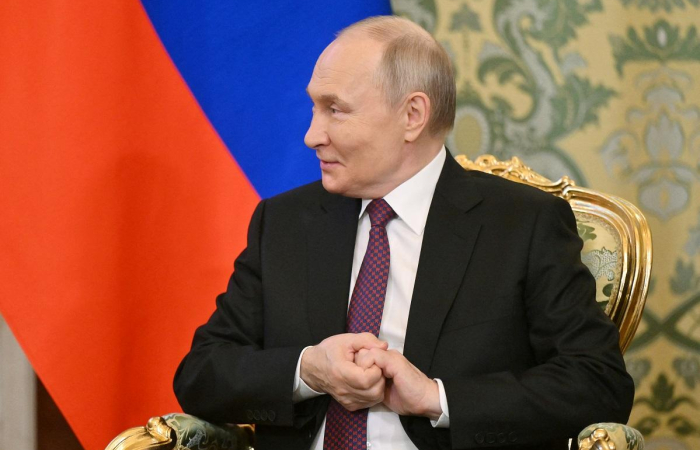
Russian President Vladimir Putin has ordered a surprise three-day ceasefire from May 8-10, coinciding with Moscow's World War II Victory Day commemorations, the Kremlin said on Monday. Moscow said it expected Kyiv to issue a similar order, and that it stood ready to respond to any violations of the possible halt in fighting.  Putin made a similar order to stop combat over Easter, a truce that both sides accused the other of violating hundreds of times, but did lead to a temporary reduction in fighting.
Editor's choice
Opinion
Opinion: Armenia–Turkey Normalisation Process: What Next?

Opinion: Armenia–Turkey Normalisation Process: What Next?

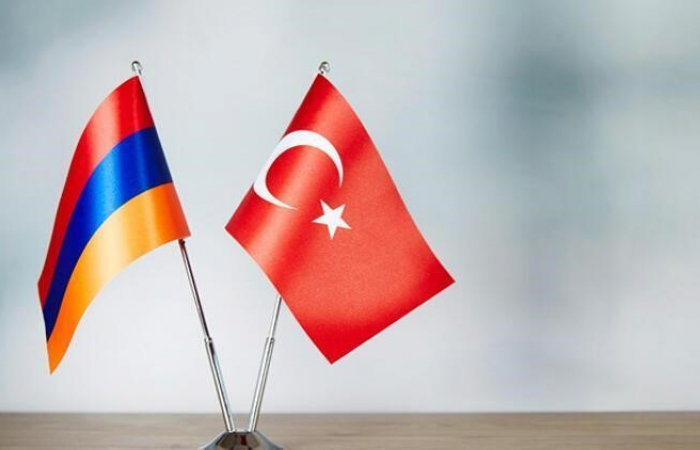
Since Armenia gained independence from the Soviet Union in 1991, normalizing relations with Turkey has been one of the country’s top foreign-policy priorities. The rationale behind this has been both economic, to end the blockade and facilitate access to Turkish Mediterranean ports, and political, to drive a wedge in the Azerbaijan–Turkey strategic partnership. Armenia took steps towards normalization in 2008 and 2009. As a result of intensive negotiations, Armenia and Turkey signed two protocols in Zurich in 2009 to open their borders and establish diplomatic relations. However, Turkey did not ratify them, under intense pressure from Azerbaijan.
Editor's choice
Monday Commentary
Is the Sahel Europe’s soft underbelly?

Is the Sahel Europe’s soft underbelly?

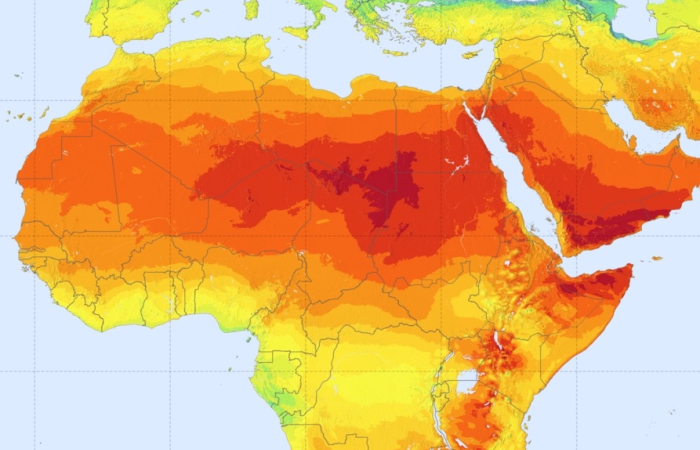
The Sahel region stretches from the Atlantic Ocean to the Red Sea and consists, according to the UN, of ten countries which sit, wholly or partly, within it: Senegal,  Gambia, Mauritania, Guinea, Mali, Burkina Faso, Niger, Chad, Cameroon and Nigeria Other neighbouring countries however, such as Benin, Togo Sudan and Central African Republic, due to their proximity, and to the fact that they increasingly share the same problems, are often included when the Sahel is discussed.
Editor's choice
News
Trump says Zelensky remarks on Crimea are inflammatory and can prolong the 'killing field'

Trump says Zelensky remarks on Crimea are inflammatory and can prolong the 'killing field'

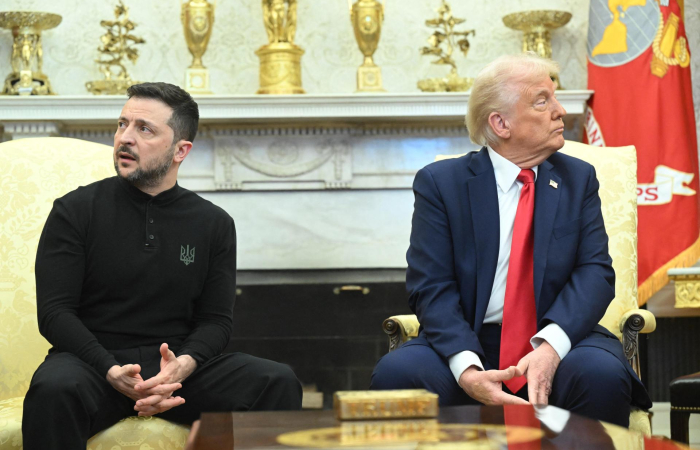
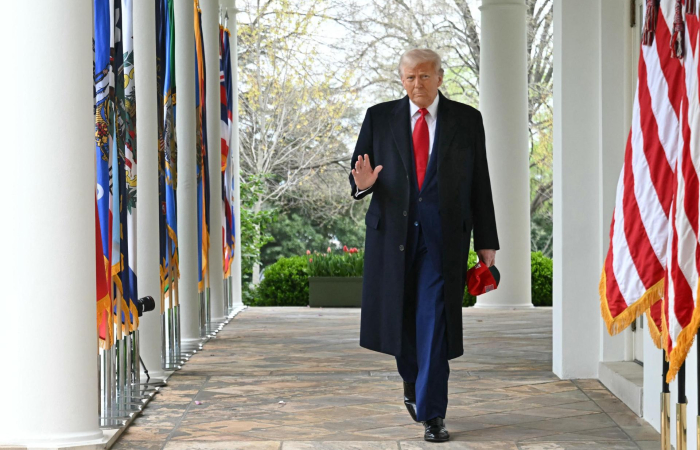
US President Donald Trump said a deal to halt the Ukraine war was "very close" but hit out at Ukrainian leader Volodymyr Zelensky over his refusal to formally cede Crimea to Russia. Trump's comments came as Vice President JD Vance warned that the United States would "walk away" unless Russia and Ukraine agree a peace deal, and as envoys from Washington, Kyiv and European nations gathered for downgraded talks in Britain.
Editor's choice
Opinion
Opinion: Azerbaijan Reiterated Support for Ukraine’s Territorial Integrity

Opinion: Azerbaijan Reiterated Support for Ukraine’s Territorial Integrity

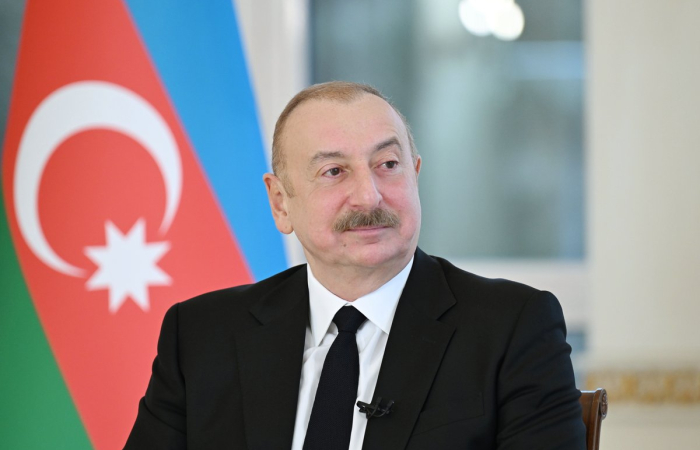
On April 9, at an international conference in Baku, Azerbaijan’s President Ilham Aliyev delivered a statement on the ongoing peace talks between Russia and Ukraine, mediated by the United States. Reaffirming Azerbaijan’s steadfast commitment to Ukraine’s territorial integrity, Aliyev sharply criticized proposals that urge Ukraine to cede parts of its territory in exchange for a ceasefire. “No country, at least in my understanding, will agree to compromise on territorial integrity, and to expect Ukraine to agree that they will sacrifice their internationally recognized territory in exchange for peace is not fair and not realistic,” he declared.
Editor's choice
News
President Trump sends envoy to Moscow to push for ceasefire

President Trump sends envoy to Moscow to push for ceasefire

US envoy Steve Witkoff is expected to visit Russia this week, a Kremlin aide said Tuesday, as US President Donald Trump seeks a speedy deal to end the three-year Ukraine conflict. Trump, who promised on the campaign trail to strike a deal between Moscow and Kyiv in 24 hours, has failed since his return to office three months ago to wrangle concessions from Russian President Vladimir Putin to halt his troops in Ukraine.
Editor's choice
Opinion
Opinion:  Compromise necessary to overcome Armenia-Azerbaijan Constitutional Impasse?

Opinion: Compromise necessary to overcome Armenia-Azerbaijan Constitutional Impasse?

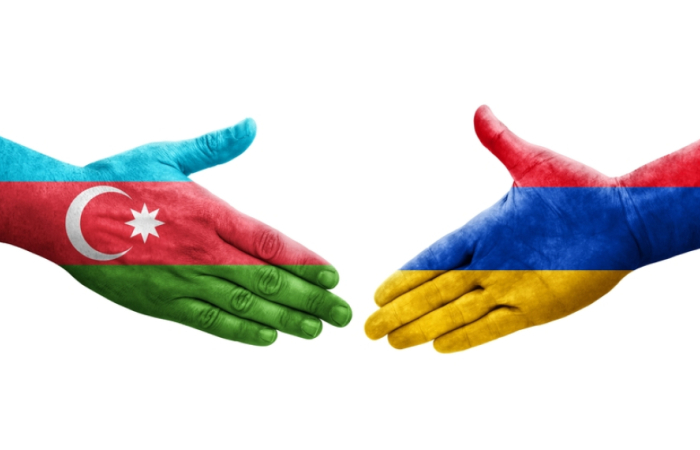
Since February 2020, it is not uncommon for the leaders of Armenia and Azerbaijan to appear on the same stage at international events – or at least at the Munich Security Conference. The same has not been true for their foreign ministers. That changed on April 12 at the Antalya Diplomacy Forum, a notable moment just weeks after the finalisation of a long-overdue treaty aimed at normalising relations between the two countries. While the road ahead remains uncertain, the meeting carried clear symbolic significance.
Editor's choice
News
Russia to host special summit with Arab states

Russia to host special summit with Arab states

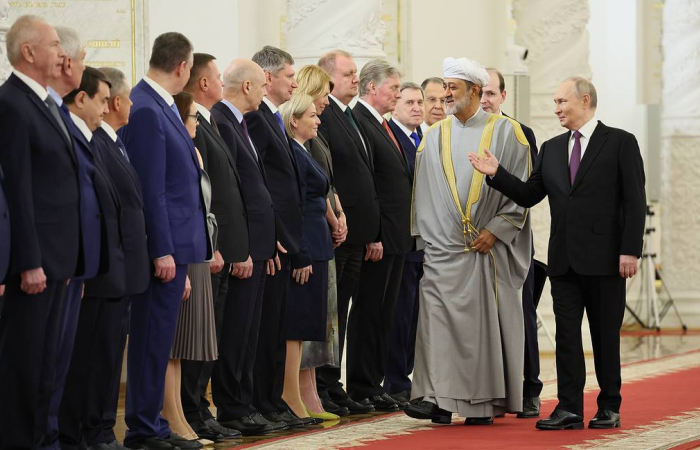
Russian President Vladimir Putin announced on Tuesday that Russia will host a special Russian-Arab summit later this year. The announcement came during Putin's meeting at the Kremlin with the Omani sultan, Haitham bin Tariq Al-Said, the first-ever state visit of the Arab country's sultan to Russia.
Editor's choice
News
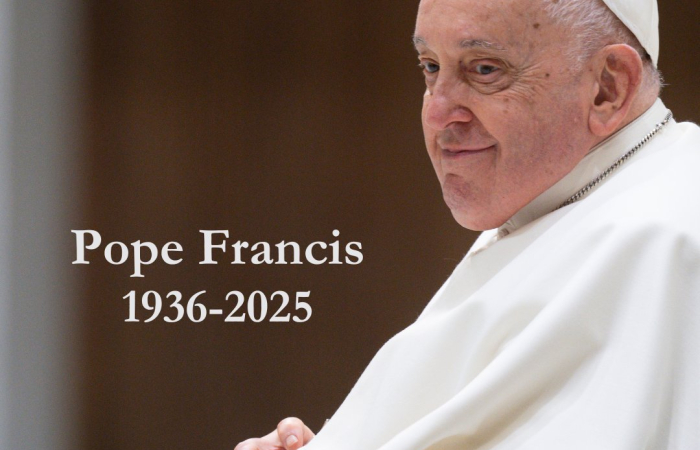
The world reacts to the death of Pope Francis

The world reacts to the death of Pope Francis

World leaders remembered Pope Francis as "a beacon of compassion", reacting with sadness after the leader of the world's 1.4 billion Catholics died on Monday. From King Charles III to Russian president Vladimir Putin, leaders from across the globe took a moment to hail the 88-year-old pontiff, whose death came just a day after he delighted the crowds of worshippers at the Vatican on Easter Sunday with an appearance on the balcony at Saint Peter's Basilica.