Theme

Conflict and Peace

Stories related to violent conflicts, diplomatic tensions, and conflict prevention, mediation and resolution.

Editor's choice
News
European leaders set out their plan for Ukraine

European leaders set out their plan for Ukraine

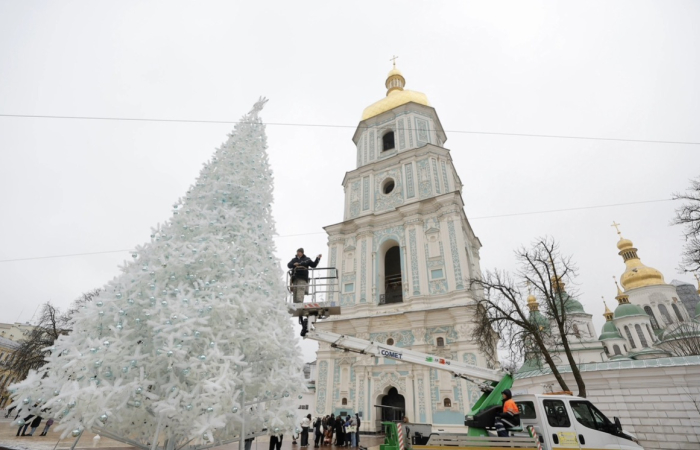
The leaders of Germany, Denmark, Finland, France, Italy, Netherlands, Norway, Poland, Sweden, and United Kingdom, together with the President of the European Council, and the President of the European Commission, o  Monday (15 December) issued a statement, outlining their plan for Ukraine. In their statement, Chancellor Merz, Prime Minister Frederiksen, President Stubb, President Macron, Prime Minister Meloni, Prime Minister Schoof, Prime Minister Støre, Prime Minister Tusk, Prime Minister Kristersson, Prime Minister Starmer, as well as President Costa and President von der Leyen spoke about "Peace for Ukraine". The Leaders welcomed significant progress on President Trump’s efforts to secure a just and lasting peace in Ukraine. They also welcomed the close work between President Zelenskyy’s and President Trump’s teams as well as European teams over the recent days and weeks. They agreed to work together with President Trump and President Zelenskyy to get to a lasting peace which preserves Ukrainian sovereignty and European security. Leaders appreciated the strong convergence between the United States, Ukraine and Europe. Leaders agreed that ensuring the security, sovereignty, and prosperity of Ukraine was integral for wider Euro-Atlantic security. They were clear that Ukraine and its people deserved a prosperous, independent, and sovereign future, free from fear of future Russian aggression. Both the US and European leaders committed to work together to provide robust security guarantees and economic recovery support measures for Ukraine in the context of an agreement on ending the war. This would include commitments to: Provide sustained and significant support to Ukraine to build its armed forces, which should remain at a peacetime level of 800,000 to be able to deter conflict and defend Ukraine’s territory. A European-led ‘multinational force Ukraine’ made up from contributions from willing nations within the framework of the Coalition of the Willing and supported by the US. It will assist in the regeneration of Ukraine’s forces, in securing Ukraine’s skies, and in supporting safer seas, including through operating inside Ukraine. (Click the image to read the statement in full).
Editor's choice
News
NATO Chief says war is on Europe's doorstep, and warns against complacency

NATO Chief says war is on Europe's doorstep, and warns against complacency

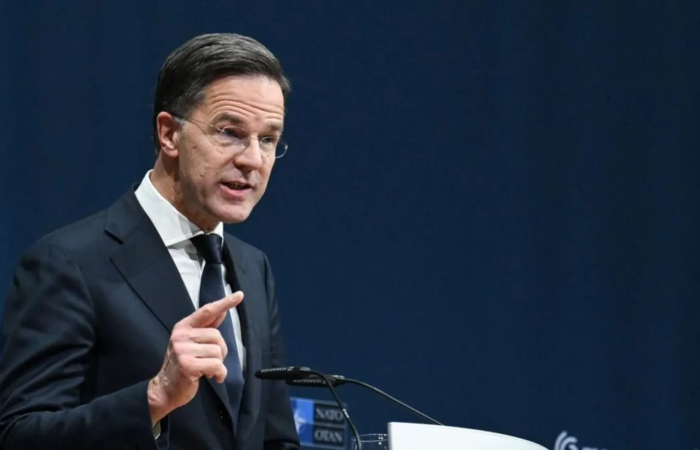
Russia could attack a NATO country within the next five years, the Secretary General of NATO, Mark Rutte, said in a stark new warning. "NATO's own defences can hold for now," Rutte warned in Berlin, but conflict was "next door" to Europe, and he feared "too many are quietly complacent, and too many don't feel the urgency, too many believe that time is on our side. "Russia is already escalating its covert campaign against our societies," Rutte said in a speech in Germany. "We must be prepared for the scale of war our grandparents or great-grandparents endured." Earlier this month, Russia's President Vladimir Putin said his country was not planning to go to war with Europe, but it was ready "right now" if Europe wanted to - or started a war. But similar reassurances were given by Moscow in 2022, just before 200,000 Russian troops crossed the border and invaded Ukraine. Putin has accused European countries of hindering US efforts to bring peace in Ukraine - a reference to the role Ukraine's European allies have recently played in trying to change a US peace plan to end the war, whose initial draft was seen as favouring Russia. But Putin was not sincere, Nato's secretary-general said in the German capital, Berlin. Supporting Ukraine, he added, was a guarantee for European security. "Just imagine if Putin got his way; Ukraine under the boot of Russian occupation, his forces pressing against a longer border with Nato, and the significantly increased risk of an armed attack against us." Russia's economy has been on a war footing for more than three years now - its factories churn out ever more supplies of drones, missiles and artillery shells. According to a recent report by the Kiel Institute for the World Economy, Russia has been producing each month around 150 tanks, 550 infantry fighting vehicles, 120 Lancet drones and more than 50 artillery pieces. The UK, and most of its Western allies, are simply not anywhere near this point. Analysts say it would take years for Western Europe's factories to come close to matching Russia's mass-production of weapons. "Allied defence spending and production must rise rapidly, our armed forces must have what they need to keep us safe," the Nato chief said.

Filter archive

Publication date
Editor's choice
News
Clouds of war gather in the Middle East

Clouds of war gather in the Middle East

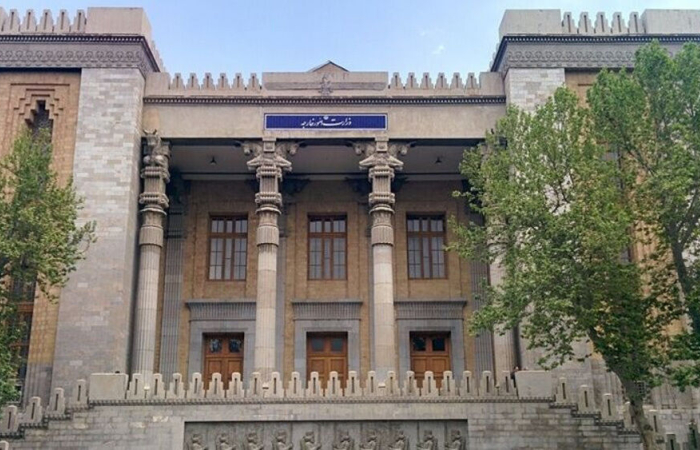
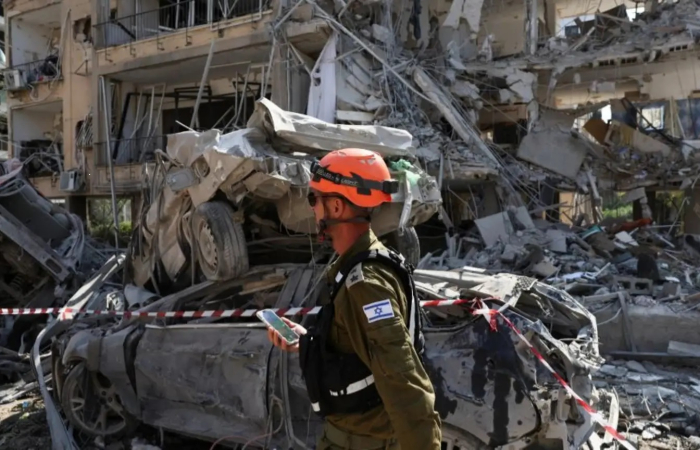
Iran  has responded to Israeli attacks on Thursday night, firing missiles at targets in Israel, including in Tel Aviv and Jerusalem, Both side say that civilians got killed in the attacks. Clouds of war are now gathering across the Middle East  and there is fear that this conflict may expand to other players. The Iranian FARS News agency quoted the new commander of the Islamic Revolution Guards Corps (IRGC) as saying that Iran would would take Israel to the gates of hell over the latter’s deadly onslaught against Tehran which led to the death of senior military commanders, including the IRGC own commander, Major General Hossein Salami.
Editor's choice
News
Israel launches an air campaign targeting Iran’s nuclear and military infrastructure

Israel launches an air campaign targeting Iran’s nuclear and military infrastructure

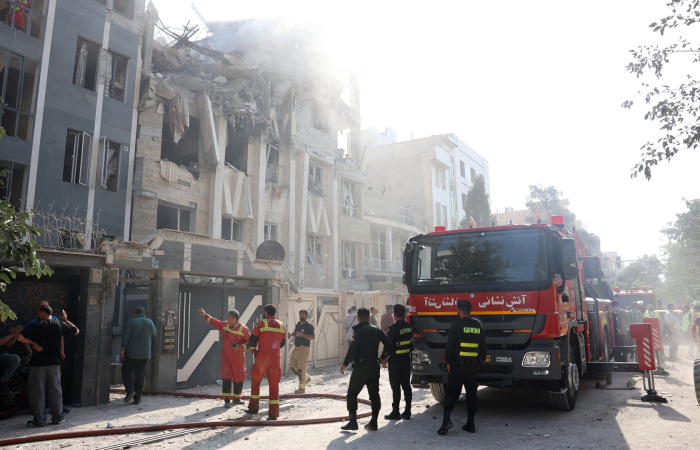
On Friday (13 June), a series of powerful explosions were heard and seen across Iran, following a large-scale Israeli air campaign targeting the country's military infrastructure. In a prerecorded video released early on Friday morning, Israeli Prime Minister Benjamin Netanyahu argued that the strikes were aimed at nuclear infrastructure and ballistic missile factories inside Iran. According to Netanyahu, the strikes were necessary to delay what he described as an imminent nuclear threat.
Editor's choice
News
Sweden leads EU effort to harden position against Israel

Sweden leads EU effort to harden position against Israel

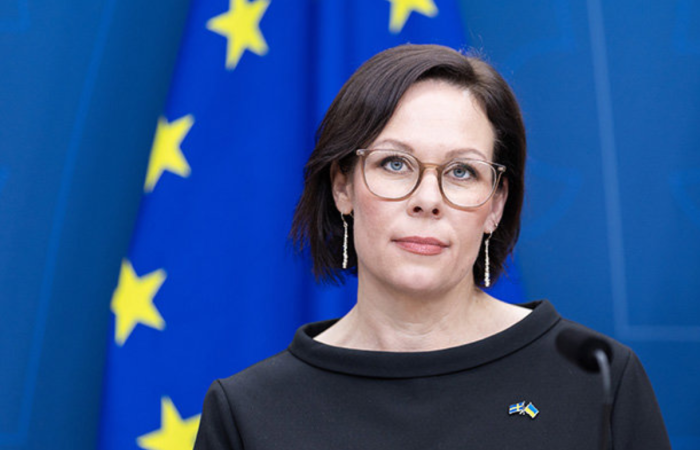
The European Union should harden its stance against Israel and follow in the footsteps of the United Kingdom and other Western allies by issuing sanctions against far-right members of Israeli Prime Minister Benjamin Netanyahu’s Cabinet, Sweden’s foreign minister told Politico. Maria Malmer Stenergard said after meeting in Brussels with Kaja Kallas, the EU’s top diplomat, that the EU now needs to take a stronger position and increase pressure on the Israeli government.
Editor's choice
Opinion
Armenia and Azerbaijan Dialogue in the context of the European Political Community

Armenia and Azerbaijan Dialogue in the context of the European Political Community

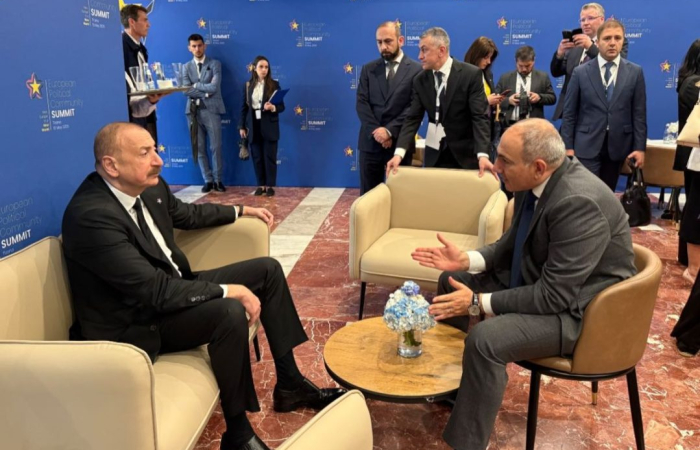
The latest European Political Community summit held in Tirana in May this year, featured Azerbaijan’s President Aliyev at a time when Baku’s period of bad blood with Brussels seems to be over and Europe once again is viewed as a constructive partner. It is not a coincidence that Aliyev briefly met Pashinyan in Tirana for the first time in months and even had a seemingly friendly conversation with French President Macron despite the two countries’ intense feud.
Editor's choice
Opinion
Pashinyan Targets Remnants of Old Regime as Election Showdown Looms

Pashinyan Targets Remnants of Old Regime as Election Showdown Looms

For over a week now, the Armenian public has been subjected to another unedifying spectacle between the country’s political and spiritual leadership. Tirades posted on social media by Prime Minister Nikol Pashinyan targeting Armenian Catholicos Karekin II, who he accuses of fathering at least one child despite an oath of celibacy, have been incendiary. The allegation is not new. Armenian media even named an alleged daughter back in 2013. However, Pashinyan’s wife, Anna Hakobyan, further ratcheted up tensions by referring to some members of the clergy as paedophiles while not presenting any evidence.
Editor's choice
News
Russia expanding military footprint in Africa while skirting sanctions

Russia expanding military footprint in Africa while skirting sanctions

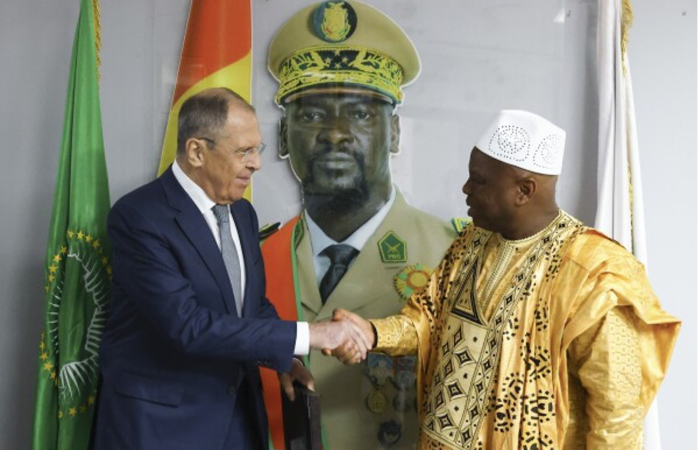
Russia is expanding its military footprint in Africa, delivering sophisticated weaponry to sub-Saharan conflict zones where a Kremlin-controlled armed force is on the rise. Skirting sanctions imposed by Western nations, Moscow is using cargo ships to send tanks, armoured vehicles, artillery and other high-value equipment to West Africa, according to the Associated Press.