Theme

Conflict and Peace

Stories related to violent conflicts, diplomatic tensions, and conflict prevention, mediation and resolution.

Editor's choice
News
European leaders set out their plan for Ukraine

European leaders set out their plan for Ukraine

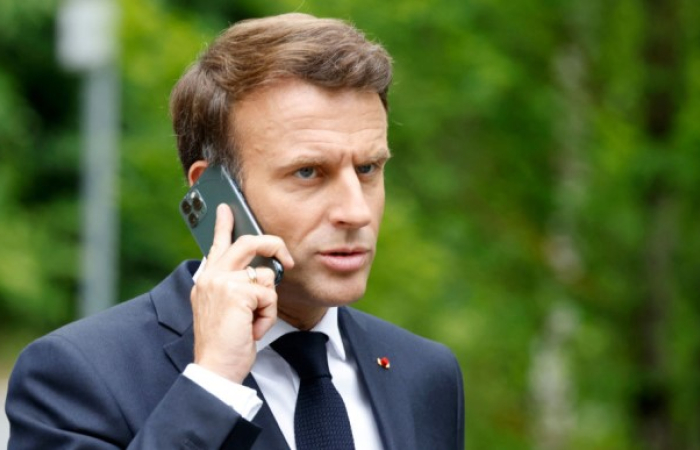
The leaders of Germany, Denmark, Finland, France, Italy, Netherlands, Norway, Poland, Sweden, and United Kingdom, together with the President of the European Council, and the President of the European Commission, o  Monday (15 December) issued a statement, outlining their plan for Ukraine. In their statement, Chancellor Merz, Prime Minister Frederiksen, President Stubb, President Macron, Prime Minister Meloni, Prime Minister Schoof, Prime Minister Støre, Prime Minister Tusk, Prime Minister Kristersson, Prime Minister Starmer, as well as President Costa and President von der Leyen spoke about "Peace for Ukraine". The Leaders welcomed significant progress on President Trump’s efforts to secure a just and lasting peace in Ukraine. They also welcomed the close work between President Zelenskyy’s and President Trump’s teams as well as European teams over the recent days and weeks. They agreed to work together with President Trump and President Zelenskyy to get to a lasting peace which preserves Ukrainian sovereignty and European security. Leaders appreciated the strong convergence between the United States, Ukraine and Europe. Leaders agreed that ensuring the security, sovereignty, and prosperity of Ukraine was integral for wider Euro-Atlantic security. They were clear that Ukraine and its people deserved a prosperous, independent, and sovereign future, free from fear of future Russian aggression. Both the US and European leaders committed to work together to provide robust security guarantees and economic recovery support measures for Ukraine in the context of an agreement on ending the war. This would include commitments to: Provide sustained and significant support to Ukraine to build its armed forces, which should remain at a peacetime level of 800,000 to be able to deter conflict and defend Ukraine’s territory. A European-led ‘multinational force Ukraine’ made up from contributions from willing nations within the framework of the Coalition of the Willing and supported by the US. It will assist in the regeneration of Ukraine’s forces, in securing Ukraine’s skies, and in supporting safer seas, including through operating inside Ukraine. (Click the image to read the statement in full).
Editor's choice
News
NATO Chief says war is on Europe's doorstep, and warns against complacency

NATO Chief says war is on Europe's doorstep, and warns against complacency

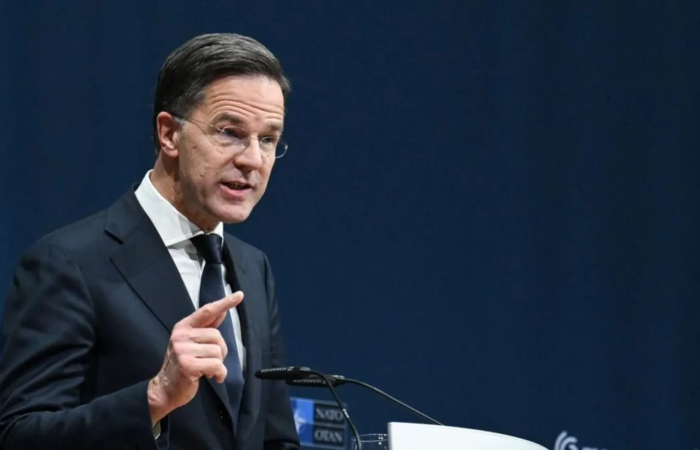
Russia could attack a NATO country within the next five years, the Secretary General of NATO, Mark Rutte, said in a stark new warning. "NATO's own defences can hold for now," Rutte warned in Berlin, but conflict was "next door" to Europe, and he feared "too many are quietly complacent, and too many don't feel the urgency, too many believe that time is on our side. "Russia is already escalating its covert campaign against our societies," Rutte said in a speech in Germany. "We must be prepared for the scale of war our grandparents or great-grandparents endured." Earlier this month, Russia's President Vladimir Putin said his country was not planning to go to war with Europe, but it was ready "right now" if Europe wanted to - or started a war. But similar reassurances were given by Moscow in 2022, just before 200,000 Russian troops crossed the border and invaded Ukraine. Putin has accused European countries of hindering US efforts to bring peace in Ukraine - a reference to the role Ukraine's European allies have recently played in trying to change a US peace plan to end the war, whose initial draft was seen as favouring Russia. But Putin was not sincere, Nato's secretary-general said in the German capital, Berlin. Supporting Ukraine, he added, was a guarantee for European security. "Just imagine if Putin got his way; Ukraine under the boot of Russian occupation, his forces pressing against a longer border with Nato, and the significantly increased risk of an armed attack against us." Russia's economy has been on a war footing for more than three years now - its factories churn out ever more supplies of drones, missiles and artillery shells. According to a recent report by the Kiel Institute for the World Economy, Russia has been producing each month around 150 tanks, 550 infantry fighting vehicles, 120 Lancet drones and more than 50 artillery pieces. The UK, and most of its Western allies, are simply not anywhere near this point. Analysts say it would take years for Western Europe's factories to come close to matching Russia's mass-production of weapons. "Allied defence spending and production must rise rapidly, our armed forces must have what they need to keep us safe," the Nato chief said.

Filter archive

Publication date
Editor's choice
News
Russia fires record number of drones at Ukraine overnight

Russia fires record number of drones at Ukraine overnight

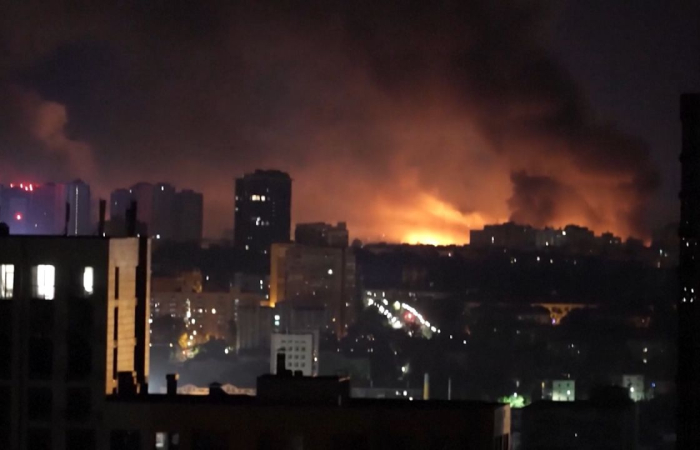
According to various Ukrainian media reports, several Ukrainian cities were hit on the night of Tuesday 8 July into Wednesday 9 July by the heaviest Russian missile and drone attack since the large-scale invasion in February 2022. The capital, Kyiv, was among the cities that came under heavy fire, according to Kyiv Independent journalists who were on the scene.
Editor's choice
News
Dozens participate in new Armenia-Azerbaijan dialogue process as societies prepare for the signing of historic peace agreement

Dozens participate in new Armenia-Azerbaijan dialogue process as societies prepare for the signing of historic peace agreement

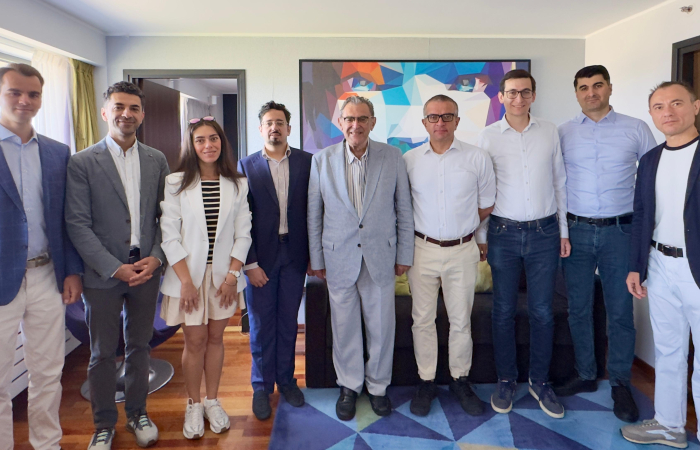
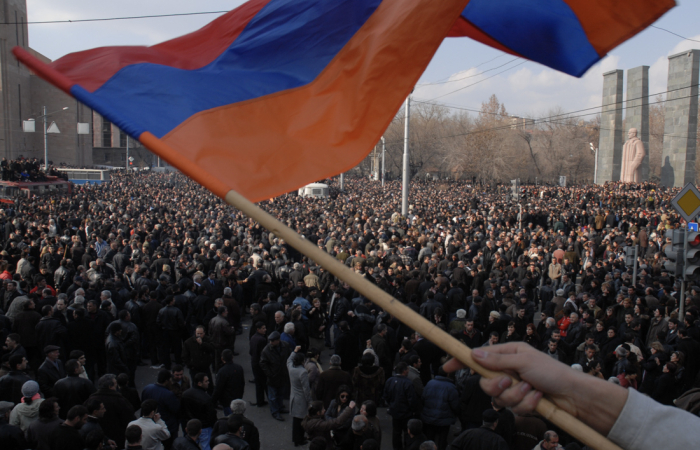
The governments of Armenia and Azerbaijan have recently agreed the text of a historic peace agreement that ends years of animosity and warfare. The agreement is expected to be signed soon. LINKS Europe, which has a long history of engagement with the process of peace in the region, recently launched a new Armenia-Azerbaijan dialogue format in the framework of the European Union's EU4Peace initiative. In the last two weeks dozens of Armenians and Azerbaijanis, including academics, students, civil society activists, journalists and other professionals, many of them young, were involved. The work is organised in five thematic groups focusing on peace and security, connectivity, environment, governance and gender and equality and in phase 2 of the project, which has just ended, around fifty participants took part in in-person and online meetings, and more than twenty others were involved indirectly. The Chairpersons of the five thematic groups met in Vilnius, 3-6 July to launch the third phase of the program. The five thematic groups are now working on separate reports, which are expected to be finished in November and presented to the two governments and other stakeholders. The reports will outline a vision, up to 2040.
Editor's choice
Opinion
Just Peace - "The Hague Speaks for Peace: Rebalancing Security”

Just Peace - "The Hague Speaks for Peace: Rebalancing Security”

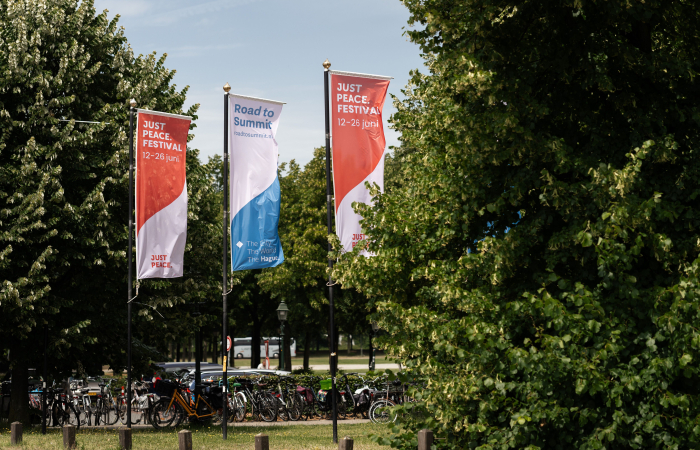
 Last week, as NATO leaders gathered in Brussels for their summit, LINKS Europe joined other civil society organisations in a public statement. The Statement was the initiative of The Hague Humanity Hub. The statement called for a balanced vision of peace and security, one that places people at its heart. At a time when the focus is increasingly drawn toward defense capabilities and military preparedness, the statement urged equal and sustained attention to and investment in the long-term work of building resilient, inclusive, and just societies. This is not an alternative to security, it is the foundation of it, the statement added.
Editor's choice
News
The Houthi rebels are shipping high-tech weapons to Somali rebels

The Houthi rebels are shipping high-tech weapons to Somali rebels

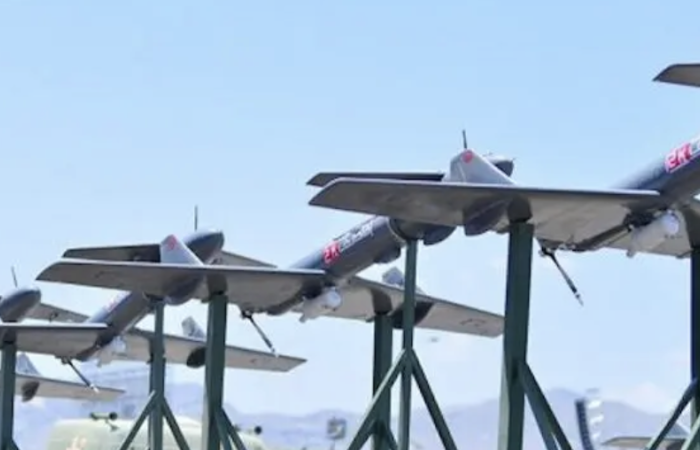
On Friday (4 July), Eurasia Review reported that Yemen’s Houthi rebels were supplying drones to Somali militant groups, raising security concerns across the Horn of Africa. Despite having different religious affiliations — Somali militant groups primarily advocate for Sunni Islamist ideology, while the Houthis back Shiism — the two groups began cooperating to expand ammunition and weaponry supply routes.
Editor's choice
Opinion
The South Caucasus is Set for Geopolitical Realignment

The South Caucasus is Set for Geopolitical Realignment

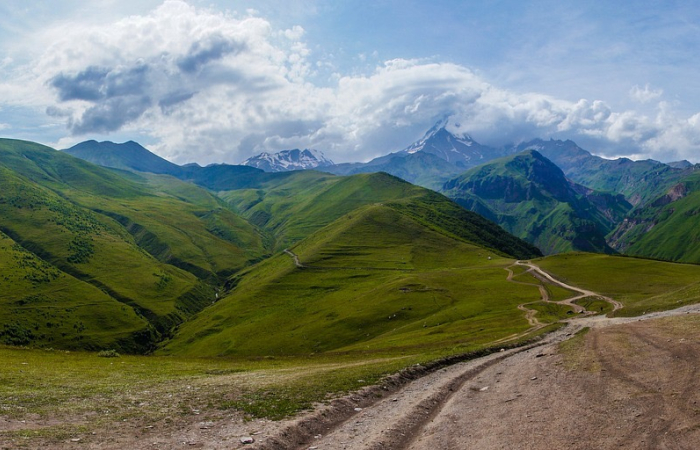
In Mackinder’s terminology, Eurasia is the heartland of geopolitics and the South Caucasus, though small in economic terms compared to the surrounding major powers, constitutes the heart of that heartland. No major power can afford to ignore or neglect it. Strategically located at the crossroads of East and West and being the only region that borders two most controversial actors of Eurasia (Russia and Iran), control over the South Caucasus equates to control over a vital part of the Eurasian continent. This is why the region’s geopolitical orientation carries immense significance, particularly amid the evolving landscape of international relations shaped by the war in Ukraine and the recent escalation of tensions between Iran and Israel in the southern neighborhood. Today, the geopolitics of the South Caucasus is in flux, and most importantly, this transition has now reached to the most important nation-state of the region: Azerbaijan.
Editor's choice
News
EU Foreign Policy Chief Kaja Kallas ends visit to Yerevan aimed at strengthening partnership with Armenia

EU Foreign Policy Chief Kaja Kallas ends visit to Yerevan aimed at strengthening partnership with Armenia

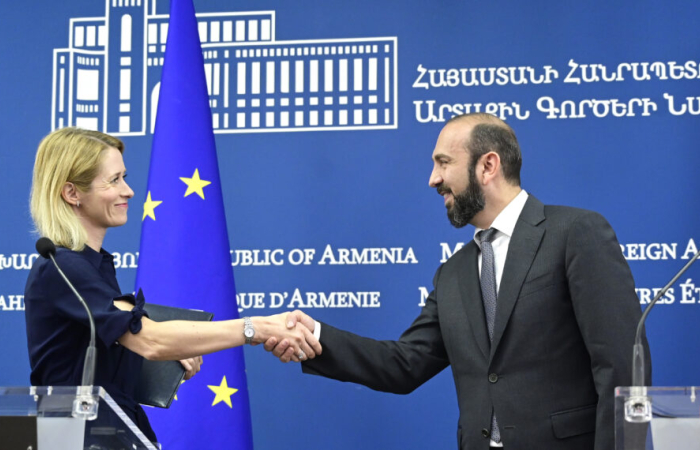
EU High Representative for Foreign Affairs and Security Policy Kaja Kallas has ended her official visit to Armenia after signing a partnership agreement with authorities in Yerevan. Following talks with Armenian Foreign Minister Ararat Mirzoyan, a joint press conference was held in which the media was briefed about an agreement outlining Armenia’s participation in the European Union’s Common Security and Defence Policy crisis management operations. According to Kallas, the document envisions Armenia’s participation in EU missions around the world.
Editor's choice
News
Russia has seized important lithium reserves in eastern Ukraine

Russia has seized important lithium reserves in eastern Ukraine

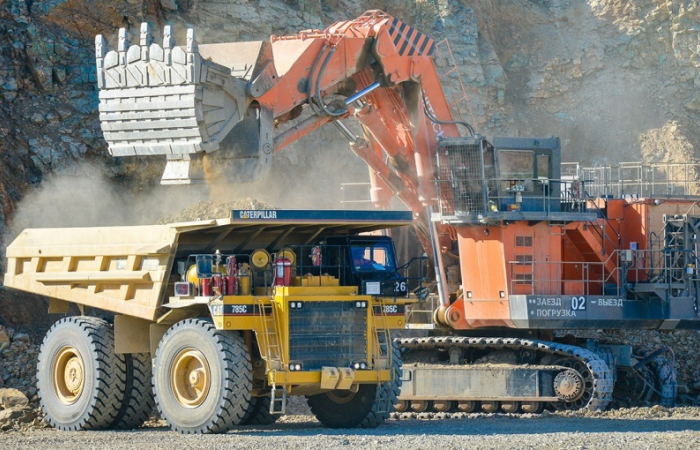
After months of fierce fighting, Russia appears to have finally taken control of one of Ukraine's largest lithium reserves. Russian troops have been in control of the town of Shevchenko for several days now, where an estimated 12 to 14 million tonnes of lithium ore lie underground to the east. Lithium is an important mineral needed for producing rechargeable car batteries, among other things. This information comes from the Reuters news agency. Ukrainian media outlets such as Kyiv Insider are also reporting on the news.