Theme

Conflict and Peace

Stories related to violent conflicts, diplomatic tensions, and conflict prevention, mediation and resolution.

Editor's choice
News
NATO Chief says war is on Europe's doorstep, and warns against complacency

NATO Chief says war is on Europe's doorstep, and warns against complacency

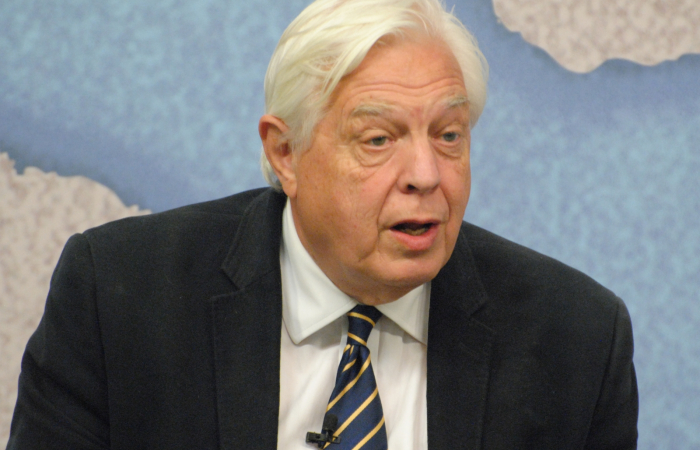
Russia could attack a Nato country within the next five years, the Secretary General of NATO, Mark Rutte, said in a stark new warning. "Nato's own defences can hold for now," Rutte warned in Berlin, but conflict was "next door" to Europe and he feared "too many are quietly complacent, and too many don't feel the urgency, too many believe that time is on our side. "Russia is already escalating its covert campaign against our societies," Rutte said in a speech in Germany. "We must be prepared for the scale of war our grandparents or great-grandparents endured." Earlier this month, Russia's President Vladimir Putin said his country was not planning to go to war with Europe, but it was ready "right now" if Europe wanted to - or started a war. But similar reassurances were given by Moscow in 2022, just before 200,000 Russian troops crossed the border and invaded Ukraine. Putin has accused European countries of hindering US efforts to bring peace in Ukraine - a reference to the role Ukraine's European allies have recently played in trying to change a US peace plan to end the war, whose initial draft was seen as favouring Russia. But Putin was not sincere, Nato's secretary-general said in the German capital, Berlin. Supporting Ukraine, he added, was a guarantee for European security. "Just imagine if Putin got his way; Ukraine under the boot of Russian occupation, his forces pressing against a longer border with Nato, and the significantly increased risk of an armed attack against us." Russia's economy has been on a war footing for more than three years now - its factories churn out ever more supplies of drones, missiles and artillery shells. According to a recent report by the Kiel Institute for the World Economy, Russia has been producing each month around 150 tanks, 550 infantry fighting vehicles, 120 Lancet drones and more than 50 artillery pieces. The UK, and most of its Western allies, are simply not anywhere near this point. Analysts say it would take years for Western Europe's factories to come close to matching Russia's mass-production of weapons. "Allied defence spending and production must rise rapidly, our armed forces must have what they need to keep us safe," the Nato chief said.
Editor's choice
News
Thai-Cambodia border clashes enter fourth day

Thai-Cambodia border clashes enter fourth day

Renewed fighting between Thailand and Cambodia has entered its fourth day, with both sides accusing one another of violating international law, as they await a promised phone call from United States President Donald Trump. Cambodia’s Ministry of Defence accused Thailand’s military of carrying out numerous attacks within the country in the early hours of Thursday morning, including deploying tanks and artillery to strike targets in the country’s Pursat, Banteay Meanchey, and Oddar Meanchey provinces. In one such attack, Cambodia accused Thai soldiers of violating international humanitarian law by firing on civilians in Prey Chan village in Banteay Meanchey province. In another, it accused Thai forces of shelling “into Khnar Temple area”, and said Thai forces had also “fired artillery and support fire into the O’Smach area”. “Cambodia urges that Thailand immediately stop all hostile activities and withdraw its forces from Cambodia’s territorial integrity, and avoid acts of aggression that threaten peace and stability in the region,” the Defence Ministry said. Clashes took place on Wednesday at more than a dozen locations along the contested colonial-era demarcated 817-kilometre (508-mile) Thai-Cambodian border, with some of the most intense fighting being reported since a five-day battle in July, which saw dozens killed on both sides. Cambodia’s Ministry of the Interior said homes, schools, roads, Buddhist pagodas and ancient temples had been damaged by “Thailand’s intensified shelling and F-16 air strikes targeting villages and civilian population centres up to 30km [18.6 miles] inside Cambodian territory”. (click the image to read the full story).

Filter archive

Publication date
Editor's choice
News
Progress in EU hosted talks between Armenia and Azerbaijan

Progress in EU hosted talks between Armenia and Azerbaijan

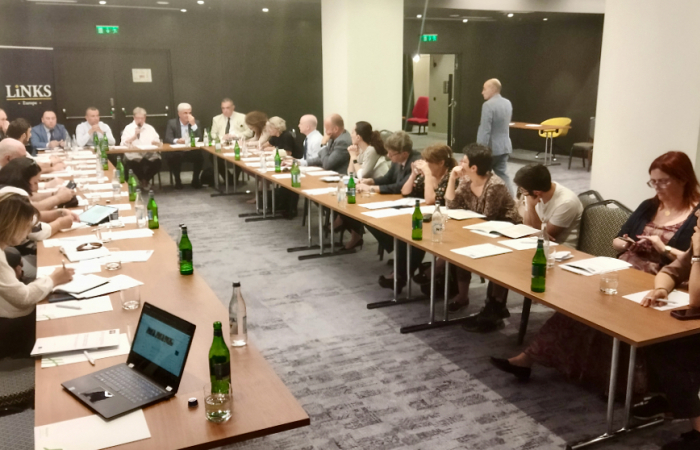
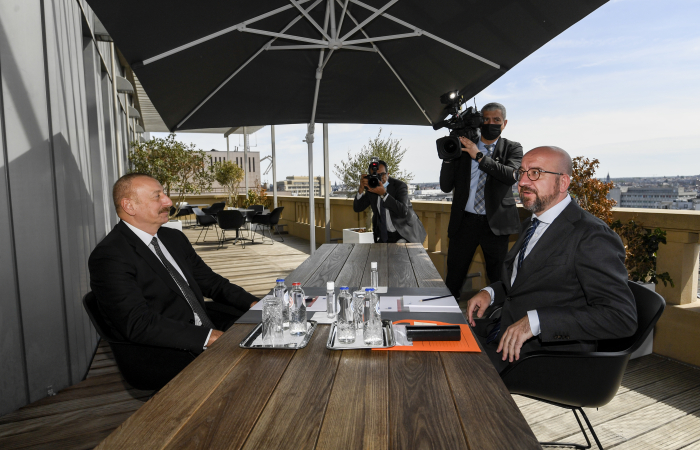
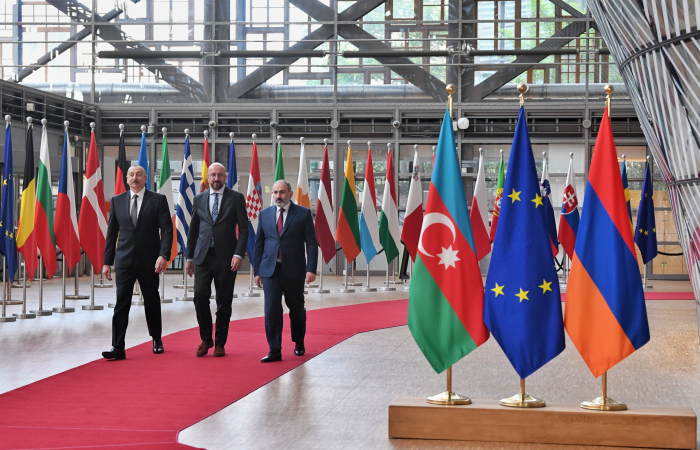
A third round of meetings between the leaders of Armenia and Azerbaijan hosted by the European Union in Brussels have resulted in progress on a range of issues as the two countries work to resolve the long standing conflict between them. European Council president, Charles Michel welcomed president Ilham Aliyev of Azerbaijan and prime minister Nikol Pashinyan of Armenia for another meeting in trilateral format on Sunday (22 May). He later described the talks as "frank and productive". In a statement to the media late on Sunday night Michel said the talks focused on the situation in the South Caucasus and the development of EU relations with both countries as well as the broader region. Summarising the meeting, Michel said "the discussion was frank and productive. We reviewed the entire set of issues. We had a detailed discussion on humanitarian issues, including demining, and efforts to free detainees and address the fate of missing persons." He listed a number of outcomes from the meeting including on border issues, connectivity, on a future peace agreement and on socio economic development. In conclusion president Michel said that he also stressed the importance of preparing the populations for long-term sustainable peace. The EU is ready to step up its support. "We agreed to remain in close contact and will meet again in the same format by July/August." 
Editor's choice
News
Kyiv says it will not give up territory in return for a cease fire

Kyiv says it will not give up territory in return for a cease fire

The Ukrainian government says it won't agree a ceasefire deal with Russia that involves giving up territory. Presidential adviser Mykhaylo Podolyak said Kyiv would not follow calls in the West for an urgent ceasefire that involved Russian forces remaining in territory they occupy in the south and east of the country. He said making concessions would result in Moscow starting an even larger, more bloody offensive in the longer term. His comments come as Russia continues its attempts to encircle Ukrainian forces defending the eastern city of Severodonetsk. Russia occupied the Crimean Peninsula in 2014,and annexed it to its territory. It also took de facto control of parts of the Donbas region around the same time. Immediately before launching the invasion of Ukraine on 24 February of this year, Russian president Putin formally recognised the territories, which it calls the  Lugansk and Donetsk People's Republics, as sovereign countries. After failing to occupy Kyiv and overthrow the Ukrainian government as part of its invasion plan, the Kremlin is now concentrating on expanding the territory under its control in the Donbas. The internationally community recognises Crimea and the Donbas region as an integral part of Ukraine.
Editor's choice
News
Russia steps up its support for the military government of Mali

Russia steps up its support for the military government of Mali

Russian Foreign Minister Sergei Lavrov on Friday (20 May) received in Moscow his Malian counterpart Abdoulaye Diop with promises of Russian support for the the Malian military government across a range of areas, including defence, security and energy. Lavrov speaking at a press conference with Diop accused France of trying to dictate to Mali who they can or cannot communicate with. "This is unacceptable and does not make the French Republic or French manners look good", the Russian foreign minister said. The meeting came on the same day that the German parliament agreed on a reconfiguration of its military contingent in Mali.
Editor's choice
Opinion
Opinion: A transitional arrangement for Karabakh may be necessary if deadlock in Armenia-Azerbaijan negotiations is to be avoided

Opinion: A transitional arrangement for Karabakh may be necessary if deadlock in Armenia-Azerbaijan negotiations is to be avoided

The issue of the status of Nagorno Karabakh cannot be avoided in future discussions on an Armenia-Azerbaijan bilateral peace treaty, argues Benyamin Poghosyan in this op-ed. One solution is to agree to some transitional arrangement. During this “transitional period,” the status quo that emerged after the 2020 Karabakh war should remain intact, with no territorial changes or population relocation. The OSCE Minsk group or other relevant international bodies may elaborate on specific criteria to determine conditions that will allow the termination of the “transitional period." Meanwhile, the sides may seek to provide an international mandate to the Russian peacekeeping force deployed in Karabakh, potentially supplementing Russian troops with forces of other countries. Implementing robust “confidence-building measures" between the sides supported by the international community should be a significant part of the deal. Such a “Transitional period” may not seem the ideal solution. However, other options risk sooner or later destroying the fragile bilateral talks between Armenia and Azerbaijan and may bring the region back to the pre-2020 war situation. 
Editor's choice
News
Slava Ukraina: Europeans embrace Ukraine, catapulting it to victory in the Eurovision Song Festival

Slava Ukraina: Europeans embrace Ukraine, catapulting it to victory in the Eurovision Song Festival

Kalush Orchestra have won the 2022 Eurovision Song Contest for Ukraine with their song 'Stefania', at the end of an emotional festival final held in Turin on Saturday (14 May). It was a memorable night for the iconic Eurovision Festival as Ukraine's Kalush Band swept to victory with the backing of a popular vote from across Europe. If European politicians are hesitant in embracing Ukraine as one of their own, the people of Europe have shown no hesitation in embracing Ukraine's music and culture, and the cause of the Ukrainian people as they fight against Russian aggression. Receiving the winning trophy, lead singer Oleh Psiuk declared: "Thank you for supporting Ukraine. This victory is for every Ukrainian. Slava Ukraina." Speaking backstage, the singer said he hoped Ukraine could stage the contest in 2023. Ukrainian President Volodymyr Zelensky congratulated Kalush Orchestra and said Ukraine's courage "impresses the world". In a post on Instagram, he vowed one day to host Eurovision in a "free, peaceful and rebuilt" Mariupol, the port city that has been completely destroyed by the Russian invaders and is now mostly under Russian occupation.
Editor's choice
News
G7 countries reject outright attempts to redraw borders by force in violation of sovereignty and territorial integrity.

G7 countries reject outright attempts to redraw borders by force in violation of sovereignty and territorial integrity.

In a strongly worded statement issued on Saturday (14 May), the foreign ministers of the G7 countries have declared steadfast solidarity and support for Ukraine as it defends itself against Russia’s unjustifiable, unprovoked and illegal war of aggression, a war in which Belarus is complicit. The foreign ministers of Canada, France, Germany, Italy, Japan, UK and US, and the High Representative of the EU stated that "they are committed to helping Ukraine, a democracy and a UN member, uphold its sovereignty and territorial integrity, to defend itself and resist future attacks or coercion, choose its own future and prosper." In their final statement after their meeting the Ministers declared: "In the presence of the Foreign Ministers of Ukraine and Moldova, we underscore Ukraine’s sovereignty, territorial integrity, independence and right for self-defence under the UN Charter. This war of aggression has reaffirmed our determination to reject outright attempts to redraw borders by force in violation of sovereignty and territorial integrity."
Editor's choice
Opinion
Opinion: The Armenia-Azerbaijan peace process proceeds despite challenges

Opinion: The Armenia-Azerbaijan peace process proceeds despite challenges

The Armenia-Azerbaijan peace process is passing through a critical stage which will determine the future of the relations between the two countries: Either they will now agree on normalization of relations and put an end to their hostilities, or they will remain stuck in these disputes for years to come. Hopefully, peace efforts will prevail over the agendas of nationalist groups and their external allies, writes Dr Vasif Huseynov in this op-ed