Region

Ukraine and Eastern Europe

Stories under this heading cover Ukraine and Eastern Europe. 

Editor's choice
News
Council of Europe launches new International Claims Commission for Ukraine

Council of Europe launches new International Claims Commission for Ukraine

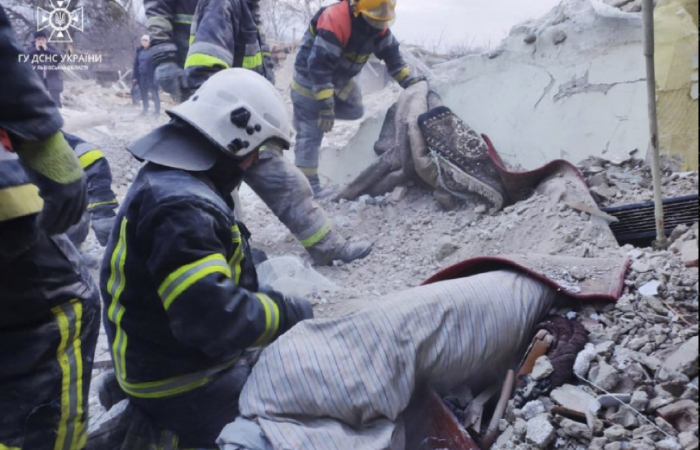
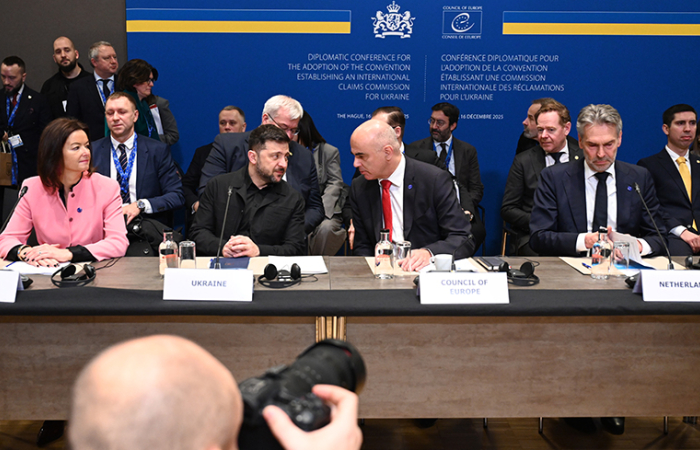
Thirty-four countries and the European Union have signed a new convention establishing an International Claims Commission for Ukraine at a diplomatic conference co-hosted by the 46-nation Council of Europe and the Netherlands in the Hague. The diplomatic conference was attended by leaders and high-level representatives from over 50 states, including the President of Ukraine, Volodymyr Zelenskyy, the President of the Republic of Moldova, Maia Sandu, and the Prime Minister of the Netherlands, Dick Schoof.  “Today marks a major step forward in ensuring accountability for Ukraine. The International Claims Commission represents justice and hope for tens of thousands of victims—our determination that those who have suffered will not be forgotten. I call for quick ratifications so we can get the commission rapidly up and running for the people of Ukraine,” said Council of Europe Secretary General Alain Berset. Ukrainian President Volodymyr Zelenskyy said: “We expect that every mechanism for compensation from the Register of Damage and Claims Commission to the actual payments – will start working and receive strong and sufficient international support, so that people can truly feel that any kind of damage caused by the war can be compensated. This war, and Russia’s responsibility for it, MUST become a clear example – so that others learn not to choose aggression.” “Accountability is about creating the conditions for peace that endures. And therefore, accountability is a condition of security – today and for the future. But accountability is not only about Ukraine. And it is not only about one aggressor and one victim. Accountability is about Europe. About every country in Europe. It is about whether Europe, as a whole, is willing to defend its peace,” said Maia Sandu, President of the Republic of Moldova, which currently holds the Presidency of the Council of Europe’s Committee of Ministers. The Prime Minister of the Netherlands, Dick Schoof, said: “Every day Russia is deliberately bombarding homes, destroying businesses and damaging infrastructure in Ukraine. Russia must compensate Ukraine for the damage caused. That is why we have launched the International Claims Commission for Ukraine and we are honoured to host it.” The International Claims Commission will be the second part of a comprehensive compensation mechanism related to Russia’s war of aggression, building on the existing Register of Damage for Ukraine. The claims commission will be established within the framework of the Council of Europe and will also be open to other countries. The Register of Damage for Ukraine, created in 2023, collects and records compensation claims submitted by individuals, organisations and public bodies in Ukraine. Forty-four states and the European Union have so far joined the Register, which has already received 86,000 claims. The International Claims Commission will review, assess and decide upon claims submitted to the Register of Damage for Ukraine and determine the amount of compensation, if any, which is due in each case. The convention establishing the commission will enter into force once it has been ratified by 25 signatories, as long as sufficient funds have been secured to support its initial work.

Filter archive

Publication date
Editor's choice
News
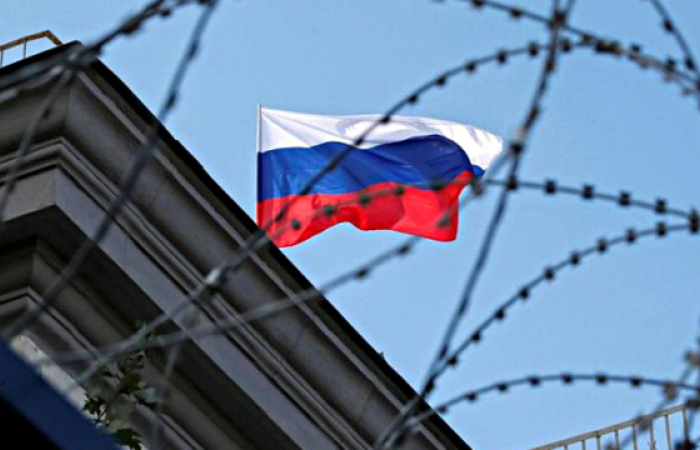
EU extends sanctions on Russia for another six months

EU extends sanctions on Russia for another six months

The European Council has announced that it will extend sanctions on Russia for another six months, until 15 September 2023. In a statement released on Monday (13 March), the Council announced: "The existing restrictive measures provide for travel restrictions for natural persons, the freezing of assets, and a ban on making funds or other economic resources available to the listed individuals and entities. Sanctions will continue to apply to 1,473 individuals and 205 entities, many of which are targeted in response to Russia’s ongoing unjustified and unprovoked military aggression against Ukraine."The statement continued: "After 24 February 2022, in response to Russia’s military aggression against Ukraine, the EU massively expanded sanctions against Russia with the aim of significantly weakening Russia's economic base, depriving it of critical technologies and markets, and significantly curtailing its ability to wage war."
Editor's choice
News
Wagner troops try to break into central Bakhmut but suffer "significant" losses

Wagner troops try to break into central Bakhmut but suffer "significant" losses

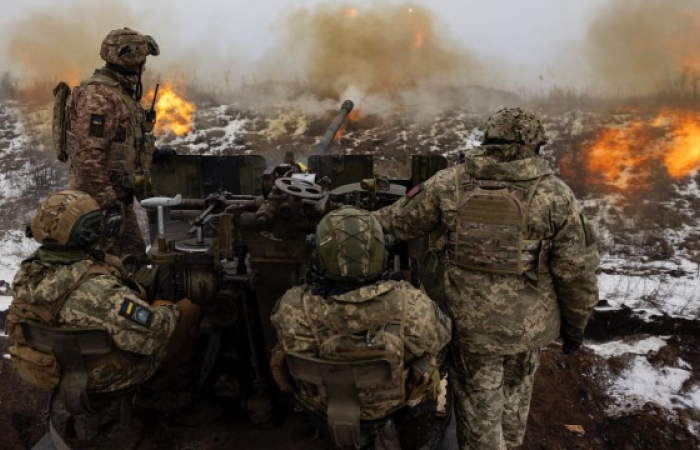
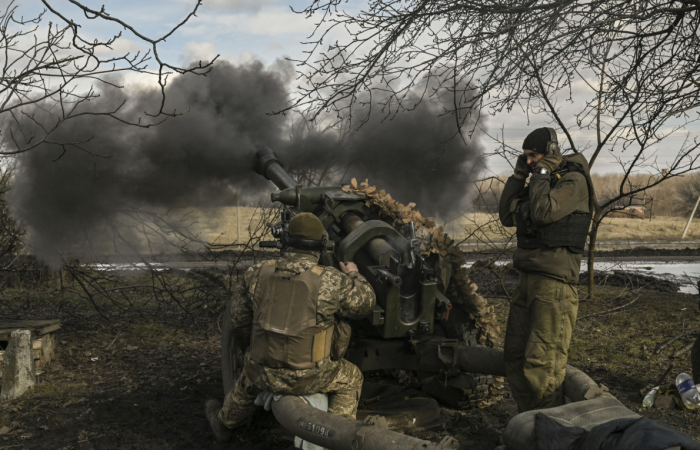
Oleksandr Syrskyi, the commander of Ukraine's Ground Forces, has said in the morning of Monday (13 March) that fighting around the Ukrainian town of Bakhmut - an industrial town with a pre-war population of some 70,000 - remains "difficult" as assault units of the Russian Kremlin-backed mercenary group Wagner continue trying to break through Ukrainian defense lines and advance to the central areas of the city. Quoted by the Ukrainian defense ministry's media center, Syrskyi said "in fierce battles, our defenders inflict significant losses on the enemy. All enemy attempts to capture the city are repelled by artillery, tanks, and other firepower." Russia, and in large part Wagner, has been trying to take Bakhmut for some seven months. In recent weeks Russian and Wagner forces have slowly advanced towards the town and have reportedly partially encircled it. Last week Ukraine is understood to have partially withdrawn to west of the Bakhmutka river that divides Bakhmut, and now marks the front line.
Editor's choice
News
Ukraine likely conducting limited tactical withdrawal from Bakhmut, Russia still deploying 60-year-old tanks

Ukraine likely conducting limited tactical withdrawal from Bakhmut, Russia still deploying 60-year-old tanks

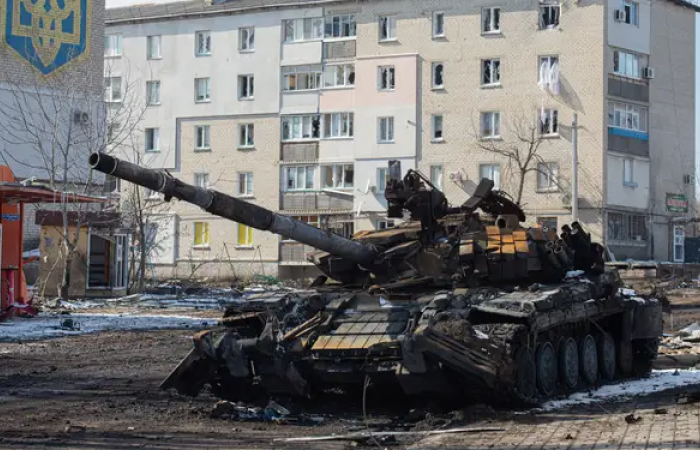
Ukrainian forces are likely conducting a "limited tactical withdrawal" from Bakhmut, said the Institute for the Study of War in its latest update of the Russia-Ukraine war on Monday (6 March). They did also caution, however, that it is too early to tell if Ukraine is considering a complete withdrawal from the city. Quoting a Ukrainian serviceman, the ISW also reported that, as of 4 March, Russian forces had not yet crossed the Bakhmuta River into central Bakhmut. Russian military bloggers have also claimed the Wagner Group had pushed Ukrainian positions back to central Bakhmut, according to the ISW. Amid the increased fighting along the frontline in eastern Ukraine, the UK Ministry of Defence reported in its intelligence update on 6 March that Russia "has continued to respond to heavy armoured vehicle losses by deploying 60-year-old T-62 main battle tanks".
Editor's choice
News
Warmer weather could help Ukraine in Bakhmut as Kyiv claims 150,000 Russian troop losses

Warmer weather could help Ukraine in Bakhmut as Kyiv claims 150,000 Russian troop losses

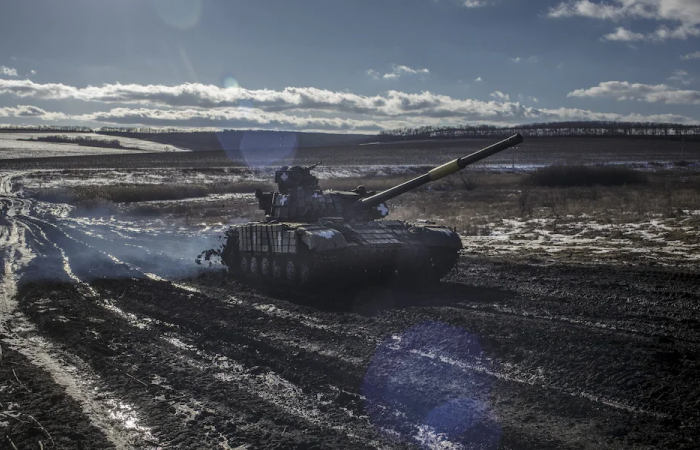
In its latest intelligence briefing on the Russian invasion of Ukraine on Thursday (2 March), the UK Ministry of Defence has suggested that warmer weather around Bakhmut - the eastern Ukrainian town with a pre-war population of 70,000 that Russia has been trying to capture for months - may help the Ukrainians in their defence. In the briefing, the UK Ministry of Defence wrote, "as Ukrainian forces continue their defence of Bakhmut, Donetsk Oblast, rising temperatures are now creating the muddy conditions [...] limiting cross country movement (CCM)." "Poor CCM typically provides some military advantage to defending forces," the briefing adds. The UK Ministry of Defence also note that daytime temperatures around Bakhmut have risen to above freezing, and warmer than average forecasts over the next weeks will also likely decrease CCM. "It is almost certain that by late-March, CCM will be at its worst following the final thaw. This will add further friction to ground operations and hamper the off-road movement of heavier armoured vehicles, especially over churned-up ground in the Bakhmut sector."
Editor's choice
Commentary
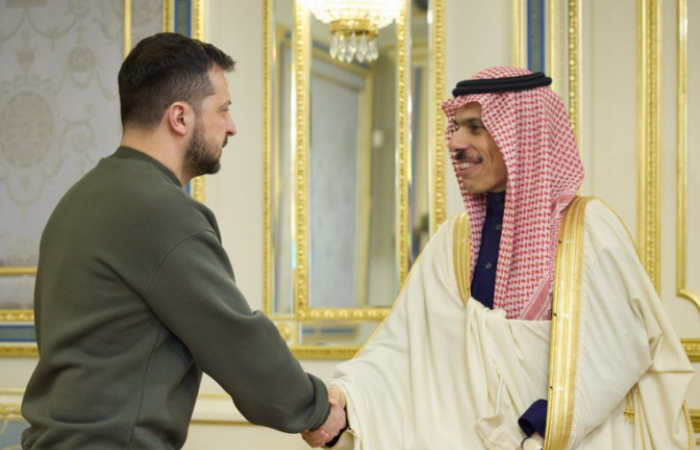
Gulf States' position on the war in Ukraine is a work in progress

Gulf States' position on the war in Ukraine is a work in progress

When Russia launched its full-scale invasion of Ukraine one year ago the prevalent feeling among the Arab Gulf states was that they did not want to get involved.  Some thought the best policy was to ignore it, others that they should at the very least dodge it, and some even saw in it some opportunity to extend relations with Russia and China.  There were a number of reasons for this. The region was frustrated with how the west dealt with it. It expected a more equal relationship that never properly materialised. There was fatigue at western attempts – some clearly ill-judged – at interfering in the Arab region, and conversely, disappointment at western failure to stand up to Iran. The unsightly US departure from Afghanistan, and talk of American strategic re-positioning, convinced some that the American moment in the Gulf had passed.
Editor's choice
News
Ukraine repels 60 Russian attacks in 24 hours as Bakhmut situation deteriorates

Ukraine repels 60 Russian attacks in 24 hours as Bakhmut situation deteriorates

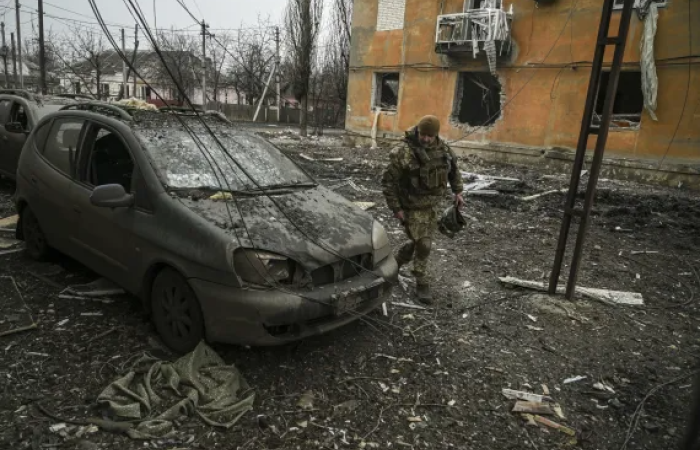
The Ukrainian military repelled 60 Russian attacks in five areas over the past 24 hours in northeastern and eastern Ukraine, the General Staff of Ukraine's Armed Forces reported in its morning update on Tuesday (28 February). Ukraine repelled the attacks near Kupyansk in eastern Kharkiv Oblast as well as Lyman, Bakhmut, Adviika, and Shakhtarsk in Donetsk Oblast, where Russia is concentrating its main offensive efforts, according to the General Staff. Russian troops reportedly carried out eight missile attacks, 32 air strikes, and launched more than 85 attacks using multiple launch rocket systems  between 27 and 28 February, the statement said. Meanwhile, in his daily address on the evening of 27 February, Ukrainian President Volodymyr Zelensky said that the situation in the Bakhmut direction is "getting more and more difficult". He added that Russia "is constantly destroying everything that can be used to protect our positions, to gain a foothold and ensure defense". The commander of Ukraine's ground forces, Col Gen Oleksandr Syrskyi, has said the situation around Bakhmut is "extremely tense". Russia has been trying to take the medium-sized industrial town with a pre-war population of roughly 70,000 for over six months, and has long been a location where the front line has been the most active.