Region

Ukraine and Eastern Europe

Stories under this heading cover Ukraine and Eastern Europe. 

Editor's choice
News
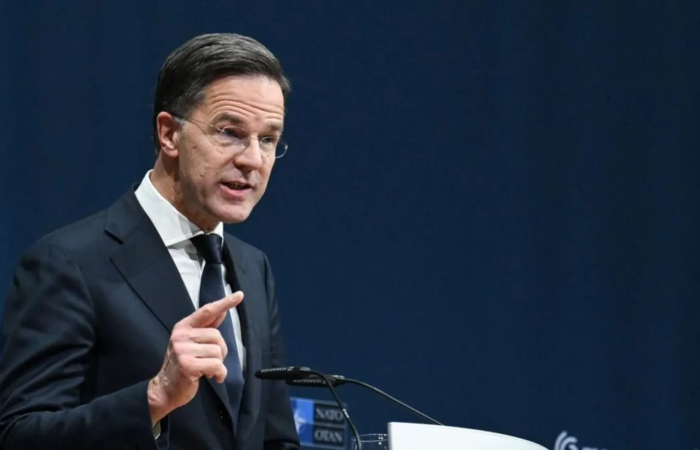
NATO Chief says war is on Europe's doorstep, and warns against complacency

NATO Chief says war is on Europe's doorstep, and warns against complacency

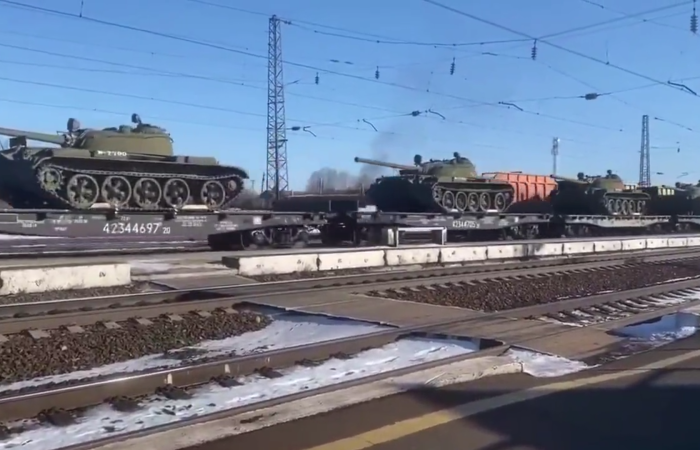
Russia could attack a NATO country within the next five years, the Secretary General of NATO, Mark Rutte, said in a stark new warning. "NATO's own defences can hold for now," Rutte warned in Berlin, but conflict was "next door" to Europe, and he feared "too many are quietly complacent, and too many don't feel the urgency, too many believe that time is on our side. "Russia is already escalating its covert campaign against our societies," Rutte said in a speech in Germany. "We must be prepared for the scale of war our grandparents or great-grandparents endured." Earlier this month, Russia's President Vladimir Putin said his country was not planning to go to war with Europe, but it was ready "right now" if Europe wanted to - or started a war. But similar reassurances were given by Moscow in 2022, just before 200,000 Russian troops crossed the border and invaded Ukraine. Putin has accused European countries of hindering US efforts to bring peace in Ukraine - a reference to the role Ukraine's European allies have recently played in trying to change a US peace plan to end the war, whose initial draft was seen as favouring Russia. But Putin was not sincere, Nato's secretary-general said in the German capital, Berlin. Supporting Ukraine, he added, was a guarantee for European security. "Just imagine if Putin got his way; Ukraine under the boot of Russian occupation, his forces pressing against a longer border with Nato, and the significantly increased risk of an armed attack against us." Russia's economy has been on a war footing for more than three years now - its factories churn out ever more supplies of drones, missiles and artillery shells. According to a recent report by the Kiel Institute for the World Economy, Russia has been producing each month around 150 tanks, 550 infantry fighting vehicles, 120 Lancet drones and more than 50 artillery pieces. The UK, and most of its Western allies, are simply not anywhere near this point. Analysts say it would take years for Western Europe's factories to come close to matching Russia's mass-production of weapons. "Allied defence spending and production must rise rapidly, our armed forces must have what they need to keep us safe," the Nato chief said.
Filter archive

Publication date
Editor's choice
News
IMF reach staff-level agreement to give Ukraine $15.6bn loan

IMF reach staff-level agreement to give Ukraine $15.6bn loan

On Tuesday (21 March) the International Monetary Fund (IMF) located in Washington D.C. announced that it had reached a staff-level agreement with Ukraine for a 48-month financing package worth about $15.6 billion. The BBC also reports that it is the first loan that the organisation has granted to a country at war. In a statement, the IMF announced that the Extended Fund Facility (EFF) "aims to support the Ukrainian authorities anchor policies that sustain fiscal, external, price and financial stability, and support the ongoing gradual economic recovery, while promoting long-term growth in the context of post-war reconstruction and Ukraine’s path to EU accession". The agreement must however still be ratified by the IMF's board, and follows months of negotiations between IMF staff and Ukrainian authorities. The executive board of the IMF is expected to discuss approval in the coming weeks.
Editor's choice
News
Russian cruise missiles destroyed in explosion in Crimea

Russian cruise missiles destroyed in explosion in Crimea

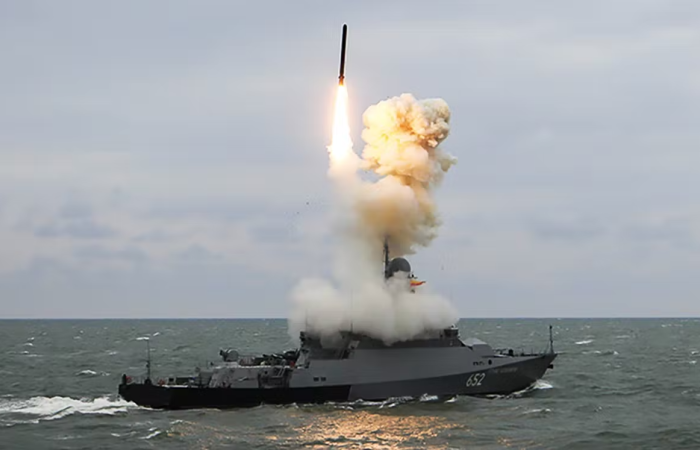
Russian Kalibr cruise missiles have been destroyed in an explosion in the Crimean city of Dzhankoi late on Monday (20 March). According to the Ukrainian Ministry of Defence, they were being transported by rail at the time of the explosion. As has become standard, Ukrainian authorities confirmed the explosions in Dzhankoi, located in the north of the Russian-occupied Crimean peninsula, but they did not claim an attack. "The [explosions] continue the process of Russia's demilitarisation and prepares the Ukrainian peninsula of Crimea for de-occupation," the Ukrainian Defence Ministry said in a statement. Sergei Aksenov, the head of Moscow-installed proxies in Crimea, said that Russian air defense had been working in Dzhankoi, saying that the wreckage injured one person and damaged a household and a shop. Meanwhile Igor Ivin, the head of the occupying administration in Dzhankoi, reported a drone attack. The Kalibr missiles which have reportedly been destroyed in the explosion are designed to be launched from surface ships of the Russian Black Sea Fleet.
Editor's choice
News
UK Foreign Secretary visits Moldova and Georgia to pledge support against "Russian malign interference"

UK Foreign Secretary visits Moldova and Georgia to pledge support against "Russian malign interference"

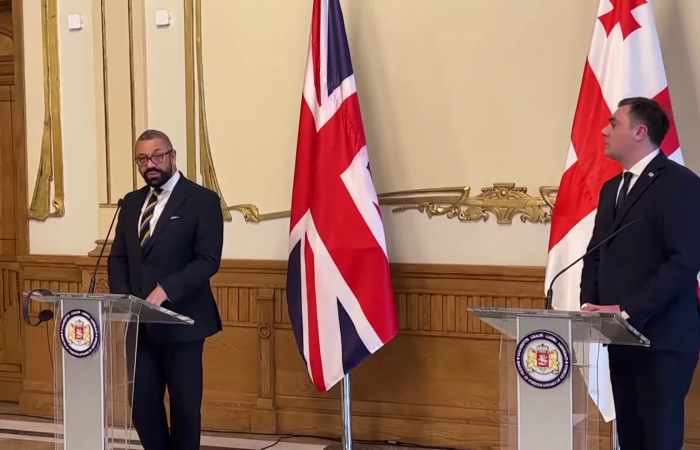
The UK Foreign Secretary James Cleverly is on a two-day visit to Moldova and Georgia to announce new funding to "boost regional resilience against Russian malign interference". In a press release from the Foreign, Commonwealth and Development Office issued on Thursday (16 March), the UK Government said they will "underline support for territorial integrity and sovereignty as part of work with Russia’s neighbours to deal with the threat on their doorstep.They added that funding will support governance reforms, fair elections, and anti-corruption programmes. First visiting the Moldovan capital of Chisinau on Thursday, Cleverly announced an extra £10 million (€11.4 million) to support economic and governance reforms in Moldova. This new pledge comes on top of £12 million already contributing to military reforms, and anti-corruption and transparency work in the country. Visiting the Georgian capital of Tbilisi one day later, on Friday (17 March), Cleverly announced a £500,000 package aimed at creating an environment for free and fair elections in 2024, protecting them from external interference.
Editor's choice
News
EU extends sanctions on Russia for another six months

EU extends sanctions on Russia for another six months

The European Council has announced that it will extend sanctions on Russia for another six months, until 15 September 2023. In a statement released on Monday (13 March), the Council announced: "The existing restrictive measures provide for travel restrictions for natural persons, the freezing of assets, and a ban on making funds or other economic resources available to the listed individuals and entities. Sanctions will continue to apply to 1,473 individuals and 205 entities, many of which are targeted in response to Russia’s ongoing unjustified and unprovoked military aggression against Ukraine."The statement continued: "After 24 February 2022, in response to Russia’s military aggression against Ukraine, the EU massively expanded sanctions against Russia with the aim of significantly weakening Russia's economic base, depriving it of critical technologies and markets, and significantly curtailing its ability to wage war."
Editor's choice
News
Wagner troops try to break into central Bakhmut but suffer "significant" losses

Wagner troops try to break into central Bakhmut but suffer "significant" losses

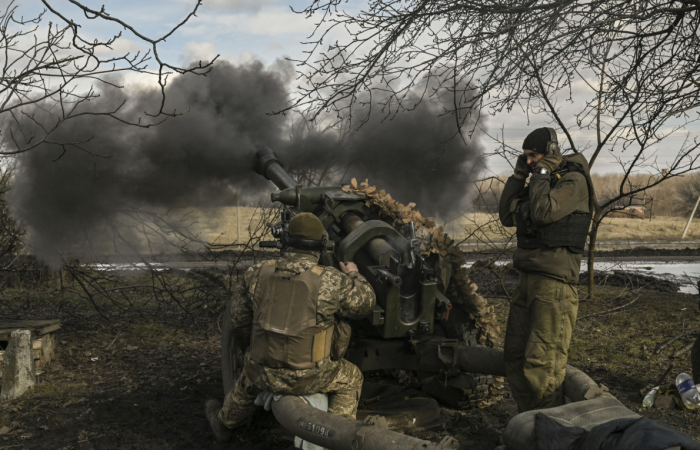
Oleksandr Syrskyi, the commander of Ukraine's Ground Forces, has said in the morning of Monday (13 March) that fighting around the Ukrainian town of Bakhmut - an industrial town with a pre-war population of some 70,000 - remains "difficult" as assault units of the Russian Kremlin-backed mercenary group Wagner continue trying to break through Ukrainian defense lines and advance to the central areas of the city. Quoted by the Ukrainian defense ministry's media center, Syrskyi said "in fierce battles, our defenders inflict significant losses on the enemy. All enemy attempts to capture the city are repelled by artillery, tanks, and other firepower." Russia, and in large part Wagner, has been trying to take Bakhmut for some seven months. In recent weeks Russian and Wagner forces have slowly advanced towards the town and have reportedly partially encircled it. Last week Ukraine is understood to have partially withdrawn to west of the Bakhmutka river that divides Bakhmut, and now marks the front line.