Region

South Caucasus

The South Caucasus – a region encompassing Armenia, Azerbaijan and Georgia - is one of strategic importance, not only for adjacent countries, such as Turkiye, Russia, Iran and the Central Asian states, but also for neighbours such as the European Union and the GCC states, and globally for the United States, India, China, Pakistan and Japan.

commonspace.eu team brings decades of experience of working in the South Caucasus and we are pleased to share our insights with our loyal readers through the website, and the sister newsletter, Caucasus Concise.

Filter archive

Publication date
Editor's choice
Opinion
Opinion: A worrying sense of deja-vu prevails in Armenia-Azerbaijan relations

Opinion: A worrying sense of deja-vu prevails in Armenia-Azerbaijan relations

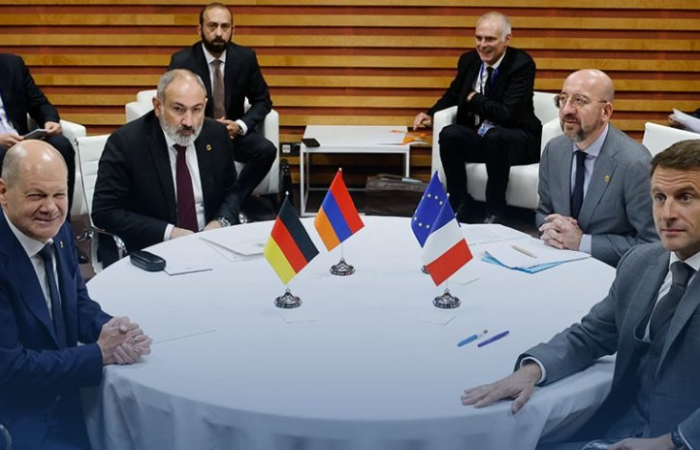
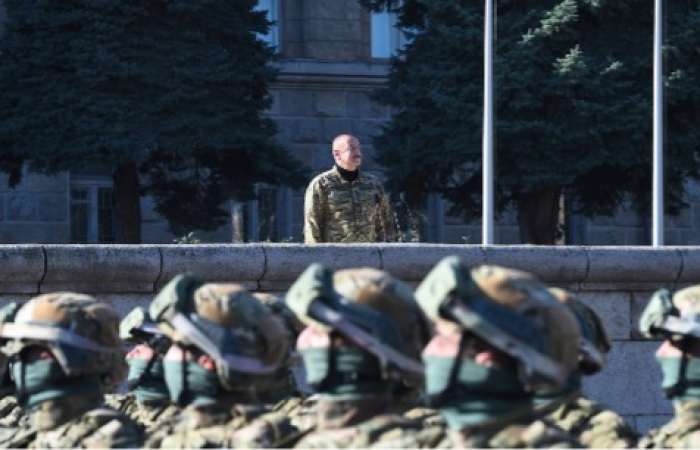
This month marked the third anniversary of the ceasefire statement that was meant to end the second Karabakh war. In retrospect, it might be more appropriately considered a continuation of the first conflict of the early 1990s given that the ceasefire then was hardly implemented too, leading to a new war 26 years later. Meanwhile, hopes that Baku and Yerevan could sign a peace agreement are fading. In this op-ed for commonspace.eu Onnik James Krikorian says that "a deal was possible by the end of the year, both sides pronounced in 2022 and again throughout 2023, but that sounded as vague and sometimes disingenuous then as it does now. Instead, an uncanny sense of deja vu hangs over the process, reminiscent of earlier failures by the now defunct OSCE Minsk Group."
Editor's choice
Commentary
Commentary: EU muddles along in its relations with the South Caucasus

Commentary: EU muddles along in its relations with the South Caucasus

It has been a roller-coaster sort of week for EU relations with the South Caucasus. It started on Wednesday (8 November), with the decision of the European Commission to recommend that Georgia be recognized as a Candidate Country, opening the way for eventual membership. By Tuesday, (14 November) the Foreign Affairs Council was considering providing military assistance to Armenia through possible assistance from the European Peace Facility. In the days in-between relations between the EU and Azerbaijan appeared to have dipped to their lowest point in a decade, with Azerbaijan accusing the EU of inciting separatism. Except that on Wednesday (15 November), the Azerbaijani presidential foreign policy aide surfaced in Brussels where he was told that Azerbaijan was an important partner for the EU in the South Caucasus and that the EU will continue to support the Armenia-Azerbaijan normalisation process to advance a peaceful and prosperous South Caucasus. One would like to think that all this was part of some grand strategy. Russian foreign minister Sergei Lavrov seems to think so, accusing the EU of trying to oust Russia out of the South Caucasus (and Central Asia). But a closer look at this week’s events suggest that the EU is doing, what it often does: muddling along, reacting to events and situations rather than fulfilling some grand strategy. This is risky, and the EU needs to develop a strategic framework for dealing with the South Caucasus. There is an urgent need for the European Union to develop a strategic perspective towards the region that is based on realism, and that has enough support from different stakeholders – Commission, Member States; Parliament – for it to be credible. Developing a comprehensive EU strategy will take time and will require an alignment of different views and interests that may take months, if not years, to achieve. In the meantime however, the EU should have the ambition to publish by early Spring 2024 a short but ambitious statement of intent with its vision for the region that may provide a framework around which different ad hoc policies and initiatives can be organized. The first half of 2024 may offer a window of opportunity for this to happen.
Editor's choice
News
EU is worried about Armenia

EU is worried about Armenia

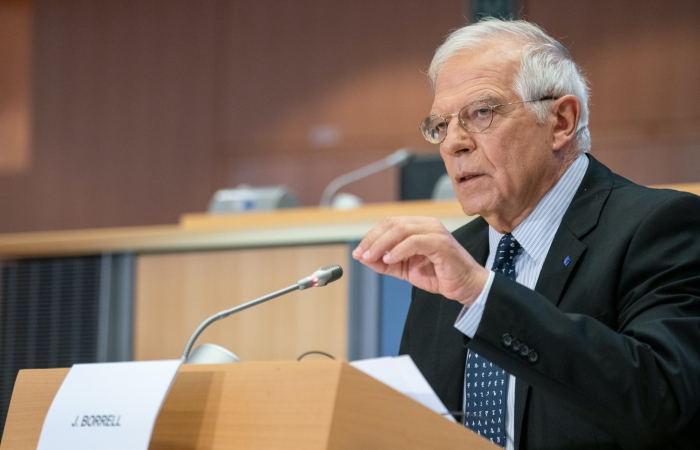
The European Union is increasingly worried about Armenia, and attempts to destabilise it both internally and externally. The matter was discussed by the foreign ministers of the 27 member states meeting in Brussels in the format of the Foreign Affairs Council on Monday (14 November). Briefing journalists after the meeting, EU High Representative, Josep Borrell said "The October European Council discussed how to strengthen our cooperation with Armenia and support its democratically elected authorities, its resilience, its security and the continuation of reforms in the country. We decided to beef up our mission in Armenia: more observers and more patrols in sensitive areas of the border.   And we will explore a possible support to Armenia under the European Peace Facility and options for visa-liberalisation for Armenia.  We have to be very much vigilant for any attempts of destabilisation of Armenia, internally and externally. And our message to Azerbaijan has been clear: any violation of Armenia’s territorial integrity will be unacceptable and would have severe consequences for the quality of our relations.   We call for the resumption of negotiations between Armenia and Azerbaijan and on the work done by the President of the [European] Council [Charles Michel]. We need a peace treaty to be concluded and we are committed to continue our mediation role.   We decided to invite the Armenian Foreign Minister [Ararat Mirzoyan] to join us in the margins of the next, maybe the next, Foreign Affairs Council, it has to be decided - but an upcoming Foreign Affairs Council." In a statement this morning the Azerbaijani Ministry of Foreign Affairs rejected Borrell's statement and accused the EU of inciting separatism.
Editor's choice
News
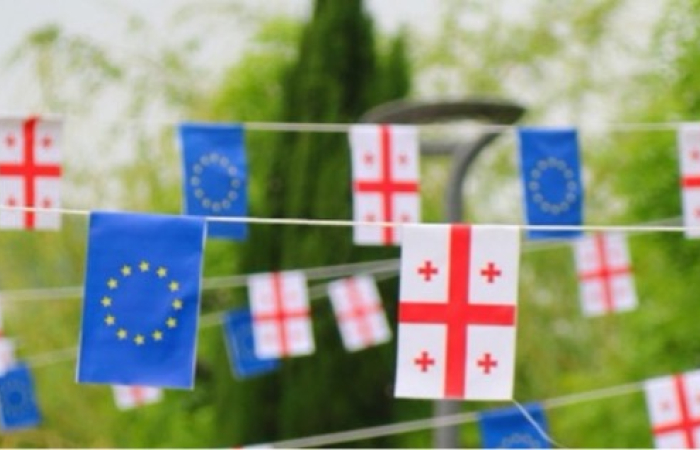
European Commission recommends opening EU membership talks with Ukraine and Moldova and  proposes to grant Georgia EU candidate status

European Commission recommends opening EU membership talks with Ukraine and Moldova and proposes to grant Georgia EU candidate status

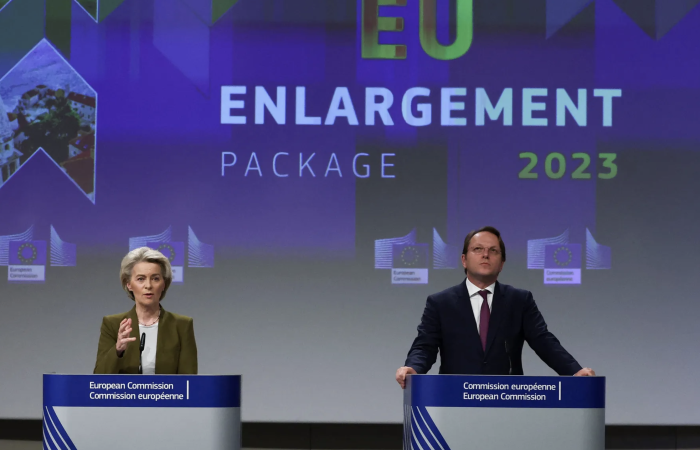
The European Commission has taken a step towards the enlargement of the European Union by recommending the opening of formal EU membership talks with Ukraine and Moldova. The Commission's endorsement is significant as it could lead to Ukraine, currently in conflict with Russia, joining the EU. However, both Ukraine and Moldova will be required to accelerate their internal reforms to meet EU standards. The EU had previously recognised Ukraine as a potential candidate, and this latest development is a continuation of that process. Moldova is on a similar path. The recommendations are part of the EU's routine assessment of potential new members to ensure they are in line with EU rules and values. The final decision on this matter will be taken by EU leaders at a summit in Brussels in December. In the wider context of the enlargement strategy, the Commission has also suggested that Georgia could be granted candidate status if it implements certain reforms. The commission statement says: Georgia has taken steps to strengthen engagement with the EU and increased pace of reforms in the recent months. To address the twelve priorities identified in the Commission Opinion on its membership application, Georgia has adopted legislative acts and policy actions on gender equality, on fighting violence against women and organised crime, as well as on taking into account European Court of Human Rights judgments. A judicial reform has been brought forward although a holistic reform of the High Council of Justice is still needed. Georgia has shared laws as well as its action plan for deoligarchisation with the Venice Commission for an opinion. A strategy on the protection of human rights was adopted and an action plan is being elaborated. A memorandum of cooperation with civil society representatives was concluded. Building a strong cross-party political consensus would contribute to addressing polarisation and accelerate its European path. The Commission has also proposed steps for six Western Balkan countries that want to join the EU, with Bosnia and Herzegovina mentioned as a potential candidate for negotiations "once the necessary degree of compliance with the membership criteria is achieved".
Editor's choice
Opinion
Opinion: EU-Azerbaijan relations are important for both sides

Opinion: EU-Azerbaijan relations are important for both sides

EU-Azerbaijan relations are important for both sides, and the Brussels format of the Armenia-Azerbaijani peace talks, are likewise important to reach negotiated solutions over the remaining unresolved questions between Baku and Yerevan, writes Vasif Huseynov in this op-ed for commonspace.eu. "The reactivation of the Brussels format and the revitalization of the constructive role of the EU in the South Caucasus should happen sooner rather than later. A balanced approach by the EU and its leading member states vis-à-vis the countries of the region is of utmost necessity towards this end", he argues.