Region

EU plus

Stories in this section cover the EU-27 countries plus the UK, Norway, Switzerland, Iceland, Liechtenstein, Monaco, Andorra and the Balkan Countries (Albania, Serbia, Montenegro, Bosnia-Herzegovina, Kosovo, North Macedonia).

Editor's choice
News
Germany accuses Russia of cyberattacks and disinformation campaign

Germany accuses Russia of cyberattacks and disinformation campaign

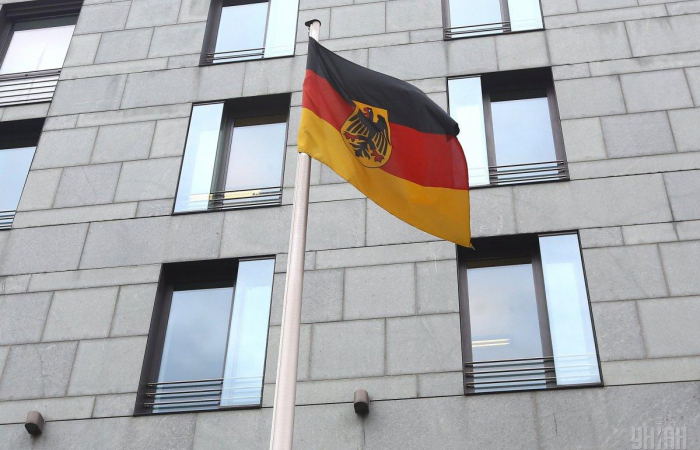
The German government holds Russia responsible for a cyberattack on German air traffic control, and for targeted disinformation campaigns before the last federal election. According to the German Foreign Office in Berlin, the incidents could be clearly attributed to the Russian military intelligence service, the GRU. In response, the Russian ambassador to Berlin was summoned to the Foreign Ministry. "We have been observing a massive increase in threatening hybrid activities by Russia for some time now," a spokesperson for the Foreign Ministry stated. These range from disinformation campaigns and espionage to cyberattacks and sabotage attempts. The aim is to divide society, sow distrust, and undermine confidence in democratic institutions. The spokesperson added that with these actions, Russia is "very concretely threatening our security, not only through its war of aggression against Ukraine, but also here in Germany."  The Foreign Ministry spokesperson explained that the cyberattack on air traffic control in August 2024 was clearly attributed to the hacker collective "APT28," known as "Fancy Bear," and to the responsibility of the Russian military intelligence service, the GRU. Furthermore, it could now be "conclusively stated" that Russia had attempted "to influence and destabilize both the last Federal election and the ongoing internal affairs of the Federal Republic of Germany." There was "absolutely irrefutable evidence" for this". The so-called "Storm 1516" campaign, which has been running since 2024, is allegedly backed by "reliable information" that the Moscow-based think tank "Center for Geopolitical Expertise" is behind it. The Center is also said to be supported by Russian military intelligence. Its primary aim is to influence democratic elections in the West. (Click the image to read more).
Editor's choice
News
NATO Chief says war is on Europe's doorstep, and warns against complacency

NATO Chief says war is on Europe's doorstep, and warns against complacency

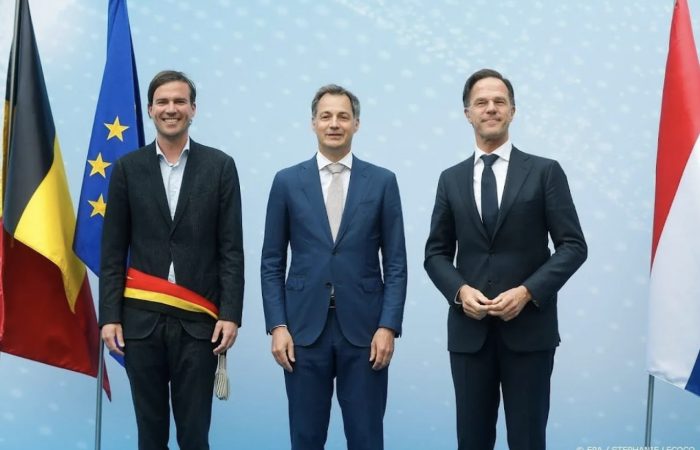
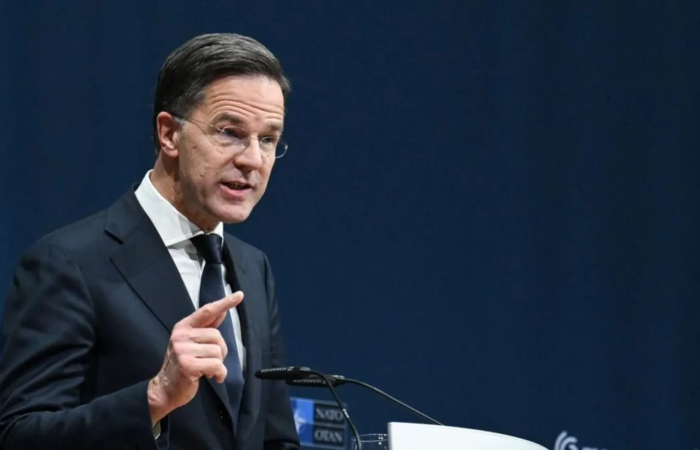
Russia could attack a NATO country within the next five years, the Secretary General of NATO, Mark Rutte, said in a stark new warning. "NATO's own defences can hold for now," Rutte warned in Berlin, but conflict was "next door" to Europe, and he feared "too many are quietly complacent, and too many don't feel the urgency, too many believe that time is on our side. "Russia is already escalating its covert campaign against our societies," Rutte said in a speech in Germany. "We must be prepared for the scale of war our grandparents or great-grandparents endured." Earlier this month, Russia's President Vladimir Putin said his country was not planning to go to war with Europe, but it was ready "right now" if Europe wanted to - or started a war. But similar reassurances were given by Moscow in 2022, just before 200,000 Russian troops crossed the border and invaded Ukraine. Putin has accused European countries of hindering US efforts to bring peace in Ukraine - a reference to the role Ukraine's European allies have recently played in trying to change a US peace plan to end the war, whose initial draft was seen as favouring Russia. But Putin was not sincere, Nato's secretary-general said in the German capital, Berlin. Supporting Ukraine, he added, was a guarantee for European security. "Just imagine if Putin got his way; Ukraine under the boot of Russian occupation, his forces pressing against a longer border with Nato, and the significantly increased risk of an armed attack against us." Russia's economy has been on a war footing for more than three years now - its factories churn out ever more supplies of drones, missiles and artillery shells. According to a recent report by the Kiel Institute for the World Economy, Russia has been producing each month around 150 tanks, 550 infantry fighting vehicles, 120 Lancet drones and more than 50 artillery pieces. The UK, and most of its Western allies, are simply not anywhere near this point. Analysts say it would take years for Western Europe's factories to come close to matching Russia's mass-production of weapons. "Allied defence spending and production must rise rapidly, our armed forces must have what they need to keep us safe," the Nato chief said.

Filter archive

Publication date
Editor's choice
News
A sigh of relief in Europe as Macron sweeps to victory

A sigh of relief in Europe as Macron sweeps to victory

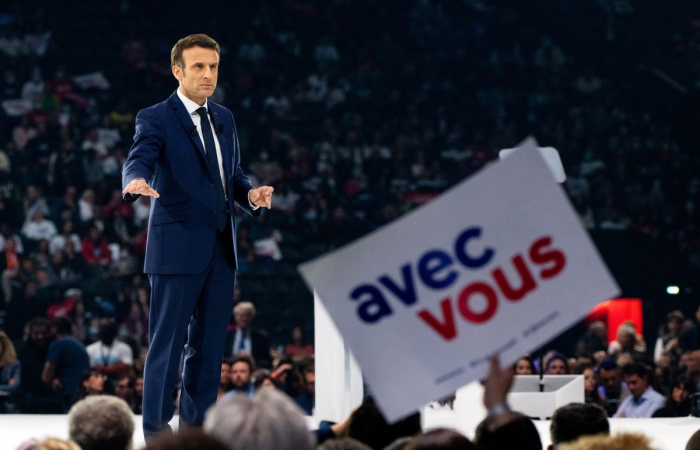
There was a sigh of relief across Europe on the news of the victory of Emmanuel Macron in the second round of the French presidential elections held on Sunday (24 April), thwarting an attempt to unseat him by far right candidate Marie Le Pen. Many in Europe are describing the outcome as a win for the European Union.  "Bravo Emanuel", European Council president Charles Michel wrote on twitter. “In this turbulent period, we need a solid Europe and a France totally committed to a more sovereign and more strategic European Union.” Whilst Macron was always the favorite to win, European countries watched anxiously as his lead in opinion polls narrowed in the days before the ballot. A victory for Le Pen, a deeply eurosceptic politician who has professed admiration for Russian President Vladimir Putin, would have had huge implications for the stability of the EU. Le Pen had long flirted with the idea of leaving the bloc, although she insisted during her campaign that she had no “secret agenda” this time for quitting the group or the euro single currency.
Editor's choice
News
Charles Michel meets Zelensky in Kyiv and visits Borodyanka

Charles Michel meets Zelensky in Kyiv and visits Borodyanka

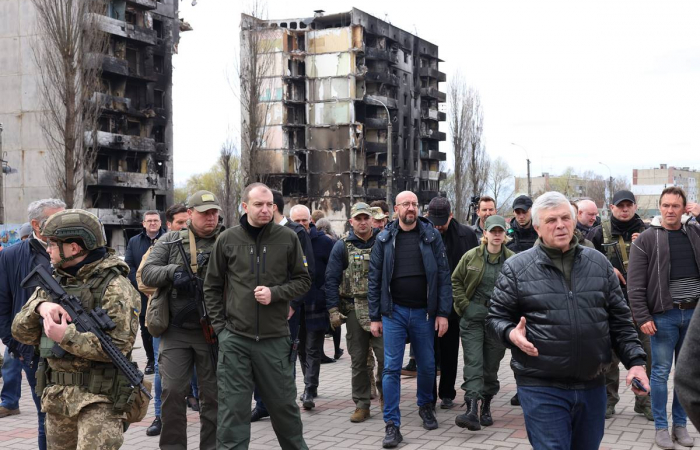
European Council president Charles Michel, who is currently paying a surprise visit to the Ukrainian capital, Kyiv, met on Wednesday with Ukrainian President Volodymyr Zelensky.  Later, Zelensky tweeted: "My valuable friend Charles Michel is in Kyiv today. Sanctions against Russia, defense and financial support for our country, and responses to a survey on compliance with EU criteria have been discussed. I thank for the meaningful meeting and solidarity with the Ukrainian people," said Zelensky. During the course of the day, Michel also visited the town Borodyanka. He said that the situation in the town was the same as in Bucha and many other Ukrainian towns. "History will not forget the war crimes that have been committed here. There can be no peace without justice," he said.
Editor's choice
Commentary
Europeans must recognise the challenges ahead, and prepare for them

Europeans must recognise the challenges ahead, and prepare for them

The international community, and particularly the European Union -  because this remains first and foremost a European problem - has to prepare itself for three huge challenges ahead: rebuilding and embracing Ukraine; rebuilding European security in a way that it can deal with a Russian threat in the future; and determining how to deal with a wounded and weakened Russia which in the short term can be even more dangerous. All European, from the leaders at the top, to the citizens at the grass roots must accept the truth as it is: there is now a new reality which requires a different response; there is a huge cost, which all Europeans will be expected to pay; there are risks and dangers that we all thought were buried in the past, which now need to be prepared for. Europe has the strength and the resilience, the resources and the capacities, necessary to deal with these challenges as long as the enormity of the current and emerging situation is well understood, and properly addressed.
Editor's choice
News
EU officials see with their own eyes Russian horrors in Ukraine

EU officials see with their own eyes Russian horrors in Ukraine

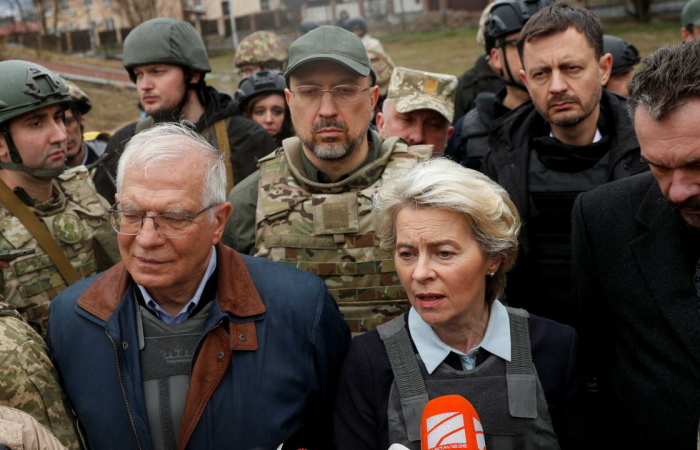
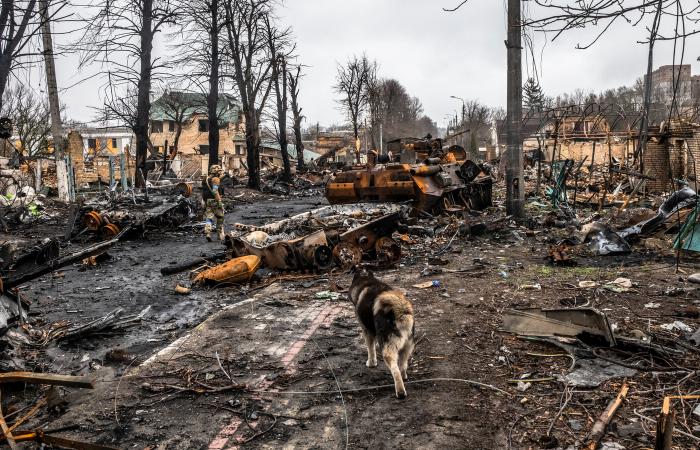
European Commission president, Ursula von der Leyen and EU High Representative for Foreign and Security Policy, Josep Borrell, travelled to Kyiv on Friday in a show of solidarity with the Ukrainian government and people, on a day when again dozens were killed in indiscriminate Russian attacks against civilians at a railway station, and when further evidence emerged of a Russian massacre of Ukrainians in the town of Bucha..  The two EU leaders started their trip in Bucha, scene of an earlier Russian massacre. European Commission president Von der Leyen said the civilian deaths in the Ukrainian town showed the “cruel face” of Russia’s army. In Bucha, where forensic investigators started to exhume bodies from a mass grave, Von der Leyen looked visibly moved by what she saw in the town northwest of Kyiv where Ukrainian officials say hundreds of civilians were killed by Russian forces.
Editor's choice
Opinion
Opinion: A game-changing Aliyev-Pashinyan-Michel summit in Brussels

Opinion: A game-changing Aliyev-Pashinyan-Michel summit in Brussels

This week's summit of Azerbaijani president Ilham Aliyev and Armenian prime minister Nikol Pashinyan, mediated by European Council president Charles Michel, marks a growing mediating role for the EU, something which is welcomed by both Baku and Yerevan, writes Vasif Husseynov in this op-ed. There are now two separate tracks in the peace process, one led by Brussels, the other by Moscow. So far they are complimentary, and should remain so, he argues
Editor's choice
News
The process for negotiating a peace treaty between Armenia and Azerbaijan has started

The process for negotiating a peace treaty between Armenia and Azerbaijan has started

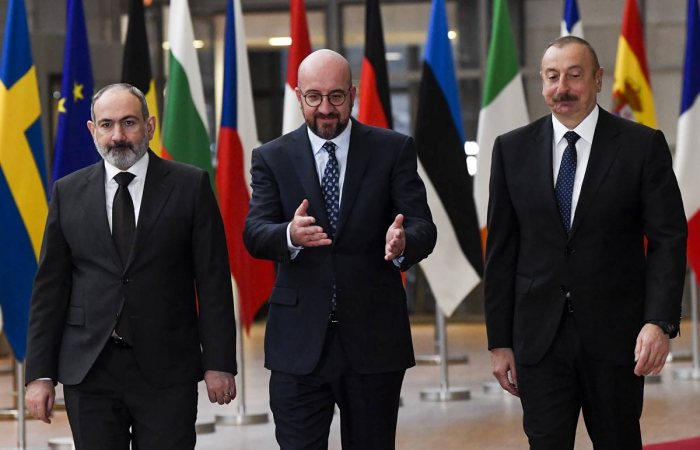
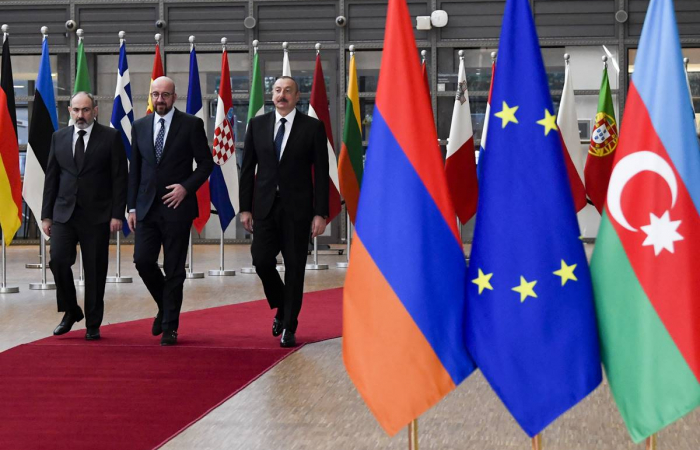
After four hours of intensive discussions in Brussels on Wednesday evening  (6 April), European Council president Charles Michel announced that the leaders of Armenia and Azerbaijan had agreed to instruct their foreign ministers to start work on the preparation of a peace treaty, which would address all necessary issues. "The process has started. It started tonight", president Michel told journalists. Michel earlier met separately with Armenian prime minister Nikol Pashinyan and with Azerbaijani president Ilham Aliyev before the three convened for their meeting. Michel described the meeting as "excellent and very productive".
Editor's choice
News
Brussels hosts important discussions between the leaders of Armenia and Azerbaijan

Brussels hosts important discussions between the leaders of Armenia and Azerbaijan

The leaders of Armenia and Azerbaijan, Nikol Pashinyan and Ilham Aliyev, will today meet in Brussels together with the president of the European Council, Charles Michel. The trilateral meeting is taking place at a critical moment for the future of the South Caucasus as Armenia and Azerbaijan seek ways to build peace between them following the 44 Day Karabakh war in the autumn of 2020. It is taking place in the shadow of the Russian invasion of Ukraine which has caused the bbiggest crisis on the European continent since World War II. Michel hosted a previous meeting with Aliyev and Pashinyan on 14 December 2021, and a new format appears to be emerging for contact between Armenia and Azerbaijan. Observers are hesitant to call it a peace process yet, but the importance of the talks is considerable. This was highlighted yesterday when US Secretary of State Antony Blinken spoke on the phone with the leaders of Armenia and Azerbaijan to stress the US support for the talks. In Brussels Michel is expected to urge Pashinyan and Aliyev, with who he has built a strong personal rapport over the last year, to work together to de-escalate tensions on the border, move forward with the process of agreeing the terms of a peace agreement, and implement confidence and security building measures to support their work and help build trust at the political, military and societal levels.
Editor's choice
News
Putin must stop this war immediately and unconditionally

Putin must stop this war immediately and unconditionally

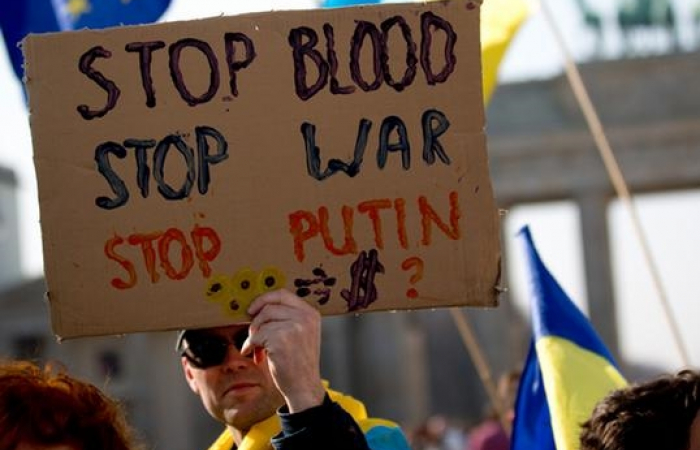
Shock has turned to anger right across the world as the truth about Russian atrocities in Ukraine began to emerge. The leaders of Europe, the US and other countries have strongly condemned war crimes being committed by invading Russian forces in Ukraine. In a statement on Monday (4 April) the European Union said: "We stand in full solidarity with Ukraine and the Ukrainian people in these sombre hours for the whole world. The EU will continue to firmly support Ukraine and will advance, as a matter of urgency, work on further sanctions against Russia. President Putin must stop this war immediately and unconditionally."