Region

EU plus

Stories in this section cover the EU-27 countries plus the UK, Norway, Switzerland, Iceland, Liechtenstein, Monaco, Andorra and the Balkan Countries (Albania, Serbia, Montenegro, Bosnia-Herzegovina, Kosovo, North Macedonia).

Editor's choice
News
Germany accuses Russia of cyberattacks and disinformation campaign

Germany accuses Russia of cyberattacks and disinformation campaign

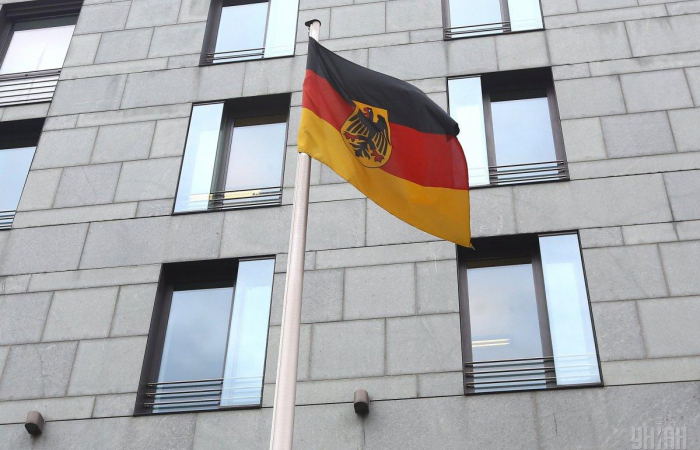
The German government holds Russia responsible for a cyberattack on German air traffic control, and for targeted disinformation campaigns before the last federal election. According to the German Foreign Office in Berlin, the incidents could be clearly attributed to the Russian military intelligence service, the GRU. In response, the Russian ambassador to Berlin was summoned to the Foreign Ministry. "We have been observing a massive increase in threatening hybrid activities by Russia for some time now," a spokesperson for the Foreign Ministry stated. These range from disinformation campaigns and espionage to cyberattacks and sabotage attempts. The aim is to divide society, sow distrust, and undermine confidence in democratic institutions. The spokesperson added that with these actions, Russia is "very concretely threatening our security, not only through its war of aggression against Ukraine, but also here in Germany."  The Foreign Ministry spokesperson explained that the cyberattack on air traffic control in August 2024 was clearly attributed to the hacker collective "APT28," known as "Fancy Bear," and to the responsibility of the Russian military intelligence service, the GRU. Furthermore, it could now be "conclusively stated" that Russia had attempted "to influence and destabilize both the last Federal election and the ongoing internal affairs of the Federal Republic of Germany." There was "absolutely irrefutable evidence" for this". The so-called "Storm 1516" campaign, which has been running since 2024, is allegedly backed by "reliable information" that the Moscow-based think tank "Center for Geopolitical Expertise" is behind it. The Center is also said to be supported by Russian military intelligence. Its primary aim is to influence democratic elections in the West. (Click the image to read more).
Editor's choice
News
NATO Chief says war is on Europe's doorstep, and warns against complacency

NATO Chief says war is on Europe's doorstep, and warns against complacency

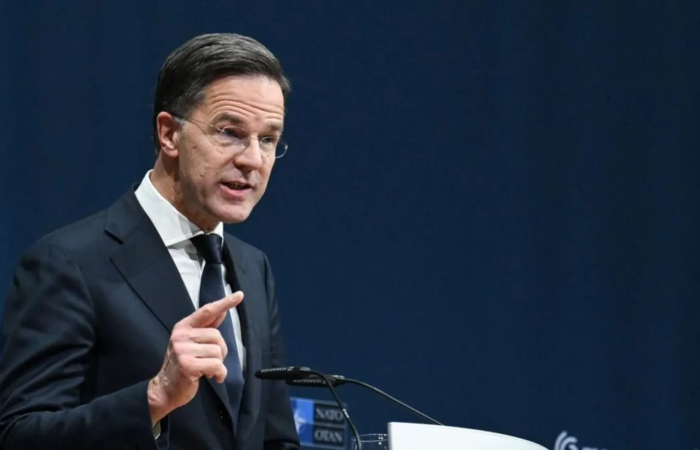
Russia could attack a NATO country within the next five years, the Secretary General of NATO, Mark Rutte, said in a stark new warning. "NATO's own defences can hold for now," Rutte warned in Berlin, but conflict was "next door" to Europe, and he feared "too many are quietly complacent, and too many don't feel the urgency, too many believe that time is on our side. "Russia is already escalating its covert campaign against our societies," Rutte said in a speech in Germany. "We must be prepared for the scale of war our grandparents or great-grandparents endured." Earlier this month, Russia's President Vladimir Putin said his country was not planning to go to war with Europe, but it was ready "right now" if Europe wanted to - or started a war. But similar reassurances were given by Moscow in 2022, just before 200,000 Russian troops crossed the border and invaded Ukraine. Putin has accused European countries of hindering US efforts to bring peace in Ukraine - a reference to the role Ukraine's European allies have recently played in trying to change a US peace plan to end the war, whose initial draft was seen as favouring Russia. But Putin was not sincere, Nato's secretary-general said in the German capital, Berlin. Supporting Ukraine, he added, was a guarantee for European security. "Just imagine if Putin got his way; Ukraine under the boot of Russian occupation, his forces pressing against a longer border with Nato, and the significantly increased risk of an armed attack against us." Russia's economy has been on a war footing for more than three years now - its factories churn out ever more supplies of drones, missiles and artillery shells. According to a recent report by the Kiel Institute for the World Economy, Russia has been producing each month around 150 tanks, 550 infantry fighting vehicles, 120 Lancet drones and more than 50 artillery pieces. The UK, and most of its Western allies, are simply not anywhere near this point. Analysts say it would take years for Western Europe's factories to come close to matching Russia's mass-production of weapons. "Allied defence spending and production must rise rapidly, our armed forces must have what they need to keep us safe," the Nato chief said.

Filter archive

Publication date
Editor's choice
News
Russia steps up its support for the military government of Mali

Russia steps up its support for the military government of Mali

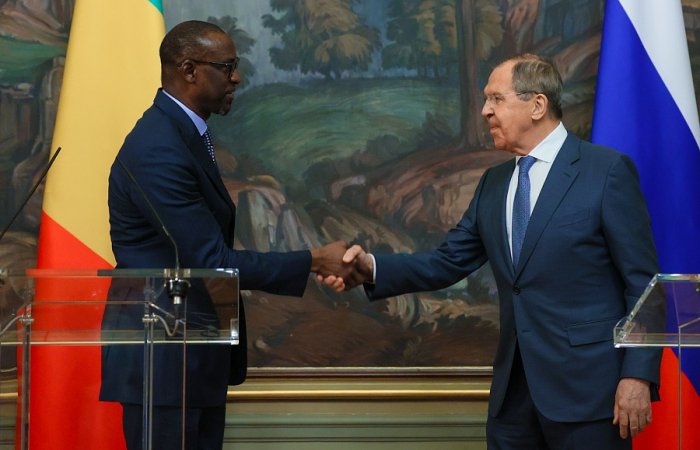
Russian Foreign Minister Sergei Lavrov on Friday (20 May) received in Moscow his Malian counterpart Abdoulaye Diop with promises of Russian support for the the Malian military government across a range of areas, including defence, security and energy. Lavrov speaking at a press conference with Diop accused France of trying to dictate to Mali who they can or cannot communicate with. "This is unacceptable and does not make the French Republic or French manners look good", the Russian foreign minister said. The meeting came on the same day that the German parliament agreed on a reconfiguration of its military contingent in Mali.
Editor's choice
Opinion
Opinion: The decision of Sweden and Finland to apply for NATO membership is the right one and should be supported

Opinion: The decision of Sweden and Finland to apply for NATO membership is the right one and should be supported

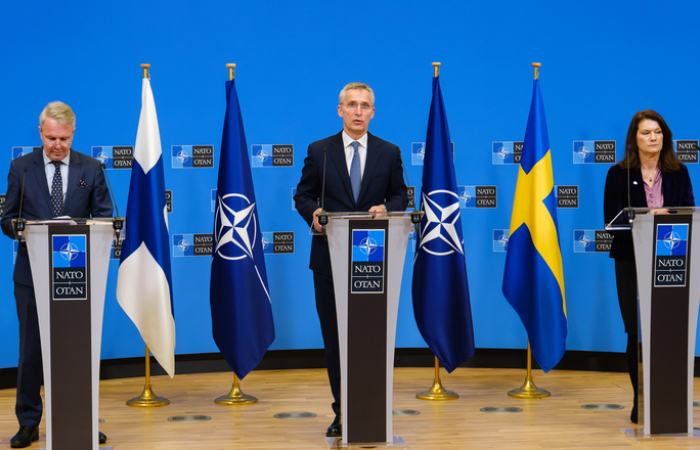
For decades, Finland and Sweden weathered the dangers of the cold war as neutral states, sandwiched between Soviet Union and its Warsaw Pact allies, and the United States and its European allies in NATO. It was a risky situation. Their professed neutrality was seen as a naivety by some, as a vulnerability by others. But they used their status for the common good. Finland and Sweden, together with other neutral and non-aligned countries such as Austria, Switzerland, Yugoslavia and Malta, helped to bring about the Helsinki Conference on Security and Co-operation in Europe, and in 1975 the signing of the Helsinki Final Act, a milestone document that reduced tension during the cold war, and provided a blue print for what followed. This week they broke with their historic position of neutrality, which in the case of Sweden had lasted for two centuries, and applied to join NATO. Finland and Sweden were left with no choice. Their decision to apply for NATO membership was the right one, and should be supported.
Editor's choice
News
Slava Ukraina: Europeans embrace Ukraine, catapulting it to victory in the Eurovision Song Festival

Slava Ukraina: Europeans embrace Ukraine, catapulting it to victory in the Eurovision Song Festival

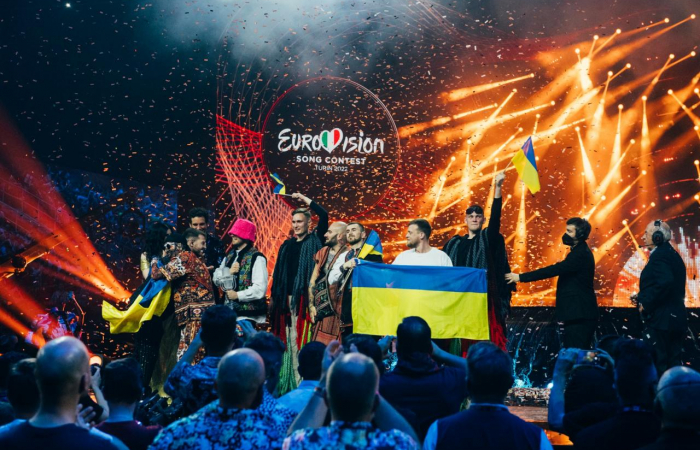
Kalush Orchestra have won the 2022 Eurovision Song Contest for Ukraine with their song 'Stefania', at the end of an emotional festival final held in Turin on Saturday (14 May). It was a memorable night for the iconic Eurovision Festival as Ukraine's Kalush Band swept to victory with the backing of a popular vote from across Europe. If European politicians are hesitant in embracing Ukraine as one of their own, the people of Europe have shown no hesitation in embracing Ukraine's music and culture, and the cause of the Ukrainian people as they fight against Russian aggression. Receiving the winning trophy, lead singer Oleh Psiuk declared: "Thank you for supporting Ukraine. This victory is for every Ukrainian. Slava Ukraina." Speaking backstage, the singer said he hoped Ukraine could stage the contest in 2023. Ukrainian President Volodymyr Zelensky congratulated Kalush Orchestra and said Ukraine's courage "impresses the world". In a post on Instagram, he vowed one day to host Eurovision in a "free, peaceful and rebuilt" Mariupol, the port city that has been completely destroyed by the Russian invaders and is now mostly under Russian occupation.
Editor's choice
News
That other European border

That other European border

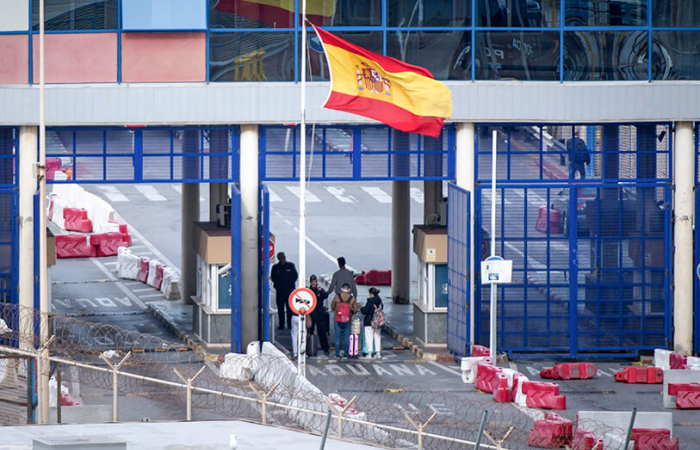
The Spanish Interior Minister announced on Thursday, 12 May, that Madrid and Rabat have decided to reopen the borders between Morocco and the Spanish enclaves of Ceuta and Melilla in the next few days, after two years of closure. The enclaves, on the African continent, are surrounded by the sea, and by Moroccan territory. The reopening of the only two land borders of the European Union on the African continent will be done gradually and will initially concern the nationals of countries belonging to the Schengen area, according to the Spanish Minister of the Interior Fernando Grande-Marlaska. Workers from border regions  will then be able to cross the border freely from 31 May 2022.
Editor's choice
News
Von der Leyen says Russia is the most  direct threat to the international order

Von der Leyen says Russia is the most direct threat to the international order

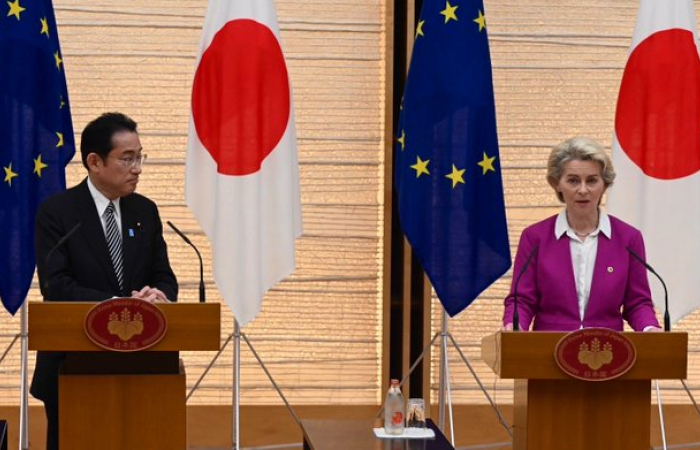
Russia “is today the most direct threat to the world order with the barbaric war against Ukraine, and its worrying pact with China”, European Commission President, Urusula von der Leyen, said in Tokyo on Thursday (12 May) after meeting Japanese Prime Minister Fumio Kishida along with European Council President Charles Michel. The two are in Tokyo for an annual EU-Japan summit that comes with much of the international community rallying to pressure Moscow over the Ukraine war, with concern also growing about China’s role. “Russia’s invasion of Ukraine is not just a matter for Europe, but it shakes the core of the international order including Asia. This must not be tolerated,” said Kishida, whose government has joined tough sanctions on Moscow, including on energy. “Our cooperation in Ukraine is critical in Europe, but it’s also important in the Indo-Pacific and we also want to deepen our consultation on a more assertive China,” said Michel.
Editor's choice
Analysis
Macron gets a second chance to push for a new type of French partnership with Africa

Macron gets a second chance to push for a new type of French partnership with Africa

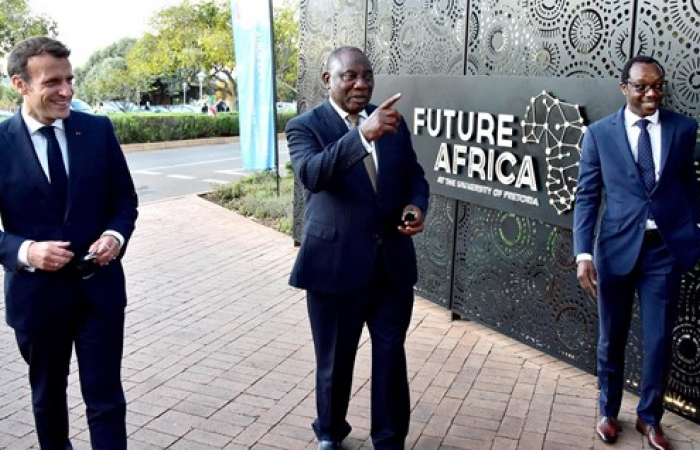
The re-election of Emmanuel Macron as President of the French Republic was the occasion for many congratulations from African heads of state with most leaders hailing the French president's "brilliant" election. Yet on the continent, not everyone is so enthusiastic, and speculation is high how France’s Africa policy will play out during Macron’s second term. The silence of Bamako, Conakry and Ouagadougou reflects the challenges of Emmanuel Macron's African policy in the years to come. Macron has put a great deal of energy into opening a new chapter in the relationship between France and Africa, but the results have been below expectations. A sustainable and mutually beneficial relationship is very important in these new, uncertain times. Whether it is through the gas alternative proposed by some North African countries, or the emergence of new partnerships in the Sahel and in English-speaking Africa, France will have to play a prominent role and has much to gain from being close with Africa. 
Editor's choice
News
NATO membership can be arranged quickly once Finland and Sweden submit application

NATO membership can be arranged quickly once Finland and Sweden submit application

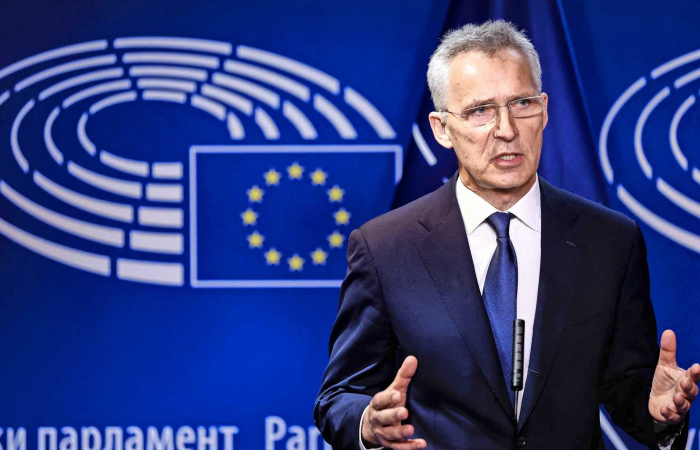
The NATO membership of Finland and Sweden will be arranged quickly if they apply to join the Western military alliance. There will also be 'interim measures' until the two countries become full members of the organisation. NATO chief Jens Stoltenberg said this on Thursday (28 April) at a press conference at the European Parliament in Brussels. "If they decide to apply, Finland and Sweden will be warmly welcomed and I expect the process to go quickly".Sweden and Finland announced two weeks ago that they are considering membership in NATO. The Swedish government may want to submit a formal application as early as the end of June. The two countries have had a neutral status for various historical reasons. Since the war in Ukraine, their position on neutrality has changed.
Editor's choice
Opinion
Russia’s war against Ukraine: where do we stand and what can the future bring?

Russia’s war against Ukraine: where do we stand and what can the future bring?

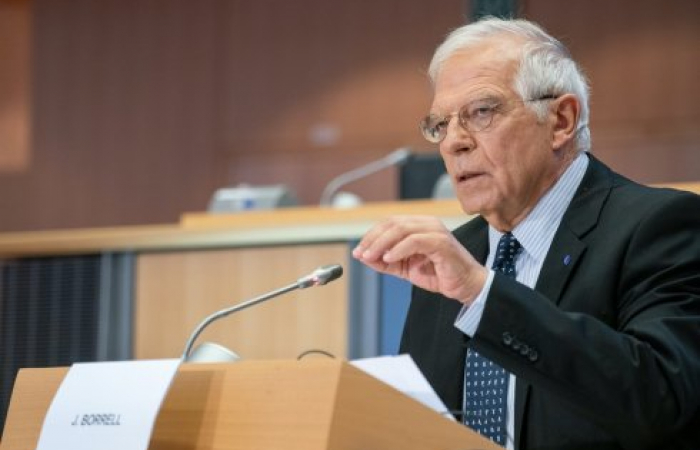
"Two months into the war against Ukraine there is no end in sight and Russia’s most recent actions even point to an intensification of the fight. The Russian leadership must stop the aggression and reconsider the unacceptable path it has chosen: for the sake of Ukraine, Russia, Europe and the wider world", says Josep Borrell, EU High Representative for foreign and security policy in this article which first appeared on his blog on the website of the European External Action Service on 26 April 2022. In the article the head of the EU diplomacy says that "Defending Ukraine from Russia’s invasion is rejecting the law of the jungle, the notion that “might makes right”. Being “neutral” is a false concept here. One country has invaded another one. Putting them on the same footing fails to differentiate between the attacker and the attacked. Such “neutrality” may respond, of course, to a variety of reasons, from hidden alignment to fear of reprisals, but it becomes in practice support to Russia and its war of aggression."