Region

EU plus

Stories in this section cover the EU-27 countries plus the UK, Norway, Switzerland, Iceland, Liechtenstein, Monaco, Andorra and the Balkan Countries (Albania, Serbia, Montenegro, Bosnia-Herzegovina, Kosovo, North Macedonia).

Editor's choice
News
European leaders set out their plan for Ukraine

European leaders set out their plan for Ukraine

The leaders of Germany, Denmark, Finland, France, Italy, Netherlands, Norway, Poland, Sweden, and United Kingdom, together with the President of the European Council, and the President of the European Commission, o  Monday (15 December) issued a statement, outlining their plan for Ukraine. In their statement, Chancellor Merz, Prime Minister Frederiksen, President Stubb, President Macron, Prime Minister Meloni, Prime Minister Schoof, Prime Minister Støre, Prime Minister Tusk, Prime Minister Kristersson, Prime Minister Starmer, as well as President Costa and President von der Leyen spoke about "Peace for Ukraine". The Leaders welcomed significant progress on President Trump’s efforts to secure a just and lasting peace in Ukraine. They also welcomed the close work between President Zelenskyy’s and President Trump’s teams as well as European teams over the recent days and weeks. They agreed to work together with President Trump and President Zelenskyy to get to a lasting peace which preserves Ukrainian sovereignty and European security. Leaders appreciated the strong convergence between the United States, Ukraine and Europe. Leaders agreed that ensuring the security, sovereignty, and prosperity of Ukraine was integral for wider Euro-Atlantic security. They were clear that Ukraine and its people deserved a prosperous, independent, and sovereign future, free from fear of future Russian aggression. Both the US and European leaders committed to work together to provide robust security guarantees and economic recovery support measures for Ukraine in the context of an agreement on ending the war. This would include commitments to: Provide sustained and significant support to Ukraine to build its armed forces, which should remain at a peacetime level of 800,000 to be able to deter conflict and defend Ukraine’s territory. A European-led ‘multinational force Ukraine’ made up from contributions from willing nations within the framework of the Coalition of the Willing and supported by the US. It will assist in the regeneration of Ukraine’s forces, in securing Ukraine’s skies, and in supporting safer seas, including through operating inside Ukraine. (Click the image to read the statement in full).


Filter archive

Publication date
Editor's choice
News
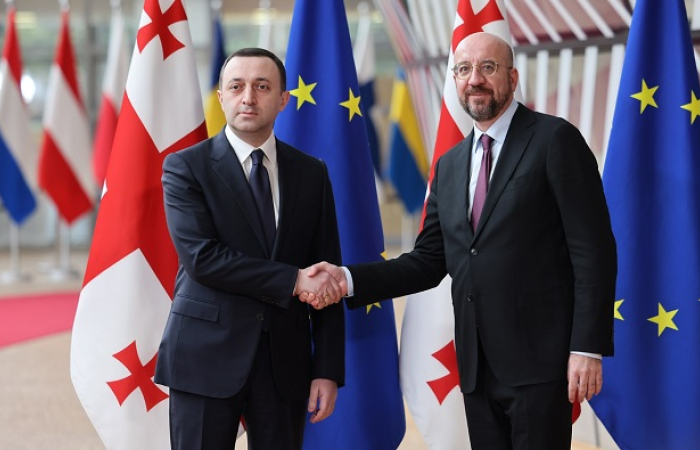
Garibashvili and Michel discuss Georgia EU accession in Brussels

Garibashvili and Michel discuss Georgia EU accession in Brussels

The Prime Minister of Georgia Irakli Garibashvili and the President of the European Council Charles Michel met in Brussels on Tuesday (25 April) to review Georgia's progress towards membership of the EU. According to a press release from the Georgian government, "Irakli Garibashvili briefed the President of the European Council about Georgia’s efforts toward fulfilling the European Commission’s 12 priorities and pointed out that, in this process, the authorities maintain continuous consultations with EU institutions and member states, also the Venice Commission and OSCE/ODIHR." Garibashvili also stressed the importance of granting Georgia candidate status by the end of the year because "a large portion of the recommendations has been fulfilled". The Georgian Prime Minister also argued that EU-Georgia Association Agreement, the Deep and Comprehensive Free Trade Agreement (DCFTA) with the EU, visa-free travel, and the recently granted European perspective "demonstrate Georgia’s progress toward European integration". 
Editor's choice
News
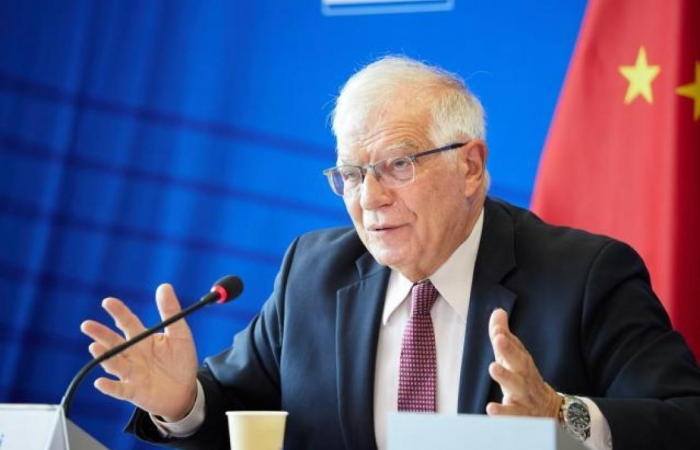
Borrell addresses European Parliament on EU-China relations

Borrell addresses European Parliament on EU-China relations

The Vice-President of the European Commission and European Union High Representative for Foreign Affairs and Security Policy Josep Borrell addressed the European Parliament on Tuesday (18 April) on "The need for a coherent strategy for EU-China Relations”. Beginning by recognising that different member states have different interests vis-a-vis China, Borrell said, "if we want to define a coherent EU strategy towards China, it is necessary for each and every EU actor to exercise their respective roles and responsibilities in accordance with, and in full respect of, the Treaties. "The main focus of his address was on integrating "economic security" into wider "national security" strategies. "This concept of ‘national security’ - ‘economic security’ - will have a determining influence on the way we conceive our foreign relations," Borrell said, adding that the EU should aim to replicate the strategies of the USA and Japan in this regard. Borrell said the four key issues in the EU's relationship with China are "values, economic security, Taiwan, and Ukraine".
Editor's choice
News
Aurora 23 military exercise kicks off in Sweden, 26,000 soldiers from 14 countries take part

Aurora 23 military exercise kicks off in Sweden, 26,000 soldiers from 14 countries take part

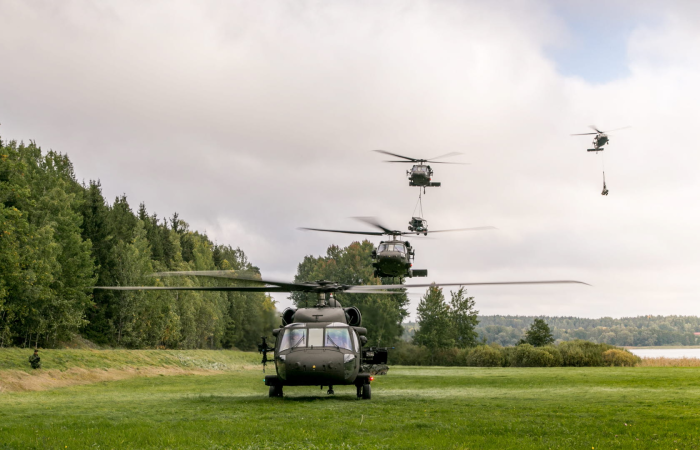
Sweden has commenced its largest military exercise in 25 years, involving some 26,000 soldiers from 14 different countries. The Aurora 23 exercises kicked off yesterday, on Monday (17 April) and will run until 11 May. Other than Sweden, participating nations are the US, UK, Poland, Norway, Estonia, Latvia, Lithuania, Denmark, Austria, Germany, France, Finland, who joined NATO on 4 April this year, and Ukraine. In a statement released two weeks ago, the Swedish Armed Forces said that the purpose of Aurora 23 is "to enhance the collected capability to counter an armed attack on Sweden", with drills taking place "in the air, on the ground and at sea". The exercise will focus mostly on southern Sweden and the strategically important island of Gotland in the south-east, which lies in the middle of the Baltic Sea and approximately 350km north of the Russian exclave of Kaliningrad. Drills will also be taking place in northern Sweden, the country's Armed Forces added. The biggest military exercises held in Sweden in 25 years come amid the country's stalled NATO membership application. Stockholm, along with Helsinki, applied for NATO membership in May after being rattled by Russia's full scale invasion of Ukraine in February.