Region

EU plus

Stories in this section cover the EU-27 countries plus the UK, Norway, Switzerland, Iceland, Liechtenstein, Monaco, Andorra and the Balkan Countries (Albania, Serbia, Montenegro, Bosnia-Herzegovina, Kosovo, North Macedonia).

Editor's choice
News
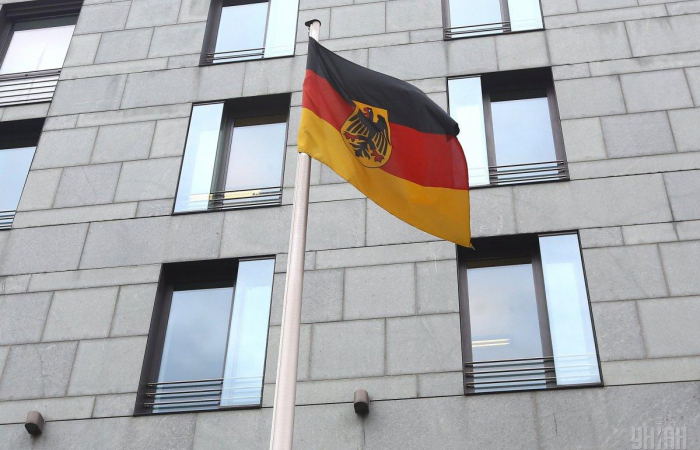
Germany accuses Russia of cyberattacks and disinformation campaign

Germany accuses Russia of cyberattacks and disinformation campaign

The German government holds Russia responsible for a cyberattack on German air traffic control, and for targeted disinformation campaigns before the last federal election. According to the German Foreign Office in Berlin, the incidents could be clearly attributed to the Russian military intelligence service, the GRU. In response, the Russian ambassador to Berlin was summoned to the Foreign Ministry. "We have been observing a massive increase in threatening hybrid activities by Russia for some time now," a spokesperson for the Foreign Ministry stated. These range from disinformation campaigns and espionage to cyberattacks and sabotage attempts. The aim is to divide society, sow distrust, and undermine confidence in democratic institutions. The spokesperson added that with these actions, Russia is "very concretely threatening our security, not only through its war of aggression against Ukraine, but also here in Germany."  The Foreign Ministry spokesperson explained that the cyberattack on air traffic control in August 2024 was clearly attributed to the hacker collective "APT28," known as "Fancy Bear," and to the responsibility of the Russian military intelligence service, the GRU. Furthermore, it could now be "conclusively stated" that Russia had attempted "to influence and destabilize both the last Federal election and the ongoing internal affairs of the Federal Republic of Germany." There was "absolutely irrefutable evidence" for this". The so-called "Storm 1516" campaign, which has been running since 2024, is allegedly backed by "reliable information" that the Moscow-based think tank "Center for Geopolitical Expertise" is behind it. The Center is also said to be supported by Russian military intelligence. Its primary aim is to influence democratic elections in the West. (Click the image to read more).
Editor's choice
News
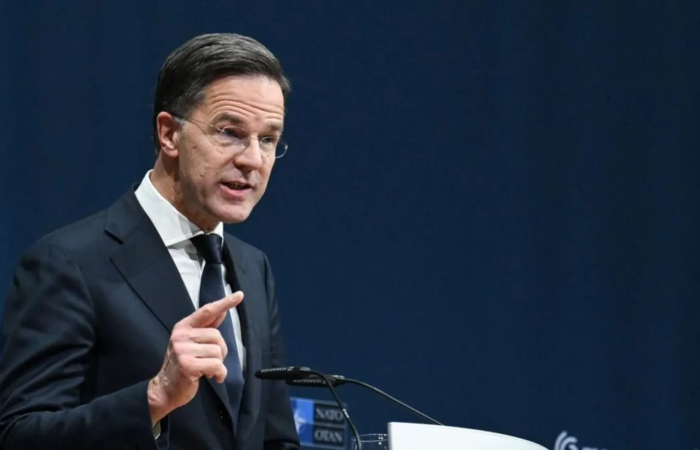
NATO Chief says war is on Europe's doorstep, and warns against complacency

NATO Chief says war is on Europe's doorstep, and warns against complacency

Russia could attack a NATO country within the next five years, the Secretary General of NATO, Mark Rutte, said in a stark new warning. "NATO's own defences can hold for now," Rutte warned in Berlin, but conflict was "next door" to Europe, and he feared "too many are quietly complacent, and too many don't feel the urgency, too many believe that time is on our side. "Russia is already escalating its covert campaign against our societies," Rutte said in a speech in Germany. "We must be prepared for the scale of war our grandparents or great-grandparents endured." Earlier this month, Russia's President Vladimir Putin said his country was not planning to go to war with Europe, but it was ready "right now" if Europe wanted to - or started a war. But similar reassurances were given by Moscow in 2022, just before 200,000 Russian troops crossed the border and invaded Ukraine. Putin has accused European countries of hindering US efforts to bring peace in Ukraine - a reference to the role Ukraine's European allies have recently played in trying to change a US peace plan to end the war, whose initial draft was seen as favouring Russia. But Putin was not sincere, Nato's secretary-general said in the German capital, Berlin. Supporting Ukraine, he added, was a guarantee for European security. "Just imagine if Putin got his way; Ukraine under the boot of Russian occupation, his forces pressing against a longer border with Nato, and the significantly increased risk of an armed attack against us." Russia's economy has been on a war footing for more than three years now - its factories churn out ever more supplies of drones, missiles and artillery shells. According to a recent report by the Kiel Institute for the World Economy, Russia has been producing each month around 150 tanks, 550 infantry fighting vehicles, 120 Lancet drones and more than 50 artillery pieces. The UK, and most of its Western allies, are simply not anywhere near this point. Analysts say it would take years for Western Europe's factories to come close to matching Russia's mass-production of weapons. "Allied defence spending and production must rise rapidly, our armed forces must have what they need to keep us safe," the Nato chief said.

Filter archive

Publication date
Editor's choice
News
Macron travels to New Caledonia to solve the crisis on volatile territory

Macron travels to New Caledonia to solve the crisis on volatile territory

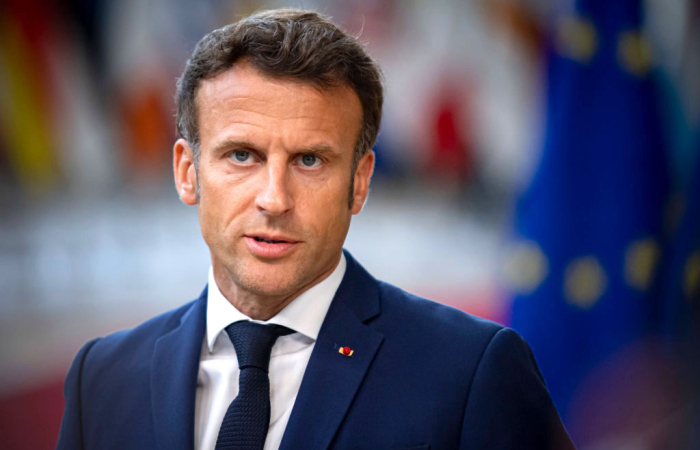
French President Emmanuel Macron embarked on a flight to New Caledonia Tuesday night (21 May) to address an ongoing crisis following a violent insurrection on the French territory. The archipelago, over 15,000 kilometres from mainland France, has become a top priority for the government after a week of violent protests left six people dead. The protests, between pro-independence supporters and French loyalists, were triggered by the French National Assembly’s vote to allow all citizens who have been living in New Caledonia for over 10 years to elect the local legislature. Voting in these elections has previously been reserved for citizens who settled in the archipelago before 1998 or their descendants. Pro-independence forces argue that expanding the electorate would further reduce the influence of the indigenous Kanak population, whose share of the population has decreased since France took control of the territory over 170 years ago. Proponents of the reform argue it is a democratic necessity, noting that current rules exclude even certain New Caledonia-born citizens from voting. 
Editor's choice
News
A new era of peace in the Eastern Mediterranean

A new era of peace in the Eastern Mediterranean

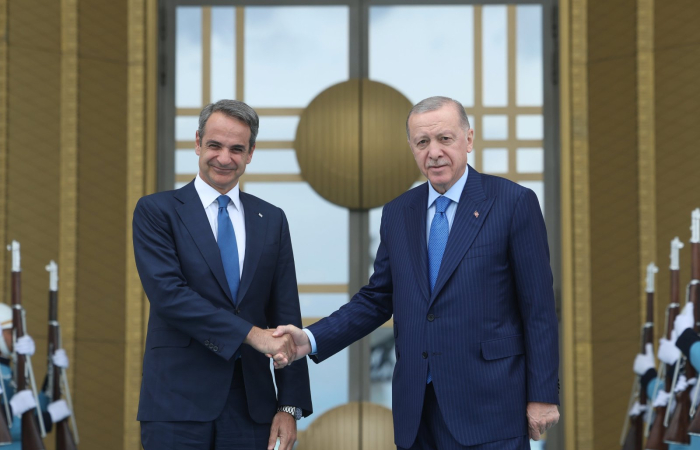
A ground breaking meeting between the President of Turkiye, Recip Tayip Erdogan, and Greek Prime minister Kyriakos Mitsotakis, on Monday (13 May) is being hailed as the dawn of a new era of peace in the Eastern Mediterranean. Mitsotakis was in Ankara as the guest of the Turkish leader. There are no unsolvable problems between Athens and Ankara, President Recep Tayyip Erdoğan said, as he and Greek Prime Minister Kyriakos Mitsotakis praised the state of relations between the two neighbors while pledging to further enhance bilateral ties. "We had a constructive and positive meeting and discussed problems in Türkiye-Greece relations; We will solve problems through dialogue," Erdoğan said at a joint news conference with Mitsotakis. Erdoğan said that Ankara and Athens are committed to resolving issues via "cordial dialogue, good neighborly ties, and international law" as outlined in last year's Athens Declaration on Friendly Relations and Good-Neighborliness. Improvement of bilateral relations with Türkiye is yielding concrete and positive results, Greek Prime Minister Kyriakos Mitsotakis said "I can only begin by thanking you for the warm hospitality today in Ankara, it was a fourth meeting in the last 10 months, which I believe proves that the two neighbors can now establish this approach of mutual understanding, no longer as some exception, but as a productive normality that is not negated by the known differences in our positions," Mitsotakis said. He said bilateral relations have been progressing, as agreed by the parties, on three levels: political dialogue, positive agenda and confidence-building measures. "I believe that it is a positive development in a difficult time for international peace, but also for the broader stability in our region," the Greek leader said.
Editor's choice
News
European Council calls for an integrated and coherent EU response to external crises and conflicts

European Council calls for an integrated and coherent EU response to external crises and conflicts

The European Council approved on Tuesday (7 May) conclusions on the 2023 annual report on the implementation of the European Union’s External Action Instruments in 2022. It commends the steps taken by the EU in the current challenging geopolitical context, marked by Russia’s war of aggression against Ukraine, conflict in the Middle East and the effects of the COVID-19 pandemic, among others. The Council welcomes the report’s emphasis on the key support provided by the EU to Ukraine and neighbouring countries affected by Russia’s war of aggression, as well as efforts to address the regional and global consequences and its impact on the most vulnerable groups, in particular with regard to food and energy security. In this context, the Council encourages the Commission to continue highlighting the EU’s support to tackle global challenges. It underlines the necessity to continue working towards an integrated and coherent EU response to external crises and conflicts, including through the EU’s external action instruments. Preventing conflict through timely analysis and early action, supporting peace mediation and dialogue, building peace and resilience, and forging international and regional partnerships in the area of peace, security and defence are key aspects in this regard.
Editor's choice
News
Borrell speaks about global changes and challenges

Borrell speaks about global changes and challenges

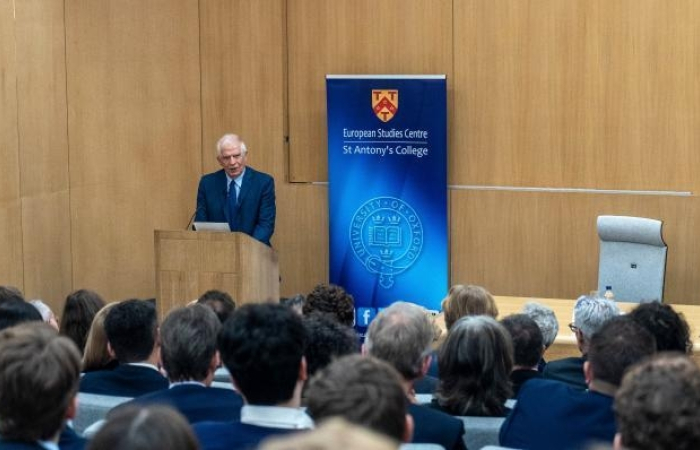
EU High Representative for Foreign and Security Policy, Josep Borrell, delivered an important policy speech on Friday 3 May during which he did a wide tour d'horizon of the current global situation and the challenges it flags up for Europe and for the world. Speaking in an academic setting, delivering the Dahrendorf Lecture at St Antony's College Oxford, Borrell spoke of a world where there is much more confrontation than co-operation, where there is more polarity and less multilateralism, Borrell spoke about the diminishing role of the United States as world hegemon and the rise of China. "We, Europeans, wanted to create in our neighbourhood a ring of friends. Instead of that, what we have today is a ring of fire. A ring of fire coming from the Sahel to the Middle East, the Caucasus and now in the battlefields of Ukraine", the High Representative said: Speaking on Russia, Borrell said  "Under Putin’s leadership, Russia has returned to the imperialist understanding of the world. Imperial Russia from the Tsar times and the Soviet empire times have been rehabilitated by Putin dreaming of a former size and influence." "It was Georgia in 2008. It was Crimea in 2014. We did not see, or we did not want to see, the evolution of Russia under Putin’s watch. Even though Putin himself had warned us at the Munich Security Conference in 2007. It is important to re-read what Putin said in 2007 at the Munich [Security] Conference that I am afraid that nobody wanted to hear or to understand." Borell described Putin as "an existential threat". In his speech Borell dwelt on the wars in Ukraine and in Gaza. "Now, we have two wars. And we, Europeans, are not prepared for the harshness of the world." The High Representative said that the way of living of the Europeans, "this best combination of political freedom, economic prosperity and social cohesion that the humanity has never been able to invent, is certainly in danger. And in order to face these challenges, I think that we have to work on three dimensions: Principles, Cooperation and Strength."
Editor's choice
News
European Commission President Ursula von der Leyen issues statement on Tbilisi protests

European Commission President Ursula von der Leyen issues statement on Tbilisi protests

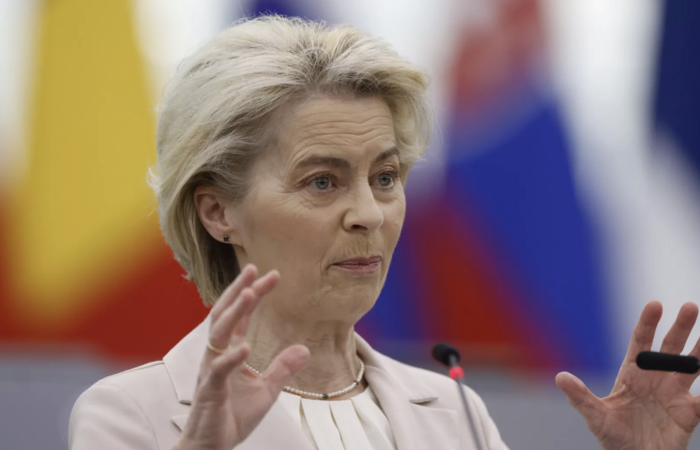
The President of the European Commission, Ursula von der Leyen, has expressed concern about the situation in the Georgian capital, Tbilisi, amid ongoing anti-government protests against a new foreign influence law, which critics fear could be used to limit press freedoms. The protests, which have attracted international attention, highlight growing discontent in the country and calls for a closer alignment with European ideals.
Editor's choice
Commentary
From Blighty with love – UK charm offensive in Central Asia is well thought through

From Blighty with love – UK charm offensive in Central Asia is well thought through

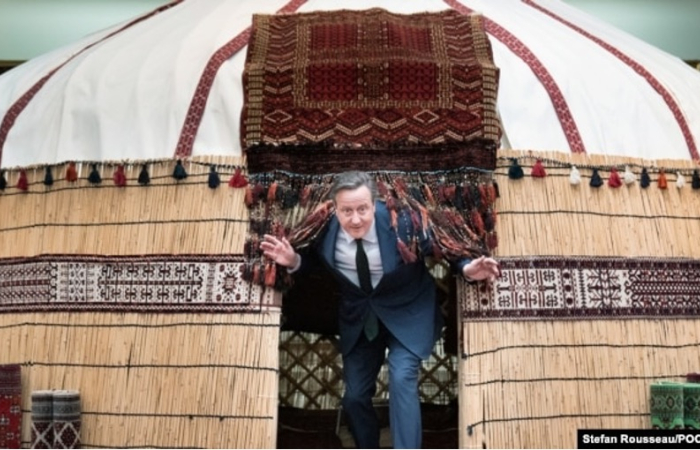
UK Foreign Secretary, Lord Cameron, conducted a whirlwind tour of the five Central Asian countries and Mongolia in the last days, visiting countries that had never before been visited by a British Foreign Secretary. There is very little you can do on a trip like this when you are in a country for one day, sometimes for a few hours. But this visit was well prepared and was part of a well-thought-through British strategy to engage with Central Asia.
Editor's choice
News
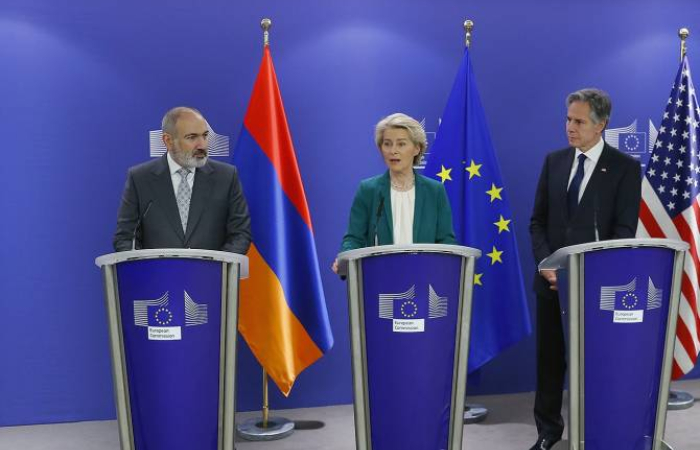
EU and US make a generous financial pledge to Armenia as they affirm their support for its sovereignty, democracy, territorial integrity, and socio-economic resilience

EU and US make a generous financial pledge to Armenia as they affirm their support for its sovereignty, democracy, territorial integrity, and socio-economic resilience

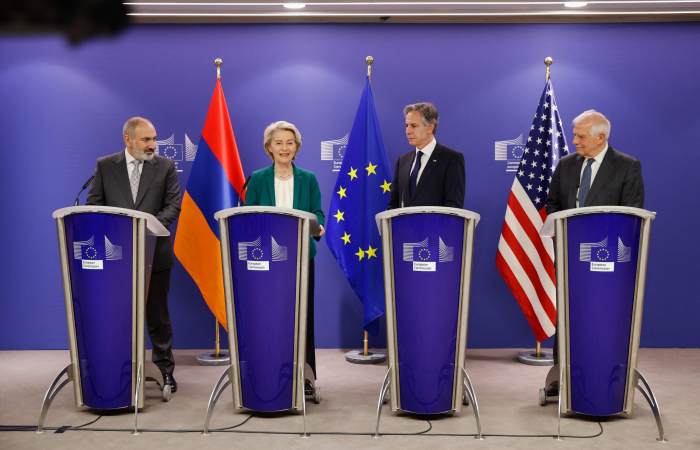
The European Union and the United States have made a generous financial pledge to Armenia and reaffirmed their support for its sovereignty, democracy, territorial integrity, and socio-economic resilience. President of the European Commission, Ursula von der Leyen, EU High Representative/Vice-President, Josep Borrell, Secretary of State of the United States of America, Antony Blinken, USAID Administrator Samantha Power, and Prime Minister of the Republic of Armenia, Nikol Pashinyan, met today, April 5, 2024 in Brussels to reaffirm support for Armenia's sovereignty, democracy, territorial integrity, and socio-economic resilience. The statement concluded by saying that "A prosperous, sovereign, and democratic Armenia that develops its own partnerships and freely sets its own course will contribute to regional stability and prosperity."