Region

EU plus

Stories in this section cover the EU-27 countries plus the UK, Norway, Switzerland, Iceland, Liechtenstein, Monaco, Andorra and the Balkan Countries (Albania, Serbia, Montenegro, Bosnia-Herzegovina, Kosovo, North Macedonia).

Editor's choice
News
Germany accuses Russia of cyberattacks and disinformation campaign

Germany accuses Russia of cyberattacks and disinformation campaign

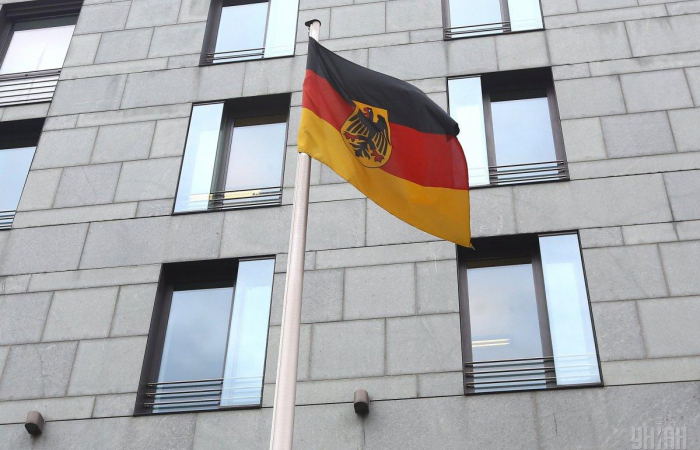
The German government holds Russia responsible for a cyberattack on German air traffic control, and for targeted disinformation campaigns before the last federal election. According to the German Foreign Office in Berlin, the incidents could be clearly attributed to the Russian military intelligence service, the GRU. In response, the Russian ambassador to Berlin was summoned to the Foreign Ministry. "We have been observing a massive increase in threatening hybrid activities by Russia for some time now," a spokesperson for the Foreign Ministry stated. These range from disinformation campaigns and espionage to cyberattacks and sabotage attempts. The aim is to divide society, sow distrust, and undermine confidence in democratic institutions. The spokesperson added that with these actions, Russia is "very concretely threatening our security, not only through its war of aggression against Ukraine, but also here in Germany."  The Foreign Ministry spokesperson explained that the cyberattack on air traffic control in August 2024 was clearly attributed to the hacker collective "APT28," known as "Fancy Bear," and to the responsibility of the Russian military intelligence service, the GRU. Furthermore, it could now be "conclusively stated" that Russia had attempted "to influence and destabilize both the last Federal election and the ongoing internal affairs of the Federal Republic of Germany." There was "absolutely irrefutable evidence" for this". The so-called "Storm 1516" campaign, which has been running since 2024, is allegedly backed by "reliable information" that the Moscow-based think tank "Center for Geopolitical Expertise" is behind it. The Center is also said to be supported by Russian military intelligence. Its primary aim is to influence democratic elections in the West. (Click the image to read more).
Editor's choice
News
NATO Chief says war is on Europe's doorstep, and warns against complacency

NATO Chief says war is on Europe's doorstep, and warns against complacency

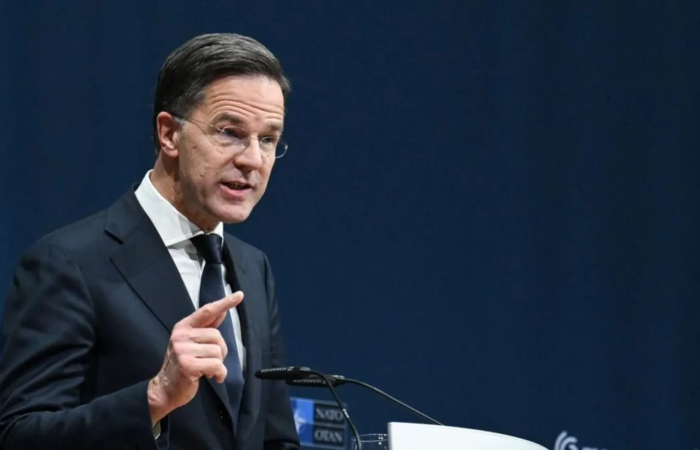
Russia could attack a NATO country within the next five years, the Secretary General of NATO, Mark Rutte, said in a stark new warning. "NATO's own defences can hold for now," Rutte warned in Berlin, but conflict was "next door" to Europe, and he feared "too many are quietly complacent, and too many don't feel the urgency, too many believe that time is on our side. "Russia is already escalating its covert campaign against our societies," Rutte said in a speech in Germany. "We must be prepared for the scale of war our grandparents or great-grandparents endured." Earlier this month, Russia's President Vladimir Putin said his country was not planning to go to war with Europe, but it was ready "right now" if Europe wanted to - or started a war. But similar reassurances were given by Moscow in 2022, just before 200,000 Russian troops crossed the border and invaded Ukraine. Putin has accused European countries of hindering US efforts to bring peace in Ukraine - a reference to the role Ukraine's European allies have recently played in trying to change a US peace plan to end the war, whose initial draft was seen as favouring Russia. But Putin was not sincere, Nato's secretary-general said in the German capital, Berlin. Supporting Ukraine, he added, was a guarantee for European security. "Just imagine if Putin got his way; Ukraine under the boot of Russian occupation, his forces pressing against a longer border with Nato, and the significantly increased risk of an armed attack against us." Russia's economy has been on a war footing for more than three years now - its factories churn out ever more supplies of drones, missiles and artillery shells. According to a recent report by the Kiel Institute for the World Economy, Russia has been producing each month around 150 tanks, 550 infantry fighting vehicles, 120 Lancet drones and more than 50 artillery pieces. The UK, and most of its Western allies, are simply not anywhere near this point. Analysts say it would take years for Western Europe's factories to come close to matching Russia's mass-production of weapons. "Allied defence spending and production must rise rapidly, our armed forces must have what they need to keep us safe," the Nato chief said.

Filter archive

Publication date
Editor's choice
News
France and Algeria open new chapter in relations

France and Algeria open new chapter in relations

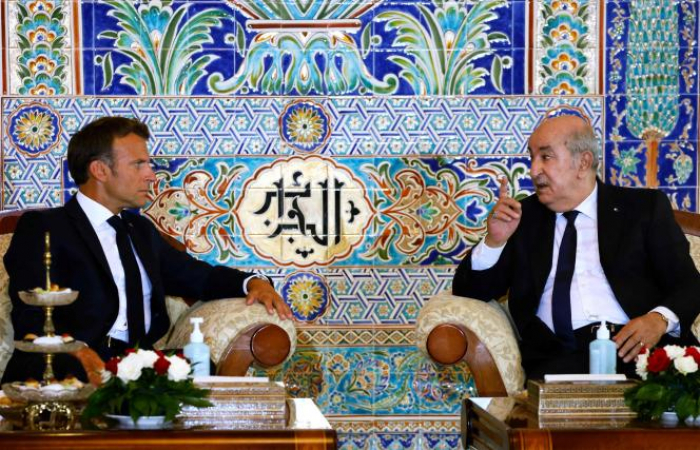
French President Emmanuel Macron and his Algerian counterpart Abdelmadjid Tebboune Saturday declared a "new, irreversible dynamic of progress" in the relations between the two countries, at the end of a state visit by the French president to the former French colony. The three-day visit comes less than two months after Algeria marked six decades of independence following 132 years of French rule and a devastating eight-year war. It also comes as European powers scramble to replace Russian energy imports -- including with supplies from Algeria, Africa's top gas exporter, which in turn is seeking to expand its clout in North Africa and the Sahel. In their joint declaration on Saturday, the two leaders said "France and Algeria have decided to open a new era ... laying the foundation for a renewed partnership expressed through a concrete and constructive approach, focused on future projects and youth." Algerian President Abdelmadjid Tebboune had on Thursday hailed "promising prospects for improving the special partnership" between the two countries. The baggage of history weighs heavily on Franco-Algerian relations. Speaking at a joint press conference with his Algerian counterpart on Thursday evening, Macron -- the first French president to be born since Algerian independence in 1962 -- said that "we didn't the choose the past, we inherited it".
Editor's choice
News
Progress made in talks between Turkey and NATO candidate countries Finland and Sweden

Progress made in talks between Turkey and NATO candidate countries Finland and Sweden

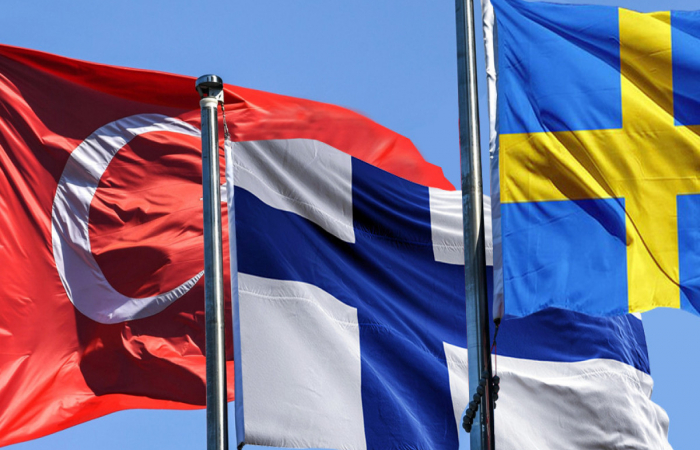
Finland and Sweden reiterated on Friday that they will cooperate with Turkey in the fight against terrorism during their first trilateral meeting since the NATO Madrid summit when the mechanism for consultation was created as part of the process leading to membership in NATO for the two previously neutral Scandinavian countries. The meeting was held in Helsinki. According to a statement from the office of Turkey's Presidential Spokesperson, Ibrahim Kalin's, Finland and Sweden reiterated their commitment to show full solidarity and cooperation with Turkey in the fight against all forms and manifestations of terrorism, pledging to fully support Turkey against all threats to its national security. “It was agreed to intensify cooperation at the technical level among the relevant institutions in order to achieve concrete progress on the issues addressed within the scope of the mechanism,” the statement added. During the meeting, the fundamentals of the permanent joint mechanism were determined while developments on the realization of the commitments in the trilateral deal were reviewed as well as concrete steps to be taken in the future.
Editor's choice
News
Impasse in the dialogue between Serbia and Kosovo

Impasse in the dialogue between Serbia and Kosovo

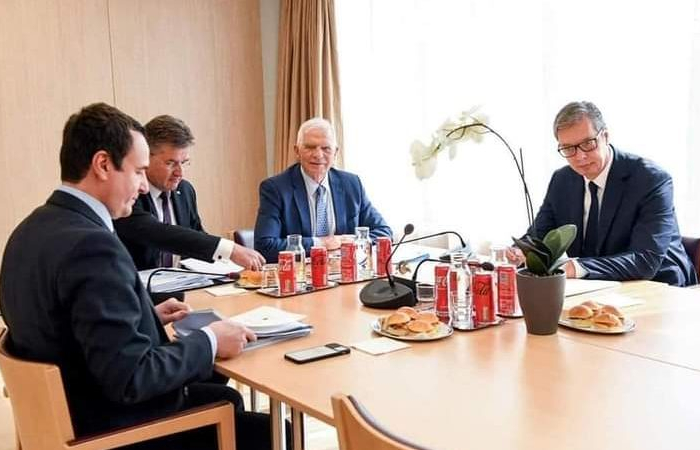
High level talks between Serbia and Kosovo, facilitated by the European Union, have failed to unblock the impasse between them.  EU High Representative Josep Borrell hosted the talks between Serbian President Aleksandar Vučić and Kosovo Prime Minister Albin Kurti in Belgrade on Thursday, 18 August. Kosovo declared independence unilaterally from Serbia in 2008, after a long period of tension with Belgrade which had already emerged during the time of Yugoslavia.  Serbia still considers Kosovo an integral part of its territory. Around a hundred countries, including most EU member states, recognise Kosovo's independence. Kosovo has a population of 1.8 million population, which is 90% ethnic Albanian. However 5% are Serbs, and it is the rights of this community that are the present stumbling block, but it is also recognised that differences are more substantial and wide-ranging. A clearly disappointed EU High Representative told the media after the event that the immediate objective of the talks had failed, but that both sides agreed to keep talking.
Editor's choice
News
Estonia removes Soviet WWII memorial amid controversy

Estonia removes Soviet WWII memorial amid controversy

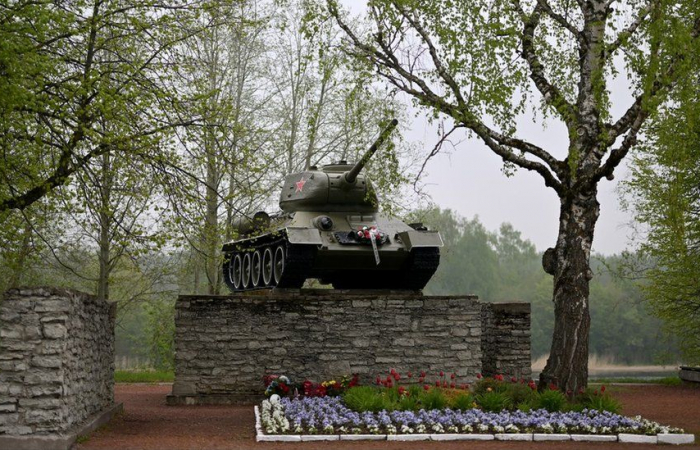
Estonia has removed a Soviet-era World War II memorial from Narva, a large Russian-speaking majority city, accusing Russia of using such monuments to stir up tensions. In a controversial move that is likely to bring relations with Russia to a new low Estonia has decided to remove a tank which formed part of the War memorial in the town which is close to the Russian border. People in the Baltic States fought on both sides during WWII, and issues regarding remembrance activities and monuments remain highly sensitive and controversial.  Prime Minister Kaja Kallas said in a statement that the move was a response to “increasing tensions and confusion around memorials in Narva”. “We must act quickly to ensure public order and internal security,” she said on Tuesday. Local opposition to removing the monument had sparked fears of a repetition of the rioting that broke out in Tallinn in 2007 due to the removal of a Soviet monument. A World War II-era T-34 tank that formed part of the memorial in Narva will be taken to the Estonian War Museum and a mass grave of wartime victims will instead be given a “neutral grave marker”.
Editor's choice
News
International community calls on Russia to withdraw from Zaporizhzhia Nuclear Power Plant

International community calls on Russia to withdraw from Zaporizhzhia Nuclear Power Plant

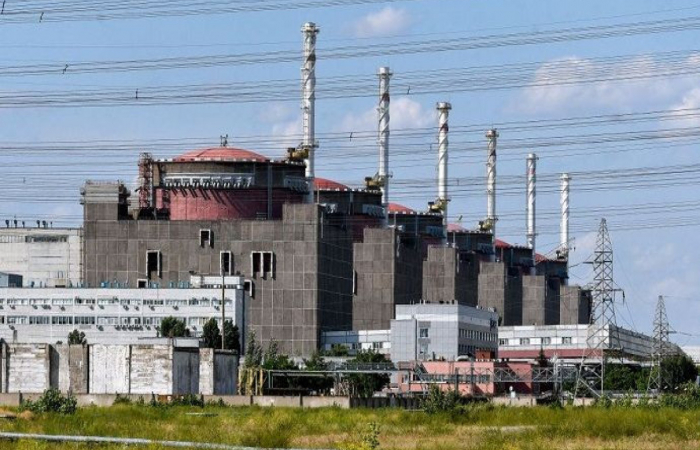
EU member states and other countries in the international community have issued a statement on the situation around the Zaporizhzhia Nuclear Power Plant, and have called on Russia to withdraw its troops from the territory of the plant. In a statement the 42 countries called on Russia to immediately withdraw its military forces and all other unauthorised personnel from the Zaporizhzhia Nuclear Power Plant, its immediate surroundings, and all of Ukraine so that the operator and the Ukrainian authorities can resume their sovereign responsibilities within Ukraine’s internationally recognized borders and the legitimate operating staff can conduct their duties without outside interference, threat, or unacceptably harsh working conditions. This will also enable the IAEA to carry out its verification pursuant to Ukraine’s safeguards obligations under safe and secure conditions and in a timely manner. The statement said that the international community will hold Russia accountable for its aggression, and Russia must bear full responsibility for its unlawful actions in Ukraine.
Editor's choice
News
Turkey, Sweden and Finland to meet on 26 August

Turkey, Sweden and Finland to meet on 26 August

Turkish representatives will meet counterparts from Sweden and Finland on 26 August in an effort to remove the final stumbling blocks for the accession of the two Scandinavian countries into NATO. Turkey is one of seven out of thirty NATO countries still to ratify the decision taken at the last NATO summit to admit Sweden and Finland into the alliance. Speaking at a Conference for Turkish Ambassadors across the world, being held this week in Ankara, Turkish Foreign Minister Mevlut Cavusoglu said Sweden and Finland are yet to deliver their commitments arising from the trilateral memorandum signed at the NATO summit in Madrid in June and they haven't taken any solid steps on Turkey's requests on extradition of terrorists yet. He described the remarks by Swedish and Finnish authorities on their promises as "well intentioned," and reiterated Turkey's desire to see concrete steps from the two countries.
Editor's choice
Commentary
Commentary: Ukraine crisis helps Europe re-discover the meaning of the word “solidarity”

Commentary: Ukraine crisis helps Europe re-discover the meaning of the word “solidarity”

Since the start of the Russian invasion, the EU and its member states have given Ukraine billions of euros of budgetary assistance, have welcomed more than 3.7 million refugees, and have extended unprecedented levels of military assistance. Europe has re-discovered the meaning of the word solidarity, even if not all of the solidarity is altruistic but involves also a measure of self-preservation in the face of Putin's Russia naked aggressiveness and expansionist ambitions. Solidarity with Ukraine and Ukrainians is also ultimately in the interest of every European Union country and citizen. But this does not in any way lessen the significance of Europe’s support for Ukraine. Can this solidarity be sustained for the months, and probably years ahead, as Ukraine struggles to defeat Russia, and hopefully afterwards, victorious, start the difficult process of reconstruction? The decision to give Ukraine EU candidate status was in this regard significant, and indicates that the EU sees Ukraine as a long term commitment. For sure, as the winter cold starts biting and Putin plays politics with Russian gas supplies, there will be those who will question the value of Europe’s solidarity with Ukraine.  It is important they remain marginalised. For this, European leaders, decision makers and opinion shapers, need to communicate constantly to European citizens the righteousness of the decision to help Ukraine to stand up to Russia, and to help the Ukrainian people in their hour of need.
Editor's choice
News
Decision time for the future of the Iran nuclear deal

Decision time for the future of the Iran nuclear deal

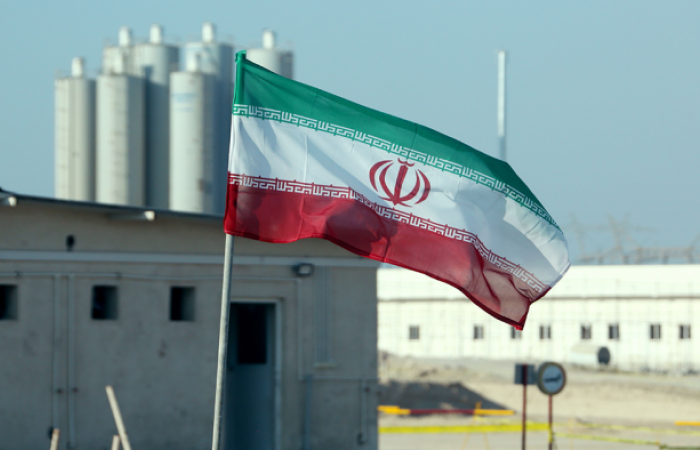
After years of uncertainty and negotiations, it is finally decision time for the future of the Iran nuclear deal, known as the Joint Comprehensive Plan of Action (JCPOA). On Monday (8 August), the European Union submitted a “final text” at talks to salvage the 2015 deal aimed at reining in Iran’s nuclear ambitions. Tehran said it was reviewing the proposals. Britain, China, France, Germany, Iran and Russia, as well as the United States indirectly, resumed talks on Thursday in Vienna, months after they had stalled. The European Union has submitted a “final text,” a European official said on Monday. “We worked for four days and today the text is on the table,” the official told reporters on condition of anonymity. “The negotiation is finished, it’s the final text... and it will not be renegotiated.” “Now the ball is in the court of the capitals and we will see what happens,” the European official added. AFP news agency quoted European diplomats as saying that the final draft tabled is non-negotiable, and “stretches us all to the limits of our flexibility.”  According to The Wall Street Journal correspondent Laurence Norman, a senior EU official said that EU foreign policy chief Josep Borrell will send messages to participating states setting out the next steps. The EU has been co-ordinating the efforts to revive the JCPOA, which involved mediating indirect talks between Iran and the United States.