Region

EU plus

Stories in this section cover the EU-27 countries plus the UK, Norway, Switzerland, Iceland, Liechtenstein, Monaco, Andorra and the Balkan Countries (Albania, Serbia, Montenegro, Bosnia-Herzegovina, Kosovo, North Macedonia).

Editor's choice
News
Germany accuses Russia of cyberattacks and disinformation campaign

Germany accuses Russia of cyberattacks and disinformation campaign

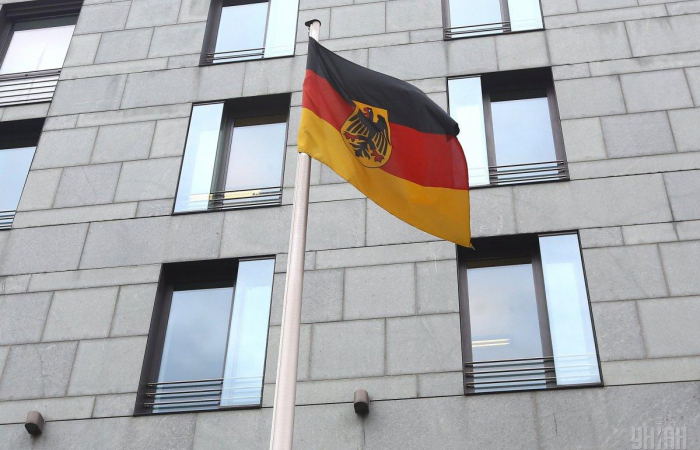
The German government holds Russia responsible for a cyberattack on German air traffic control, and for targeted disinformation campaigns before the last federal election. According to the German Foreign Office in Berlin, the incidents could be clearly attributed to the Russian military intelligence service, the GRU. In response, the Russian ambassador to Berlin was summoned to the Foreign Ministry. "We have been observing a massive increase in threatening hybrid activities by Russia for some time now," a spokesperson for the Foreign Ministry stated. These range from disinformation campaigns and espionage to cyberattacks and sabotage attempts. The aim is to divide society, sow distrust, and undermine confidence in democratic institutions. The spokesperson added that with these actions, Russia is "very concretely threatening our security, not only through its war of aggression against Ukraine, but also here in Germany."  The Foreign Ministry spokesperson explained that the cyberattack on air traffic control in August 2024 was clearly attributed to the hacker collective "APT28," known as "Fancy Bear," and to the responsibility of the Russian military intelligence service, the GRU. Furthermore, it could now be "conclusively stated" that Russia had attempted "to influence and destabilize both the last Federal election and the ongoing internal affairs of the Federal Republic of Germany." There was "absolutely irrefutable evidence" for this". The so-called "Storm 1516" campaign, which has been running since 2024, is allegedly backed by "reliable information" that the Moscow-based think tank "Center for Geopolitical Expertise" is behind it. The Center is also said to be supported by Russian military intelligence. Its primary aim is to influence democratic elections in the West. (Click the image to read more).
Editor's choice
News
NATO Chief says war is on Europe's doorstep, and warns against complacency

NATO Chief says war is on Europe's doorstep, and warns against complacency

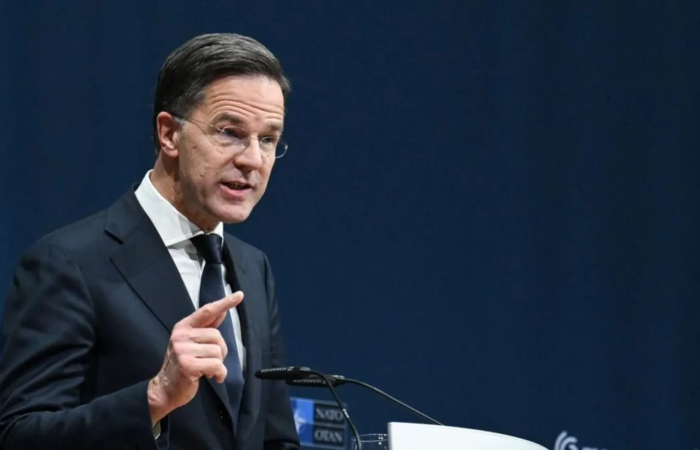
Russia could attack a NATO country within the next five years, the Secretary General of NATO, Mark Rutte, said in a stark new warning. "NATO's own defences can hold for now," Rutte warned in Berlin, but conflict was "next door" to Europe, and he feared "too many are quietly complacent, and too many don't feel the urgency, too many believe that time is on our side. "Russia is already escalating its covert campaign against our societies," Rutte said in a speech in Germany. "We must be prepared for the scale of war our grandparents or great-grandparents endured." Earlier this month, Russia's President Vladimir Putin said his country was not planning to go to war with Europe, but it was ready "right now" if Europe wanted to - or started a war. But similar reassurances were given by Moscow in 2022, just before 200,000 Russian troops crossed the border and invaded Ukraine. Putin has accused European countries of hindering US efforts to bring peace in Ukraine - a reference to the role Ukraine's European allies have recently played in trying to change a US peace plan to end the war, whose initial draft was seen as favouring Russia. But Putin was not sincere, Nato's secretary-general said in the German capital, Berlin. Supporting Ukraine, he added, was a guarantee for European security. "Just imagine if Putin got his way; Ukraine under the boot of Russian occupation, his forces pressing against a longer border with Nato, and the significantly increased risk of an armed attack against us." Russia's economy has been on a war footing for more than three years now - its factories churn out ever more supplies of drones, missiles and artillery shells. According to a recent report by the Kiel Institute for the World Economy, Russia has been producing each month around 150 tanks, 550 infantry fighting vehicles, 120 Lancet drones and more than 50 artillery pieces. The UK, and most of its Western allies, are simply not anywhere near this point. Analysts say it would take years for Western Europe's factories to come close to matching Russia's mass-production of weapons. "Allied defence spending and production must rise rapidly, our armed forces must have what they need to keep us safe," the Nato chief said.

Filter archive

Publication date
Editor's choice
Opinion
Opinion: EU mediation between Armenia and Azerbaijan is needed now more than ever

Opinion: EU mediation between Armenia and Azerbaijan is needed now more than ever

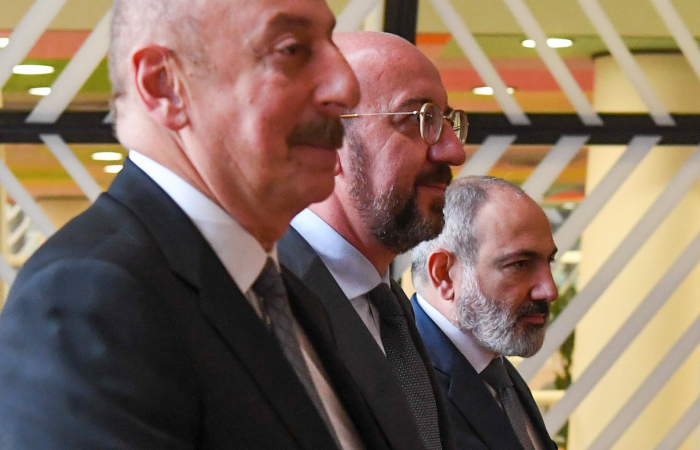
The stalemate in the process of normalising relations between Armenia and Azerbaijan has created new risks. Writing for commonspace.eu in this op-ed, Vasif Huseynov says that "there is widespread concern in the region that the sides might end up in a violent military escalation this year if they fail to sign a peace treaty and agree on a roadmap for the resolution of the remaining disputes concerning the Karabakh region of Azerbaijan and the re-opening of regional transportation links. Under these circumstances, there is a great need for the constructive intervention and active mediation of the EU, without which Baku and Yerevan are unlikely to be able to overcome the difficulties created by the Russian side", he argues.
Editor's choice
News
Sweden takes over rotating presidency of EU for the next six months

Sweden takes over rotating presidency of EU for the next six months

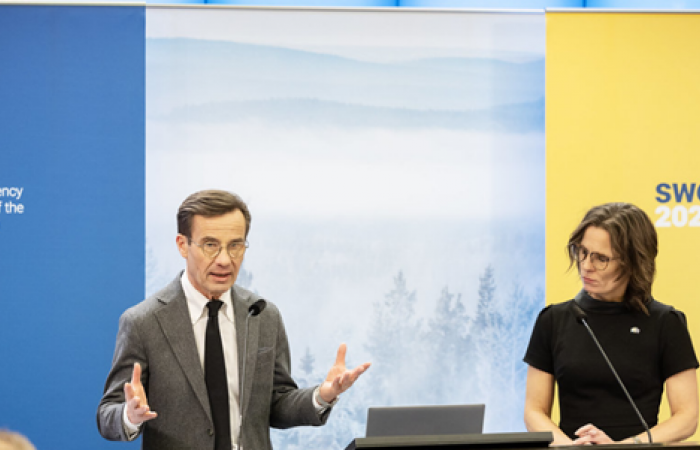
On 1 January 2023, Sweden took over the Presidency of the Council of the European Union from Czechia. "Security, competitiveness, green and energy transitions, democratic values and the rule of law" are the priorities of the Presidency for the coming six months. During the first half of the year, Sweden will lead the work in the Council of the EU and represent all 27 Member States in negotiations with other EU institutions. The Swedish Presidency will chair approximately 2 000 meetings in Brussels and Luxembourg, and approximately 150 informal meetings will be held in locations throughout Sweden. “Sweden is taking over the Presidency at a time when the European Union is facing unprecedented challenges. A greener, more secure and freer Europe is the foundation of our priorities,” said Prime Minister Ulf Kristersson on 14 December when he presented the priorities of the Swedish Presidency to the Riksdag
Editor's choice
Opinion
Opinion: Azerbaijan is intensively engaged in new projects that aim to contribute to energy security, especially in Eastern Europe

Opinion: Azerbaijan is intensively engaged in new projects that aim to contribute to energy security, especially in Eastern Europe

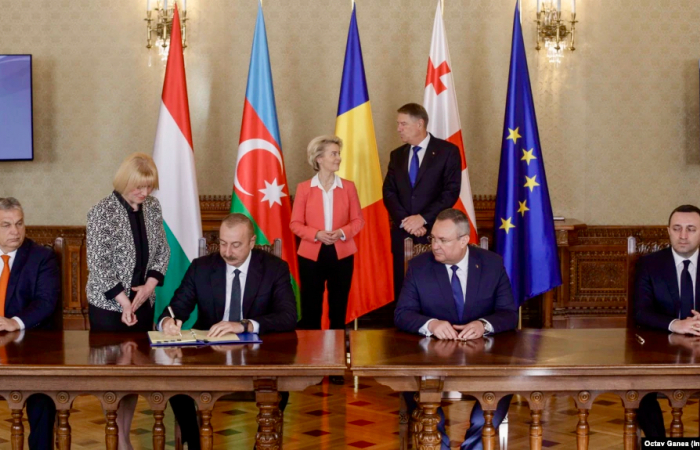
Over the last month, the diplomatic traffic between Azerbaijan and the Eastern European countries has intensified in a remarkable way. The mutual high-level visits between Albania and Azerbaijan, as well as between Serbia and Azerbaijan in a short period of time over the last few months were a sign of the sides’ interest in bilateral cooperation in various fields, particularly in the field of energy. Azerbaijan is also involved in projects with the countries of the region within multilateral formats together with the European Union (EU). In this context, two major agreements signed this year provide a good basis for this cooperation both in the imports of natural gas and importantly green energy, writes Vasif Huseynov in this op-ed for commonspace.eu. These developments in the relations between Azerbaijan and the Eastern European countries brings with it also geopolitical approximation between the sides. As President Aliyev stated following the signing of the electricity deal in Bucharest, Azerbaijan’s contribution to European energy security creates an important bridge between the EU and Azerbaijan. The bridge between the two shores of the Black Sea forms a larger security architecture which increase the resilience of the regional countries in the face of national security challenges they face.
Editor's choice
News
EU continues to develop its tools in support of its objective to contribute to peace in the South Caucasus.

EU continues to develop its tools in support of its objective to contribute to peace in the South Caucasus.

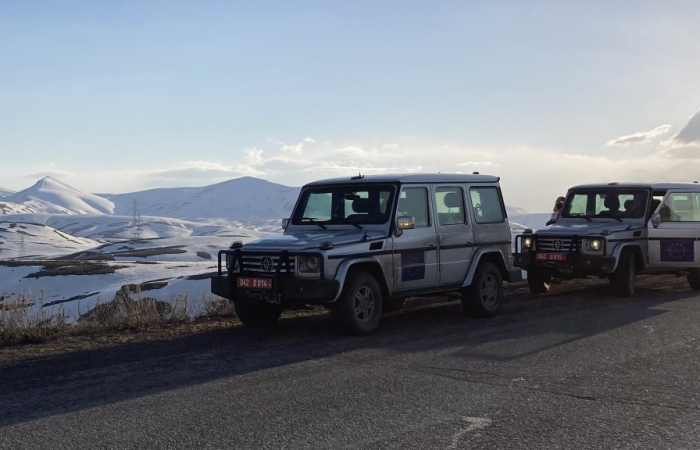
The European Union continues to develop its tools in support of its objective to contribute to peace and security in the South Caucasus.  On Monday (19 December), the EU Monitoring Capacity in Armenia (EUMCAP), launched in October, completed its mandate. Based on the agreement between the leaders of Armenia, Azerbaijan, European Council and France, the EUMCAP was deployed on 20 October along the Armenian side of the international border with Azerbaijan with the objective of monitoring, analysing and reporting on the situation on the ground. EU leaders, meeting in Brussels last week, assessed the wotk of the mission and the way forward. A statement by the European External Action Service on Monday stated that, "the Council – in agreement with Armenia’s authorities - decided that the existing EU Monitoring Mission in Georgia (EUMM Georgia) will deploy a transitional planning assistance team in Armenia to enhance the EU’s awareness of the security situation, and contribute to the planning and preparation of a possible civilian CSDP mission in the country. The transitional planning assistance team is also expected to support the President of the European Council, Charles Michel, in the EU-facilitated normalisation process between Armenia and Azerbaijan."
Editor's choice
Analysis
Under the Pall of War: Implications of Russia's Invasion of Ukraine for Peace Processes in the South Caucasus

Under the Pall of War: Implications of Russia's Invasion of Ukraine for Peace Processes in the South Caucasus

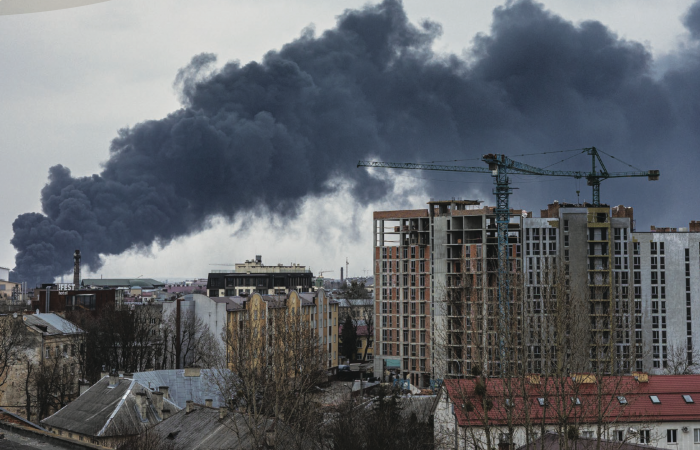
Russia’s invasion of Ukraine in February 2022 shattered Europe’s security architecture, with far-reaching and unpredictable implications for conflicts in neighbouring regions where Russia plays a role. This discussion paper, just published by Conciliation Resources, focuses on the impacts of war in Ukraine on the peace processes of the South Caucasus, a region fractured by protracted conflicts dating back to the 1990s.