Region

EU plus

Stories in this section cover the EU-27 countries plus the UK, Norway, Switzerland, Iceland, Liechtenstein, Monaco, Andorra and the Balkan Countries (Albania, Serbia, Montenegro, Bosnia-Herzegovina, Kosovo, North Macedonia).

Editor's choice
News
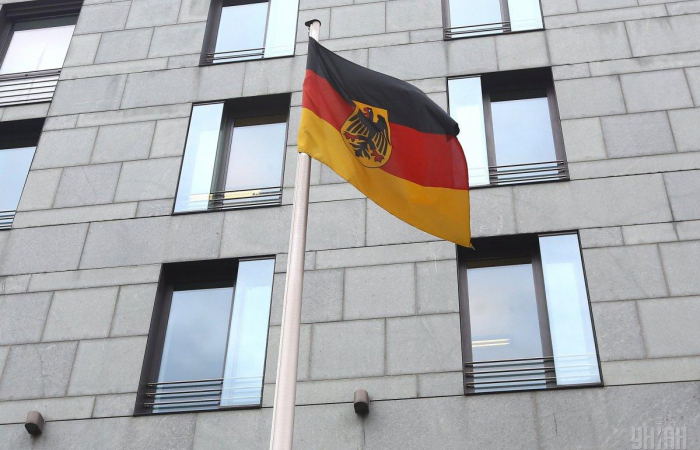
Germany accuses Russia of cyberattacks and disinformation campaign

Germany accuses Russia of cyberattacks and disinformation campaign

The German government holds Russia responsible for a cyberattack on German air traffic control, and for targeted disinformation campaigns before the last federal election. According to the German Foreign Office in Berlin, the incidents could be clearly attributed to the Russian military intelligence service, the GRU. In response, the Russian ambassador to Berlin was summoned to the Foreign Ministry. "We have been observing a massive increase in threatening hybrid activities by Russia for some time now," a spokesperson for the Foreign Ministry stated. These range from disinformation campaigns and espionage to cyberattacks and sabotage attempts. The aim is to divide society, sow distrust, and undermine confidence in democratic institutions. The spokesperson added that with these actions, Russia is "very concretely threatening our security, not only through its war of aggression against Ukraine, but also here in Germany."  The Foreign Ministry spokesperson explained that the cyberattack on air traffic control in August 2024 was clearly attributed to the hacker collective "APT28," known as "Fancy Bear," and to the responsibility of the Russian military intelligence service, the GRU. Furthermore, it could now be "conclusively stated" that Russia had attempted "to influence and destabilize both the last Federal election and the ongoing internal affairs of the Federal Republic of Germany." There was "absolutely irrefutable evidence" for this". The so-called "Storm 1516" campaign, which has been running since 2024, is allegedly backed by "reliable information" that the Moscow-based think tank "Center for Geopolitical Expertise" is behind it. The Center is also said to be supported by Russian military intelligence. Its primary aim is to influence democratic elections in the West. (Click the image to read more).
Editor's choice
News
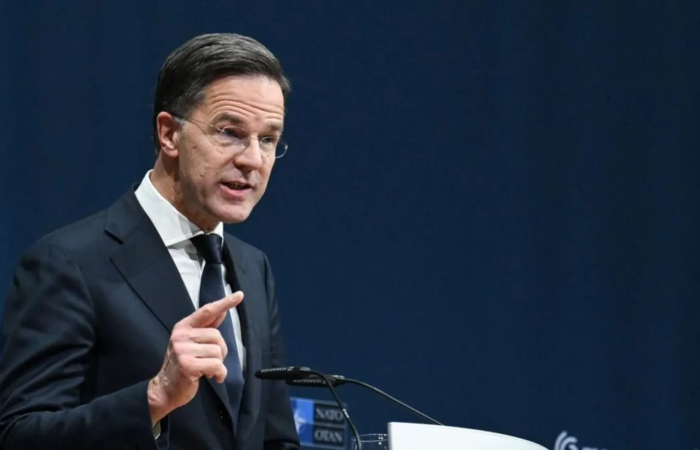
NATO Chief says war is on Europe's doorstep, and warns against complacency

NATO Chief says war is on Europe's doorstep, and warns against complacency

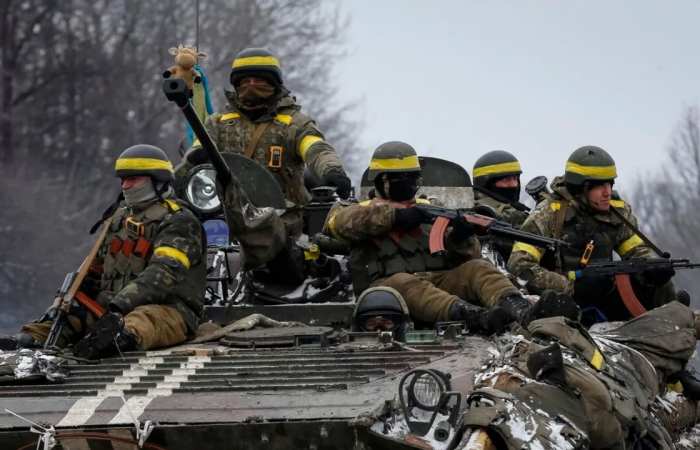
Russia could attack a NATO country within the next five years, the Secretary General of NATO, Mark Rutte, said in a stark new warning. "NATO's own defences can hold for now," Rutte warned in Berlin, but conflict was "next door" to Europe, and he feared "too many are quietly complacent, and too many don't feel the urgency, too many believe that time is on our side. "Russia is already escalating its covert campaign against our societies," Rutte said in a speech in Germany. "We must be prepared for the scale of war our grandparents or great-grandparents endured." Earlier this month, Russia's President Vladimir Putin said his country was not planning to go to war with Europe, but it was ready "right now" if Europe wanted to - or started a war. But similar reassurances were given by Moscow in 2022, just before 200,000 Russian troops crossed the border and invaded Ukraine. Putin has accused European countries of hindering US efforts to bring peace in Ukraine - a reference to the role Ukraine's European allies have recently played in trying to change a US peace plan to end the war, whose initial draft was seen as favouring Russia. But Putin was not sincere, Nato's secretary-general said in the German capital, Berlin. Supporting Ukraine, he added, was a guarantee for European security. "Just imagine if Putin got his way; Ukraine under the boot of Russian occupation, his forces pressing against a longer border with Nato, and the significantly increased risk of an armed attack against us." Russia's economy has been on a war footing for more than three years now - its factories churn out ever more supplies of drones, missiles and artillery shells. According to a recent report by the Kiel Institute for the World Economy, Russia has been producing each month around 150 tanks, 550 infantry fighting vehicles, 120 Lancet drones and more than 50 artillery pieces. The UK, and most of its Western allies, are simply not anywhere near this point. Analysts say it would take years for Western Europe's factories to come close to matching Russia's mass-production of weapons. "Allied defence spending and production must rise rapidly, our armed forces must have what they need to keep us safe," the Nato chief said.

Filter archive

Publication date
Editor's choice
News
EU and Uzbekistan officials meet to discuss ties, promise to expand cooperation

EU and Uzbekistan officials meet to discuss ties, promise to expand cooperation

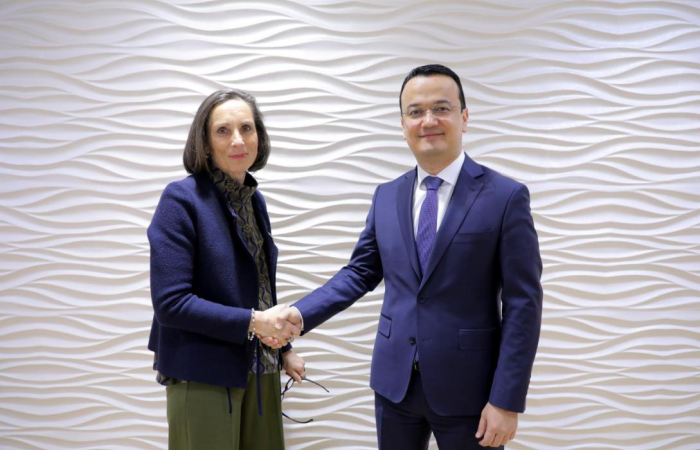
The Uzbek Minister of Investments, Industry and Trade Laziz Qudratov hosted the head of the delegation of the EU in Uzbekistan Charlotte Adriaen on Monday (30 January) to discuss ways to advance bilateral ties in trade, economic and investment spheres. The parties explored the opportunities for expanding the main areas of bilateral financial and technical cooperation, and discussed the EU's Multi-Annual Indicative Programme for Uzbekistan (MIP), the implementation of which has been allocated €76m for the period 2021-2024. Additional funds for the same time frame were also earmarked for Human Rights support (€3.6m), and Civil Society Organisation (€3.4m). The MIP 2021-2027 has three main priorities, namely effective governance and digital transformation; inclusive, digital and green growth, and the development of a smart eco-friendly agri-food sector.
Editor's choice
News
Germany officially confirms export of Leopard 2 tanks to Ukraine, approves re-export from third countries

Germany officially confirms export of Leopard 2 tanks to Ukraine, approves re-export from third countries

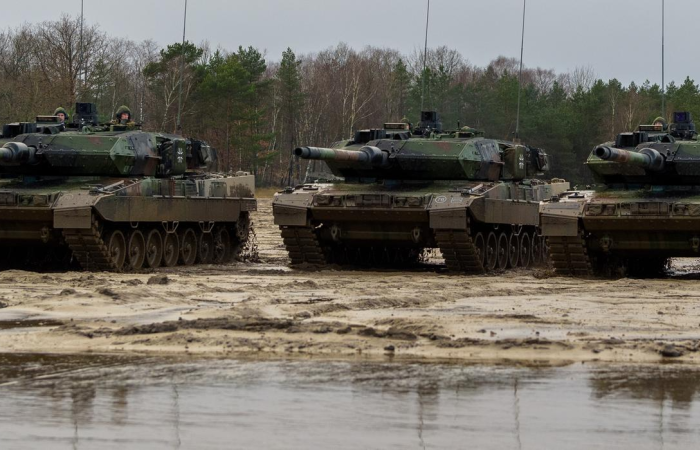
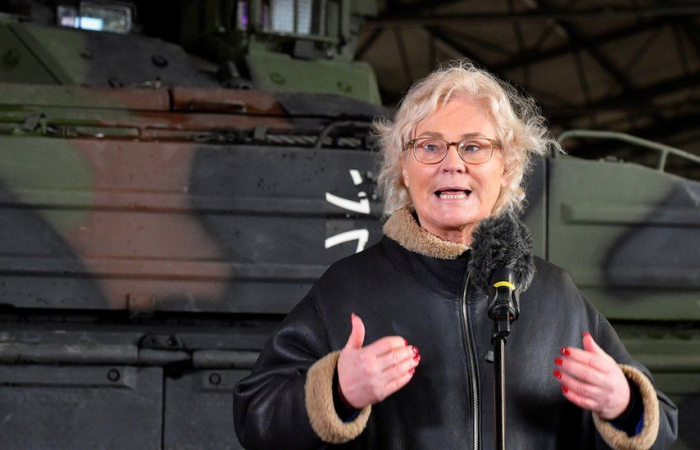
After weeks of growing pressure from allies, Berlin has finally announced that it will send 14 of its Leopard 2 tanks to Ukraine. It has also approved the re-export of Leopard 2 tanks from third countries. Other countries have also pledged to send Ukraine Leopard 2 tanks, including Poland, Norway and Portugal. It has also been reported that Spain intends to send Ukraine the German-made tanks too. Last week, the UK announced that it would send 14 of its Challenger 2 tanks to Kyiv. The announcement comes as the United States is reportedly considering arming Ukraine with its around 30 of its powerful Abrams tanks, and reports of Switzerland intending to lift its ban on supplying Kyiv with arms. The Leopard 2 first came into service in 1979, has a top speed of 68km/h (42mph), and a maximum range of around 500km (311 miles). They are specifically designed to compete with the Russian T-90 tanks, which Moscow has been using during its full-scale invasion.
Editor's choice
News
Poland officially asks Germany for permission to send Leopard 2 tanks to Ukraine

Poland officially asks Germany for permission to send Leopard 2 tanks to Ukraine

Poland has officially asked Germany for permission to send some of its German-made Leopard 2 tanks to Ukraine, the Polish Defence Minister announced in a tweet on Tuesday morning (24 January). In the tweet, Mariusz Blaszczak wrote: "The Germans have already received our request for consent to the transfer of Leopard 2 tanks to Ukraine. I also appeal to the German side to join the coalition of countries supporting Ukraine with Leopard 2 tanks. This is our common cause because it is about the security of the whole of Europe!'' Germany has come under increasing pressure in recent weeks to either supply Ukraine with its Leopard 2 tanks, or at least approve other countries' re-export of them. German Foreign Minister Annalena Baerbock had said on Sunday (22 January) in an interview with French television that she would not "stand in the way" of Poland if it wanted to sent its Leopard 2 tanks to Ukraine. On his part, German Defence Minister Boris Pistorius said on Tuesday morning that Berlin had yet to decide on the delivery of combat tanks to Ukraine, saying that "There is no news that I can deliver at this point. I have said that shortly a decision will be made and I can only assume that will be the case."
Editor's choice
News
Turkey rules out support for Sweden NATO bid after Stockholm protests

Turkey rules out support for Sweden NATO bid after Stockholm protests

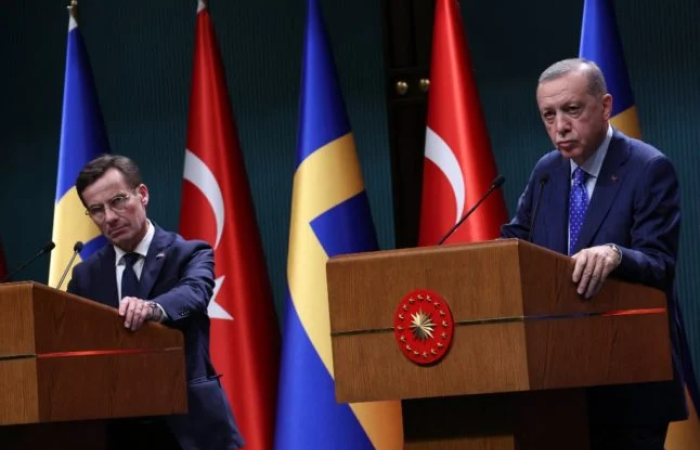
The President of Turkey, Recep Tayyip Erdogan, has said that Sweden should not expect support from Ankara over its bid to join NATO following protests in Stockholm at the weekend. Surrounded by police for his protection, on Saturday (21 January) Danish-Swedish, far-right, anti-Islam activist Rasmus Paludan burned the Quran outside the Turkish Embassy in Stockholm while making disparaging remarks about immigrants and Islam. This incensed President Erdogan who criticised the Swedish authorities for letting the stunt happen. “It is clear that those who allowed such vileness to take place in front of our embassy can no longer expect any charity from us regarding their NATO membership application,” Erdogan said on Monday (23 January). Another bone of contention between Sweden and Turkey regarding the former's accession to NATO concerns the Kurdish question. Later on Saturday following Paludan's stunt, there was a pro-Kurdish demonstration in Stockholm where flags of various Kurdish groups were waved, including that of the Kurdish Workers' Party, or the PKK. The PKK has waged a decades-long insurgency in Turkey, and although it is considered a terrorist group by Turkey, the United States and the European Union, its symbols are not banned in Sweden.
Editor's choice
News
Ramstein summit: no decision on German tanks as countries make military aid pledges

Ramstein summit: no decision on German tanks as countries make military aid pledges

No decision has been reached on whether Berlin will approve the supply of Leopard 2 tanks to Ukraine at Ramstein Air Force base summit of global defence leaders in Germany on Friday (20 January). The BBC reports that the Polish Defence Minister, Mariusz Blaszczak, remains optimistic that efforts to supply the tanks would be successful, saying, "Defence ministers of 15 countries met on the sidelines of today's conference and we talked about this topic...I am convinced that coalition building will end in success." Both leading up to and during the summit on Friday, numerous countries had made separate pledges of military equipment to Ukraine. The Netherlands, Canada, Denmark, the Czech Republic, Estonia, Lativa, Lithuania, Poland, Slovakia, the UK, Sweden, Finland, Germany and the United States are among those to have pledged further military aid to Ukraine in the past week.
Editor's choice
News
European Council President Michel heads to Kyiv amid calls to send Ukraine tanks

European Council President Michel heads to Kyiv amid calls to send Ukraine tanks

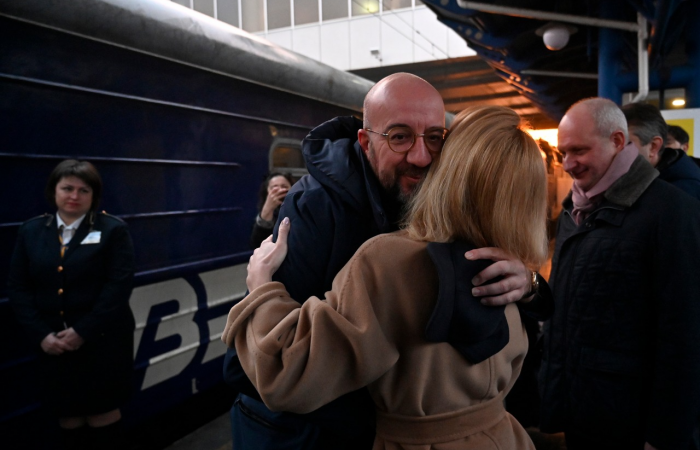
The President of the European Council Charles Michel is in Kyiv, announcing his arrival on Twitter on Thursday morning (19 January). In a video, he said: "I am on my way to Kyiv because I will have the occasion to meet again with the President Volodymyr Zelensky and the Prime Minister, and members of parliament. And we know that the Ukrainians are resisting, and they are fighting. They are fighting for their land, they are fighting for the future, and for the future of their children. We all know they are also fighting for our common European values and principles. And also for the promise of European Union peace and prosperity. They need and deserve our support, and that is why we will discuss with President Zelensky and his team what are the measures we can develop in order to make sure they are stronger and more powerful." In a speech to the European Parliament yesterday (18 January), President Michel explicitly expressed his support for supplying Ukraine with tanks, saying: "The time is now. They urgently need more equipment and I'm personally in favour of supplying tanks to Ukraine."
Editor's choice
News
Third Joint Declaration on NATO-EU cooperation

Third Joint Declaration on NATO-EU cooperation

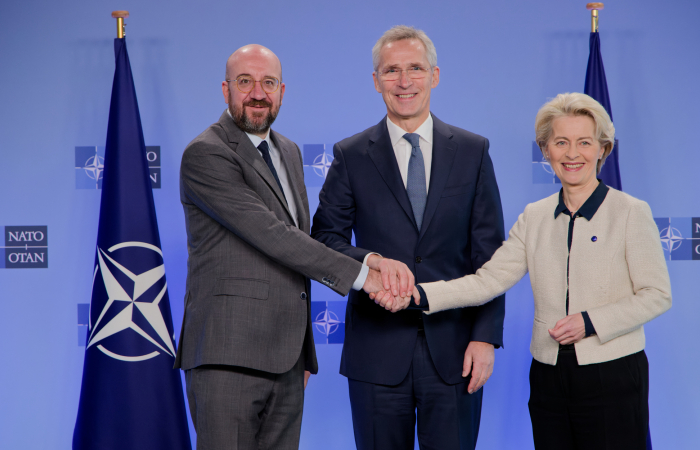
On 10 January 2023, the EU and NATO signed a Joint Declaration in Brussels. They condemned in the strongest possible terms Russia’s aggression against Ukraine and reiterated their unwavering support to the country. The declaration also sets out a shared vision of how the EU and NATO will act together against common security threats. The EU and NATO will expand and deepen their cooperation on areas such as: the growing geostrategic competition resilience and the protection of critical infrastructure emerging and disruptive technologies space the security implications of climate change foreign information manipulation and interference. NATO Secretary General Jens Stoltenberg, the President of the European Council, Charles Michel, and the President of the European Commission, Ursula von der Leyen, met on Tuesday (10 January 2023) at NATO Headquarters to sign the third Joint Declaration on NATO-European Union cooperation. Speaking at a joint press conference, Mr Stoltenberg said: “we are determined to take the partnership between NATO and the European Union to the next level.” The Joint Declaration aims to further strengthen and expand the strategic partnership between NATO and the EU, building on unprecedented progress in cooperation between the two organisations since previous declarations were signed in 2016 and 2018.