Region

EU plus

Stories in this section cover the EU-27 countries plus the UK, Norway, Switzerland, Iceland, Liechtenstein, Monaco, Andorra and the Balkan Countries (Albania, Serbia, Montenegro, Bosnia-Herzegovina, Kosovo, North Macedonia).

Editor's choice
News
Germany accuses Russia of cyberattacks and disinformation campaign

Germany accuses Russia of cyberattacks and disinformation campaign

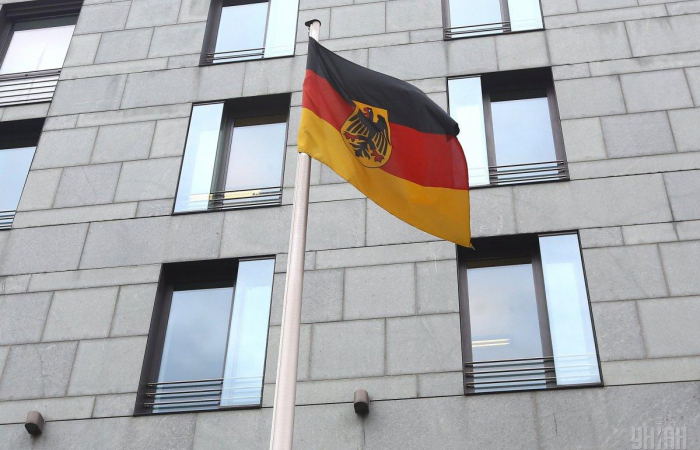
The German government holds Russia responsible for a cyberattack on German air traffic control, and for targeted disinformation campaigns before the last federal election. According to the German Foreign Office in Berlin, the incidents could be clearly attributed to the Russian military intelligence service, the GRU. In response, the Russian ambassador to Berlin was summoned to the Foreign Ministry. "We have been observing a massive increase in threatening hybrid activities by Russia for some time now," a spokesperson for the Foreign Ministry stated. These range from disinformation campaigns and espionage to cyberattacks and sabotage attempts. The aim is to divide society, sow distrust, and undermine confidence in democratic institutions. The spokesperson added that with these actions, Russia is "very concretely threatening our security, not only through its war of aggression against Ukraine, but also here in Germany."  The Foreign Ministry spokesperson explained that the cyberattack on air traffic control in August 2024 was clearly attributed to the hacker collective "APT28," known as "Fancy Bear," and to the responsibility of the Russian military intelligence service, the GRU. Furthermore, it could now be "conclusively stated" that Russia had attempted "to influence and destabilize both the last Federal election and the ongoing internal affairs of the Federal Republic of Germany." There was "absolutely irrefutable evidence" for this". The so-called "Storm 1516" campaign, which has been running since 2024, is allegedly backed by "reliable information" that the Moscow-based think tank "Center for Geopolitical Expertise" is behind it. The Center is also said to be supported by Russian military intelligence. Its primary aim is to influence democratic elections in the West. (Click the image to read more).
Editor's choice
News
NATO Chief says war is on Europe's doorstep, and warns against complacency

NATO Chief says war is on Europe's doorstep, and warns against complacency

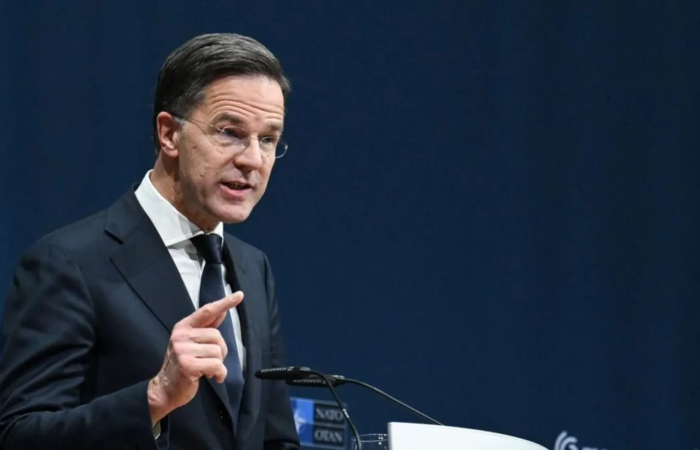
Russia could attack a NATO country within the next five years, the Secretary General of NATO, Mark Rutte, said in a stark new warning. "NATO's own defences can hold for now," Rutte warned in Berlin, but conflict was "next door" to Europe, and he feared "too many are quietly complacent, and too many don't feel the urgency, too many believe that time is on our side. "Russia is already escalating its covert campaign against our societies," Rutte said in a speech in Germany. "We must be prepared for the scale of war our grandparents or great-grandparents endured." Earlier this month, Russia's President Vladimir Putin said his country was not planning to go to war with Europe, but it was ready "right now" if Europe wanted to - or started a war. But similar reassurances were given by Moscow in 2022, just before 200,000 Russian troops crossed the border and invaded Ukraine. Putin has accused European countries of hindering US efforts to bring peace in Ukraine - a reference to the role Ukraine's European allies have recently played in trying to change a US peace plan to end the war, whose initial draft was seen as favouring Russia. But Putin was not sincere, Nato's secretary-general said in the German capital, Berlin. Supporting Ukraine, he added, was a guarantee for European security. "Just imagine if Putin got his way; Ukraine under the boot of Russian occupation, his forces pressing against a longer border with Nato, and the significantly increased risk of an armed attack against us." Russia's economy has been on a war footing for more than three years now - its factories churn out ever more supplies of drones, missiles and artillery shells. According to a recent report by the Kiel Institute for the World Economy, Russia has been producing each month around 150 tanks, 550 infantry fighting vehicles, 120 Lancet drones and more than 50 artillery pieces. The UK, and most of its Western allies, are simply not anywhere near this point. Analysts say it would take years for Western Europe's factories to come close to matching Russia's mass-production of weapons. "Allied defence spending and production must rise rapidly, our armed forces must have what they need to keep us safe," the Nato chief said.

Filter archive

Publication date
Editor's choice
News
Poland, Czech Republic pledge more military aid to Ukraine as Zelensky visits Warsaw

Poland, Czech Republic pledge more military aid to Ukraine as Zelensky visits Warsaw

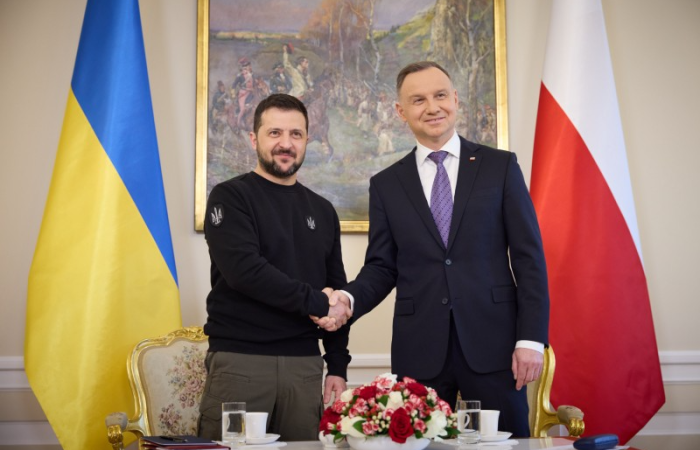
Poland has announced a swathe of new military aid to Ukraine as Ukrainian President Volodymyr Zelensky visited Warsaw on Wednesday (5 April). Speaking in Warsaw, Zelensky announced that he and his Polish counterpart Andrzej Duda had agreed on the supply of armoured personnel carriers, self-propelled mortars and air defense systems. Additionally, President Duda announced that Poland will increase its donation of Soviet-era MiG-29 fighter jets to 14.  Poland had previously donated four, has prepared to transfer four more, and is currently preparing to transfer six further jets that "can be transferred quite soon", according to President Duda. This is on top of 13 MiG-29 fighter jets that had been previously pledged by Slovakia. During the same visit, Poland and Ukraine also signed a joint memorandum on the reconstruction of war-damaged areas of Ukraine as well as on the production of 125mm tank rounds. On the same day, the Czech Republic also pledged a package of military aid worth $30m, including equipment that was currently in storage and "not needed" for the country's defense, according to Czech Defense Minister Jana Černochová.
Editor's choice
News
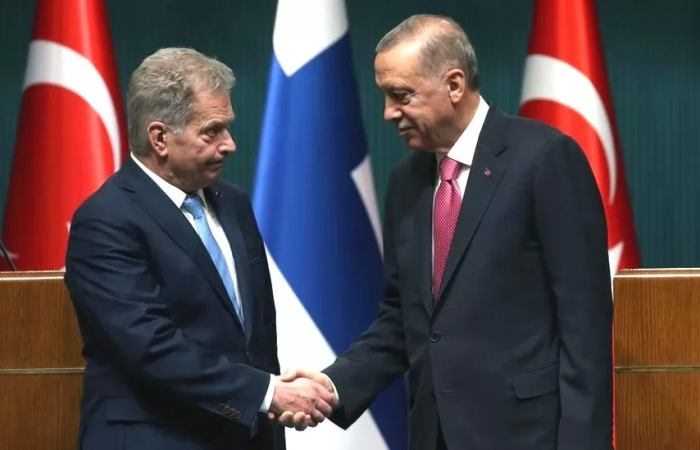
Finland officially joins NATO military alliance

Finland officially joins NATO military alliance

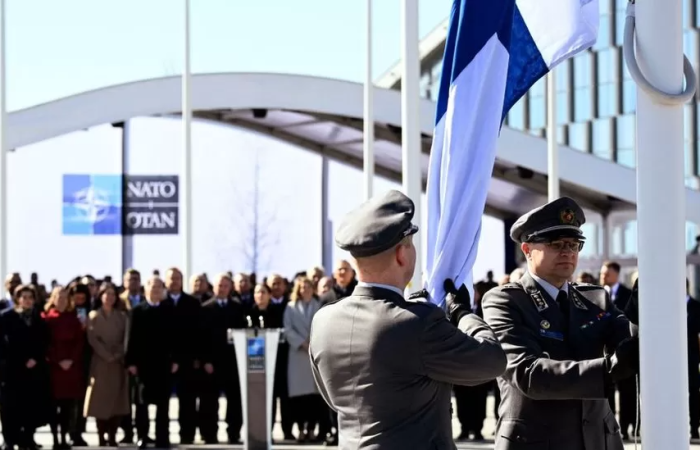
Finland has officially joined the NATO military alliance after handing over the instrument of accession in a ceremony at the NATO headquarters in Brussels on Tuesday (4 April). Finland has therefore become the 31st member of the bloc, and in doing so has doubled the length of NATO's border with Russia. Previously, the only NATO member states who shared a border with Russia were Norway, Estonia, Latvia, Lithuania and Poland. "It’s a great day for Finland and an important day for Nato,” said Finland’s president, Sauli Niinistö. "Russia tried to create a sphere around them and … we’re not a sphere. I’m sure Finns themselves feel more secure that we are living in a more stable world." The NATO Secretary General Jens Stoltenberg said, "This will make Finland safer and NATO stronger...President Putin had a declared goal of the invasion of Ukraine to get less Nato along its borders and no more membership in Europe, he's getting exactly the opposite." Finland and their nordic neighbour Sweden both abandoned decades of military non-alignment to apply for NATO after Russia launched its full-scale invasion of Ukraine in February 2022. With an active force of about 30,000, and able to call on 250,000 reserves, Finland has a well-equipped and trained armed forces.
Editor's choice
News
Finland set to join NATO after Turkey finally approves membership

Finland set to join NATO after Turkey finally approves membership

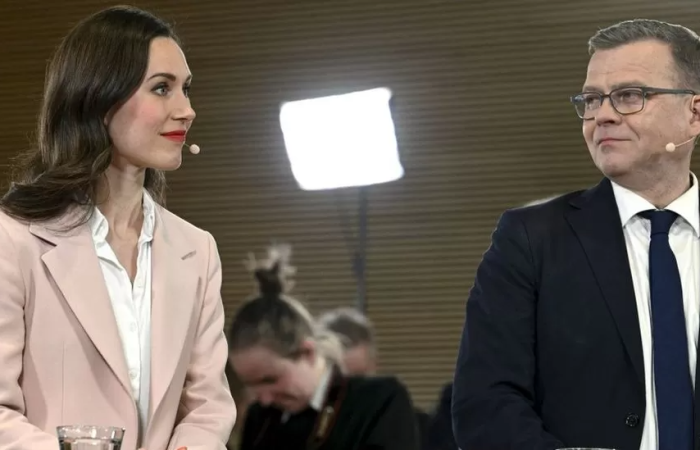
Finland is set to become the 31st member of the North Atlantic Treaty Organization (NATO) military alliance after approving its membership in a parliamentary vote late on Thursday (30 March). After months of stalling over claims that Finland, along with its nordic neighbour Sweden, were supporting Kurdish "terrorists", the Turkish parliament finally approved Finland's membership in a vote of 276 MPs voting for, and 0 voting against. While Finland will now be formally admitted into the military alliance at its next summit in July in Lithuania, Sweden's membership bid, which was submitted at the same time as Finland's, is still being held up by Ankara and Budapest. In a statement following the Turkish vote, the Finnish government said joining the alliance would strengthen the country's security, and improve stability and security in the region. Meanwhile the Finnish Prime Minister Sanna Marin tweeted, "as allies, we will give and receive security. We will defend each other. Finland stands with Sweden now and in the future and supports its application."
Editor's choice
News
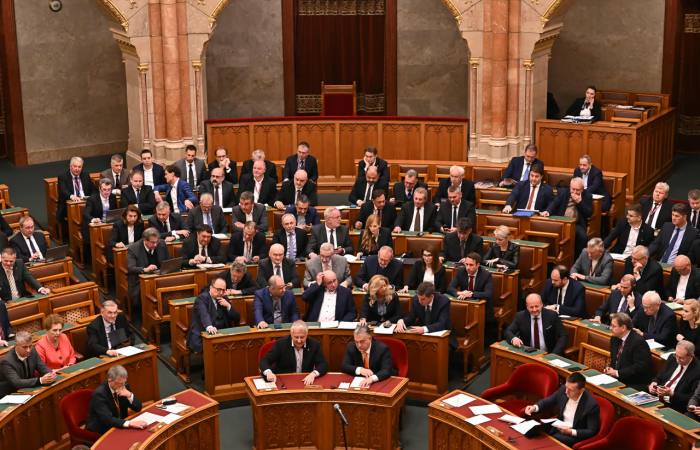
Hungarian Parliament approves Finland NATO membership

Hungarian Parliament approves Finland NATO membership

Over 10 months after Finland applied to join the NATO military alliance, the Hungarian Parliament has ratified Finland's application to the currently 30-member bloc in a vote on Monday (27 March). The vote was passed by 182 votes for and only 6 votes against. In order to become a NATO member, an applicant country must be approved by every member state individually, and following Hungary's approval yesterday only one country remains, Turkey. Turkey's approval of Finland's application to NATO is indeed expected soon as the country after the country's parliamentary committee on foreign affairs approved their application last week. A parliamentary vote on accession is expected before the country's presidential elections on 14 May. Yesterday's vote comes after months of delay in both Budapest and Ankara over Finland and Sweden's NATO membership prospects. While Hungarian officials had spent months insisting that they simply busy with other business, at the end of last month the Hungarian Prime Minister Viktor Orbán threatened to throw a spanner in the works over Finland and Sweden's history of open criticism of rule-of-law in Hungary.