Region

EU plus

Stories in this section cover the EU-27 countries plus the UK, Norway, Switzerland, Iceland, Liechtenstein, Monaco, Andorra and the Balkan Countries (Albania, Serbia, Montenegro, Bosnia-Herzegovina, Kosovo, North Macedonia).

Editor's choice
News
Germany accuses Russia of cyberattacks and disinformation campaign

Germany accuses Russia of cyberattacks and disinformation campaign

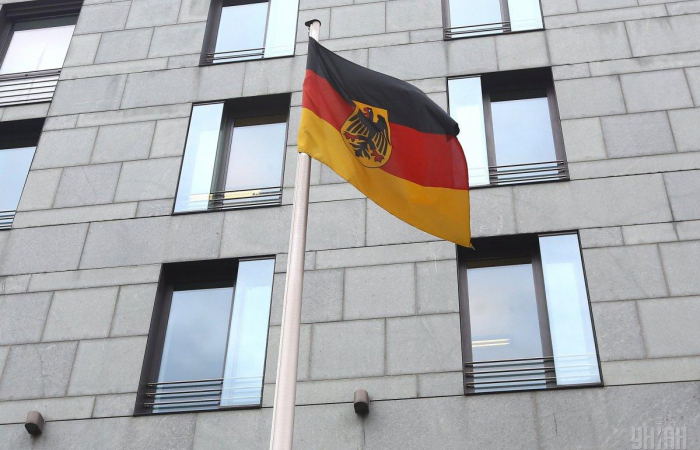
The German government holds Russia responsible for a cyberattack on German air traffic control, and for targeted disinformation campaigns before the last federal election. According to the German Foreign Office in Berlin, the incidents could be clearly attributed to the Russian military intelligence service, the GRU. In response, the Russian ambassador to Berlin was summoned to the Foreign Ministry. "We have been observing a massive increase in threatening hybrid activities by Russia for some time now," a spokesperson for the Foreign Ministry stated. These range from disinformation campaigns and espionage to cyberattacks and sabotage attempts. The aim is to divide society, sow distrust, and undermine confidence in democratic institutions. The spokesperson added that with these actions, Russia is "very concretely threatening our security, not only through its war of aggression against Ukraine, but also here in Germany."  The Foreign Ministry spokesperson explained that the cyberattack on air traffic control in August 2024 was clearly attributed to the hacker collective "APT28," known as "Fancy Bear," and to the responsibility of the Russian military intelligence service, the GRU. Furthermore, it could now be "conclusively stated" that Russia had attempted "to influence and destabilize both the last Federal election and the ongoing internal affairs of the Federal Republic of Germany." There was "absolutely irrefutable evidence" for this". The so-called "Storm 1516" campaign, which has been running since 2024, is allegedly backed by "reliable information" that the Moscow-based think tank "Center for Geopolitical Expertise" is behind it. The Center is also said to be supported by Russian military intelligence. Its primary aim is to influence democratic elections in the West. (Click the image to read more).
Editor's choice
News
NATO Chief says war is on Europe's doorstep, and warns against complacency

NATO Chief says war is on Europe's doorstep, and warns against complacency

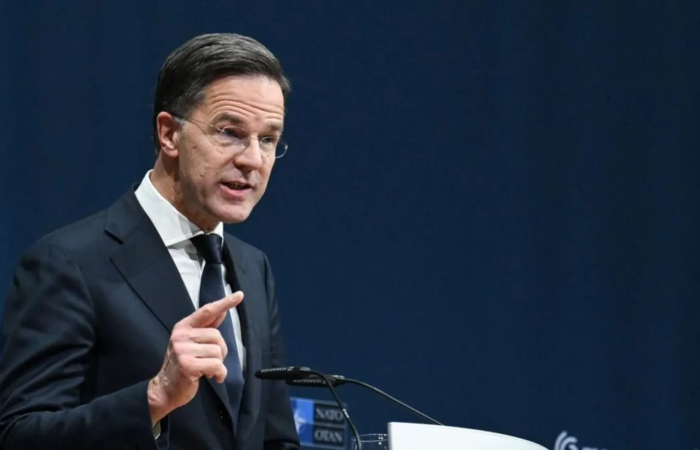
Russia could attack a NATO country within the next five years, the Secretary General of NATO, Mark Rutte, said in a stark new warning. "NATO's own defences can hold for now," Rutte warned in Berlin, but conflict was "next door" to Europe, and he feared "too many are quietly complacent, and too many don't feel the urgency, too many believe that time is on our side. "Russia is already escalating its covert campaign against our societies," Rutte said in a speech in Germany. "We must be prepared for the scale of war our grandparents or great-grandparents endured." Earlier this month, Russia's President Vladimir Putin said his country was not planning to go to war with Europe, but it was ready "right now" if Europe wanted to - or started a war. But similar reassurances were given by Moscow in 2022, just before 200,000 Russian troops crossed the border and invaded Ukraine. Putin has accused European countries of hindering US efforts to bring peace in Ukraine - a reference to the role Ukraine's European allies have recently played in trying to change a US peace plan to end the war, whose initial draft was seen as favouring Russia. But Putin was not sincere, Nato's secretary-general said in the German capital, Berlin. Supporting Ukraine, he added, was a guarantee for European security. "Just imagine if Putin got his way; Ukraine under the boot of Russian occupation, his forces pressing against a longer border with Nato, and the significantly increased risk of an armed attack against us." Russia's economy has been on a war footing for more than three years now - its factories churn out ever more supplies of drones, missiles and artillery shells. According to a recent report by the Kiel Institute for the World Economy, Russia has been producing each month around 150 tanks, 550 infantry fighting vehicles, 120 Lancet drones and more than 50 artillery pieces. The UK, and most of its Western allies, are simply not anywhere near this point. Analysts say it would take years for Western Europe's factories to come close to matching Russia's mass-production of weapons. "Allied defence spending and production must rise rapidly, our armed forces must have what they need to keep us safe," the Nato chief said.

Filter archive

Publication date
Editor's choice
News
Borrell briefs EU colleagues after damage limitation trip to Middle East

Borrell briefs EU colleagues after damage limitation trip to Middle East

The foreign ministers of the 27 EU member states held an informal video conference on Monday (20 January) to hear from the EU High Representative for foreign and security policy, Josep Borrell, the results of his recent visit to the Middle East. Borrell travelled to Israel, Palestine, Bahrain, Saudi Arabia, Qatar, and Jordan from 16-20 November. A statement from his office in Brussels at the start of the visit said that “the visit will take place against the background of the war against Hamas and the deepening humanitarian crisis in Gaza, following the 7 October Hamas terrorist attacks against Israel, and in the context of EU’s regional outreach, following-up to the latest European Council and Foreign Affairs Council.”Since the Gaza crisis erupted in October, the European Union has appeared to be confused and undecided.  Deep divisions in the position of many of the member states became evident in somewhat contradictory statements by leaders of the various EU institutions in the early days of the crisis, with some rushing to express solidarity with Israel, whilst others reminding of the long-suffering of the Palestinian people. The problem became more acute as the humanitarian crisis in Gaza escalated sharply following the launch of an Israeli military offensive. The divisions within the EU reached a climax at a vote at the UN General Assembly session on 28 October with some EU members voting for and others against a resolution on Gaza, whilst others simply abstained. Many saw this as a low point in the process of developing a “common foreign and security policy” for the EU, whilst others contemplated the damage that current EU positions were having on future relations with Arab and Muslim countries. The situation improved somehow following a meeting of the Foreign Affairs Council, where some sort of compromise position emerged. Borrell is constrained in having to reflect not only his position, and that of the European External Action Service, which he leads, but also the view of all the other European institutions and all the 27 member states. No mean task. None of them however appear to fully comprehend the sense of anger and frustration in the Arab and Muslim world at ongoing events in Gaza. As one young Arab commentator put it, the time the EU spoke from the moral high ground has gone, and will not come back. If the EU wants to communicate with the Arab and Muslim world in the future it has to find a new language. Borrell has taken a step in this direction through his visit and his op-eds, but it is just a small step in what promises to be a long and unpleasant journey.
Editor's choice
Commentary
Commentary: EU muddles along in its relations with the South Caucasus

Commentary: EU muddles along in its relations with the South Caucasus

It has been a roller-coaster sort of week for EU relations with the South Caucasus. It started on Wednesday (8 November), with the decision of the European Commission to recommend that Georgia be recognized as a Candidate Country, opening the way for eventual membership. By Tuesday, (14 November) the Foreign Affairs Council was considering providing military assistance to Armenia through possible assistance from the European Peace Facility. In the days in-between relations between the EU and Azerbaijan appeared to have dipped to their lowest point in a decade, with Azerbaijan accusing the EU of inciting separatism. Except that on Wednesday (15 November), the Azerbaijani presidential foreign policy aide surfaced in Brussels where he was told that Azerbaijan was an important partner for the EU in the South Caucasus and that the EU will continue to support the Armenia-Azerbaijan normalisation process to advance a peaceful and prosperous South Caucasus. One would like to think that all this was part of some grand strategy. Russian foreign minister Sergei Lavrov seems to think so, accusing the EU of trying to oust Russia out of the South Caucasus (and Central Asia). But a closer look at this week’s events suggest that the EU is doing, what it often does: muddling along, reacting to events and situations rather than fulfilling some grand strategy. This is risky, and the EU needs to develop a strategic framework for dealing with the South Caucasus. There is an urgent need for the European Union to develop a strategic perspective towards the region that is based on realism, and that has enough support from different stakeholders – Commission, Member States; Parliament – for it to be credible. Developing a comprehensive EU strategy will take time and will require an alignment of different views and interests that may take months, if not years, to achieve. In the meantime however, the EU should have the ambition to publish by early Spring 2024 a short but ambitious statement of intent with its vision for the region that may provide a framework around which different ad hoc policies and initiatives can be organized. The first half of 2024 may offer a window of opportunity for this to happen.
Editor's choice
News
EU is worried about Armenia

EU is worried about Armenia

The European Union is increasingly worried about Armenia, and attempts to destabilise it both internally and externally. The matter was discussed by the foreign ministers of the 27 member states meeting in Brussels in the format of the Foreign Affairs Council on Monday (14 November). Briefing journalists after the meeting, EU High Representative, Josep Borrell said "The October European Council discussed how to strengthen our cooperation with Armenia and support its democratically elected authorities, its resilience, its security and the continuation of reforms in the country. We decided to beef up our mission in Armenia: more observers and more patrols in sensitive areas of the border.   And we will explore a possible support to Armenia under the European Peace Facility and options for visa-liberalisation for Armenia.  We have to be very much vigilant for any attempts of destabilisation of Armenia, internally and externally. And our message to Azerbaijan has been clear: any violation of Armenia’s territorial integrity will be unacceptable and would have severe consequences for the quality of our relations.   We call for the resumption of negotiations between Armenia and Azerbaijan and on the work done by the President of the [European] Council [Charles Michel]. We need a peace treaty to be concluded and we are committed to continue our mediation role.   We decided to invite the Armenian Foreign Minister [Ararat Mirzoyan] to join us in the margins of the next, maybe the next, Foreign Affairs Council, it has to be decided - but an upcoming Foreign Affairs Council." In a statement this morning the Azerbaijani Ministry of Foreign Affairs rejected Borrell's statement and accused the EU of inciting separatism.
Editor's choice
News
European Commission recommends opening EU membership talks with Ukraine and Moldova and  proposes to grant Georgia EU candidate status

European Commission recommends opening EU membership talks with Ukraine and Moldova and proposes to grant Georgia EU candidate status

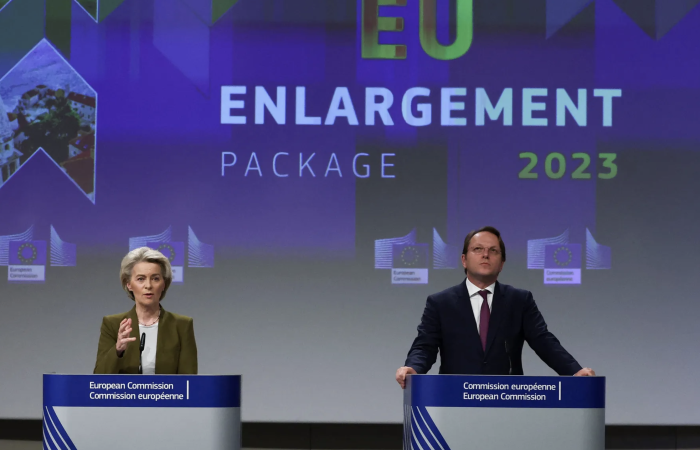
The European Commission has taken a step towards the enlargement of the European Union by recommending the opening of formal EU membership talks with Ukraine and Moldova. The Commission's endorsement is significant as it could lead to Ukraine, currently in conflict with Russia, joining the EU. However, both Ukraine and Moldova will be required to accelerate their internal reforms to meet EU standards. The EU had previously recognised Ukraine as a potential candidate, and this latest development is a continuation of that process. Moldova is on a similar path. The recommendations are part of the EU's routine assessment of potential new members to ensure they are in line with EU rules and values. The final decision on this matter will be taken by EU leaders at a summit in Brussels in December. In the wider context of the enlargement strategy, the Commission has also suggested that Georgia could be granted candidate status if it implements certain reforms. The commission statement says: Georgia has taken steps to strengthen engagement with the EU and increased pace of reforms in the recent months. To address the twelve priorities identified in the Commission Opinion on its membership application, Georgia has adopted legislative acts and policy actions on gender equality, on fighting violence against women and organised crime, as well as on taking into account European Court of Human Rights judgments. A judicial reform has been brought forward although a holistic reform of the High Council of Justice is still needed. Georgia has shared laws as well as its action plan for deoligarchisation with the Venice Commission for an opinion. A strategy on the protection of human rights was adopted and an action plan is being elaborated. A memorandum of cooperation with civil society representatives was concluded. Building a strong cross-party political consensus would contribute to addressing polarisation and accelerate its European path. The Commission has also proposed steps for six Western Balkan countries that want to join the EU, with Bosnia and Herzegovina mentioned as a potential candidate for negotiations "once the necessary degree of compliance with the membership criteria is achieved".
Editor's choice
Opinion
Opinion: EU-Azerbaijan relations are important for both sides

Opinion: EU-Azerbaijan relations are important for both sides

EU-Azerbaijan relations are important for both sides, and the Brussels format of the Armenia-Azerbaijani peace talks, are likewise important to reach negotiated solutions over the remaining unresolved questions between Baku and Yerevan, writes Vasif Huseynov in this op-ed for commonspace.eu. "The reactivation of the Brussels format and the revitalization of the constructive role of the EU in the South Caucasus should happen sooner rather than later. A balanced approach by the EU and its leading member states vis-à-vis the countries of the region is of utmost necessity towards this end", he argues.
Editor's choice
News
Ambitious EU-Central Asia agenda requires political will and public engagement

Ambitious EU-Central Asia agenda requires political will and public engagement

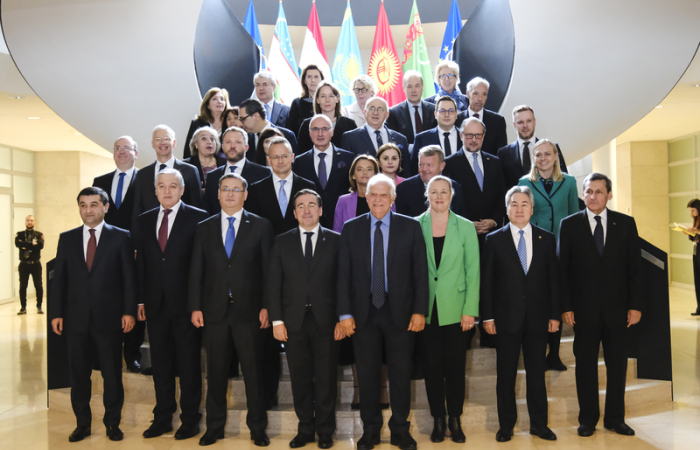
It was overshadowed by more dramatic events in the world, yet despite this, the 19th  EU-Central Asia Ministerial meeting held in Luxembourg on 23 October was a significant event, and another step in the process of building closer co-operation between Europe and the countries of Central Asia. A statement from Brussels said that “for the EU, the Ministerial meeting was an opportunity to highlight its strong commitment to the region and stress the importance of deeper cooperation in the context of the challenges emerging from regional dynamics, with a focus on the fall-out of Russia’s war of aggression against Ukraine and the situation in Afghanistan.” A joint communique issued after the meeting covered a wide range of issues, and indicated the expanding agenda in the relations between the two group of countries. commonspace.eu political editor said in a comment that the documents coming out of the Luxembourg Meeting of EU and Central Asia foreign ministers on 23 October are significant – they are not only declaratory as sometimes such statements are, but also offer a large number of tangible frameworks, proposals and action points that should keep officials on both sides busy for a while. The two sides have set an ambitious agenda for their future co-operation, but implementing this agenda is going to require political commitment. That will ensure its success up to a point. More will depend on public engagement on both sides, and securing that may be even more challenging.
Editor's choice
News
UN General Assembly overwhelmingly votes for a humanitarian truce in Gaza leading to a cessation of hostilities

UN General Assembly overwhelmingly votes for a humanitarian truce in Gaza leading to a cessation of hostilities

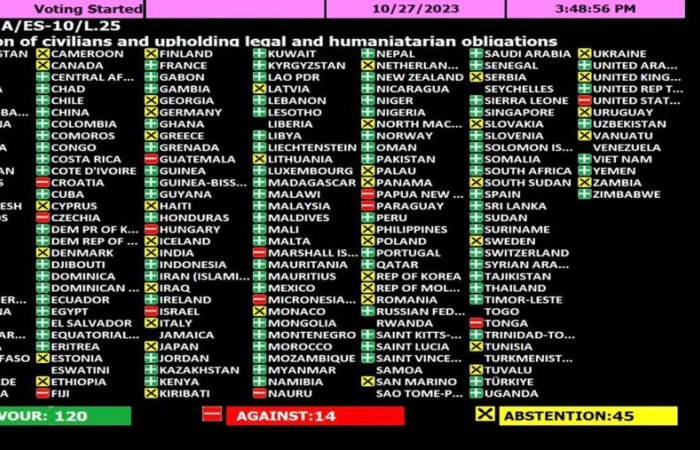
The United Nations General Assembly on Friday (27 October), voted overwhelmingly, with 120 countries in favour, 14 against and 45 abstentions, to a resolution calling for an end of hostilities in Gaza and for humanitarian relief to the Palestinian people of Gaza. The resolution calls for an “immediate, durable and sustained humanitarian truce leading to a cessation of hostilities.” The vote, whilst not binding, gives moral support to efforts to get a similar resolution passed in the Security Council. As decided by the General Assembly earlier, the resolution required a two-thirds majority of the members present and voting to be adopted. There are 193 members of the United Nations. Most members of the Non-Aligned Movement, eight members of the European Union, and UN Security Council members France, China  and Russia were amongst those voting for the resolution. There could be noted however divisions in the voting patterns of EU members: Several of the EU 27 member states voted for the resolution, including: Belgium, France, Ireland, Luxembourg, Malta, Portugal, Spain and Slovenia. Five, joined the United States and Israel to vote against, namely Austria, Croatia, Czechia, Hungary Most EU countries abstained, including Bulgaria, Cyprus, Denmark, Estonia, Finland, Germany, Greece, Italy, Latvia, Lithuania, The Netherlands, Poland and Romania, Slovakia and Sweden. Of the three South Caucasus countries, Armenia and Azerbaijan voted for the resolution, Georgia abstained. Ukraine and Moldova also abstained.
Editor's choice
News
Dennis Sammut: The EU needs a comprehensive strategy towards the South Caucasus

Dennis Sammut: The EU needs a comprehensive strategy towards the South Caucasus

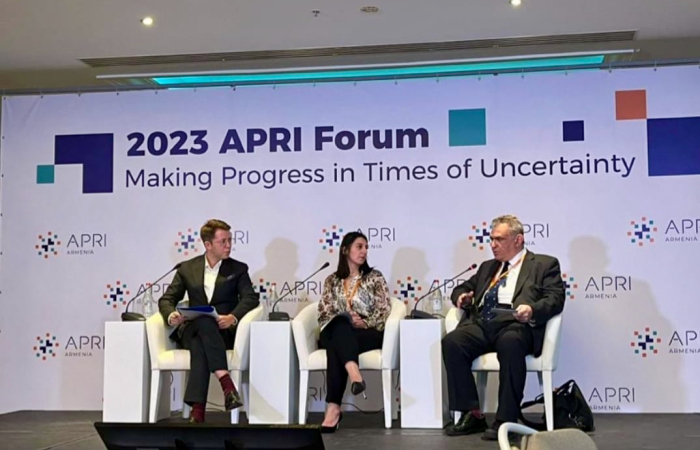
The 2023 APRI Forum is taking place at the Marriott Hotel in Yerevan on 25-27 October 2023. More than a hundred participants from Armenia and beyond are participating. Speaking at the event in Yerevan on Thursday, 26 October, LINKS Europe Director, Dr Dennis Sammut, spoke about relations between the European Union and the South Caucasus. He said that since the 1990s EU policy was guided by four pillars: Support for the independence of the three South Caucasus countries; support for peace and the peaceful resolution of conflicts in the region; political and economic stability; and prosperity. Whilst these principles guided EU policy towards the region there was not a comprehensive policy towards the region, mainly because the Armenia-Azerbaijan conflict made any sort of regional interaction difficult. Thus whilst there is an EU Strategy towards Central Asia, and towards the Black Sea Region, there is no EU strategy towards the South Caucasus. One of the consequences has been that the EU has mainly been conducting its relations with the three countries bilaterally. Dennis Sammut said that the time has now come to develop a regional approach in EU policy towards the region, and that an eventual Armenia-Azerbaijan normalisation of relations will open the way for this to happen. This opportunity needs to be seized. Dennis Sammut said that currently the EU has different contractual relations with the three South Caucasus, and bilateral relations will continue to be important. Speaking about EU Armenia relations, Dennis Sammut said that relations between the Armenian state and Europe were stronger today than they have been since the time of Byzantium. The challenge was to turn this from simply symbolic expressions to tangible co-operation. He said that the EU and Armenia should prioritise four sectors: Institution building; education; innovation and connectivity. Think tanks and civil society need to work to develop tangible ideas on how this work can be taken forward. The speaker warned that recent signs of displeasure in Moscow at the policies of the Armenian government may lead to some actions from Russia to try to put pressure on Armenia, and the EU needs to be ready to stand by Armenia in such circumstances. Dennis Sammut said that EU relations with the South Caucasus in general and with Armenia in particular need to keep in mind three important realities: first, the EU is not the provider of hard security – it is not a military alliance, such as NATO, and what it can provide in areas of security was limited; second the EU was not an ATM: it can provide financial support, as it has done in the past, but expectations of what kind of assistance can be expected need to be managed; third, the EU is not a charity, but a geo-political player. It has its own interests in the South Caucasus and these need to be recognised. A solid relationship is one in which both sides recognise the other’s interests. Dennis Sammut said that increased EU engagement in the South Caucasus may bring a reaction from Russia. Russia has for decades been trying to exclude other international actors from being active in the region. The EU is not interested in excluding anyone, but is not ready to be excluded either.