Region

EU plus

Stories in this section cover the EU-27 countries plus the UK, Norway, Switzerland, Iceland, Liechtenstein, Monaco, Andorra and the Balkan Countries (Albania, Serbia, Montenegro, Bosnia-Herzegovina, Kosovo, North Macedonia).

Editor's choice
News
Germany accuses Russia of cyberattacks and disinformation campaign

Germany accuses Russia of cyberattacks and disinformation campaign

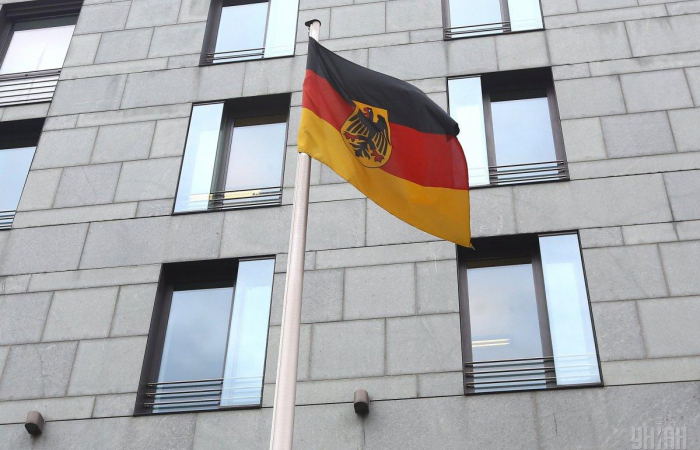
The German government holds Russia responsible for a cyberattack on German air traffic control, and for targeted disinformation campaigns before the last federal election. According to the German Foreign Office in Berlin, the incidents could be clearly attributed to the Russian military intelligence service, the GRU. In response, the Russian ambassador to Berlin was summoned to the Foreign Ministry. "We have been observing a massive increase in threatening hybrid activities by Russia for some time now," a spokesperson for the Foreign Ministry stated. These range from disinformation campaigns and espionage to cyberattacks and sabotage attempts. The aim is to divide society, sow distrust, and undermine confidence in democratic institutions. The spokesperson added that with these actions, Russia is "very concretely threatening our security, not only through its war of aggression against Ukraine, but also here in Germany."  The Foreign Ministry spokesperson explained that the cyberattack on air traffic control in August 2024 was clearly attributed to the hacker collective "APT28," known as "Fancy Bear," and to the responsibility of the Russian military intelligence service, the GRU. Furthermore, it could now be "conclusively stated" that Russia had attempted "to influence and destabilize both the last Federal election and the ongoing internal affairs of the Federal Republic of Germany." There was "absolutely irrefutable evidence" for this". The so-called "Storm 1516" campaign, which has been running since 2024, is allegedly backed by "reliable information" that the Moscow-based think tank "Center for Geopolitical Expertise" is behind it. The Center is also said to be supported by Russian military intelligence. Its primary aim is to influence democratic elections in the West. (Click the image to read more).
Editor's choice
News
NATO Chief says war is on Europe's doorstep, and warns against complacency

NATO Chief says war is on Europe's doorstep, and warns against complacency

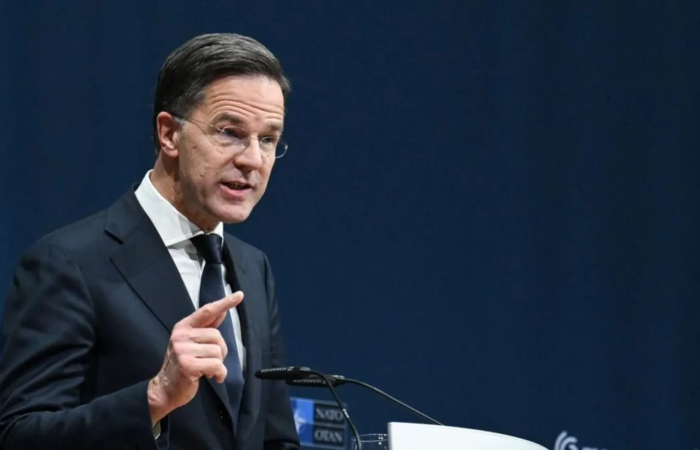
Russia could attack a NATO country within the next five years, the Secretary General of NATO, Mark Rutte, said in a stark new warning. "NATO's own defences can hold for now," Rutte warned in Berlin, but conflict was "next door" to Europe, and he feared "too many are quietly complacent, and too many don't feel the urgency, too many believe that time is on our side. "Russia is already escalating its covert campaign against our societies," Rutte said in a speech in Germany. "We must be prepared for the scale of war our grandparents or great-grandparents endured." Earlier this month, Russia's President Vladimir Putin said his country was not planning to go to war with Europe, but it was ready "right now" if Europe wanted to - or started a war. But similar reassurances were given by Moscow in 2022, just before 200,000 Russian troops crossed the border and invaded Ukraine. Putin has accused European countries of hindering US efforts to bring peace in Ukraine - a reference to the role Ukraine's European allies have recently played in trying to change a US peace plan to end the war, whose initial draft was seen as favouring Russia. But Putin was not sincere, Nato's secretary-general said in the German capital, Berlin. Supporting Ukraine, he added, was a guarantee for European security. "Just imagine if Putin got his way; Ukraine under the boot of Russian occupation, his forces pressing against a longer border with Nato, and the significantly increased risk of an armed attack against us." Russia's economy has been on a war footing for more than three years now - its factories churn out ever more supplies of drones, missiles and artillery shells. According to a recent report by the Kiel Institute for the World Economy, Russia has been producing each month around 150 tanks, 550 infantry fighting vehicles, 120 Lancet drones and more than 50 artillery pieces. The UK, and most of its Western allies, are simply not anywhere near this point. Analysts say it would take years for Western Europe's factories to come close to matching Russia's mass-production of weapons. "Allied defence spending and production must rise rapidly, our armed forces must have what they need to keep us safe," the Nato chief said.

Filter archive

Publication date
Editor's choice
Opinion
Opinion: Azerbaijan is not de-coupling from the West

Opinion: Azerbaijan is not de-coupling from the West

Over the past two years, since the beginning of the Russia-Ukraine conflict, Azerbaijan’s foreign and security policies have drawn varying interpretations from experts and political observers. "The delicate balancing act pursued by Baku between competing global powers while safeguarding the country’s national interests and restoring its territorial integrity has appeared as an intriguing case for the studies of international relations", writes Vasif Husseynov in this op-ed for commonspace.eu. "Amidst the evolving dynamics of regional geopolitics, Azerbaijan’s recent engagements with Western counterparts underscore its unwavering commitment to maintaining robust relations with the West. Despite the complexities of navigating relations with neighboring powers, Azerbaijan remains steadfast in its pursuit of multilateral or, as better known in the Azerbaijani  discourse, balanced approach in foreign policy", he argues.
Editor's choice
News
5th European Union-Central Asia meeting on Afghanistan held in Bishkek

5th European Union-Central Asia meeting on Afghanistan held in Bishkek

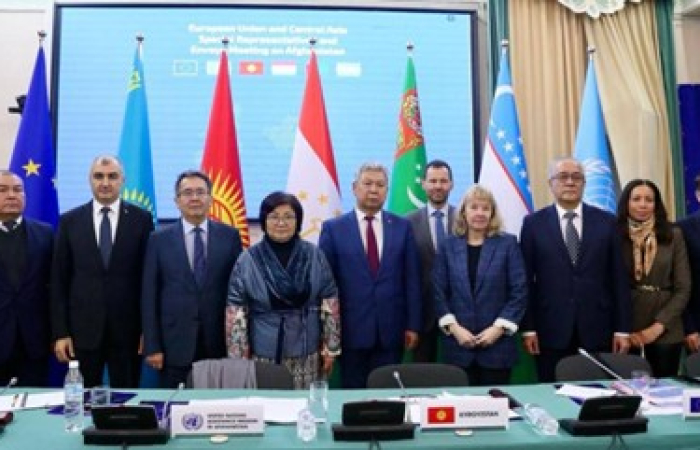
The fifth European Union-Central Asia meeting focusing on Afghanistan took place in Bishkek on 14 February. Discussions centred around the situation in Afghanistan, with particular emphasis placed on finding effective ways to interact with the country’s de facto government. Participants praised the recent United Nations (UN) report on Afghanistan and endorsed UN Secretary-General António Guterres’s initiative to establish the position of UN Secretary-General’s Special Envoy for Afghanistan. Roza Otunbayeva, the Secretary-General’s Special Representative for Afghanistan and Head of the UN Assistance Mission in Afghanistan, also attended the meeting.  The European Union was represented by the EU Special Representative for Central Asia, Terhi Hakkala.
Editor's choice
News
Busy time for Aliyev and Pashinyan at the Munich Security Conference

Busy time for Aliyev and Pashinyan at the Munich Security Conference

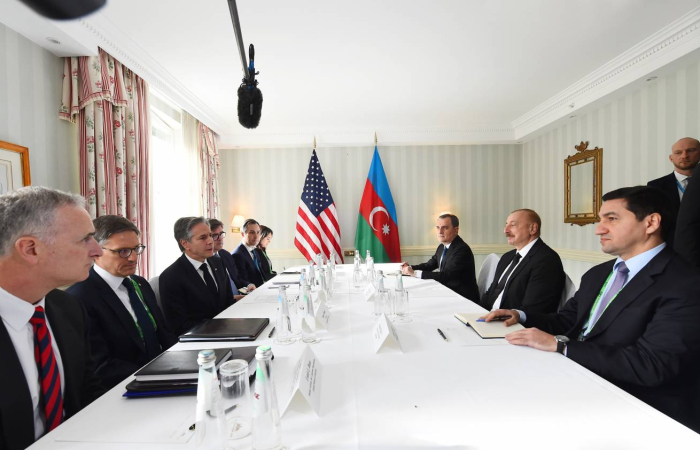
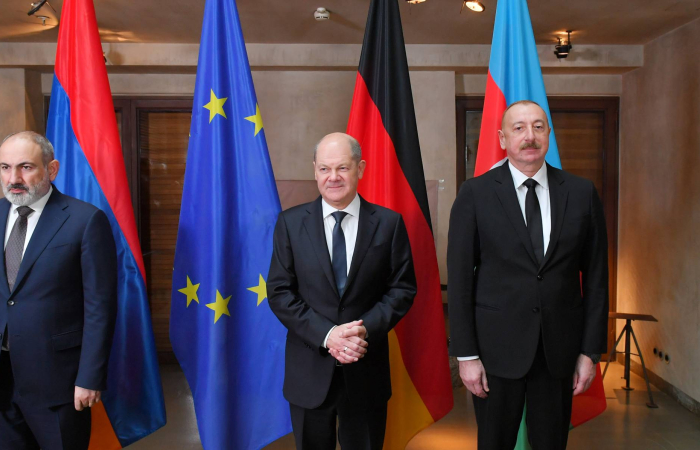
Armenian prime minister, Nikol Pashinyan, and Azerbaijani president, Ilham Aliyev, are this weekend both attending the Munich Security Conference. On the margins of the big event the two leaders have held a series of bilateral meetings with world leaders and statesmen. Of special significance however was their own bilateral meeting, which followed a trilateral meeting hosted by the German Chancellor, Olaf Scholz. In a short read out of the Aliyev-Pashinyan meeting, the website of the Azerbaijani president said "Negotiations on the peace treaty between the two countries, normalization of relations, border delimitation issues were discussed at the meeting. The Ministries of Foreign Affairs were instructed to hold a meeting on the peace agreement and a meeting of the border delimitation commission soon. The mutual compromises and progress achieved during COP29 between the two countries were positively evaluated." The website of the Armenian prime minister makes no mention of the bilateral meeting but highlights the meeting with Scholz, adding that "the process of regulating Armenia-Azerbaijan relations and steps aimed at ensuring peace and stability in the region were discussed. It was agreed to continue the work on the peace treaty." Both Aliyev and Pashinyan have also had bilateral meetings with the German Chancellor, as well as with US Secretary of State, Antony Blinken, and OSCE Chairman-in-Office, Minister of Foreign Affairs of Malta Ian Borg. The meetings highlight the interest of the international community to support Armenia and Azerbaijan in their quest for peace, despite on-going problems and incidents on the ground. For Azerbaijan the meetings in Munich are also an opportunity to prepare for COP29 - the Climate Convention framework meeting which is scheduled to be held in Baku in November. Aliyev met with US Special Envoy on Climate, John Kerry, and also invited him for the Baku event.
Editor's choice
News
Work launched on "an ambitious EU-Armenia Partnership Agenda"

Work launched on "an ambitious EU-Armenia Partnership Agenda"

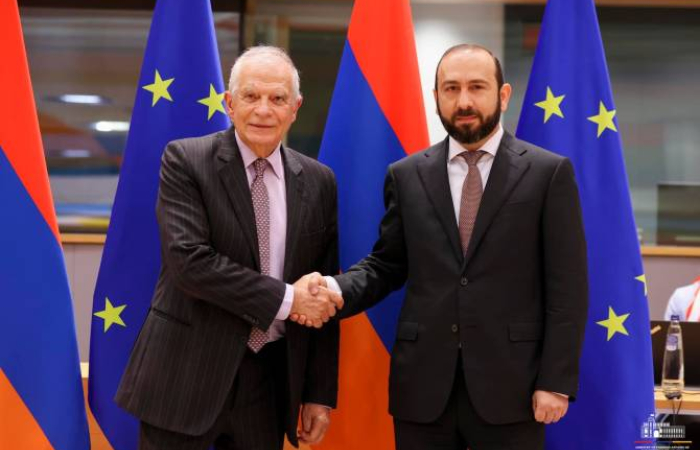
The European Union and Armenia have launched work on a new "ambitious partnership agenda". This was announced by EU High Representative for Foreign and Security Policy, Josep Borrell at the end of a meeting of the EU Armenia Partnership Council. Foreign Minister Ararat Mirzoyan led the Armenian side during the discussions. At the end of the meeting Borrell spoke to the media. Addressing Foreing Minister Mirzoyan, Borrell said: "In October in the European Parliament, your Prime Minister [Nikol Pashinyan] said that Armenia is ready to move closer to the European Union.  In response, last October, the European Council, at the highest political level of the European Union, tasked me and the [European] Commission to explore ways to strengthen our relations - EU-Armenia relations - “in all their dimensions”. In this context, today we decided to launch work on an ambitious new EU-Armenia Partnership Agenda.  This decision sends a strong signal of our mutual interest in a new strategic phase in our relations, and it will provide a clear roadmap and a vision for the way forward.This is about the future. The future starts today".
Editor's choice
Opinion
Opinion: Committing to doing what it takes for Ukraine to achieve victory

Opinion: Committing to doing what it takes for Ukraine to achieve victory

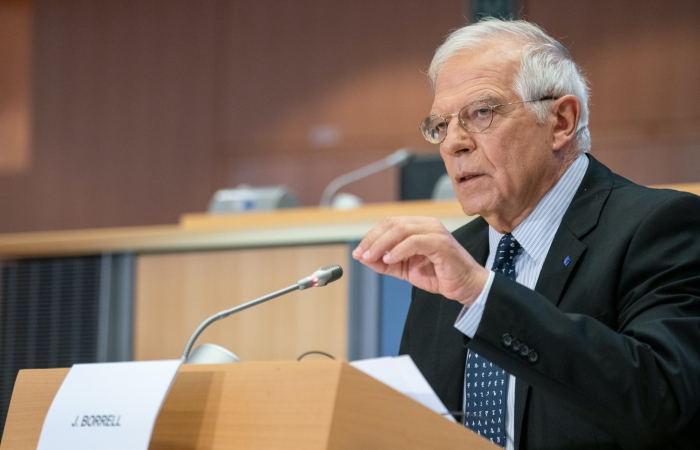
2024 started with an unprecedented number of Russian drones and ballistic missiles raining down on Ukraine. In this op-ed published this week on various media outlets, the European Union's High Representative for Foreign and Security Policy, Josep Borrell, argues that Ukraine prevailing against the Russian aggression is the best security guarantee for Europe and that a paradigm shift is needed from supporting Ukraine for 'as long as it takes' to committing to 'what it takes' for Ukraine to achieve victory. Borrell argues that we must intensify our efforts to win the race against time with Putin’s Russia. "We cannot allow him to prevail. Our own security is at stake. Should Putin’s strategy prove successful, it would embolden Russia and other autocracies to pursue their imperialist agendas. We must at any cost prevent a world where might makes right, where powerful countries change borders at will, and the weak fall prey to the strong. Allowing such a scenario would cast a long shadow over our future for decades to come. Ukraine prevailing against the Russian aggression is the best security guarantee for Europe. A Russia that learnt to stay within its borders will lessen pressure on its neighbours, ease Ukraine’s path to EU membership and allow Europe and the world to shift attention to the many other challenges that need solving. With our assistance, Ukraine can consign Russia’s imperial ambitions to the pages of history. This must guide our actions and thinking."
Editor's choice
News
Sweden one step closer to joining NATO

Sweden one step closer to joining NATO

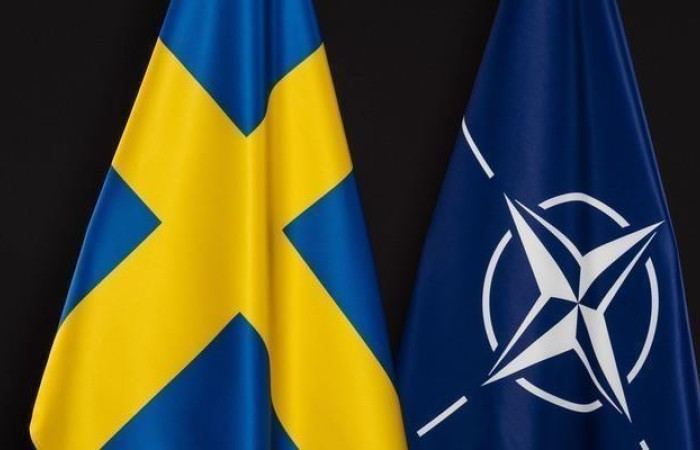
The Turkish Grand National Assembly (Parliament), on Tuesday, 23 January, ratified the agreement on Swedish membership of NATO, bringing the Scandinavian country one step closer to fulfilling its historic decision to abandon its decades-long neutrality and join the military alliance in the face of Russian aggression against Ukraine, and the threat that poses to the European security order. The ratification was adopted by the national assembly in a vote of 287 to 55. President Recep Tayyip Erdoğan is now expected to sign the accession agreement. formalising the process of Turkish ratification. All members of NATO have to approve the addition of new members to the organisation. The only remaining NATO country to finalise the ratification process is Hungary  “Today we are one step closer to becoming a full member of NATO,” tweeted Swedish Prime Minister Ulf Kristersson. On Tuesday, Hungarian Prime Minister Viktor Orbán reached out to Kristersson, asking him to come down to Budapest and negotiate about the NATO bid, an idea swiftly rejected by Swedish Foreign Minister Tobias Billström.