"The US needs Turkey to counter Russia in the Black Sea region, the Middle East, and the South Caucasus. Turkey can also be useful in the US strategy to contain China", argues Benyamin Poghosyan in this op-ed for commonspace.eu. However given the number of problems between the two countries US-Turkey relations may normalise, but they will continue to develop in the cooperation/competition framework, he argues.
US-Turkey relations have passed through significant transformations in the last decade.
President Obama started by seeking to build a "model partnership" with Turkey during his first term in office, but later he confronted Turkey over the growing authoritarianism of President Recep Tayyip Erdogan. The US decision to choose the Syrian Kurds as the main ally in their fight against ISIS in Syria triggered significant resentment from Turkey. Ankara perceives the Kurdish YPG fighters as a Syrian branch of Kurdistan Workers Party (PKK), which was identified as a terrorist organisation by both the US and Turkey. Ankara repeatedly warned the US "not to use terrorists to fight other terrorists". The US refusal of Turkey's request to transfer technological know-how as part of the sale of Patriot air defence systems only added to Turkish grievances. The failed July 2016 military coup in Turkey, and lingering doubts among the top Turkish leadership that the US directly or indirectly was behind the coup, exacerbated relations further.
The election of President Trump seemed to create some hope for the normalisation of bilateral relations. Trump's publicly stated admiration for strong leaders was seen as potentially useful in establishing good personal chemistry between him and Erdogan. However, during Trump's presidency, US–Turkish relations lacked clarity and stability. Erdogan's decision to buy the Russian S-400 air defence system triggered a new crisis. The US cancelled the delivery of F-35 fighter jets to Turkey and kicked Turkish defence industry companies out of the project. President Trump gave the green light for Turkey's October 2019 incursion into Northeastern Syria, but immediately afterward, he sent the famous "Do not be a fool" letter to President Erdogan. By the end of 2020, bilateral relations were in a mess. Trump imposed sanctions on Turkey for purchasing the S-400 systems. The US Central Command continued its co-operation with YPG military units in Northeastern Syria, while Turkey was in multiple spats with other NATO allies such as Greece and France.
President Biden pledged to restore US leadership in the world, and to reinvigorate US alliances. "America is back" was the key slogan of President Biden's first major foreign policy speech at the 2021 virtual Munich security conference. Biden promised to protect NATO allies, and reinforced US iron-clad commitment to article 5 of the NATO treaty. He also pledged to counter any Russian threat accusing President Putin of attacking western democracies and undermining EU and NATO coherence. Biden also underscored the significance of democracy, and argued that democracy would and must prevail, and still deliver for people in a changing world.
The US needs Turkey to counter Russia in the Black Sea region, the Middle East, and the South Caucasus. Turkey can also be useful in the US strategy to contain China, given Turkey's growing Turkic ambitions and the US efforts to use Uyghur-related issues as critical leverage to pressure China. Meanwhile, President Erdogan is pursuing overt anti-liberal policies. The recent protests in Boğaziçi University and Erdogan's anti LGBTQ+ comments were clear signals that Erdogan and his AK party are drifting further away from Western liberal values.
Even if the Biden administration puts aside the issue of values and will elaborate its Turkey policy based on pure realism, it will not guarantee a quick normalisation of bilateral relations. President Erdogan has a vision of a strong and independent Turkey pursuing regional hegemony. Erdogan will never agree to bring back Turkey to the US in a junior ally position, merely receiving and executing US orders. According to Erdogan's vision, Turkey should have a right to choose its allies in different regions and different crises. Turkey may ally itself with the US only if there are overlapping interests, and the same applies to Turkey's relations with Russia, the EU, China, and other powers.
Nevertheless, the Turkish economy is in a terrible shape now, and Erdogan understands that if living standards continue to deteriorate, he may lose the upcoming presidential elections. Russia can not save the Turkish economy, and China may not want to do so even if it can. Erdogan needs some normalisation with the US to receive funding from the US-controlled international financial institutions.
This situation creates a bases for US-Turkey strategic bargaining. Turkey may give up its intention to buy the second S-400 system. Turkey's proposal to not fully activate its controversial Russian S-400 missile system offers a way forward to the new US administration to start negotiations over the issue that has severely strained bilateral ties.
In his recent interview with domestic media, Turkey's Defence Minister Hulusi Akar stated that Turkish was open to a deal similar to what NATO reached with Greece after Athens had bought S-300 – an older generation of the Russian defence system – in 1997. Simultaneously, Turkey has launched preliminary discussions with the US to buy the Patriot systems. Meanwhile, Turkish officials started linking the S-400 issue to the dispute over the US support to Syria's Kurdish fighters. Thus, the deal's potential contours can be Turkey's decision to cancel the purchase of the second unit of S-400 and not activate the already bought system, while the US may decrease its support to the Kurdish YPG units.
However, it will be problematic for the US to deliver the latter. In that case Syrian Kurds, through Russian mediation, will probably negotiate a deal with the Assad government to accept the Syrian central government’s authority and keep their autonomy. It will strengthen Iran's and Russia's positions in Syria, which are not in line with the US regional policy.
Regardless, Turkey needs a rapprochement with the US, and the Biden administration needs Turkey's support. Most probably, overlapping interests will facilitate some normalisation between the two states. However, as long as Erdogan is Turkey's leader, Ankara will pursue an independent foreign and domestic policy. The US-Turkey relations may normalise, but they will continue to develop in the co-operation/competition framework. This is unlikely to change, at least until the next presidential elections in Turkey.
Source: This op-ed was prepared for commonspace.eu by Benyamin Poghosyan, Founder and Chairman of the Center for Political and Economic Strategic Studies in Yerevan.
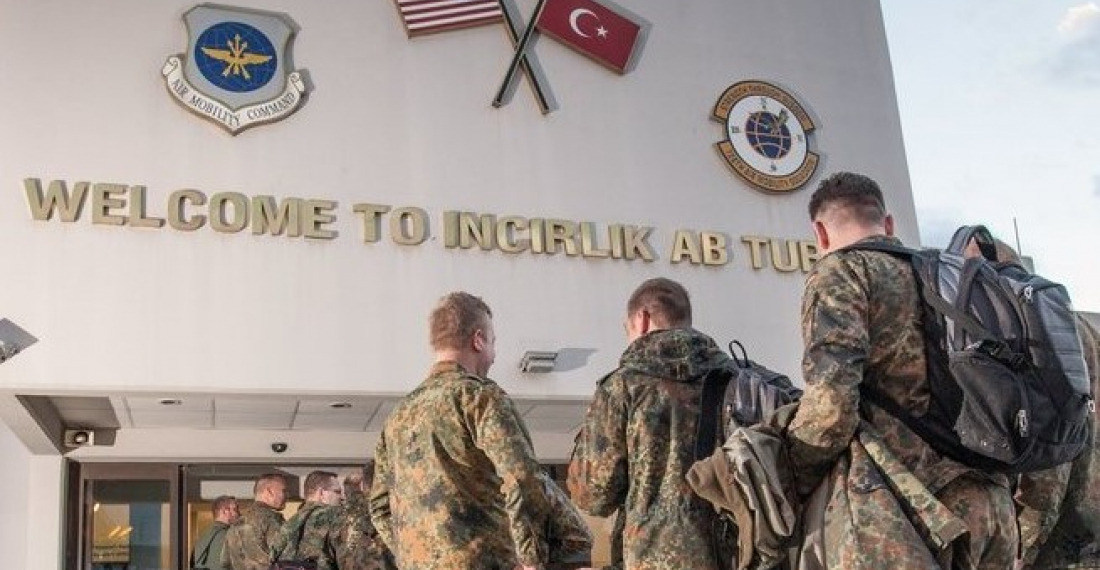
Photo: The US military base in Incirlik is one of the most important American overseas military facilities. Run as a joint US-Turkish base it is an example of the complicated, often awkward, but strategic relationship between the two NATO allies