Turkey-Russia relations are typically based on compartmentalization. They simultaneously compete and cooperate in various regions, separating the areas in which their interests are overlapping from those where they are in competition. This concept was the base of their competing relations in Syria until the demise of Assad regime in 2024, and mutual interactions in post-Gaddafi Libya.
Another aspect of compartmentalization is the conscious separation of economy and geopolitics: they have been developing economic cooperation while competing in geopolitics. Economic cooperation is significant for both Russia and Turkey, considering Russian gas and oil imported by Turkey and the construction by the Russian state nuclear energy company ROSATOM of a nuclear power plant in Akkuyu, southern Turkey. Reuters calculations, based on global financial data provider LSEG figures and traders’ estimates, showed that Turkey and Turkish companies have saved around $2 billion on energy bills in 2023 by increasing imports of discounted Russian oil and refined products. As the Russian energy corporation Gazprom’s transit agreement with Ukraine ended in December 2024, the pipelines that go through Turkey - Blue Stream (opened in 2003) and Turk Stream (opened in 2020) - are Russia’s last functioning gas export route to the European Union.
While speaking about bilateral relations, the impact of personal relationship and government style of the countries’ two leaders - President Putin and President Erdoğan - should be mentioned. They have both created a strong hierarchical system of governance, where key issues are often decided by leaders and the role of institutions is sidelined. Their positive assessments of one other speak of a personal relationship. On many occasions, the personal relationship helped the leaders to overcome the tensions and find mutually acceptable solutions based on the concept of compartmentalization as a result of hours long face to face meetings
Turkey, Russia and the South Caucasus
The concept of compartmentalization - simultaneous competition and cooperation - applies also to the bilateral relations in the South Caucasus. Within this concept two approaches can explain the rationale behind Turkey’s policy toward Russia in the South Caucasus. According to the first, Turkey views Russia as “unavoidable evil,” which will always play a role in the region. Ankara is interested in managing relations with Russia, creating a sort of Russia - Turkey condominium and significantly minimizing the presence and influence of the United States and EU, as well as reducing NATO’s role in the region. Moscow would be interested to use its relationship with Turkey to contain the Western presence in the South Caucasus.
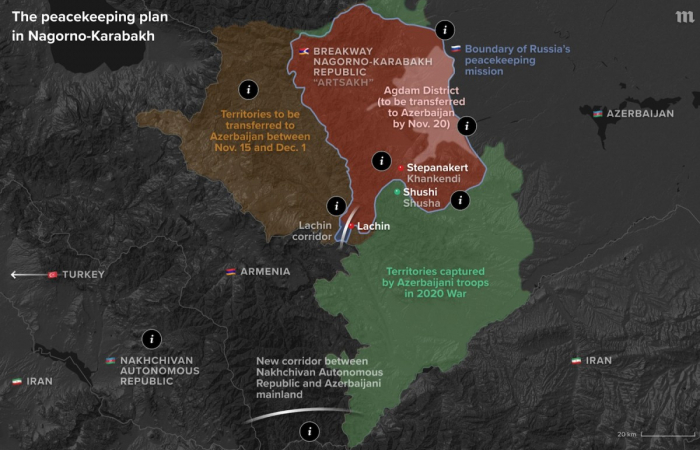
The 2020 Nagorno-Karabakh War and Turkey’s suggestion to establish a 3+3 consultation format, and their joint opposition to the April 2024 high level Brussels meeting between Armenia, the EU and the US validate this approach. In 2020, Turkey challenged Russia in the region, supporting Azerbaijan’s efforts to change the status quo by military means as Azerbaijan defeated Russia’s ally Armenia. Nevertheless, the sides managed to find a mutually acceptable solution by deploying Russian peacekeepers in Nagorno-Karabakh and establishing a joint Russian-Turkish monitoring centre. The establishment of 3+3 consultation format after the 2020 Nagorno-Karabakh, whereby Armenia, Azerbaijan and Georgia would deal with regional issues with their bigger neighbours, Russia, Turkey and Iran, provided opportunities for Russia and Turkey to manage their relations in the region while sidelining Western powers.
According to the second approach, Turkey would use Russia’s diverted attention on Ukraine to push Moscow out of the South Caucasus as much as possible and make Turkey the most influential regional power. As the US and its European allies may be interested in eroding Russia’s influence abroad, exploiting Russia’s focus on the war in Ukraine, there could be an overlap here between Western and Turkish interests.
The establishment of a strategic alliance between Turkey and Azerbaijan, the facilitation of Turkey-Georgia-Azerbaijan strategic partnership, Turkey’s full support to Azerbaijan in its conflict with Armenia, including to Azerbaijan’s demands of the establishment of the de facto extraterritorial corridor via Armenia to connect Azerbaijan with Nakhijevan and Turkey in the post-2020 period are actions validating this approach. Meanwhile, Turkey’s unwillingness to normalize relations with Armenia, open the border and provide Armenia more possibilities to decrease its dependency on Russia contradicts this approach.
It’s challenging to assess what approach will ultimately prevail in Turkey’s policy toward Russia in the South Caucasus, especially in the context of rapidly changing regional and global balance of power.
One thing is more or less certain. Russia and Turkey probably will remain the two most influential powers in the region in the coming years. Turkey has increased its influence as a result of the 2020 Nagorno-Karabakh war, the establishment of a strategic alliance with Azerbaijan in 2021 and the 2023 military takeover of Nagorno-Karabakh by Azerbaijan. Turkey-Azerbaijan-Georgia strategic partnership is another pillar of Turkey's influence and potential normalization of relations with Armenia and opening of Turkey-Armenia border will result in the Turkish presence in Armenia. Turkey was the number one trade partner of Georgia in January-July 2025, and the second trade partner of Azerbaijan in 2024 behind only Italy.
While the war in Ukraine has significantly restricted Russian abilities to influence the geopolitics of the South Caucasus, Russia continues to remain the strongest military power in the region. Russian military base in Armenia, military bases in Abkhazia and South Ossetia/Tskhinvali region, and border troops along Armenia-Turkey and Armenia-Iran borders still provide Russia with hard power tools in the region.
Russia continues to be the number one trade partner of Armenia, despite the decline in bilateral trade in the first half of the 2025. Russia was the third trade partner of Georgia in January-July 2025 and the third trade partner of Azerbaijan in 2024. Russia continues its economic partnership with Azerbaijan, including the use of Azerbaijani territory to trade with Iran and India.
Given these dynamics, the evolving Turkey-Russia relations will continue to have significant impact on the geopolitics and geoeconomics of the South Caucasus.
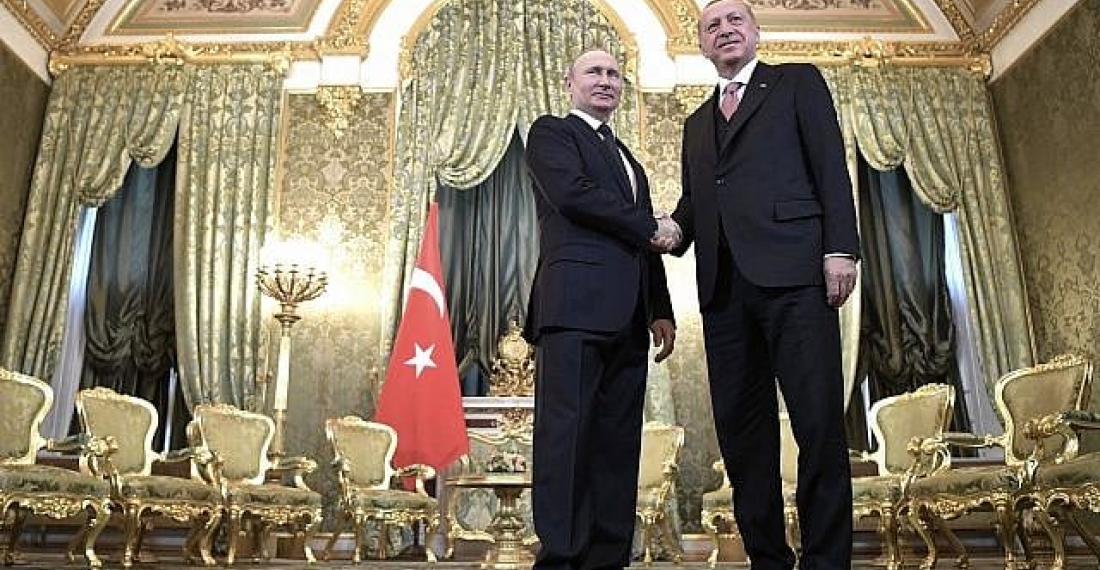
Source: Benyamin Poghosyan is a Senior Fellow on foreign policy at APRI Armenia and the founder and Chairman of the Centre for Political and Economic Strategic Studies in Yerevan. Photo: Russian President Vladimir Putin, left, and Turkish President Recep Tayyip Erdogan during their meeting in the Kremlin in Moscow, Russia, April 8, 2019. Alexei Nikolsky, Sputnik, Kremlin Pool Photo via AP
The views expressed in opinion pieces and commentaries do not necessarily reflect the position of commonspace.eu or its partners