Opinion : Peace in the Caucasus is Not a Zero-Sum Game

When Armenia and Azerbaijan signed a peace declaration in Washington on August 8, one would have expected headlines hailing a historic step forward between two nations long trapped in cycles of hostility.

Instead, much of the coverage deals through the prism of great-power rivalry: Was this the beginning of Russia’s retreat from the South Caucasus? Was Moscow being “kicked out” of its backyard? Is it a conspiracy against Iran? For many commentators, such narratives are less grounded in sober analysis and more in wishful thinking.

This agreement is not about pushing anyone out—it’s about pulling a troubled region toward stability.

Of course, Russia would prefer to hold the keys to every corridor, every railway, every energy route. Which power wouldn’t? But no serious policymaker in Moscow, Teheran, or even Washington can ignore today’s reality: no single actor can monopolize the South Caucasus anymore. In fact, a calmer South Caucasus serves Russia’s own interests. Each new clash between Armenia and Azerbaijan chips away at Moscow’s credibility, leaving it with collateral damage to its reputation whether it intervenes or stands aside. It’s worth recalling that the Armenian–Azerbaijani conflict was one of the catalysts for the Soviet Union’s very collapse.

Iran, too, is watching uneasily, especially at the prospect of American companies managing stretches of the Armenia border. But what real alternative does Tehran have to offer? On the ground, Azerbaijan and Iran have already struck a deal to build a railway linking Nakhchivan with mainland Azerbaijan. And thanks to the TRIPP initiative, Iran will, for the first time, enjoy long-sought rail access to Armenia via Nakhchivan—a logistical breakthrough that had been on wish lists for decades but was previously unworkable.

Far from isolating Iran, the new dynamics could even accelerate the long-discussed North-South Corridor, a strategic link binding Iran and Russia through Azerbaijan. That project, until now, has remained more ambition than reality.

The fact that this peace memorandum was brokered under Donald Trump also softens the edges for Moscow and Tehran. Unlike his predecessors, Trump does not carry the banner of “liberal hegemony” or interventionist doctrine—the very instincts that have historically triggered alarm in both Russia and Iran.

As for the dissolution of the OSCE Minsk Group, which for 30 years presided over a frozen conflict without thawing it: let’s be honest, no one in Moscow, Paris, or Washington is truly shedding tears over the demise of this obsolete mechanism.

The bottom line is that the peace declaration should not be misread as a geopolitical zero-sum game.

For neighbors and outside powers alike, the real test lies ahead—whether they cling to coercive habits that failed for decades, or instead embrace the new opportunities a more stable South Caucasus presents.

source: Yalcin Mammadov contributed this op-ed to commonspace.eu

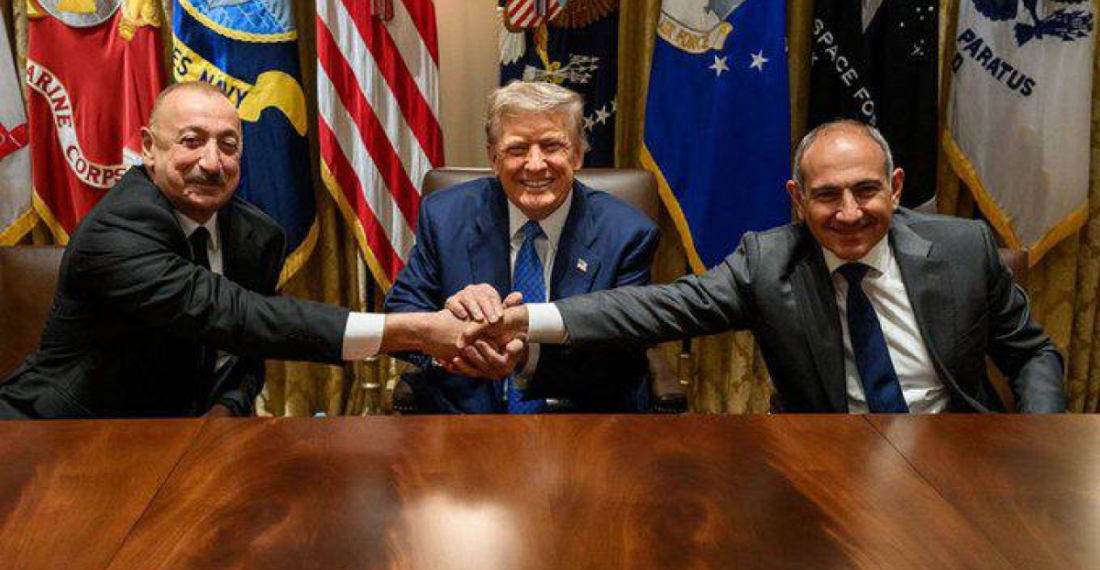
photo: President Trump with the Armenian and Azerbaijani leaders at the White House  on 8 August 2025. 

The views expressed in opinion pieces and commentaries do not necessarily reflect the position of commonspace.eu or its partners
 

Related articles

Editor's choice
News
UAE says it will withdraw from Yemen, but division emerges in Yemeni presidential council

UAE says it will withdraw from Yemen, but division emerges in Yemeni presidential council

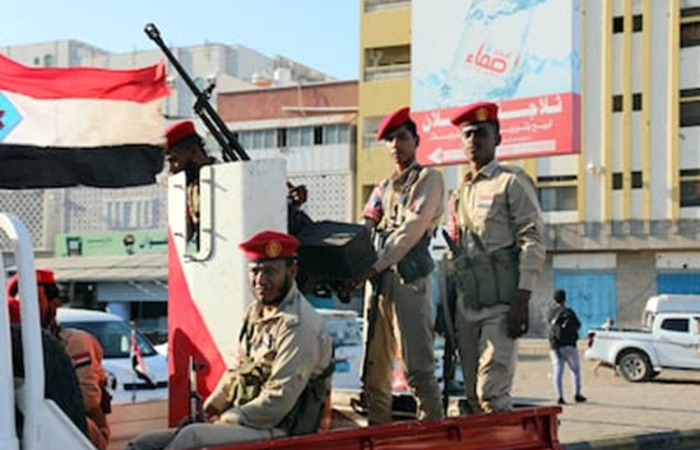
In a move seen as an attempt to de-escalate a crises with Saudi Arabia, the United Arab Emirates, on Tuesday (30th December) announced that it was heeding a call to withdraw its troops from Southern Yemen. UAE says that its presence included counter-terrorism teams that were crucial in fighting against Islamist groups. UAE sources said that parts of Yemen not controlled by the Houthis have had Al Qaeda in the Arab Peninsula (AQAP) operatives using the territory to launch attacks on Europe, the US and Middle East. UAE teams have co-ordinated with American and British special forces and intelligence. The sources added that Emirati forces and their Yemeni allies also helped reverse Houthi gains in the south. including the liberation of Aden port. The small UAE contingent has remained in place since the UAE withdrew most of its military personnel in 2019. The leading English-language newspaper in Abu Dhabi, The National, said that the main UAE force was based at Riyan Mukalla International Airport, with access to fixed-wing aircraft and helicopters, but also operated smaller contingents in the port town Balhaf and Shabwa. "It is understood it also flew a number of drones from the airbase that were able to track terrorist movements, pass information back to its allies and assisted special forces' missions." Meanwhile a division has emerged in Yemen's presidential council after four members denounced what they called the 'unilateral decisions' by the chairman. Four of Yemen’s eight Presidential Leadership Council members on Tuesday denounced an announcement by the council’s chairman accusing him of breaching the governing agreement. Tension between Yemeni leaders has been rising for weeks, underscoring the fragility of the country's already fractured political landscape and further complicating efforts to confront the Iran-backed Houthi rebels. The latest rift took an unprecedented turn on Tuesday morning, marked by a Saudi-led coalition “limited operation” striking combat vehicles Riyadh linked to the Southern Transitional Council, which has three members in the PLC. The PLC Chairman, Rashad al Alimi, on Tuesday said that he was seeking to cancel the joint defence agreement with the UAE. “What has been issued … constitutes a clear violation of the Declaration of the Transfer of Power [agreement], which explicitly stipulates that the Presidential Leadership Council is a collective body whose decisions are taken by consensus, or by majority when consensus is not possible,” the statement by the four members said. “It does not, under any circumstances, allow for unilateral decision-making on sovereign, military, or major political matters." The statement was signed by STC chief Aidarous Al Zubaidi, Faraj Al Bahsani, Tariq Saleh and Abu Zaraa al Muharrami. (click the picture to read the full article).

Popular

Editor's choice
News
UAE says it will withdraw from Yemen, but division emerges in Yemeni presidential council

UAE says it will withdraw from Yemen, but division emerges in Yemeni presidential council

In a move seen as an attempt to de-escalate a crises with Saudi Arabia, the United Arab Emirates, on Tuesday (30th December) announced that it was heeding a call to withdraw its troops from Southern Yemen. UAE says that its presence included counter-terrorism teams that were crucial in fighting against Islamist groups. UAE sources said that parts of Yemen not controlled by the Houthis have had Al Qaeda in the Arab Peninsula (AQAP) operatives using the territory to launch attacks on Europe, the US and Middle East. UAE teams have co-ordinated with American and British special forces and intelligence. The sources added that Emirati forces and their Yemeni allies also helped reverse Houthi gains in the south. including the liberation of Aden port. The small UAE contingent has remained in place since the UAE withdrew most of its military personnel in 2019. The leading English-language newspaper in Abu Dhabi, The National, said that the main UAE force was based at Riyan Mukalla International Airport, with access to fixed-wing aircraft and helicopters, but also operated smaller contingents in the port town Balhaf and Shabwa. "It is understood it also flew a number of drones from the airbase that were able to track terrorist movements, pass information back to its allies and assisted special forces' missions." Meanwhile a division has emerged in Yemen's presidential council after four members denounced what they called the 'unilateral decisions' by the chairman. Four of Yemen’s eight Presidential Leadership Council members on Tuesday denounced an announcement by the council’s chairman accusing him of breaching the governing agreement. Tension between Yemeni leaders has been rising for weeks, underscoring the fragility of the country's already fractured political landscape and further complicating efforts to confront the Iran-backed Houthi rebels. The latest rift took an unprecedented turn on Tuesday morning, marked by a Saudi-led coalition “limited operation” striking combat vehicles Riyadh linked to the Southern Transitional Council, which has three members in the PLC. The PLC Chairman, Rashad al Alimi, on Tuesday said that he was seeking to cancel the joint defence agreement with the UAE. “What has been issued … constitutes a clear violation of the Declaration of the Transfer of Power [agreement], which explicitly stipulates that the Presidential Leadership Council is a collective body whose decisions are taken by consensus, or by majority when consensus is not possible,” the statement by the four members said. “It does not, under any circumstances, allow for unilateral decision-making on sovereign, military, or major political matters." The statement was signed by STC chief Aidarous Al Zubaidi, Faraj Al Bahsani, Tariq Saleh and Abu Zaraa al Muharrami. (click the picture to read the full article).