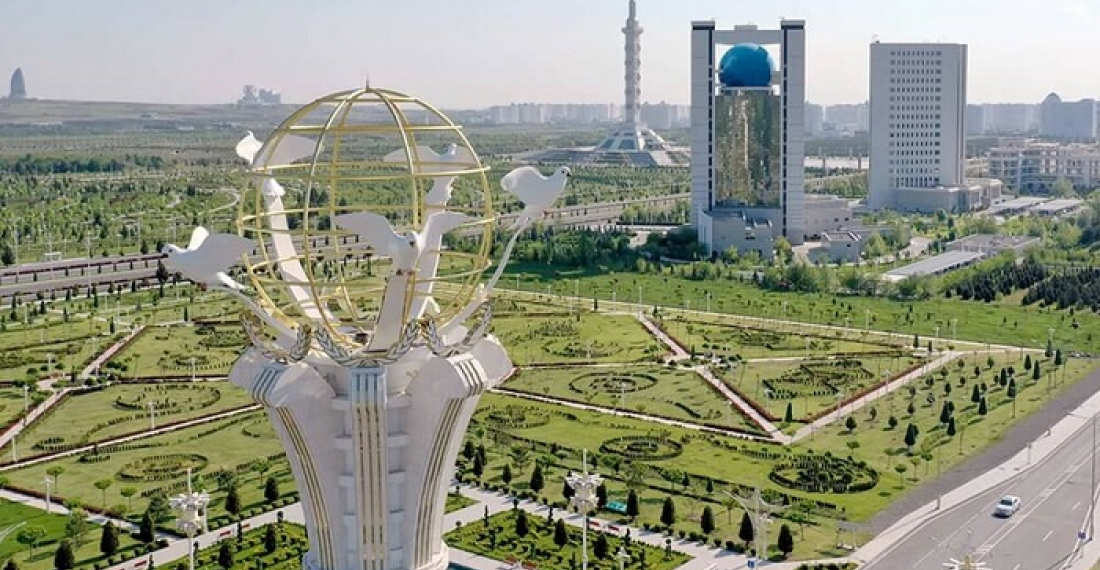
The year 2025 marks a pivotal moment for Turkmenistan as it commemorates three decades of its established status as a neutral state, coinciding with the International Year of Peace and Trust – a worldwide initiative championed by Turkmenistan itself. This dual celebration underscores the nation’s enduring influence in fostering international peace, development, and diplomatic harmony.
Turkmenistan’s neutrality was officially acknowledged on December 12, 1995, when the United Nations General Assembly unanimously adopted a resolution affirming its neutral status. This milestone saw support from all 185 UN member states at the time. Since then, neutrality has become a guiding principle of Turkmenistan’s foreign policy, positioning it as a trustworthy advocate for peace and an essential partner on the global stage. This commitment is celebrated annually as the Day of Neutrality on December 12. Further solidifying its global importance, Turkmenistan’s proposal led to the UN’s declaration of December 12 as the International Day of Neutrality in 2017, highlighting neutrality’s vital role in promoting peace and security worldwide.
Through its neutral stance, Turkmenistan has cultivated balanced relations with major powers and neighbouring countries. By upholding principles such as respect for sovereignty, non-interference, and prioritizing diplomatic engagement, the country has embraced a philosophy of "friendship with all, hostility towards none."
Economically, neutrality has been instrumental in shaping Turkmenistan as a secure and appealing hub for international investment. The nation’s collaborations with global partners have driven economic modernization and development, exemplified by landmark projects like the Turkmenistan–China gas pipeline, infrastructure developments with Afghanistan, and the ongoing Turkmenistan–Afghanistan–Pakistan–India (TAPI) pipeline. These efforts underscore Turkmenistan’s strategic role in global energy security.
In matters of security, Turkmenistan’s neutral status extends to its defence policies. Its military doctrine is exclusively defensive, designed to protect national sovereignty. By avoiding military alliances and blocs, Turkmenistan has steered clear of regional conflicts, instead focusing on strengthening its defensive capabilities independently. This approach has bolstered the nation’s reputation as a bastion of stability in a geopolitically sensitive region.
Turkmenistan’s neutrality is also deeply woven into its cultural fabric, promoting values of tolerance and peaceful coexistence. This philosophy has guided the country’s proactive participation in regional peace-building efforts. Notable examples include its mediation during the Tajik civil war (1995–1996) and support for UN-led resolutions addressing the Afghan crisis (1999–2000). Since 2007, the UN Regional Center for Preventive Diplomacy for Central Asia, based in Ashgabat, has furthered these objectives. In 2024, Turkmenistan’s diplomatic initiatives culminated in a UN resolution designating Central Asia as a zone of peace, trust, and cooperation.
The International Year of Peace and Trust in 2025, initiated by Turkmenistan and supported by 86 co-sponsoring states, aims to invigorate global efforts towards dialogue and preventive diplomacy. This initiative reinforces Turkmenistan’s reputation as a leader in fostering international collaboration.
Celebrations in 2025 will feature major events, including the International Forum of Peace and Trust in December. These events will showcase Turkmenistan’s accomplishments over 30 years while addressing key global challenges such as sustainable development, regional stability, and conflict resolution. Discussions will emphasize strategies for enhancing regional cooperation and building a resilient future.
Turkmenistan’s contributions to global energy diplomacy are particularly significant. Advocacy for stable energy transit and connectivity has resulted in the adoption of multiple UN resolutions (2008, 2013, and 2023). The TAPI pipeline stands as a symbol of Turkmenistan’s commitment to fostering regional connectivity and mutual prosperity.
Infrastructure projects like the North-South and East-West transport corridors further illustrate Turkmenistan’s pivotal role in linking Central Asia to global markets. These initiatives drive economic progress and stability across the region.
The simultaneous celebration of 30 years of neutrality and the International Year of Peace and Trust reflects Turkmenistan’s unwavering dedication to the principles of peaceful coexistence and global cooperation. As the nation honours its past achievements, it remains steadfast in its vision for a harmonious and prosperous world, reaffirming its position as a champion of peace and international solidarity.