


Opinion: Indo-European rapprochement and the competing geopolitics of infrastructure

With the geopolitical focus shifting towards the Indo-Pacific region, and China growing assertiveness, Indo-European relations become increasingly important. In this op-ed for commonspace.eu, Alex Petrosyan looks at how the EU and India are taking their co-operation to a higher level with the Connectivity Partnership launched in May, and why even closer relations are necessary.

Current dynamics suggest that the main focus of geopolitics in the coming years will shift towards the Indo-Pacific region. All eyes are on China and its regional initiatives aimed at establishing global dominance. China’s muscle-flexing behavior in the region has taken the form of direct clashes with India along the Line of Actual Control, where India lost at least 20 soldiers last June; interference in Hong Kong’s affairs; an increased presence in the South China Sea; and economic malevolence towards Australia. With this evolving geopolitical complexity, if the EU seeks to keep and increase its global ‘actorness’, it needs to go beyond the initiatives of France and Germany, and to shape its own agenda. At the same time, India is also paying attention to the fact that in today’s fragmented and multipolar world, the power of any aspiring global actor depends on its diversified relationships. In this context, the EU is a useful partner that India can rely on.

Indo-European rapprochement, which attempts to challenge Chinese global expansion, seeks also to enhance multilateral international institutions and to support a rules-based order. Given the fact that India will hold a seat on the UN Security Council in 2021-22 and the G20 presidency in 2022, both parties see an opportunity to move forward on a shared vision of multilateralism. As a normative power, the EU is trying to join forces with New Delhi to promote the rules-based system. Therefore, in order to prevent an 'all-roads-lead-to-Beijing' situation and to challenge growing Chinese hegemony, the EU and India need each other.

With this in mind, the EU and India have finally moved towards taking their co-operation to a higher level. Overcoming difficulties in negotiations, which have been suspended since 2013 because of trade-related thorny topics like India's agricultural protectionism, shows that there is now a different mood in the air.

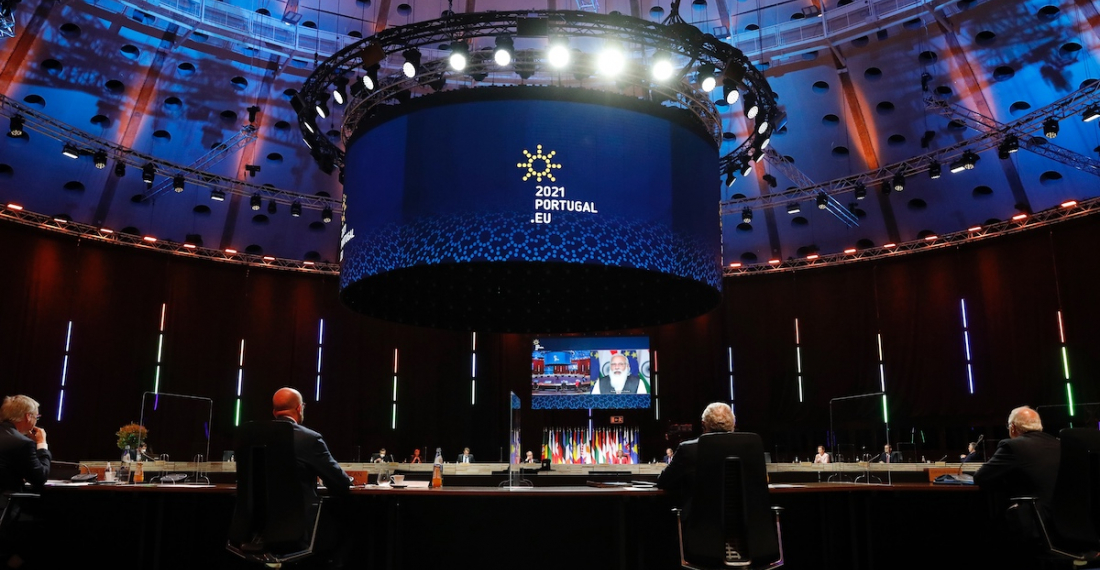
The Indian prime minister, Narendra Modi, had been scheduled to travel to Portugal for  a summit with EU leaders, but the visit cancelled because of the Covid-19 pandemic. As a result, the European Commission and Portugal – in its presidency of the European Council – offered India to hold the summit in a virtual format on 8 May 2021. The talks between these two economic giants were productive and resulted in the Connectivity Partnership, uniting efforts and attention on energy, digital and transportation sectors, offering new opportunities for investors from both sides. Moreover, this new initiative seeks to build joint infrastructure projects around the world mainly investing in third countries. Although both sides have clarified that the new global partnership isn’t designed to compete with China’s Belt and Road Initiative (BRI), the joint initiative to build effective projects across Europe, Asia and Africa, will undoubtedly counter Beijing’s agenda.  

The EU and its allies have a common interest in presenting an alternative to the Belt and Road Initiative, which will contain Chinese investment efforts to dominate various regions. Even though the EU is looking to build up its economic ties with China and signed the EU-China Comprehensive Agreement on Investments (CAI) last December, European sanctions imposed on Beijing in response to discrimination against Uighurs and other human rights violations have complicated relations. Moreover, US President Joe Biden has been pushing the EU to take a tougher stance against China and its worldwide initiatives.

This new Indo-European co-operation project, from the point of view of its initiators, will not impose a heavy debt burden on its partners as the Chinese projects do. However, whilst the EU says that both the public and the private sectors will be involved, it’s not clear where the funds will come from for these projects. The US and the EU have consistently been against the Chinese model of providing infrastructure support for developing nations, by which Beijing offers assistance via expensive projects that the host country ends up not being able to afford. India, Australia, the EU, the US and Japan have already started their own initiatives to counterbalance China’s. This includes ‘The Three Seas Initiative’ in the Central and Eastern European region, aimed at reducing its dependence on Chinese investments and Russian gas. Other successful examples are Japan’s ‘Expanded Partnership for Quality Infrastructure’ and its ‘Free and Open Indo-Pacific Strategy’. One of the joint examples of Indo-Japanese co-operation is the development of infrastructure projects in Sri Lanka, Myanmar and Bangladesh. The partners had been scheduled to build Colombo’s East Container Terminal but the Sri Lankans suddenly pulled out just before signing last year. Another competing regional strategy is the Asia-Africa Growth Corridor (AAGC), initiated by India, Japan and a few African countries in 2017. This Indo-Japanese collaboration aims to develop infrastructure in Africa, enhanced by digital connectivity, which would make the Indo-Pacific Region free and open. The AAGC gives priority to development projects in health and pharmaceuticals, agriculture, and disaster management. 

Undoubtably, this evolving infrastructure-building competition may solve the problems of many underdeveloped or developing countries if their leaderships act wisely. The newly adopted Indo-European Connectivity Partnership promises new prospects for Eastern Europe and especially for the fragile democracies of Armenia and Georgia.

The statement of the Indian ambassador to Tehran in March of this year, to connect Eastern and Northern Europe via Armenia and Georgia, paves the way for necessary dialogue on this matter. Being sandwiched between Russia and Turkey and at the same time being ideally located between Europe and India, Armenia and Georgia are well-placed to take advantage of the possible opportunities of the Indo-European Partnership. The involvement of Tbilisi and Yerevan in this project can enhance the economic attractiveness of these countries, which will increase their economic security and will make this region less vulnerable vis-à-vis Russo-Turkish interventions. 

The EU and India need to decide if they want to be decision-makers or decision-takers. Strong co-operation would help both become global agenda shapers. In case these two actors fail to find a common roadmap for promoting rules-based architecture and to become competitive infrastructure providers, it would be to the benefit of the US and China, which would impose their priorities on others, including the EU and India.

 

source: This commentary was prepared for commonspace.eu by Alexander Petrosyan, an independent analyst based in Brussels
photo: EU-India leaders' meeting via video conference Roundtable, 8 May 2021; European Union
 
The views expressed in opinion pieces and commentaries do not necessarily reflect the position of commonspace.eu or its partners

Related articles

Editor's choice
News
Council of Europe launches new International Claims Commission for Ukraine

Council of Europe launches new International Claims Commission for Ukraine

Thirty-four countries and the European Union have signed a new convention establishing an International Claims Commission for Ukraine at a diplomatic conference co-hosted by the 46-nation Council of Europe and the Netherlands in the Hague. The diplomatic conference was attended by leaders and high-level representatives from over 50 states, including the President of Ukraine, Volodymyr Zelenskyy, the President of the Republic of Moldova, Maia Sandu, and the Prime Minister of the Netherlands, Dick Schoof.  “Today marks a major step forward in ensuring accountability for Ukraine. The International Claims Commission represents justice and hope for tens of thousands of victims—our determination that those who have suffered will not be forgotten. I call for quick ratifications so we can get the commission rapidly up and running for the people of Ukraine,” said Council of Europe Secretary General Alain Berset. Ukrainian President Volodymyr Zelenskyy said: “We expect that every mechanism for compensation from the Register of Damage and Claims Commission to the actual payments – will start working and receive strong and sufficient international support, so that people can truly feel that any kind of damage caused by the war can be compensated. This war, and Russia’s responsibility for it, MUST become a clear example – so that others learn not to choose aggression.” “Accountability is about creating the conditions for peace that endures. And therefore, accountability is a condition of security – today and for the future. But accountability is not only about Ukraine. And it is not only about one aggressor and one victim. Accountability is about Europe. About every country in Europe. It is about whether Europe, as a whole, is willing to defend its peace,” said Maia Sandu, President of the Republic of Moldova, which currently holds the Presidency of the Council of Europe’s Committee of Ministers. The Prime Minister of the Netherlands, Dick Schoof, said: “Every day Russia is deliberately bombarding homes, destroying businesses and damaging infrastructure in Ukraine. Russia must compensate Ukraine for the damage caused. That is why we have launched the International Claims Commission for Ukraine and we are honoured to host it.” The International Claims Commission will be the second part of a comprehensive compensation mechanism related to Russia’s war of aggression, building on the existing Register of Damage for Ukraine. The claims commission will be established within the framework of the Council of Europe and will also be open to other countries. The Register of Damage for Ukraine, created in 2023, collects and records compensation claims submitted by individuals, organisations and public bodies in Ukraine. Forty-four states and the European Union have so far joined the Register, which has already received 86,000 claims. The International Claims Commission will review, assess and decide upon claims submitted to the Register of Damage for Ukraine and determine the amount of compensation, if any, which is due in each case. The convention establishing the commission will enter into force once it has been ratified by 25 signatories, as long as sufficient funds have been secured to support its initial work.

Popular

Editor's choice
News
Council of Europe launches new International Claims Commission for Ukraine

Council of Europe launches new International Claims Commission for Ukraine

Thirty-four countries and the European Union have signed a new convention establishing an International Claims Commission for Ukraine at a diplomatic conference co-hosted by the 46-nation Council of Europe and the Netherlands in the Hague. The diplomatic conference was attended by leaders and high-level representatives from over 50 states, including the President of Ukraine, Volodymyr Zelenskyy, the President of the Republic of Moldova, Maia Sandu, and the Prime Minister of the Netherlands, Dick Schoof.  “Today marks a major step forward in ensuring accountability for Ukraine. The International Claims Commission represents justice and hope for tens of thousands of victims—our determination that those who have suffered will not be forgotten. I call for quick ratifications so we can get the commission rapidly up and running for the people of Ukraine,” said Council of Europe Secretary General Alain Berset. Ukrainian President Volodymyr Zelenskyy said: “We expect that every mechanism for compensation from the Register of Damage and Claims Commission to the actual payments – will start working and receive strong and sufficient international support, so that people can truly feel that any kind of damage caused by the war can be compensated. This war, and Russia’s responsibility for it, MUST become a clear example – so that others learn not to choose aggression.” “Accountability is about creating the conditions for peace that endures. And therefore, accountability is a condition of security – today and for the future. But accountability is not only about Ukraine. And it is not only about one aggressor and one victim. Accountability is about Europe. About every country in Europe. It is about whether Europe, as a whole, is willing to defend its peace,” said Maia Sandu, President of the Republic of Moldova, which currently holds the Presidency of the Council of Europe’s Committee of Ministers. The Prime Minister of the Netherlands, Dick Schoof, said: “Every day Russia is deliberately bombarding homes, destroying businesses and damaging infrastructure in Ukraine. Russia must compensate Ukraine for the damage caused. That is why we have launched the International Claims Commission for Ukraine and we are honoured to host it.” The International Claims Commission will be the second part of a comprehensive compensation mechanism related to Russia’s war of aggression, building on the existing Register of Damage for Ukraine. The claims commission will be established within the framework of the Council of Europe and will also be open to other countries. The Register of Damage for Ukraine, created in 2023, collects and records compensation claims submitted by individuals, organisations and public bodies in Ukraine. Forty-four states and the European Union have so far joined the Register, which has already received 86,000 claims. The International Claims Commission will review, assess and decide upon claims submitted to the Register of Damage for Ukraine and determine the amount of compensation, if any, which is due in each case. The convention establishing the commission will enter into force once it has been ratified by 25 signatories, as long as sufficient funds have been secured to support its initial work.

