Commentary: GCC leaders will meet this week to seek a unified approach to tackle many challenges ahead

In the last weeks it became clear that the Gulf Cooperation Council (GCC) - the grouping of the six monarchies in the Gulf, was looking to solidify its strength and unity in the face of new economic, security and health challenges. The major obstacle was the dispute within the group, namely the standoff between Qatar on the one hand and Saudi Arabia, Bahrain and UAE on the other, which has been ongoing for nearly four years

After intensive efforts by Kuwait, supported by the United States, the Qatar crisis appears to be on the way of being resolved and the GCC leaders summit, which takes place in Saudi Arabia this week will likely close this chapter, at least for now. Having survived many economic and security challenges, the GCC is keen to emerge from this week's summit a more united bloc. The unity and strength of the GCC is a much-needed force in the region, especially since the United States is signalling it may not sustain its strategic support going forward.  

The GCC, known officially as, Cooperation Council for the Arab States of the Gulf, has existed since 1981 when all countries of the Arabian peninsula and the Gulf except for Iraq and Yemen signed the Charter launching a regional intergovernmental organisation. The GCC had since lived through many political and security experiences. Situated geographically between Asia, Africa and Europe, the GCC has been an important partner for many countries across these three continents. At the turn of the 21st century, the GCC leaders decided to create a customs union, a common market and a common currency. The bloc achieved major economic feats leading to a free and uninterrupted transfer of goods and persons but the goal of a monetary union is not yet realised. Perhaps the greatest achievement of the bloc was the development of its own social, educational and human capital.  

The importance of healing the rift with Qatar was clearly highlighted by the Secretary-General of the GCC, Nayef Falah M. Al-Hajraf, who was appointed just before the Coronavirus pandemic.  

In an interview with the Saudi TV Channel, Al Akhbariya, Al-Hajraf said that the GCC was born out of challenges and is capable of tackling contemporary challenges. Al-Hajraf highlighted the great desire of members states for this week's summit to be held in full attendance - in other words for the Qatari Emir to be present .

At the time of the GCC founding In 1981, the Gulf region was facing two major events: the Iranian revolution followed by the Iraq-Iran war; the GCC also experienced another war even closer when Iraq attacked Kuwait. Soon after, the rise of Al-Qaeda once again threatened the stability of the region. The GCC was able to preserve its unity and build a voice of reason as it succeeded to maintain security and economic order in the Gulf. Moreover, the GCC was able to highlight its importance given the location and the wealth of energy resources it has. In his interview Al-Hajraf also noted that the GCC was able to have global impact through its established investment and international development programmes. GCC’s total financial value, in fact, constitutes 8.1 per cent of the total financial value of the capital markets in Europe. 

Going forward, the GCC will likely keep economic growth and cooperation at the forefront of its goals. The GCC minister for transport met last month to discuss plans for a Gulf railway network and launched an agency to supervise the efforts. The GCC also seeks to establish an infectious disease centre that can monitor and prepare for future epidemics. The summit will highlight many of the future plans. With Qatar rejoining the ranks, the GCC will once again be able to showcase itself as an exemplary model for cooperation despite the differences within it.

Source: This commentary was prepared by Noman Ahmed, Research Associate at LINKS Europe
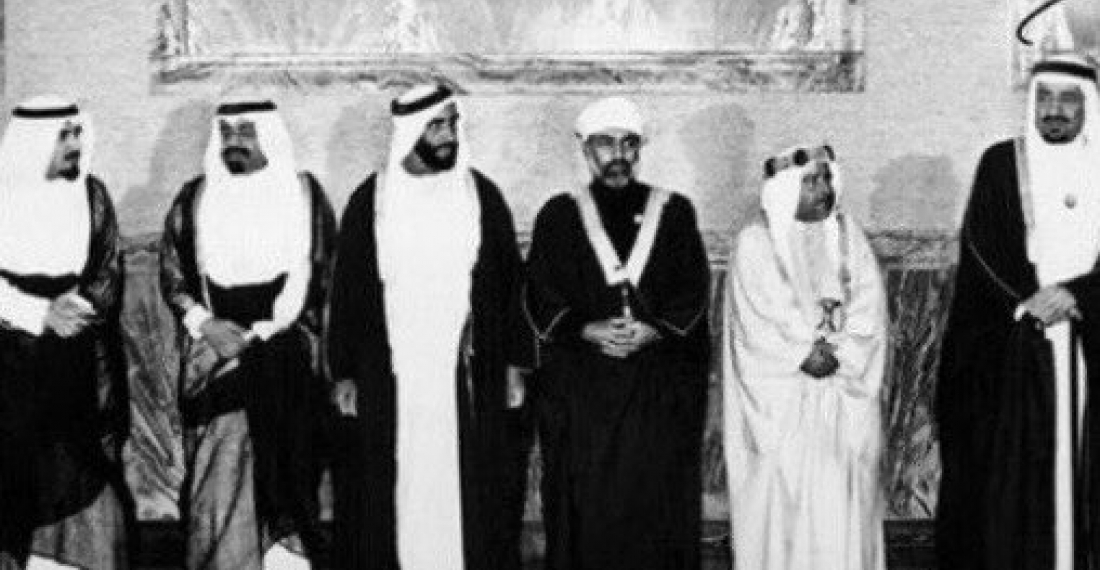
Photo: The founding fathers of the GCC at their inaugural summit of 1981. 
 

Related articles

Editor's choice
News
Women emerge favourite to lead United Nations from next year, after straw-poll of UN Security Council members

Women emerge favourite to lead United Nations from next year, after straw-poll of UN Security Council members

​ Two women have emerged as favourite to lead the United Nations as Secretary-General from 1 January 2027, when the term of the present incumbent, Antonio Gutteres, expires. A straw poll of the members of the UN Security Council, held on Thursday, 30 July showed that of the seven candidates, Rebecca Grynspan of Costa Rica and Carolyn Rodriguez-Birkett of Guyana received ten and nine positive endorsements respectively, by the 15 members UN Security Council Although the poll and its result are supposed to be secret, the result leaked within minutes, and was carried on world media outlets, such as Reuters. The result was as follows   Michelle Bachelet 6 encourage 5  discourage   4 no opinion María Fernanda Espinosa 5 2 8 Rafael Grossi 7 2 6 Rebeca Grynspan 10 1 4 Olara Otunnu 2 5 8 Carolyn Rodrigues-Birkett 9 2 4 Macky Sall 6 7 2   Article 97 of the UN Charter states that the “Secretary-General shall be appointed by the General Assembly upon the recommendation of the Security Council”. Straw polls are informal ballots used to determine the viability of Secretary-General candidates.  The seven current candidates are: Michelle Bachelet Jeria (Chile), who was nominated by Brazil, Chile, and Mexico on 2 February, with Chile withdrawing its nomination on 24 March; María Fernanda Espinosa Garcés (Ecuador), who was nominated by Antigua and Barbuda on 11 May; Rafael Mariano Grossi (Argentina), who was nominated by Argentina on 26 November 2025; Rebeca Grynspan Mayufis (Costa Rica), who was nominated by Costa Rica on 3 March; Olara Otunnu (Uganda), who was nominated by Uganda on 24 July; Carolyn Rodrigues Birkett (Guyana), who was nominated by Guyana on 15 June; and Macky Sall (Senegal), who was nominated by Burundi on 2 March. At Thursday's straw poll, there was no difference between the ballots presented to the five permanent members (P5) and the ten elected members (E10). Council members received one ballot per candidate, containing the candidate’s name followed by three options: “encouraged”, “discouraged”, and “no opinion expressed”.   It is ofcourse early days, and the straw poll is just an informal indication of the mood of the UN Security Council, but the strong showwing by the two womencandidates may be an indication that for the first time, the head of the UN can be a women. (click image to read more) ​

Popular

Editor's choice
Interview
Thursday Interview: Murad Muradov

Thursday Interview: Murad Muradov

Today, commonspace.eu starts a new regular weekly series. THURSDAY INTERVIEW, conducted by Lauri Nikulainen, will host  persons who are thinkers, opinion shapers, and implementors in their countries and spheres. We start the series with an interview with Murad Muradov, a leading person in Azerbaijan's think tank community. He is also the first co-chair of the Action Committee for a new Armenian-Azerbaijani Dialogue. Last September he made history by being the first Azerbaijani civil society activist to visit Armenia after the 44 day war, and the start of the peace process. Speaking about this visit Murad Muradov said: "My experience was largely positive. My negative expectations luckily didn’t play out. The discussions were respectful, the panel format bringing together experts from Armenia, Azerbaijan, and Turkey was particularly valuable during the NATO Rose-Roth Seminar in Yerevan, and media coverage, while varied in tone, remained largely constructive. Some media outlets though attempted to represent me as more of a government mouthpiece than an independent expert, which was totally misleading.  Overall, I see these initiatives as important steps in rebuilding trust and normalising professional engagement. The fact that soon a larger Azerbaijani civil society visits to Armenia followed, reinforces the sense that this process is moving in the right direction." (click the image to read the interview in full)