


Editor's choice
Opinion
Opinion: The future of the China-US-Russia triangle after Pelosi's visit to Taiwan

Opinion: The future of the China-US-Russia triangle after Pelosi's visit to Taiwan

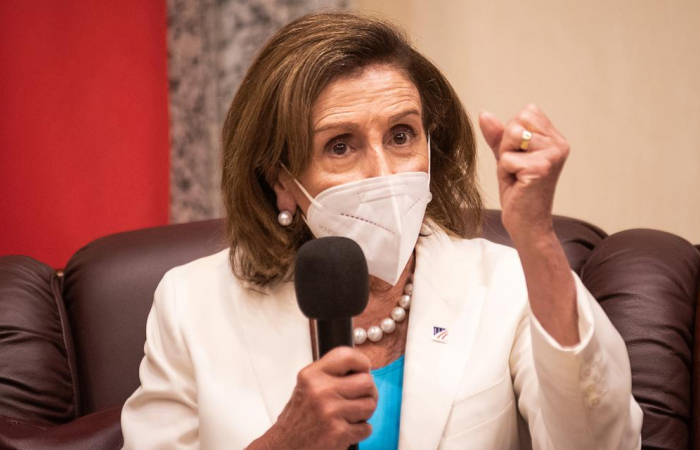
Since February 24, 2022, the international community's focus was concentrated entirely on the war in Ukraine and the growing Russia – West confrontation. It seemed that nothing could change the situation until the end of hostilities in Ukraine. However, on August 2 and 3, almost everyone’s attention shifted from Ukraine to Taiwan. As the Speaker of the US House of Representatives, Nancy Pelosi, stated her intention to visit Taiwan, up to half a million people were watching the trajectory of her plane on air flight tracking sites. The negative reaction of China, including the warning of President Xi during his conversation with President Biden that those who played with fire would be perished by it, created hype around this visit. Many were discussing the possibility of Chinese military jets closing the airspace over Taiwan and preventing Pelosi’s plane from landing in Taiwan, while some enthusiasts were even contemplating the possibility of a US-China direct military clash. As Pelosi landed in Taiwan and met with the Taiwanese President, the global social media was full of amateur assessments about the strategic victory of the US and the confirmation of the US global hegemony. However, as the dust settles down, and information noise and manipulation eventually decreases, a more serious assessment is needed to understand the real consequences of this visit.
Editor's choice
News
Mayhem in Baluchistan as separatist insurgents attack government targets across the Pakistani province

Mayhem in Baluchistan as separatist insurgents attack government targets across the Pakistani province

There was violence and mayhem across the Pakistani Indian Ocean province of Baluchistan on Friday and Saturday (30-31 January), as separatist insurgents attacked multiple government targets, in a co-ordinated attack in a number of towns and cities. Security forces conducted a large-scale counter-terrorism operation across Baluchistan following a series of coordinated attacks targeting multiple districts, killing civilians and security personnel, according to the Inter-Services Public Relations (ISPR) of the Pakistani government. "The operation, conducted over two days, resulted in the deaths of 133 insurgents, including suicide bombers, while 15 security personnel were killed during intense engagements", according to the government source. The attacks took place in Quetta, Mastung, Nushki, Dalbandin, Kharan, Panjgur, Tump, Gwadar and Pasni. "The assaults were aimed at destabilising peace in the province and undermining development by targeting law enforcement agencies and innocent civilians", the Pakistani government said.  The Pakistani government said the attacks were launched by “Indian sponsored Fitna al Hindustan,” a reference to the separatist Balochistan Liberation Army (BLA), saying intelligence reports confirmed the violence was orchestrated and directed by militant leaders operating from outside Pakistan, who were in direct communication with attackers during the assaults. The BLA also issued a statement earlier in the day, saying it had launched what it called “Operation Herof 2.0” and claiming responsibility for attacks in multiple locations. Pakistani officials describe BLA militants as Indian proxies, a charge New Delhi denies.
Editor's choice
Interview
Thursday Interview: Mykhailyna Skoryk-Shkarivska

Thursday Interview: Mykhailyna Skoryk-Shkarivska

In 2022, Russian forces advanced towards Kyiv from Belarus. Bucha, only a 30-minute drive from the capital, became the site of mass atrocities, including summary executions, torture chambers, and the deliberate hunting of civilians. Ukrainian officials described this as “a plan of terror against the population.” This week, commonspace.eu welcomes Mykhailyna Skoryk-Shkarivska, who served on Bucha’s city council during the invasion and was later appointed deputy mayor to support the city’s recovery. Mykhailyna shares the story of how a suburb of Kyiv grieved, became a global symbol of Russian atrocity, and ultimately rebuilt.