Filter archive

Publication date
Editor's choice
Opinion
Opinion: The future of the China-US-Russia triangle after Pelosi's visit to Taiwan

Opinion: The future of the China-US-Russia triangle after Pelosi's visit to Taiwan

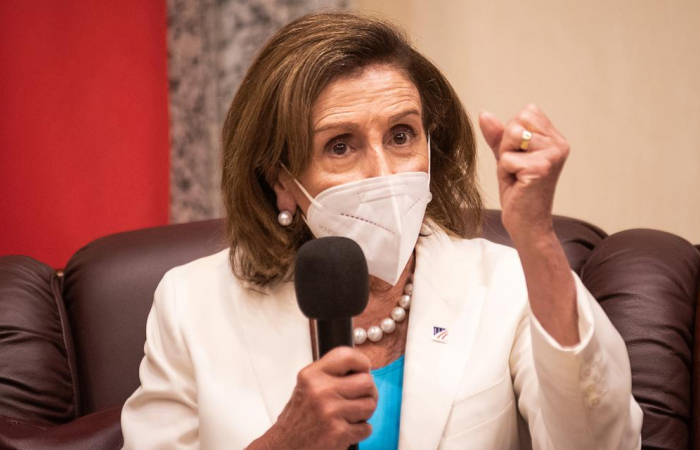
Since February 24, 2022, the international community's focus was concentrated entirely on the war in Ukraine and the growing Russia – West confrontation. It seemed that nothing could change the situation until the end of hostilities in Ukraine. However, on August 2 and 3, almost everyone’s attention shifted from Ukraine to Taiwan. As the Speaker of the US House of Representatives, Nancy Pelosi, stated her intention to visit Taiwan, up to half a million people were watching the trajectory of her plane on air flight tracking sites. The negative reaction of China, including the warning of President Xi during his conversation with President Biden that those who played with fire would be perished by it, created hype around this visit. Many were discussing the possibility of Chinese military jets closing the airspace over Taiwan and preventing Pelosi’s plane from landing in Taiwan, while some enthusiasts were even contemplating the possibility of a US-China direct military clash. As Pelosi landed in Taiwan and met with the Taiwanese President, the global social media was full of amateur assessments about the strategic victory of the US and the confirmation of the US global hegemony. However, as the dust settles down, and information noise and manipulation eventually decreases, a more serious assessment is needed to understand the real consequences of this visit.

Editor's choice
Monday Commentary
Monday Commentary: UN Peacekeeping must be protected in more ways than one

Monday Commentary: UN Peacekeeping must be protected in more ways than one

The news that six members of UNIFIL – the UN Peacekeeping force in Lebanon – have been killed in the last few weeks, has been overshadowed by the broader desperation of the situation in the Middle East. In March Israel launched an orgy of violence in Lebanon, killing thousands of people, and forcing the displacement of more than a million Lebanese.  Yet, the killing of the six UNIFIL members is a significant indicator of the gravity of the situation facing UN peacekeepers in numerous trouble-spots around the globe. Israel and Hizballah are blamed for the killing of the six UNIFIL soldiers – four Indonesian and two French – in separate incidents. Their death unfortunately is symbolic of a dangerous trend: UN peacekeepers are increasingly specifically targeted. They are in the eyes of belligerents a legitimate target. They are not. Killing peacekeepers is a violation of international humanitarian law. The perpetrators of this crime must be pursued. The UN had 11 peacekeeping operations with 61,197 peacekeepers in 2025. This number is set to decrease. It is financial constraints that are a more existential threat to UN peacekeeping operations. The impact of the UN’s liquidity crisis on UN peacekeeping operations is a major concern. The UN is expected to run out of cash in July if member states, and particularly the US, do not pay their dues. The Secretary-General has warned that the organisation faces a major risk of “imminent financial collapse”, a situation that would have catastrophic implications for its peacekeeping missions. The crisis in UN peacekeeping, and the broader UN financial crisis, reflects a deeper problem in the UN, and particularly in the leadership of the UN Security Council, and  its legitimacy. it is financial constraints that are a more existential threat to UN peacekeeping operations. The impact of the UN’s liquidity crisis on UN peacekeeping operations is a major concern. The UN is expected to run out of cash in July if member states, and particularly the US, do not pay their dues. The Secretary-General has warned that the organisation faces a major risk of “imminent financial collapse”, a situation that would have catastrophic implications for its peacekeeping missions. The crisis in UN peacekeeping, and the broader UN financial crisis, reflects a deeper problem in the UN, and particularly in the leadership of the UN Security Council, and  its legitimacy. (click the image to read the full Monday Commentary)
Editor's choice
News
NATO's Ankara summit in July likely to be the most important in the history of the organisation

NATO's Ankara summit in July likely to be the most important in the history of the organisation

Preparations are going on in earnest ahead of what is likely be the most important summit in the history of the North Atlantic Treaty Organisation (NATO), scheduled to be held in Türkiye in July. NATO Secretary General Mark Rutte visited Ankara, Türkiye (21-22 April 2026) to engage with national leadership and visit an ASELSAN Technology Base. In his meeting with President Recep Tayyip Erdoğan, Mr Rutte highlighted Türkiye’s contribution to the Alliance and discussed preparations for the upcoming Summit in Ankara. During his visit, the Secretary General also met with Foreign Minister Hakan Fidan and Defence Minister Yaşar Güler.  US president, Donald Trump, has been very vocal in recent weeks criticising NATO countries for not supporting the US-Israel war against Iran. The issue is likely to dominate discussions at the Ankara summit, and many have described this as the most challenging time in the history of the alliance, since it was established in 1949. (click the picture to read more)
Editor's choice
Interview
Thursday Interview: Dimitar Borumov

Thursday Interview: Dimitar Borumov

Bulgaria’s April 2026 election saw a sweeping win for ex-President Rumen Radev’s Progressive Bulgaria party. While much international coverage focused on Radev’s perceived stance toward Russia, the more consequential story lies at home: his victory was shaped by youth-driven discontent that intensified after the collapse of the government led by Zhelyazkov in December 2025. Young Bulgarians, particularly those in Generation Z, turned out in significant numbers, alongside previously disengaged voters. Their mobilisation appears to have been driven less by ideology than by frustration with entrenched corruption, weak economic prospects, and a broader sense that Bulgaria has struggled to offer a viable future for its younger generation. This week, Thursday Interview returns with Dimitar Borumov, a 23-year-old Bulgarian political economist, teacher of Bulgarian history, geography, and economy, and columnist at The European Times. We discuss the surge in youth participation, the frustrations and divides behind it, and how social media is shaping political news consumption among young Bulgarians. “Young people were already taking to the streets in December 2025. That was a clear indicator that they wanted change. They wanted to change what I would call, cynically, the ‘rotten system’, the status quo they were tired of. What Radev proposed was not a specific policy, apart from judicial reform. It was not directed against a specific party or person. It was a broader alternative, framed around a stronger Bulgaria.” (Read the full interview by clicking on the image above.)