Filter archive

Publication date
Editor's choice
Opinion
Opinion: The future of the China-US-Russia triangle after Pelosi's visit to Taiwan

Opinion: The future of the China-US-Russia triangle after Pelosi's visit to Taiwan

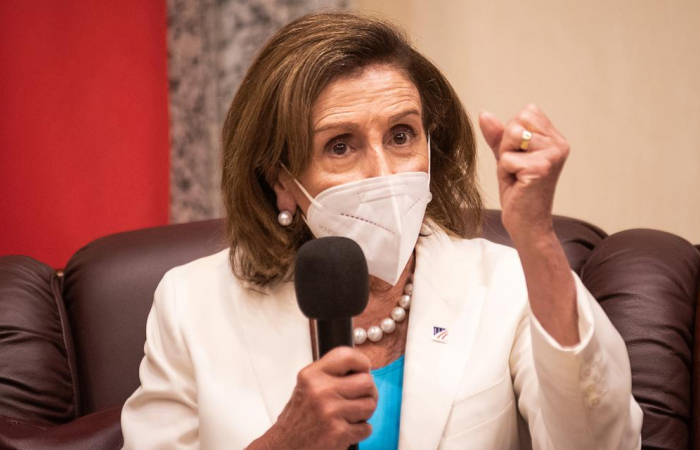
Since February 24, 2022, the international community's focus was concentrated entirely on the war in Ukraine and the growing Russia – West confrontation. It seemed that nothing could change the situation until the end of hostilities in Ukraine. However, on August 2 and 3, almost everyone’s attention shifted from Ukraine to Taiwan. As the Speaker of the US House of Representatives, Nancy Pelosi, stated her intention to visit Taiwan, up to half a million people were watching the trajectory of her plane on air flight tracking sites. The negative reaction of China, including the warning of President Xi during his conversation with President Biden that those who played with fire would be perished by it, created hype around this visit. Many were discussing the possibility of Chinese military jets closing the airspace over Taiwan and preventing Pelosi’s plane from landing in Taiwan, while some enthusiasts were even contemplating the possibility of a US-China direct military clash. As Pelosi landed in Taiwan and met with the Taiwanese President, the global social media was full of amateur assessments about the strategic victory of the US and the confirmation of the US global hegemony. However, as the dust settles down, and information noise and manipulation eventually decreases, a more serious assessment is needed to understand the real consequences of this visit.
Editor's choice
Monday Commentary
Monday Commentary: It is time for Iran to turn the page

Monday Commentary: It is time for Iran to turn the page

One slogan at a pro-democracy Iran rally held in Berlin, one of many that took place in Europe this weekend, caught my attention. It said “No Shah, no Mullahs”. It caught the dilemma of many Iranians, inside and outside the country, that are being forced into a false choice between the present clerical regime, and the “Shah”, the son of Mohammed Reza Pahlavi, who ruled Iran from 1941 until the 1979 revolution. For most of the time, and certainly since 1953, the Shah was absolute ruler. Mohammed Reze Pahlavi was no democrat. He ruled as an absolute dictator, with the help of a secret policy that tortured and abused people. It is at best disingenuous, at worst an act of great folly and cynicism, that in the United States, the son and heir of Mohammed Reza Pahlavi is being promoted as the alternative to the clerical regime that currently rules Iran. Today Iran is also ready for change, but this change cannot be going back half a century in time. No Shah, no Mullahs, as the slogan in Berlin said. Its time for  Iran to turn the page, but this has to be done by the Iranian people in their own way. You cannot bomb a new regime to replace the present one. The Iranian system is resilient, and will not allow change imposed from outside. What will emerge will not be what Israel and the US wants, but it can be what the region needs: a peaceful, stable and prosperous Iran at peace with itself and its neighbours. Change is likely to come incrementally, and from inside the system. Many inside the system understand that change is needed. (click the image above to read Dennis Sammut's this week's Monday Commentary in full).
Editor's choice
Event
Italians put on a spectacular show at opening of 2026 Winter Olympics in Milan-Cortina

Italians put on a spectacular show at opening of 2026 Winter Olympics in Milan-Cortina

The Milan-Cortina Winter Olympic Games were inaugurated with a magnificent opening ceremony split across four locations. Milan's iconic San Siro stadium was the primary venue, with elements of the ceremony also taking place in Cortina, Livigno and Predazzo. It was an impressive production that went off without a hitch. Two Olympic cauldrons were lit - one in Milan and the other in Cortina - with Italian tenor Andrea Bocelli performing a rousing rendition of Nessun Dorma as the torch entered the San Siro. That followed a jubilant ending to the athlete's parade, with the Italy team the last to be brought out to huge cheers in all four locations. Italy aside, the warmest welcome was reserved for the Ukrainian athletes, while Team USA were also loudly cheered. But there were boos when US vice-president JD Vance was shown on the big screen, with negative crowd reactions for the Israel and Georgia teams as well. (click image above to read more)
Editor's choice
Commentary
B5+1 in Bishkek and critical minerals in Washington

B5+1 in Bishkek and critical minerals in Washington

  On Wednesday, February 4, the Kyrgyz government, in coordination with the Center for International Private Enterprise (CIPE), kicked off a two-day B5+1 business forum in Bishkek. This meeting was announced back in December and covered in a previous Central Asia Concise newsletter. As a reminder, the B5 + 1 format is supported by the U.S. Department of State and aims to foster relations as well as high-level engagement between government and business leaders to ultimately advance U.S.-Central Asia economic cooperation in the region. The B5+1 serves as the business counterpart to the political level C5+1 format.  Crucially, the C5+1 was traditionally held between Central Asian and U.S. foreign ministers but recently took place at the heads of state level at the White House in November 2025. The December Central Asia Concise newsletter noted that the upgrading of the C5 + 1 not just shows increased U.S. interest in the region but may indicate if the U.S. is serious about translating its general policy objectives of increasing economic cooperation with the region to concrete outcomes and collaboration with key regional business stakeholders. Although the 2-day forum has not yet concluded, the unprecedented size and prominence of the U.S. business delegation, including over 50 representatives from major corporations, all but confirms this interest. In a commentary on CENTRAL ASIA CONCISE, the commonspace.eu editorial team says that an underreported development last month, but a contextually important one, was Kazakhstan’s Mazhilis (lower house of parliament) accepting two draft laws regulating the activities of the Collective Security Treaty Organization (CSTO). According to Mazhilis deputy Aigul Kuspan. The first law ratifies the amendments to the Agreement on the Status of Forces and Assets of the CSTO Collective Security System that expand the grounds for sending formations to the territory of the participating member states, including crisis prevention, humanitarian assistance and surprise inspections, whereas the second law looks to improve the legal framework for military transportation. Considering the increasingly hostile rhetoric from Russia, the accepted draft laws should certainly raise questions in Kazakhstan’s parliament as well as civil society. Vladimir Solovyov does not speak for the Russian state, but his shows have a clear track record of often floating narratives, talking points, and rhetoric that later become Kremlin policy, most famously framing Ukraine’s government as a corrupt ‘nazi’ infested regime oppressing its people. Overall, for Central Asian countries, which are still dependent on Russia in numerous ways, their response to this rhetoric, but more importantly, any forging of new economic ties, on critical raw minerals, for example, will be important to redefining their relationship with this historically imperial neighbour.  
Editor's choice
Interview
Thursday Interview: Dr. Sarah Njeri

Thursday Interview: Dr. Sarah Njeri

Dr. Njeri is a peace and conflict scholar and mine action activist whose work sits at the intersection of humanitarian practice, critical theory, and policy reform. In closing off a successful first month of commonspace.eu’s Thursday Interview series, she reflects on how lived experience in humanitarian action has shaped her scholarship, how hierarchies within knowledge production shape peace-building practice, and what mine action, the work of clearing landmines and other Explosive Remnants of War (ERW), reveals about power and politics on the ground. Dr. Njeri was instrumental in the success of LINKS Europe’s Bonn Contact Group on Climate, Peace and Security, where she co-authored a report on the nexus between climate change and land contamination and degradation resulting from the remnants of armed conflict. Read “Land degradation: The ‘double exposure’ of ERW contamination and climate change” by Dr. Sarah Njeri and Dr. Christina Greene. “Across contexts like Somaliland, Iraq, Ukraine, and the South Caucasus, the core barriers to translating evidence into mine action policy are less about ‘missing data’ and more about politics, incentives, and entrenched governance structures”. (Read the full interview by clicking the image above)