The world has bid farewell to Queen Elizabeth II at a funeral attended by world leaders, royal families from across the world and thousands upon thousands of British people.
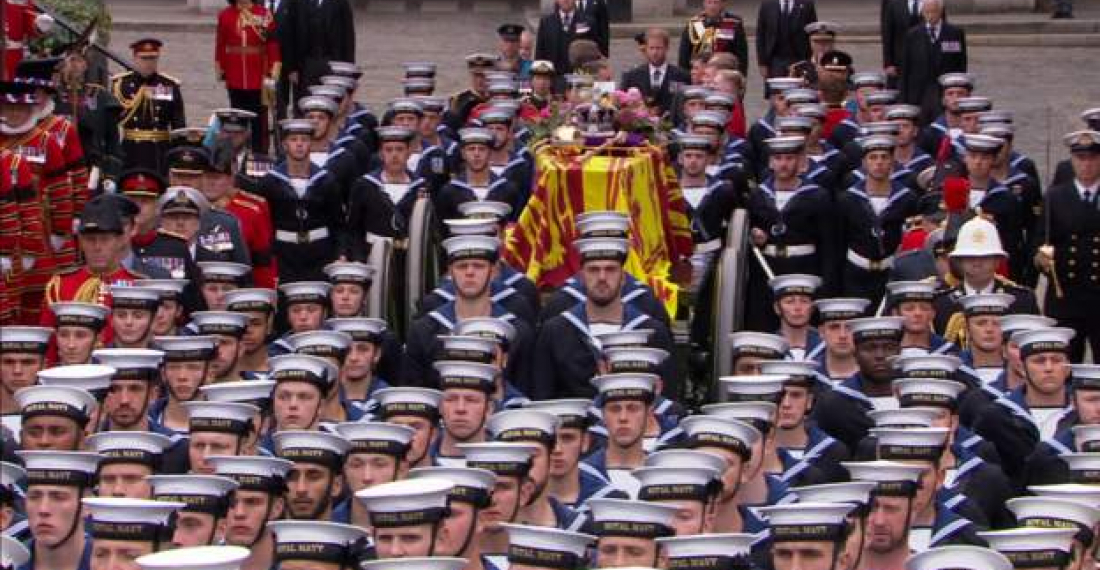
142 Royal Navy sailors drew the gun carriage carrying Elizabeth’s coffin to Westminster Abbey, with King Charles III and his sons, Princes William and Harry, walking behind as bagpipers played. Pall bearers carried the coffin into the abbey, where around 2,000 people ranging from world leaders to health care workers gathered to mourn her.
Ahead of the service, a bell tolled 96 times — once a minute for each year of her life.
“Here, where Queen Elizabeth was married and crowned, we gather from across the nation, from the Commonwealth, and from the nations of the world, to mourn our loss, to remember her long life of selfless service, and in sure confidence to commit her to the mercy of God our maker and redeemer,” the dean of the medieval abbey, David Hoyle, told the mourners.
Monday has been declared a public holiday and hundreds of thousands of people descended on central London to partake in the historic moment. Long before the service began, city authorities said viewing areas along the route of the funeral's procession were full. Millions more were expected to tune into the funeral live on television, and crowds flocked to parks and public spaces across the UK to watch it on screens. Archbishop of Canterbury Justin Welby noted during the funeral that “few leaders receive the outpouring of love we have seen" for Elizabeth.
On the evening before, Charles issued a message of thanks to people in the UK and around the world, saying he and his wife Camilla, the queen consort, have been “moved beyond measure” by the large numbers of people who have turned out to pay their respects to the queen.
Following the funeral, the coffin — ringed by units of the armed forces in dress uniforms and members of her family — will be brought through the capital's streets to Wellington Arch near Hyde Park.
There, it will be placed in a hearse to be driven to Windsor Castle — where Elizabeth spent much of her time — for another procession before a committal service in St. George’s Chapel. She will be laid to rest with her late husband, Prince Philip, at a private family service.