


News.az: Nagorno-Karabakh might escalate into war, needs to be solved
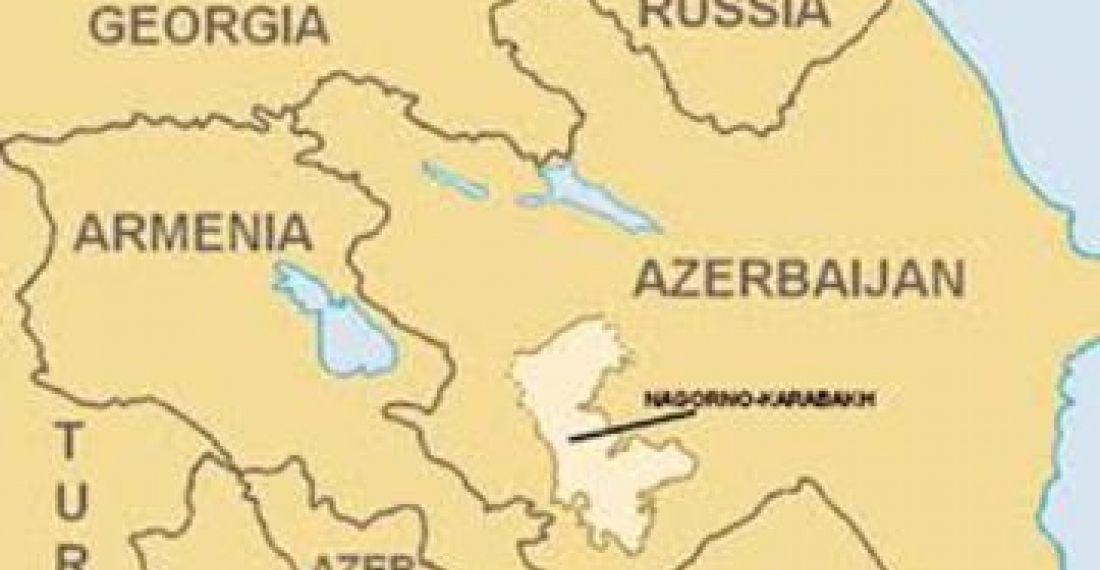
'Nagorno-Karabakh is the most heated conflict in the region.'
The Nagorno-Karabakh conflict remaining unresolved between Azerbaijan and Armenia, Turkey's neighbors to the east, is a potential threat to stability in the region that could explode at any time, analysts agree, urging the international community to become more committed to settling the conflict as soon as possible.

“Nagorno-Karabakh is the most heated conflict in the region, which could cause the biggest damage and spark tension between the nations, as hostilities are still alive and military troops are on alert along the border,” Mitat Chelikpala, a regional analyst from Kadir Has University, said at the panel discussion “Frozen conflicts in the South Caucasus and Nagorno-Karabakh,” sponsored by the Caspian Strategic Institute (HASEN) in cooperation with the Eurasia Institute in Istanbul on Friday.

In an address harshly criticizing the international community for not developing a united stance to settle the conflict, which has been deadlocked for more than two decades, Chelikpala urged the Organization for Security and Cooperation in Europe (OSCE) Minsk Group to be more active, as the analyst says that the Minsk Group, established back in 1992 to settle the Nagorno-Karabakh, is not fulfilling its mission.

Commenting on the legal aspects of the conflict and peace talks between the sides, Efgan Niftiyev of HASEN said it is not only Armenia and Azerbaijan that are affected but that the whole region is going through a very critical period, mentioning the Nagorno-Karabakh conflict as the main cause. War can flare up any time as the process for settlement of the conflict drags on, a fact which actually forces both sides to increase their military strength in the region.

“Peace talks have almost been suspended, as the sides already cannot stomach sitting down at a negotiating table which does not produce tangible results. The conflict can be solved only if both sides [Armenia and Azerbaijan] make compromises to come up with a peaceful solution,” Niftiyev noted, urging the Minsk Group be more committed to its mission and to help both sides find a peaceful end as soon as possible.  

In the meantime, underlining the importance of the Track Two process, which involves the two communities in reconciliation projects, as state-level peace talks preserve the status quo and produce no results, the analysts are hopeful that the Track Two level meetings will be significant in forcing both sides to take difficult decisions towards a solution.

Today's Zaman

Related articles

Editor's choice
News
Borrell tells the European Parliament that the situation in Afghanistan was critical, but the EU will remain engaged

Borrell tells the European Parliament that the situation in Afghanistan was critical, but the EU will remain engaged

Borrell underlined that the European Union will make every effort to support the peace process and to remain a committed partner to the Afghan people. "Of course, we will have to take into account the evolving situation, but disengagement is not an option.  We are clear on that: there is no alternative to a negotiated political settlement, through inclusive peace talks.
Editor's choice
News
Pope's visit to Türkiye and Lebanon has a strong ecumenical character, and places interreligious dialogue at its centre

Pope's visit to Türkiye and Lebanon has a strong ecumenical character, and places interreligious dialogue at its centre

Pope Leo XIV has begun the first overseas trip of his pontificate, a six-day visit to Türkiye and Lebanon, which started yesterday (27 November) and ends on Tuesday (2 December). According to Vatican Radio, the visit "carries a strong ecumenical character and places interreligious dialogue at its centre. It will also be a moment of closeness to Christian communities and local populations across the region".   During nearly a week in the region, Pope Leo XIV will meet civil and religious authorities, visit mosques and ancient churches, pray at Beirut’s port in memory of the victims of the 2020 explosion, and hold private meetings with Presidents Recep Tayyip Erdoğan and Joseph Aoun.   A highlight of the visit will be a visit to Nicaea, where the Pope will mark the anniversary of the Council of Nicaea. Christians of many traditions recognise the Council of Nicaea as a foundation of shared faith. One of the most anticipated moments will be the Pope’s encounter with Lebanese youth in Bkerké, at the Maronite Patriarchate, a meeting expected to carry strong messages of hope in the Jubilee Year. A central event will be the ecumenical celebration in İznik, where the Pope and Ecumenical Patriarch Bartholomew will walk together toward the ruins of the Basilica of St Neophytos. The prayer, held before icons of Christ and the Council, will conclude with the lighting of a candle—a symbolic gesture of unity. The journey will also highlight interreligious engagement.   Memorable moments are expected throughout the trip: a wreath at Atatürk’s mausoleum, prayer inside the Blue Mosque, Mass at Istanbul’s Volkswagen Arena, the planting of a cedar at the presidential palace in Beirut, and prayer at the tomb of St Charbel in Lebanon. The Vatican said that "Pope Leo XIV’s pilgrimage to Türkiye and Lebanon aims to offer a voice of peace, unity, and hope at the heart of the Middle East."

Popular

Editor's choice
News
Pope's visit to Türkiye and Lebanon has a strong ecumenical character, and places interreligious dialogue at its centre

Pope's visit to Türkiye and Lebanon has a strong ecumenical character, and places interreligious dialogue at its centre

Pope Leo XIV has begun the first overseas trip of his pontificate, a six-day visit to Türkiye and Lebanon, which started yesterday (27 November) and ends on Tuesday (2 December). According to Vatican Radio, the visit "carries a strong ecumenical character and places interreligious dialogue at its centre. It will also be a moment of closeness to Christian communities and local populations across the region".   During nearly a week in the region, Pope Leo XIV will meet civil and religious authorities, visit mosques and ancient churches, pray at Beirut’s port in memory of the victims of the 2020 explosion, and hold private meetings with Presidents Recep Tayyip Erdoğan and Joseph Aoun.   A highlight of the visit will be a visit to Nicaea, where the Pope will mark the anniversary of the Council of Nicaea. Christians of many traditions recognise the Council of Nicaea as a foundation of shared faith. One of the most anticipated moments will be the Pope’s encounter with Lebanese youth in Bkerké, at the Maronite Patriarchate, a meeting expected to carry strong messages of hope in the Jubilee Year. A central event will be the ecumenical celebration in İznik, where the Pope and Ecumenical Patriarch Bartholomew will walk together toward the ruins of the Basilica of St Neophytos. The prayer, held before icons of Christ and the Council, will conclude with the lighting of a candle—a symbolic gesture of unity. The journey will also highlight interreligious engagement.   Memorable moments are expected throughout the trip: a wreath at Atatürk’s mausoleum, prayer inside the Blue Mosque, Mass at Istanbul’s Volkswagen Arena, the planting of a cedar at the presidential palace in Beirut, and prayer at the tomb of St Charbel in Lebanon. The Vatican said that "Pope Leo XIV’s pilgrimage to Türkiye and Lebanon aims to offer a voice of peace, unity, and hope at the heart of the Middle East."

