Was this Lukashenko's "Ceucescu moment"?

Belarus leader, Alexander Lukashenko is struggling for his political life. The fallout from the presidential elections held a few days ago, which he claims to have won with a landslide, but which opponents claim was widely falsified, continues.

First there were the protests. Then, the police brutality against thousands of peaceful protestors. That in turn brought tens of thoudsands of portestors on to the streets.

Lukashenko has tried to show that he still has popular support. But the rally organised by his supporters on Sunday (16 August) was dwarfed by that of the protestors.

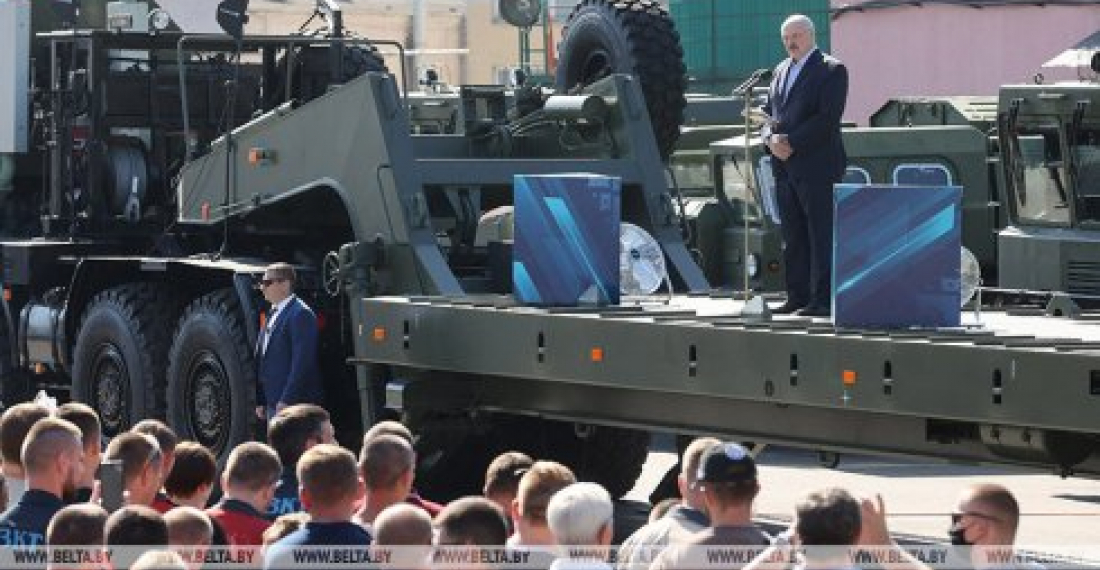
Yesterday, Lukashenko travelled by helicopter to one of the large factories, the Minsk Wheeled Tractor Factory (MZKT) which in the past provided him with some of his most loyal political support. But instead of being cherered, he was jeered, with workers shouting for him to leave. Lukashenko was clearly shocked and flustered.

Many are comparing this moment to the time when the Romanian dictator Nicolai Ceucescu was overthrown in 1989. He also called  workers from the state factories to the centre of Bucharest, expecting to be cheered, but instead to his shock and horror he was booed. It marked the end of Ceucescu, because it showed that his core support base had collapsed. Something similar appears to be happening in Minsk.

In the meantime international efforts to find some resolution to the crisis in Belarus continues. The OSCE - the Organisation for Security and Co-operation in Europe - is trying to intiate a mediation mission. The current Albanian Chairmanship and the incoming (2021) Swedish Chairmanship of the organisation are working together, and have offered to send a mission led by their foreign ministers to Minsk.

A statement issued on Monday (17 August) said,

"We reiterate our concerns about the conduct of the Presidential election on 9 August 2020, which could not be observed by the OSCE's Office for Democratic Institutions and Human Rights, and the disproportionate use of force against peaceful protesters, widespread detentions and alleged torture and mistreatment by the security forces.

An open and constructive dialogue is needed to find a way forward in Belarus.

The OSCE stands ready to support this and to engage with all stakeholders.

A formal offer has therefore been submitted to the government of Belarus for a visit by the OSCE Chairperson-in-Office, Prime Minister and Minister for Europe and Foreign Affairs of Albania, Edi Rama, and the incoming OSCE Chairperson-in-Office, Minister of Foreign Affairs of Sweden, Ann Linde - to meet with the government and representatives of the opposition.

The OSCE Chairmanship reiterates the urgent need for full compliance with OSCE principles and commitments, including the promotion and protection of fundamental freedoms and human rights, and respect for sovereignty and territorial integrity."

The leaders of the 27 member states of the European Union will discuss Belarus on Wednesday at a special meeting convened by the EU Council president Charles Michel.

In the meantime there are reports that German Chancellor, Angela Merkel will discuss Belarus on Tuesday (18 August) during a planned phone conversation with the Russian president Vladimir Putin.

source: commonspace.eu with agencies

photo: Belarus leader Alexander Lukashenko speaking at the MZKT tractor factory in Minsk on 17 August 2020 (picture courtesy of the Belta News Agency, Minsk).


Related articles

Editor's choice
News
Council of Europe launches new International Claims Commission for Ukraine

Council of Europe launches new International Claims Commission for Ukraine

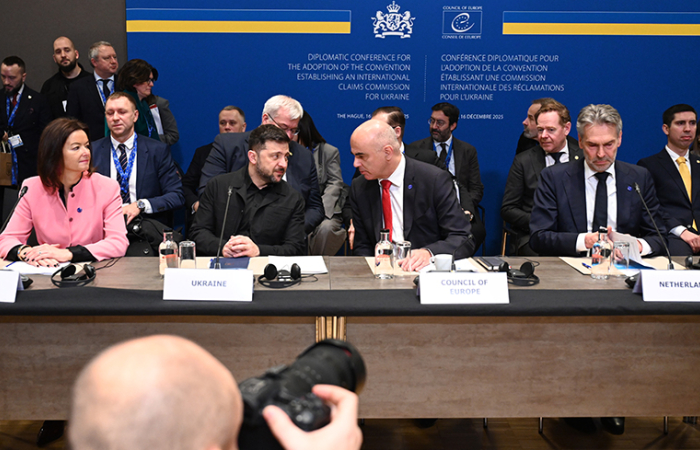
Thirty-four countries and the European Union have signed a new convention establishing an International Claims Commission for Ukraine at a diplomatic conference co-hosted by the 46-nation Council of Europe and the Netherlands in the Hague. The diplomatic conference was attended by leaders and high-level representatives from over 50 states, including the President of Ukraine, Volodymyr Zelenskyy, the President of the Republic of Moldova, Maia Sandu, and the Prime Minister of the Netherlands, Dick Schoof.  “Today marks a major step forward in ensuring accountability for Ukraine. The International Claims Commission represents justice and hope for tens of thousands of victims—our determination that those who have suffered will not be forgotten. I call for quick ratifications so we can get the commission rapidly up and running for the people of Ukraine,” said Council of Europe Secretary General Alain Berset. Ukrainian President Volodymyr Zelenskyy said: “We expect that every mechanism for compensation from the Register of Damage and Claims Commission to the actual payments – will start working and receive strong and sufficient international support, so that people can truly feel that any kind of damage caused by the war can be compensated. This war, and Russia’s responsibility for it, MUST become a clear example – so that others learn not to choose aggression.” “Accountability is about creating the conditions for peace that endures. And therefore, accountability is a condition of security – today and for the future. But accountability is not only about Ukraine. And it is not only about one aggressor and one victim. Accountability is about Europe. About every country in Europe. It is about whether Europe, as a whole, is willing to defend its peace,” said Maia Sandu, President of the Republic of Moldova, which currently holds the Presidency of the Council of Europe’s Committee of Ministers. The Prime Minister of the Netherlands, Dick Schoof, said: “Every day Russia is deliberately bombarding homes, destroying businesses and damaging infrastructure in Ukraine. Russia must compensate Ukraine for the damage caused. That is why we have launched the International Claims Commission for Ukraine and we are honoured to host it.” The International Claims Commission will be the second part of a comprehensive compensation mechanism related to Russia’s war of aggression, building on the existing Register of Damage for Ukraine. The claims commission will be established within the framework of the Council of Europe and will also be open to other countries. The Register of Damage for Ukraine, created in 2023, collects and records compensation claims submitted by individuals, organisations and public bodies in Ukraine. Forty-four states and the European Union have so far joined the Register, which has already received 86,000 claims. The International Claims Commission will review, assess and decide upon claims submitted to the Register of Damage for Ukraine and determine the amount of compensation, if any, which is due in each case. The convention establishing the commission will enter into force once it has been ratified by 25 signatories, as long as sufficient funds have been secured to support its initial work.

Popular