During this summer, despite the fact that the coronavirus pandemic continues unabated in parts of the Caucasus region, including Armenia and Azerbaijan, the sounds of war, and those of war games blended together creating a dangerous haze. The region, which is heavily armed, remains tense after a surge in violence on the Armenia-Azerbaijan border starting on 12 July. Over the last days the number of incidents recorded appeared to be less, but the situation remains volatile.
The fighting had hardly stopped when the noise of war was replaced with the noise of war games.
First the Russians....
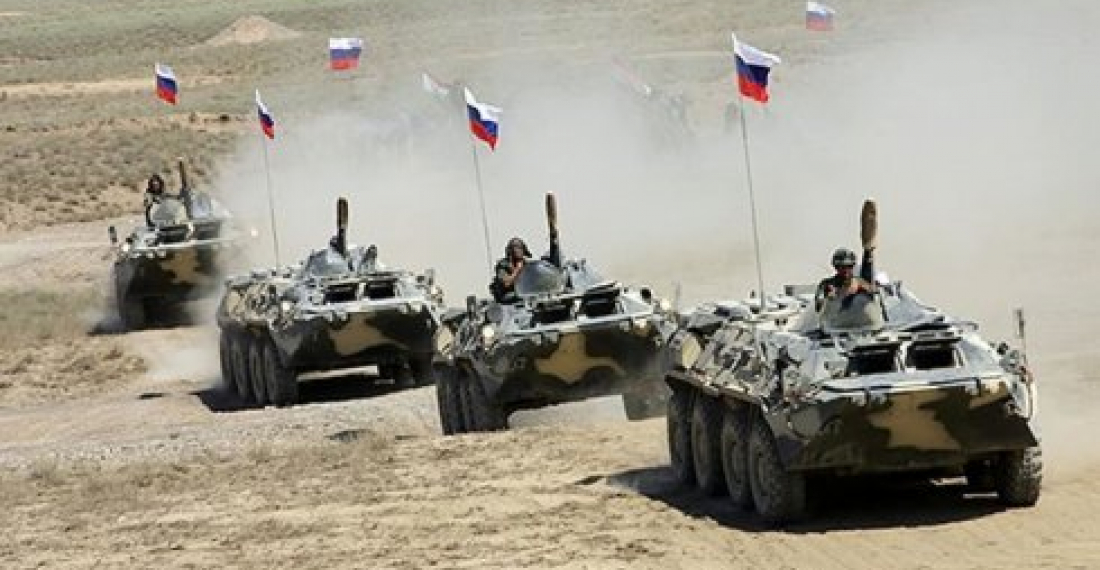
"Over 10,000 personnel of the Southern Military District are participating in force-on-force battalion-level tactical drills simultaneously running in eleven regions in Russia's south and the Trans-Caucasus region," the Russian military said in a statement last week. The motor rifle, armoured and artillery units are accomplishing combat training assignments with a live-fire exercise at all-arms practice grounds of the Astrakhan, Volgograd, Rostov and Stavropol Regions, the Republics of Dagestan, North Ossetia, Adygea and Chechnya, in Crimea and at the Southern Military District's bases in Abkhazia and South Ossetia. The drills also involve engineering, radiological, chemical and biological protection and medical troops, electronic warfare units, air defence, reconnaissance and other forces. Aircraft and helicopters of the Southern Military District's Air Force and Air Defence Army are providing fire support for the troops and promptly delivering the personnel, the statement said.
Whilst the fighting on the Armenian-Azerbaijani border was still on-going, Russian president Vladimir Putin ordered a snap combat readiness check of the troops of the Southern and Western Military Districts, marine infantry of the Northern and Pacific Fleets, some units of central subordination and the Airborne Force, and this was held 17-21 July. The surprise combat readiness check involved about 150,000 troops, around 400 aircraft, over 26,000 items of armament, military and special hardware and over 100 warships and support vessels.
Russia assured Azerbaijan that both the drills and the combat readiness check had nothing to do with events on the Armenia-Azerbaijan border.
......then the Turks
On Monday (27 July) it was announced that "in accordance with the Agreement on Military Cooperation between the Republic of Azerbaijan and the Republic of Turkey" , Azerbaijani-Turkish Live Fire Joint Large-Scale Tactical and Flight-Tactical Exercises will be held in Azerbaijan with the participation of the Land Forces and the Air Force of both countries.
The joint exercises involve military personnel, armoured vehicles, artillery mounts, and mortars, as well as military aviation and air defence equipment of the armies of the two countries.
According to the plan, exercises involving the Land Forces will be held from August 1 to 5 in Baku and Nakhchivan, and exercises with the participation of military aviation will be held from July 29 to August 10 - in Baku, Nakhchivan, Ganja, Kurdamir and Yevlakh.
The Azerbaijani Defence Ministry told the Russian newspaper Kommersant that the timeframe and the location of these drills had been chosen last year, denying any link to the recent conflict.On Friday (31 July) Armenia has put its armed forces on a high state of readiness.
An announcement from the Ministry of Defence said that "Under the 2020 plan of spot checks of the combat readiness of the Armed Forces, this morning the Chief of the General Staff brought the first-line units of the Armed Forces, military units and a part of the forces of central subordination to high levels of combat readiness.
"The aim is to test the combat readiness of the troops, the ability to act quickly in a certain situation, to clarify the issues of cooperation between the staff, the given and supporting forces and means, to conduct fire management exercises, acting out operative-tactical episodes."
It is understood that the measure is in response to ongoing large military exercises by Turkish and Azerbaijani troops currently on going in Azerbaijan.
source: commonspace.eu