


Talks between Taliban and the Afghanistan government set to open in Doha

The Government of Afghanistan and the Taliban start talks in Doha on Saturday (12 September) in an effort to end fighting in the country which has lasted for nearly two decades.

These intra-Afghan talks were envisaged in the US-brokered peace deal signed by the Taliban in February 2020. The agreement also promised a complete withdrawal of the roughly 12,000 US troops stationed on Afghan territory by April 2021 if the Taliban committed to not attacking the US or its Allies. This process is already underway, with America having reduced its presence to around 8,600 in June.

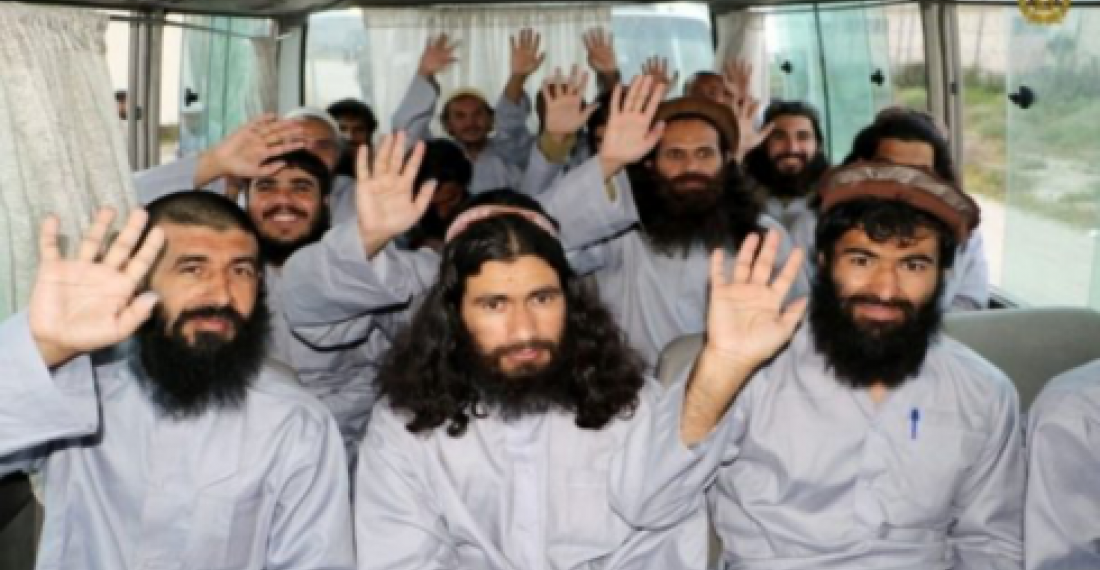
However, the talks, originally scheduled to begin in March, were delayed due to continued disputes surrounding prisoner swaps. This week the deadlock was finally broken when an agreement was reached that six Taliban members held by the Afghan government would be transferred to Qatar and held in custody there. Shortly after the prisoners arrived, both sides formally announced that they would be attending the peace talks.

"The Islamic Emirate of Afghanistan would like to declare its readiness to take part in the inauguration ceremony of the intra-Afghan negotiations that shall be held in Qatar on September 12," the Taliban said in a statement.

There remains a long way to go in the negotiation process given the history of violence and mistrust between both groups and their opposed views on issues such as women's rights. Nevertheless, these talks offer a rare chance at peace and mark a historic step in the right direction of dialogue, mediation and compromise - Saturday will be the first time since 2001 that the Taliban and the Afghan government have officially sat down together.

US Forces led an international coalition in overthrowing the Taliban rule in Afghanistan in 2001 following the deadly 9/11 al-Qaeda attacks in the United States. The Taliban, who protected al-Qaeda leader Osama Bin Laden, had refused to hand him over.

President Trump announced on Thursday (10/09) that Mike Pompeo would also attend the talks. The U.S. secretary of state added, "This opportunity must not be squandered... I urge the negotiators to demonstrate the pragmatism, restraint, and flexibility this process will require to succeed."

source: commonspace.eu with agencies

photo: Taliban prisoners about to be released after a deal with the United States in March (archive picture)


 

Related articles

Editor's choice
News
Aden under curfew, as problem in Yemen's south deepens

Aden under curfew, as problem in Yemen's south deepens

The port city of Aden, in Yemen's south, has been put under curfew, as the rift in the country between  the Saudi led coalition which  backs Yemen's presidential governing council, and the southern forces led by the Southern Transitional Council (STC), deepens. Abdul Rahman al-Mahrami, a member of the Yemeni Presidential Governing Council and commander of the al-Amalik brigades, has ordered a curfew in the temporary capital, Aden, "to maintain security". "A curfew has been imposed throughout Aden Governorate from 9:00 p.m. to 6:00 a.m., in accordance with the instructions of Commander Abdul Rahman al-Mahrami, a member of the Presidential Management Council," the statement said. It states that only security and military personnel, as well as medical and technical teams with approved permits, will be allowed to move in the area during these hours. Yemen's presidential council, which is backed by Saudi Arabia and which already is in a struggle with the Houthi Movement in the north of the country who also occupy the capital Sanaa, two days ago issued an order for the arrest of the head of the Southern Transitional Council (STC),, Aidarous al Zubaidi. The STC have wide support among people in the South, and advocate that South Yemen restores its independence. The coalition warned of further escalation in Aden, long regarded as an STC stronghold, as the Presidential Leadership Council (PLC) chief accused STC leader Aidarous Al Zubaidi of “high treason” and announced the revocation of his membership in the governing body. The moves mark a sharp escalation in tensions within the anti-Houthi camp, despite National Shield Forces, rivals of the STC and former allies, having recently retaken control of Hadhramaut and Mahra from southern fighters. The STC’s takeover of the two regions last month angered Saudi Arabia and contributed to igniting the current internal conflict. (click the picture to read more)

Popular

Editor's choice
News
Aden under curfew, as problem in Yemen's south deepens

Aden under curfew, as problem in Yemen's south deepens

The port city of Aden, in Yemen's south, has been put under curfew, as the rift in the country between  the Saudi led coalition which  backs Yemen's presidential governing council, and the southern forces led by the Southern Transitional Council (STC), deepens. Abdul Rahman al-Mahrami, a member of the Yemeni Presidential Governing Council and commander of the al-Amalik brigades, has ordered a curfew in the temporary capital, Aden, "to maintain security". "A curfew has been imposed throughout Aden Governorate from 9:00 p.m. to 6:00 a.m., in accordance with the instructions of Commander Abdul Rahman al-Mahrami, a member of the Presidential Management Council," the statement said. It states that only security and military personnel, as well as medical and technical teams with approved permits, will be allowed to move in the area during these hours. Yemen's presidential council, which is backed by Saudi Arabia and which already is in a struggle with the Houthi Movement in the north of the country who also occupy the capital Sanaa, two days ago issued an order for the arrest of the head of the Southern Transitional Council (STC),, Aidarous al Zubaidi. The STC have wide support among people in the South, and advocate that South Yemen restores its independence. The coalition warned of further escalation in Aden, long regarded as an STC stronghold, as the Presidential Leadership Council (PLC) chief accused STC leader Aidarous Al Zubaidi of “high treason” and announced the revocation of his membership in the governing body. The moves mark a sharp escalation in tensions within the anti-Houthi camp, despite National Shield Forces, rivals of the STC and former allies, having recently retaken control of Hadhramaut and Mahra from southern fighters. The STC’s takeover of the two regions last month angered Saudi Arabia and contributed to igniting the current internal conflict. (click the picture to read more)

