The South Caucasus is the focus at a conference being held today at Oxford University

Diplomats from the European Union  (EU), the United Nations (UN) and the Organisation for Security and Co-operation in Europe (OSCE) on Monday. 12 November, join dozens of experts and academics to discuss ongoing processes in the South Caucasus region, prospects for regional-co-operation and how to address issues related to the unresolved conflicts. The 3rd Oxford Conference on contemporary South Caucasus Issues, jointly organised by LINKS (DAR) and Oxford University this year has the theme "Regional Co-operation in the South Caucasus: elusive but necessary".

The conference opening, chaired by Dame Audrey Glover, will include contributions by Toivo Klaar, European Union Special Representative for the South Caucasus and the conflict in Georgia; Cihan Sultanoglu, United Nations Representative for the Geneva International Discussions; and Rudolph Michalka, Special Representative of the OSCE CiO for the South Caucasus. The keynote speech is expected to be delivered by Ambassador Natalie Sabanadze who is Georgian Ambassador to the European Union.

During the day participants will listen to three panel discussions. The 1st Session will deal with the theme "Domestic developments amid shifting regional dynamics and tense global processes". it will be moderated by Professor Roy Allison (Russian and Eurasian Studies Centre, Oxford University). Other speakers are Zaur Shiriyev (Analyst, International Crisis Group), Dr Giorgi Khelashvili (Advisor to the Chairman of the Parliament of Georgia), Lusine Kharatyan (National Academy of Sciences of Armenia).

The theme of the 2nd Session is "Big players, competing agendas, demanding clients - the role of external actors in the South Caucasus", and it will be moderated by Craig Oliphant from the Foreign Policy Centre. Panellists include Amanda Paul (Senior Analyst, European Policy Centre), Dr Giorgio Comai (International Co-operation Centre, Trento), Professor Jamie Shea (Exeter University); and Armenak Tokmajyan (International Crisis Group).

The 3rd Session after lunch will discuss the theme "Breaking the vicious circle: Can the region emerge from the quagmire of conflict?" It will be chaired by Dr Dennis Sammut (LINKS [DAR]). Speakers include  Veronika Movchan, (Berlin Economics), Ahmad Allili (CESD. Baku), Eduard Abrahamyan (Leicester University).

Reports on the conference will be available on commonspace.eu throughout the day.

source: commonspace.eu

photo: Oxford University (archive picture)


Related articles

Editor's choice
News
Uzbekistan calls for bigger voice for Central Asia in the UN

Uzbekistan calls for bigger voice for Central Asia in the UN

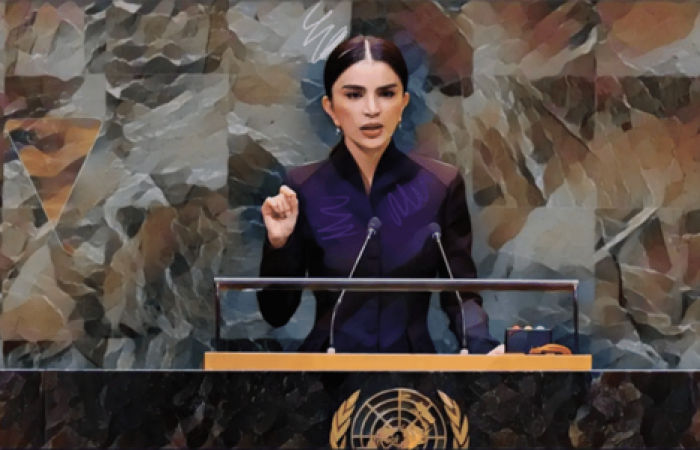
Uzbekistan called for a more effective and representative United Nations on September 23, as presidential administration chief Saida Mirziyoyeva used her address to the UN General Assembly to seek support for the country’s candidacy for a nonpermanent Security Council seat in 2035–2036. Speaking at the Assembly’s 81st session in New York, Mirziyoyeva argued that international cooperation remains necessary despite growing geopolitical divisions. She endorsed UN Secretary-General António Guterres’ UN80 reform initiative and called for an expanded Security Council, arguing that international rules should be applied consistently rather than according to the interests of powerful states. Uzbekistan’s planned chairmanship of the Non-Aligned Movement in 2027 was presented as another platform for promoting dialogue. Her emphasis on multilateralism also fits a broader Central Asian effort to increase the region’s role in international institutions. Kyrgyzstan, for example, will hold its first Security Council seat in 2027–2028. Mirziyoyeva also highlighted regional cooperation, pointing to improved relations among Central Asian states over longstanding border and water disputes. On Afghanistan, she urged countries not to view it solely as a security threat, stressing the importance of creating conditions for peaceful development. She linked Uzbekistan’s international agenda to domestic reforms, citing economic growth, falling poverty and expanded education. Climate and water security also featured prominently, with the Aral Sea serving as an example of the consequences of poor environmental management. (click image to read more)

Popular

Editor's choice
Interview
Thursday Interview: Murad Muradov

Thursday Interview: Murad Muradov

Today, commonspace.eu starts a new regular weekly series. THURSDAY INTERVIEW, conducted by Lauri Nikulainen, will host  persons who are thinkers, opinion shapers, and implementors in their countries and spheres. We start the series with an interview with Murad Muradov, a leading person in Azerbaijan's think tank community. He is also the first co-chair of the Action Committee for a new Armenian-Azerbaijani Dialogue. Last September he made history by being the first Azerbaijani civil society activist to visit Armenia after the 44 day war, and the start of the peace process. Speaking about this visit Murad Muradov said: "My experience was largely positive. My negative expectations luckily didn’t play out. The discussions were respectful, the panel format bringing together experts from Armenia, Azerbaijan, and Turkey was particularly valuable during the NATO Rose-Roth Seminar in Yerevan, and media coverage, while varied in tone, remained largely constructive. Some media outlets though attempted to represent me as more of a government mouthpiece than an independent expert, which was totally misleading.  Overall, I see these initiatives as important steps in rebuilding trust and normalising professional engagement. The fact that soon a larger Azerbaijani civil society visits to Armenia followed, reinforces the sense that this process is moving in the right direction." (click the image to read the interview in full)