


Slovak OSCE Chairmanship outlines priorities for 2019

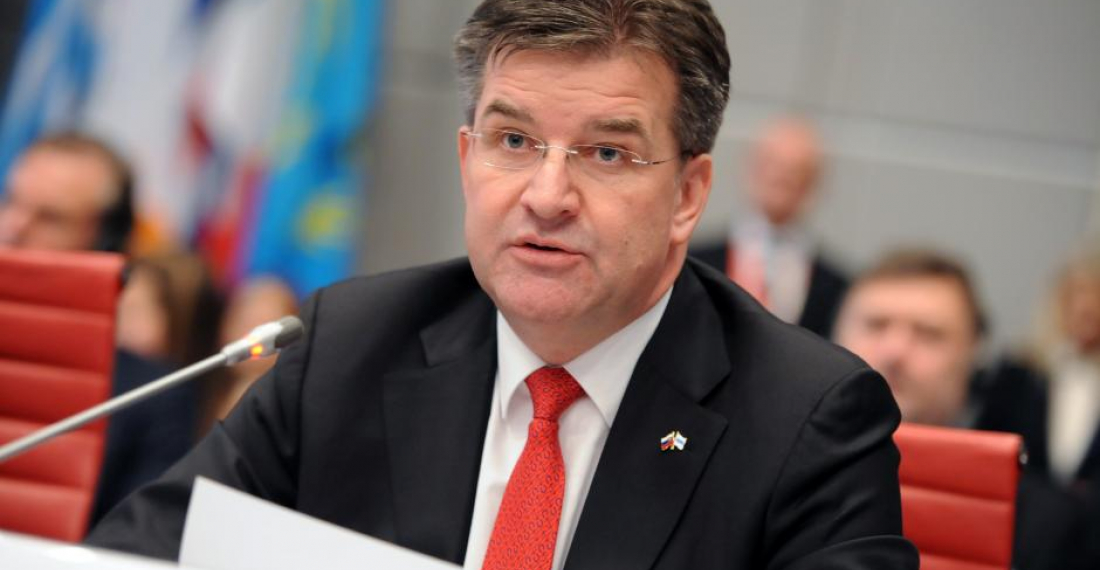
Addressing the unresolved conflicts in the OSCE area will be one of the priorities of the Slovak Chairmanship of the Organisation for Security and Co-operation in Europe (OSCE) in 2019. Slovakia took over the annual chairmanship of the organisation last week, and on Thursday (10 January), its Foreign Minister, Miroslav Lajcak was in Vienna where addressed the Permanent Council of representatives of the 57 member states of the organisation

Elaborating on the Chairmanship's priority of conflict prevention and resolution, Lajčák drew attention to the human suffering caused by protracted conflicts, adding that special attention will be given to the situation in and around Ukraine. Reminding the Permanent Council of the need for ongoing support to the OSCE Special Monitoring Mission and announcing his visit to Ukraine next week, the OSCE Chairperson-in-Office said he will focus on opportunities for dialogue. "If there is any way to immediately alleviate the situation for people on the ground, we must take it," he said.

Lajčâk also acknowledged positive momentum, when it comes to the Transdniestrian Settlement Process, the recent intensification of dialogue and the decrease in ceasefire violations and casualties in the Nagorno-Karabakh conflict, and the resumption of the Incident Prevention and Response Mechanism meetings in Ergneti.

Introducing the Chairmanship's second priority - a safer future - Lajčák said that if the OSCE is to make a difference in the lives of people, it cannot focus only on the challenges of today.

"We are still in the dark about the role communications technologies, artificial intelligence or energy innovations will play in our security landscape, years from now. But one thing is certain: we need to start thinking about it - and talking about it - more."

As custodians of the present and future, he called for young people to have a greater say, adding that they are coming up with new ways to prevent violent extremism, counter climate change and spur sustainable development.

Turning to the Chairmanship's third priority - effective multilateralism - the OSCE Chairperson-in-Office pointed out that today's security challenges cannot be addressed by one country alone.

The major challenges facing the OSCE region and beyond demand more co-operation and more dialogue than ever before, said Miroslav Lajčák,  Lajčák pointed out that all the tools needed to overcome current security challenges already exist. "In fact, many lie right here, at the OSCE," he added.

 source: commonspace.eu 

photo: Slovak Foreign Minister Mirsolav Lajcak addressing the OSCE Permanent Council in Vienna on 10 January 2019 (picture courtesy of the OSCE)

Related articles

Editor's choice
News
Council of Europe launches new International Claims Commission for Ukraine

Council of Europe launches new International Claims Commission for Ukraine

Thirty-four countries and the European Union have signed a new convention establishing an International Claims Commission for Ukraine at a diplomatic conference co-hosted by the 46-nation Council of Europe and the Netherlands in the Hague. The diplomatic conference was attended by leaders and high-level representatives from over 50 states, including the President of Ukraine, Volodymyr Zelenskyy, the President of the Republic of Moldova, Maia Sandu, and the Prime Minister of the Netherlands, Dick Schoof.  “Today marks a major step forward in ensuring accountability for Ukraine. The International Claims Commission represents justice and hope for tens of thousands of victims—our determination that those who have suffered will not be forgotten. I call for quick ratifications so we can get the commission rapidly up and running for the people of Ukraine,” said Council of Europe Secretary General Alain Berset. Ukrainian President Volodymyr Zelenskyy said: “We expect that every mechanism for compensation from the Register of Damage and Claims Commission to the actual payments – will start working and receive strong and sufficient international support, so that people can truly feel that any kind of damage caused by the war can be compensated. This war, and Russia’s responsibility for it, MUST become a clear example – so that others learn not to choose aggression.” “Accountability is about creating the conditions for peace that endures. And therefore, accountability is a condition of security – today and for the future. But accountability is not only about Ukraine. And it is not only about one aggressor and one victim. Accountability is about Europe. About every country in Europe. It is about whether Europe, as a whole, is willing to defend its peace,” said Maia Sandu, President of the Republic of Moldova, which currently holds the Presidency of the Council of Europe’s Committee of Ministers. The Prime Minister of the Netherlands, Dick Schoof, said: “Every day Russia is deliberately bombarding homes, destroying businesses and damaging infrastructure in Ukraine. Russia must compensate Ukraine for the damage caused. That is why we have launched the International Claims Commission for Ukraine and we are honoured to host it.” The International Claims Commission will be the second part of a comprehensive compensation mechanism related to Russia’s war of aggression, building on the existing Register of Damage for Ukraine. The claims commission will be established within the framework of the Council of Europe and will also be open to other countries. The Register of Damage for Ukraine, created in 2023, collects and records compensation claims submitted by individuals, organisations and public bodies in Ukraine. Forty-four states and the European Union have so far joined the Register, which has already received 86,000 claims. The International Claims Commission will review, assess and decide upon claims submitted to the Register of Damage for Ukraine and determine the amount of compensation, if any, which is due in each case. The convention establishing the commission will enter into force once it has been ratified by 25 signatories, as long as sufficient funds have been secured to support its initial work.

Popular

Editor's choice
News
Council of Europe launches new International Claims Commission for Ukraine

Council of Europe launches new International Claims Commission for Ukraine

Thirty-four countries and the European Union have signed a new convention establishing an International Claims Commission for Ukraine at a diplomatic conference co-hosted by the 46-nation Council of Europe and the Netherlands in the Hague. The diplomatic conference was attended by leaders and high-level representatives from over 50 states, including the President of Ukraine, Volodymyr Zelenskyy, the President of the Republic of Moldova, Maia Sandu, and the Prime Minister of the Netherlands, Dick Schoof.  “Today marks a major step forward in ensuring accountability for Ukraine. The International Claims Commission represents justice and hope for tens of thousands of victims—our determination that those who have suffered will not be forgotten. I call for quick ratifications so we can get the commission rapidly up and running for the people of Ukraine,” said Council of Europe Secretary General Alain Berset. Ukrainian President Volodymyr Zelenskyy said: “We expect that every mechanism for compensation from the Register of Damage and Claims Commission to the actual payments – will start working and receive strong and sufficient international support, so that people can truly feel that any kind of damage caused by the war can be compensated. This war, and Russia’s responsibility for it, MUST become a clear example – so that others learn not to choose aggression.” “Accountability is about creating the conditions for peace that endures. And therefore, accountability is a condition of security – today and for the future. But accountability is not only about Ukraine. And it is not only about one aggressor and one victim. Accountability is about Europe. About every country in Europe. It is about whether Europe, as a whole, is willing to defend its peace,” said Maia Sandu, President of the Republic of Moldova, which currently holds the Presidency of the Council of Europe’s Committee of Ministers. The Prime Minister of the Netherlands, Dick Schoof, said: “Every day Russia is deliberately bombarding homes, destroying businesses and damaging infrastructure in Ukraine. Russia must compensate Ukraine for the damage caused. That is why we have launched the International Claims Commission for Ukraine and we are honoured to host it.” The International Claims Commission will be the second part of a comprehensive compensation mechanism related to Russia’s war of aggression, building on the existing Register of Damage for Ukraine. The claims commission will be established within the framework of the Council of Europe and will also be open to other countries. The Register of Damage for Ukraine, created in 2023, collects and records compensation claims submitted by individuals, organisations and public bodies in Ukraine. Forty-four states and the European Union have so far joined the Register, which has already received 86,000 claims. The International Claims Commission will review, assess and decide upon claims submitted to the Register of Damage for Ukraine and determine the amount of compensation, if any, which is due in each case. The convention establishing the commission will enter into force once it has been ratified by 25 signatories, as long as sufficient funds have been secured to support its initial work.

