Robert Prevost, Chicago-born missionary, elected Pope Leo XIV

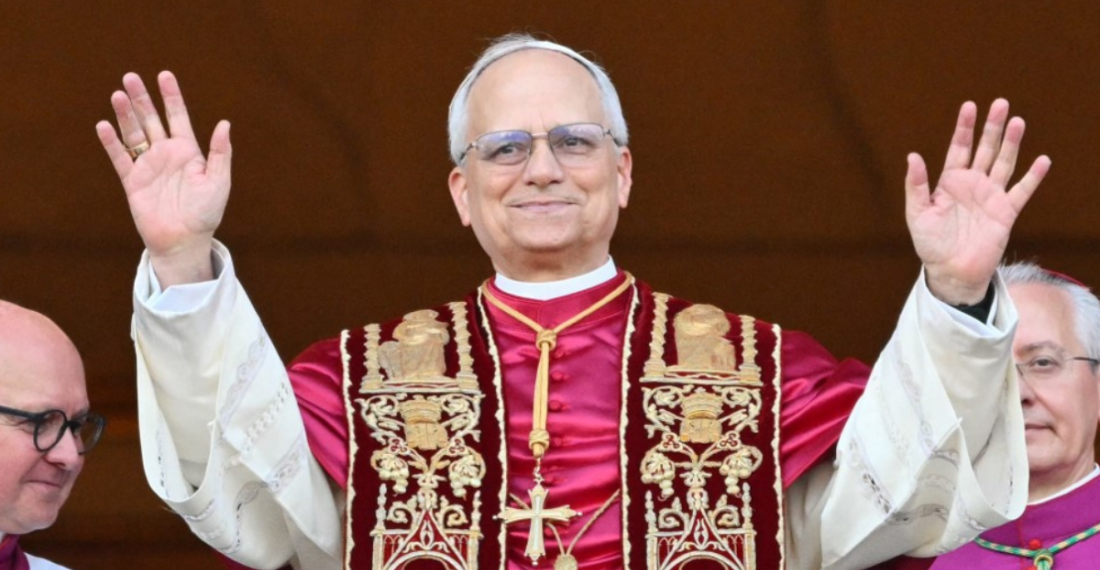
Robert Francis Prevost became the first pope from the United States on Thursday, picking the papal name Leo XIV after cardinals from around the world elected him leader of the world's 1.4 billion Catholics. Tens of thousands of people packed in St Peter's Square cheered as Prevost appeared on the balcony of St Peter's Basilica, waving with both hands, smiling and bowing. "Peace by with you," he told the crowds, before beginning his first address, where he called for "building bridges".

The 69-year-old native of Chicago, who spent years as a missionary in Peru, was made a cardinal by Pope Francis in 2023. White smoke from the Sistine Chapel had billowed into the sky on the cardinals' second day of voting to announce his election in a secret conclave, while the bells of St Peter's Basilica and churches across Rome rang out.

Crowds of people rushed towards the square to watch the balcony of the basilica, which has been fitted out with red curtains for the first address to the world by the 267th pope. The new pontiff, who succeeds Argentine reformer Pope Francis, was introduced in Latin with his chosen papal name.

Pope Francis died last month aged 88 after a 12-year papacy during which he sought to forge a more compassionate Church, but drew anger from many conservatives with his progressive approach.

The new pope now faces a momentous task: as well as asserting his moral voice on a conflict-torn global stage, he must try to unite a divided Church and tackle burning issues such as the the continued fall-out from the sexual abuse scandal.

Some 133 "Princes of the Church" from five continents, the largest and most international conclave ever, began voting on Wednesday afternoon. Sworn to secrecy, on pain of excommunication, their only means of communicating their progress to the outside world was by sending up smoke through the chimney of the Sistine Chapel.

On Wednesday evening and then again on Thursday lunchtime, the smoke was black, eliciting disappointed sighs from the tens of thousands watching. But on Thursday afternoon the smoke emitted was white, confirming that the Catholic Church has a new spiritual leader.

The question was whether to choose a pastor or diplomat, a liberal or conservative, someone versed in the Curia, the Church's governing body, or a relative outsider from areas of the world where Catholic faith is thriving. Before the cardinals were locked into the Sistine Chapel Wednesday, their dean Giovanni Battista Re urged them to choose someone able to protect the Church's unity.
Source: commonspace.eu with agencies. Photo: Pope Leo XIV, Robert Prevost, appears on balcony of St Peter's Basilica. Photo: AFP

Related articles

Editor's choice
News
Borrell tells the European Parliament that the situation in Afghanistan was critical, but the EU will remain engaged

Borrell tells the European Parliament that the situation in Afghanistan was critical, but the EU will remain engaged

Borrell underlined that the European Union will make every effort to support the peace process and to remain a committed partner to the Afghan people. "Of course, we will have to take into account the evolving situation, but disengagement is not an option.  We are clear on that: there is no alternative to a negotiated political settlement, through inclusive peace talks.
Editor's choice
News
NATO Chief says war is on Europe's doorstep, and warns against complacency

NATO Chief says war is on Europe's doorstep, and warns against complacency

Russia could attack a Nato country within the next five years, the Secretary General of NATO, Mark Rutte, said in a stark new warning. "Nato's own defences can hold for now," Rutte warned in Berlin, but conflict was "next door" to Europe and he feared "too many are quietly complacent, and too many don't feel the urgency, too many believe that time is on our side. "Russia is already escalating its covert campaign against our societies," Rutte said in a speech in Germany. "We must be prepared for the scale of war our grandparents or great-grandparents endured." Earlier this month, Russia's President Vladimir Putin said his country was not planning to go to war with Europe, but it was ready "right now" if Europe wanted to - or started a war. But similar reassurances were given by Moscow in 2022, just before 200,000 Russian troops crossed the border and invaded Ukraine. Putin has accused European countries of hindering US efforts to bring peace in Ukraine - a reference to the role Ukraine's European allies have recently played in trying to change a US peace plan to end the war, whose initial draft was seen as favouring Russia. But Putin was not sincere, Nato's secretary-general said in the German capital, Berlin. Supporting Ukraine, he added, was a guarantee for European security. "Just imagine if Putin got his way; Ukraine under the boot of Russian occupation, his forces pressing against a longer border with Nato, and the significantly increased risk of an armed attack against us." Russia's economy has been on a war footing for more than three years now - its factories churn out ever more supplies of drones, missiles and artillery shells. According to a recent report by the Kiel Institute for the World Economy, Russia has been producing each month around 150 tanks, 550 infantry fighting vehicles, 120 Lancet drones and more than 50 artillery pieces. The UK, and most of its Western allies, are simply not anywhere near this point. Analysts say it would take years for Western Europe's factories to come close to matching Russia's mass-production of weapons. "Allied defence spending and production must rise rapidly, our armed forces must have what they need to keep us safe," the Nato chief said.

Popular

Editor's choice
News
NATO Chief says war is on Europe's doorstep, and warns against complacency

NATO Chief says war is on Europe's doorstep, and warns against complacency

Russia could attack a Nato country within the next five years, the Secretary General of NATO, Mark Rutte, said in a stark new warning. "Nato's own defences can hold for now," Rutte warned in Berlin, but conflict was "next door" to Europe and he feared "too many are quietly complacent, and too many don't feel the urgency, too many believe that time is on our side. "Russia is already escalating its covert campaign against our societies," Rutte said in a speech in Germany. "We must be prepared for the scale of war our grandparents or great-grandparents endured." Earlier this month, Russia's President Vladimir Putin said his country was not planning to go to war with Europe, but it was ready "right now" if Europe wanted to - or started a war. But similar reassurances were given by Moscow in 2022, just before 200,000 Russian troops crossed the border and invaded Ukraine. Putin has accused European countries of hindering US efforts to bring peace in Ukraine - a reference to the role Ukraine's European allies have recently played in trying to change a US peace plan to end the war, whose initial draft was seen as favouring Russia. But Putin was not sincere, Nato's secretary-general said in the German capital, Berlin. Supporting Ukraine, he added, was a guarantee for European security. "Just imagine if Putin got his way; Ukraine under the boot of Russian occupation, his forces pressing against a longer border with Nato, and the significantly increased risk of an armed attack against us." Russia's economy has been on a war footing for more than three years now - its factories churn out ever more supplies of drones, missiles and artillery shells. According to a recent report by the Kiel Institute for the World Economy, Russia has been producing each month around 150 tanks, 550 infantry fighting vehicles, 120 Lancet drones and more than 50 artillery pieces. The UK, and most of its Western allies, are simply not anywhere near this point. Analysts say it would take years for Western Europe's factories to come close to matching Russia's mass-production of weapons. "Allied defence spending and production must rise rapidly, our armed forces must have what they need to keep us safe," the Nato chief said.