


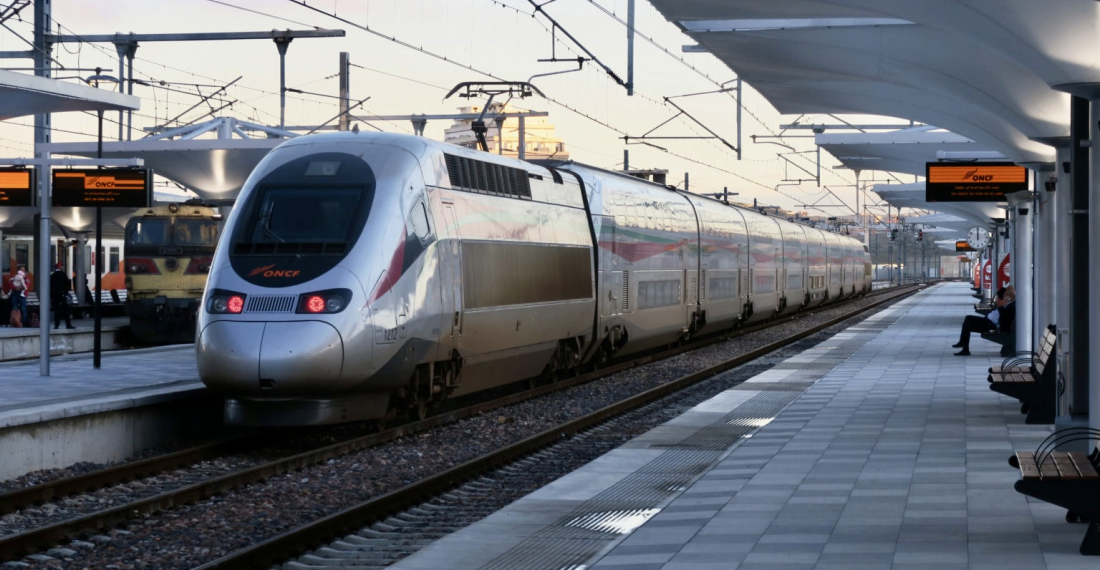
Morocco to build high-speed train to Fez via Meknes

Morocco is pushing ahead with the development of high-speed rail. Morocco plans to launch a tender to study the project of a high-speed rail link between Fez and Rabat, with a stop in Meknes. Meknes is one of the cities that will be used for team training and accommodation during the 2030 FIFA World Cup.

With this project, which is expected to cost around 23 billion Moroccan dirhams, Morocco aims to progressively develop modern and high-quality transport facilities that meet FIFA standards for the transport of supporters and delegations. Travel time between Fez and Rabat, via Meknes, will be reduced from three and a half hours to just one hour and 40 minutes. The plan involves upgrading the existing line and building a new high-speed railway, including the construction of several bridges in the province of Khemisset.

This new high-speed line and other railway infrastructure projects under construction will not only facilitate the mobility of Moroccans and visitors during the 2030 World Cup, but will also strengthen Morocco's global competitiveness. The country aims to become one of the world's leaders in HSL, alongside major nations such as China, France, Spain and Germany.
Source: commonspace.eu with agencies

Related articles

Popular

Editor's choice
Interview
Thursday Interview: Murad Muradov

Thursday Interview: Murad Muradov

Today, commonspace.eu starts a new regular weekly series. THURSDAY INTERVIEW, conducted by Lauri Nikulainen, will host  persons who are thinkers, opinion shapers, and implementors in their countries and spheres. We start the series with an interview with Murad Muradov, a leading person in Azerbaijan's think tank community. He is also the first co-chair of the Action Committee for a new Armenian-Azerbaijani Dialogue. Last September he made history by being the first Azerbaijani civil society activist to visit Armenia after the 44 day war, and the start of the peace process. Speaking about this visit Murad Muradov said: "My experience was largely positive. My negative expectations luckily didn’t play out. The discussions were respectful, the panel format bringing together experts from Armenia, Azerbaijan, and Turkey was particularly valuable during the NATO Rose-Roth Seminar in Yerevan, and media coverage, while varied in tone, remained largely constructive. Some media outlets though attempted to represent me as more of a government mouthpiece than an independent expert, which was totally misleading.  Overall, I see these initiatives as important steps in rebuilding trust and normalising professional engagement. The fact that soon a larger Azerbaijani civil society visits to Armenia followed, reinforces the sense that this process is moving in the right direction." (click the image to read the interview in full)

