It's that Novichok again!

The German government has said that there is "unequivocal proof" that Russian opposition politician Alexei Navalny was poisoned with a Novichok nerve agent. Chancellor Angela Merkel said he was a victim of attempted murder and the world would look to Russia for answers.

Steffen Seibert, a spokesperson for the German Government, has said that toxicology tests show conclusive evidence that the Russian opposition leader, Alexei Navalny, was poisoned by "a chemical nerve agent from the Novichok group". Navalny was flown to Berlin for treatment on August 21 after falling ill from a suspected poisoning during a flight between Tomsk, in the Russian region of Siberia, and Moscow on the morning of August 20. Navalny remains in an induced coma but in a stable condition at the Charité hospital in Berlin.

In light of the test results, Seibert stated that the German Chancellor Angela Merkel and her Cabinet had met to discuss the situation and determine a course of action. He confirmed that the German Government would inform their partners at NATO, the EU and the Organisation for the Prohibition of Chemical Weapons (OPCW) and consult "on an appropriate joint response". German Foreign Minister Heiko Maas stated, "We condemn this attack in the strongest possible terms," adding that the Russian Ambassador to Berlin has been summoned to his ministry. "We now know that there was an attack with a chemical nerve agent," Mass said. "That makes it even more urgent to determine who was responsible in Russia and to hold them to account."

TASS news agency reports that Russian doctors did not identify any toxic or poisonous substances in Navalny's body before he was flown to Berlin. It also reports that the official representative of the President of the Russian Federation, Dmitry Peskov, has stated that the Kremlin is yet to receive any official information from the German Government.

Novichok refers to a series of Soviet-era nerve agents designed between 1971 and 1993 to be undetectable and evade NATO chemical protective gear at the time of their creation. They are considered by some to be the most powerful nerve agents ever made. According to WBTV, Richard Parsons, a senior lecturer in biochemical toxicology at King's College London, said, "It is only dangerous when it is about to be used, i.e. mixed together. It is unavailable from anywhere except the Russian military as far as I am aware."

This is not the first time that this specific group of nerve agents has found its way into the mainstream media. In March 2018, Novichok was identified as the substance used to poison Sergei Skripal - a former Russian spy - and his daughter in the English city of Salisbury. The UK accused Russia of the poisoning, announcing a series of punitive measures including the expulsion of Russian diplomats - a move that was followed by 28 other countries. On November 27, 2019, the OPCW added Novichok to its list of banned substances.

Source: Commonspace.eu with The Guardian, TASS, Deutsche Welle, WBTV, and agencies

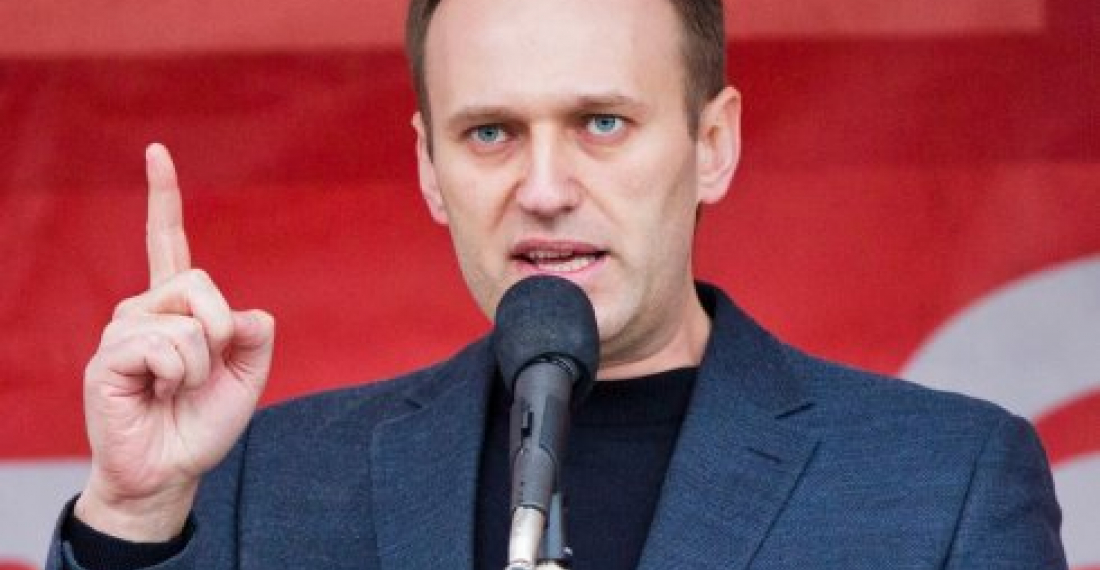
Photo: Alexei Navalny (archive picture)
Related articles

Editor's choice
News
Council of Europe launches new International Claims Commission for Ukraine

Council of Europe launches new International Claims Commission for Ukraine

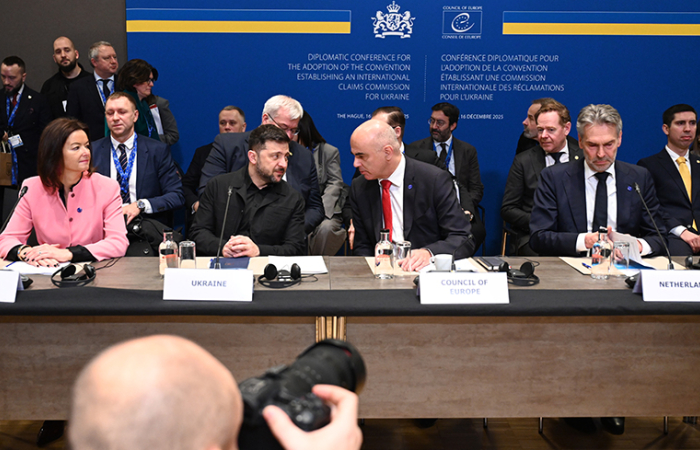
Thirty-four countries and the European Union have signed a new convention establishing an International Claims Commission for Ukraine at a diplomatic conference co-hosted by the 46-nation Council of Europe and the Netherlands in the Hague. The diplomatic conference was attended by leaders and high-level representatives from over 50 states, including the President of Ukraine, Volodymyr Zelenskyy, the President of the Republic of Moldova, Maia Sandu, and the Prime Minister of the Netherlands, Dick Schoof.  “Today marks a major step forward in ensuring accountability for Ukraine. The International Claims Commission represents justice and hope for tens of thousands of victims—our determination that those who have suffered will not be forgotten. I call for quick ratifications so we can get the commission rapidly up and running for the people of Ukraine,” said Council of Europe Secretary General Alain Berset. Ukrainian President Volodymyr Zelenskyy said: “We expect that every mechanism for compensation from the Register of Damage and Claims Commission to the actual payments – will start working and receive strong and sufficient international support, so that people can truly feel that any kind of damage caused by the war can be compensated. This war, and Russia’s responsibility for it, MUST become a clear example – so that others learn not to choose aggression.” “Accountability is about creating the conditions for peace that endures. And therefore, accountability is a condition of security – today and for the future. But accountability is not only about Ukraine. And it is not only about one aggressor and one victim. Accountability is about Europe. About every country in Europe. It is about whether Europe, as a whole, is willing to defend its peace,” said Maia Sandu, President of the Republic of Moldova, which currently holds the Presidency of the Council of Europe’s Committee of Ministers. The Prime Minister of the Netherlands, Dick Schoof, said: “Every day Russia is deliberately bombarding homes, destroying businesses and damaging infrastructure in Ukraine. Russia must compensate Ukraine for the damage caused. That is why we have launched the International Claims Commission for Ukraine and we are honoured to host it.” The International Claims Commission will be the second part of a comprehensive compensation mechanism related to Russia’s war of aggression, building on the existing Register of Damage for Ukraine. The claims commission will be established within the framework of the Council of Europe and will also be open to other countries. The Register of Damage for Ukraine, created in 2023, collects and records compensation claims submitted by individuals, organisations and public bodies in Ukraine. Forty-four states and the European Union have so far joined the Register, which has already received 86,000 claims. The International Claims Commission will review, assess and decide upon claims submitted to the Register of Damage for Ukraine and determine the amount of compensation, if any, which is due in each case. The convention establishing the commission will enter into force once it has been ratified by 25 signatories, as long as sufficient funds have been secured to support its initial work.

Popular