India withdraws from military drills "Kavkaz 2020" in Russia

India has withdrawn from large scale multi country military drills scheduled to take place in Russia's Astrakhan Region from 15-27 September amid concerns about some of the other participants.

The presence of military elements from Abkhazia and South Ossetia were considered to be problematic since India, like most of the world does not recognise the independence of these two territories. India also did not want to be seen participating in military exercises with China, another participant of Kavkaz2020, given the recent border clashes between the two countries.

Kavkaz2020 are scheduled to  gather around 13,000 troops from 20 countries and are part of a four year training cycle of the Russian Armed Forces.

"Russia and India are close and privileged strategic partners. At Russia's invitation India has been participating in many international events. However, in view of the pandemic and consequent difficulties in exercise, including arrangements of logistics, India has decided not to send a contingent this year to Kavkaz-2020. The same has been informed to the Russian side," said a defence ministry spokesperson.

According to the influential Indian newspaper, The Hindustan Times, the decision not to go ahead with participating in the Kavkaz-2020 multilateral exercise was made following consultations between India's defence ministry and the external affairs ministry that took into consideration several factors, the officials cited above said on the condition of anonymity.

"There is a decision not to take part in contact exercises in view of the Covid-19 pandemic in order to ensure the safety of our troops," the officials said. The expected presence in the exercise of troops from South Ossetia and Abkhazia, both states that aren't recognised by India, in Kavkaz-2020 was also a factor in the decision, said one of the officials.

The newspaper noted that most UN member states see Abkhazia and South Ossetia as part of Georgia, though both are recognised by Russia. India doesn't recognise both as independent states as they are not members of the UN. India's presence at such an exercise could have given rise to delicate diplomatic issues, a second official said.

Criticism of India's possible presence at Kavkaz-2020 alongside Chinese and Pakistani troops has been growing ever since reports first emerged that New Delhi was extended an invitation to send a tri-services contingent to the exercise.

India planned to send around 180 troops from an infantry battalion, along with elements of the air force and observers from the Indian Navy for the exercise.

Questions have also been raised about India participating in an exercise featuring Chinese troops amid the months-long standoff along the LAC and the death of 20 Indian soldiers in the violent clash in Galwan Valley on June 15.

The Russian exercise has also sparked tensions with Ukraine, which is organising its own command-staff exercise United Efforts-2020, for which it plans to involve NATO countries. This exercise too will be held at around the same time.

While it is not uncommon for the armies of India, China and Pakistan to be part of multi-nation exercises on neutral territories (they even deploy alongside in United Nations peace missions), India's participation in Kavkaz-2020 had assumed importance because of the ongoing border row in the Ladakh sector.

source: commonspace.eu with The Hindustan Times

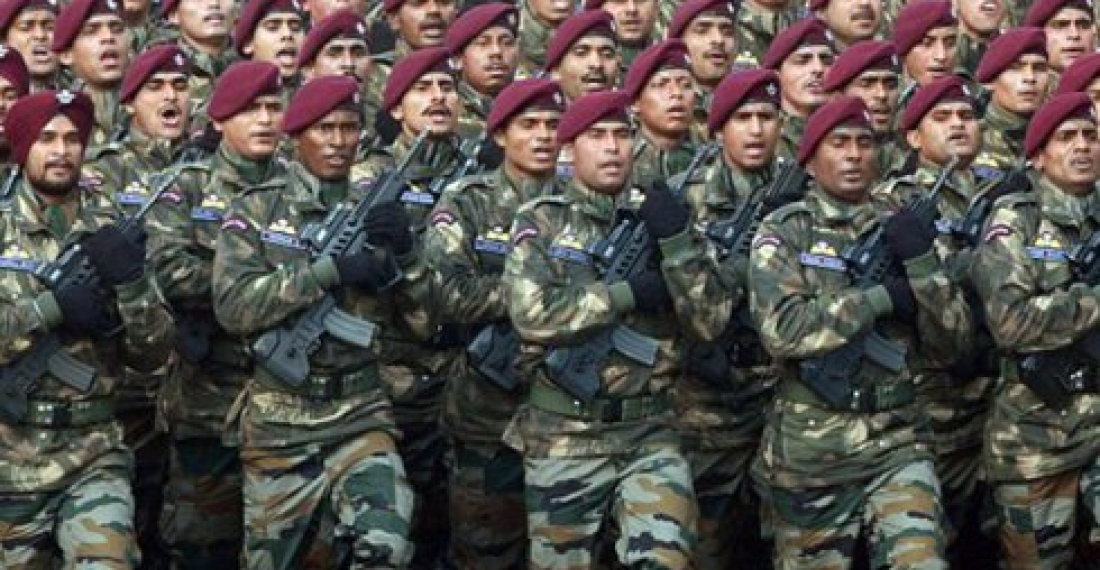
photo: An Indian army unit on parade (archive picture)
Related articles

Editor's choice
News
Council of Europe launches new International Claims Commission for Ukraine

Council of Europe launches new International Claims Commission for Ukraine

Thirty-four countries and the European Union have signed a new convention establishing an International Claims Commission for Ukraine at a diplomatic conference co-hosted by the 46-nation Council of Europe and the Netherlands in the Hague. The diplomatic conference was attended by leaders and high-level representatives from over 50 states, including the President of Ukraine, Volodymyr Zelenskyy, the President of the Republic of Moldova, Maia Sandu, and the Prime Minister of the Netherlands, Dick Schoof.  “Today marks a major step forward in ensuring accountability for Ukraine. The International Claims Commission represents justice and hope for tens of thousands of victims—our determination that those who have suffered will not be forgotten. I call for quick ratifications so we can get the commission rapidly up and running for the people of Ukraine,” said Council of Europe Secretary General Alain Berset. Ukrainian President Volodymyr Zelenskyy said: “We expect that every mechanism for compensation from the Register of Damage and Claims Commission to the actual payments – will start working and receive strong and sufficient international support, so that people can truly feel that any kind of damage caused by the war can be compensated. This war, and Russia’s responsibility for it, MUST become a clear example – so that others learn not to choose aggression.” “Accountability is about creating the conditions for peace that endures. And therefore, accountability is a condition of security – today and for the future. But accountability is not only about Ukraine. And it is not only about one aggressor and one victim. Accountability is about Europe. About every country in Europe. It is about whether Europe, as a whole, is willing to defend its peace,” said Maia Sandu, President of the Republic of Moldova, which currently holds the Presidency of the Council of Europe’s Committee of Ministers. The Prime Minister of the Netherlands, Dick Schoof, said: “Every day Russia is deliberately bombarding homes, destroying businesses and damaging infrastructure in Ukraine. Russia must compensate Ukraine for the damage caused. That is why we have launched the International Claims Commission for Ukraine and we are honoured to host it.” The International Claims Commission will be the second part of a comprehensive compensation mechanism related to Russia’s war of aggression, building on the existing Register of Damage for Ukraine. The claims commission will be established within the framework of the Council of Europe and will also be open to other countries. The Register of Damage for Ukraine, created in 2023, collects and records compensation claims submitted by individuals, organisations and public bodies in Ukraine. Forty-four states and the European Union have so far joined the Register, which has already received 86,000 claims. The International Claims Commission will review, assess and decide upon claims submitted to the Register of Damage for Ukraine and determine the amount of compensation, if any, which is due in each case. The convention establishing the commission will enter into force once it has been ratified by 25 signatories, as long as sufficient funds have been secured to support its initial work.

Popular